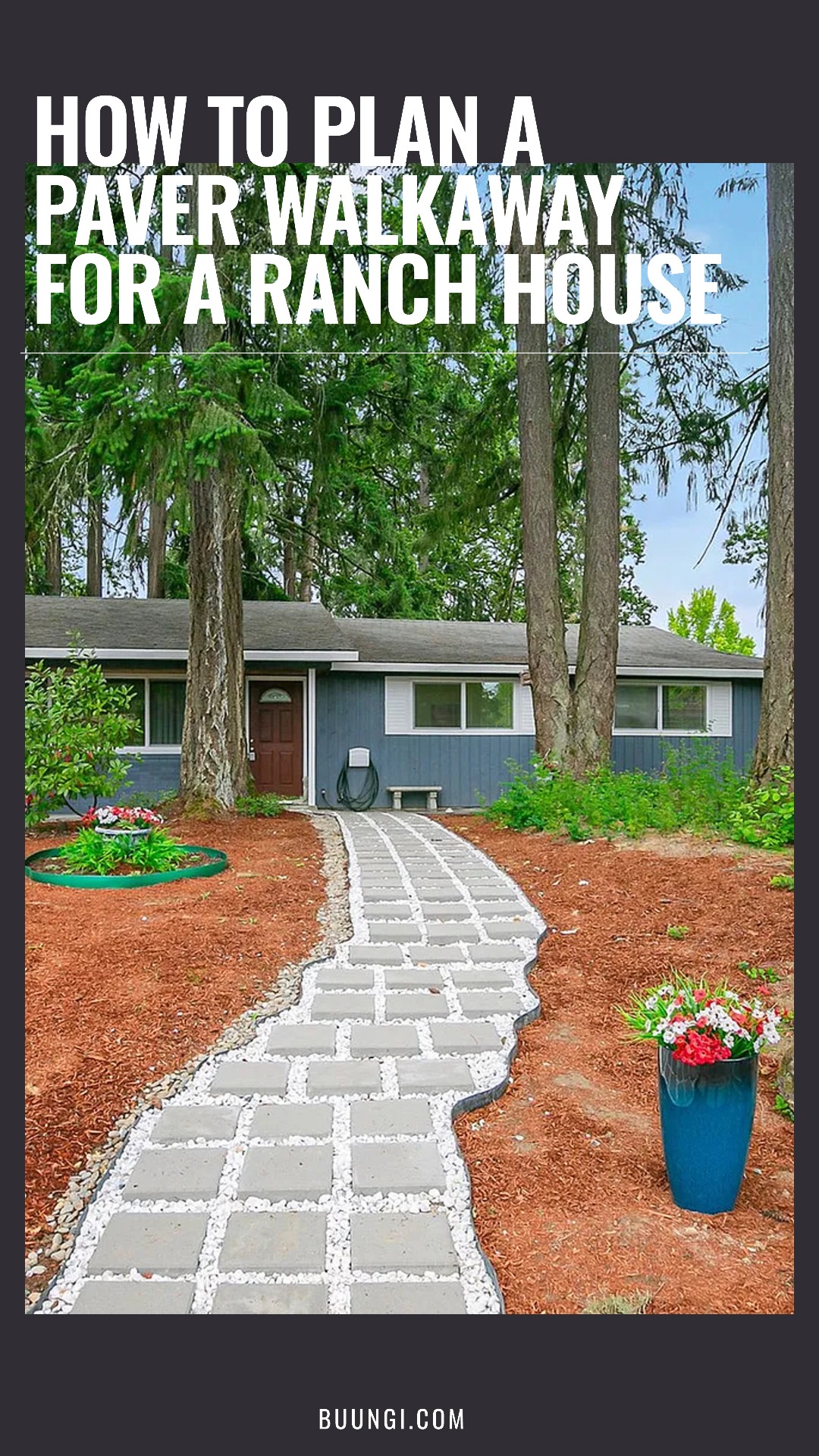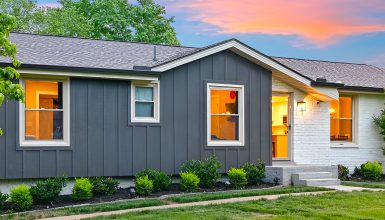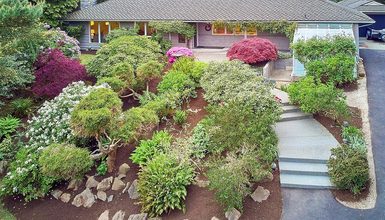
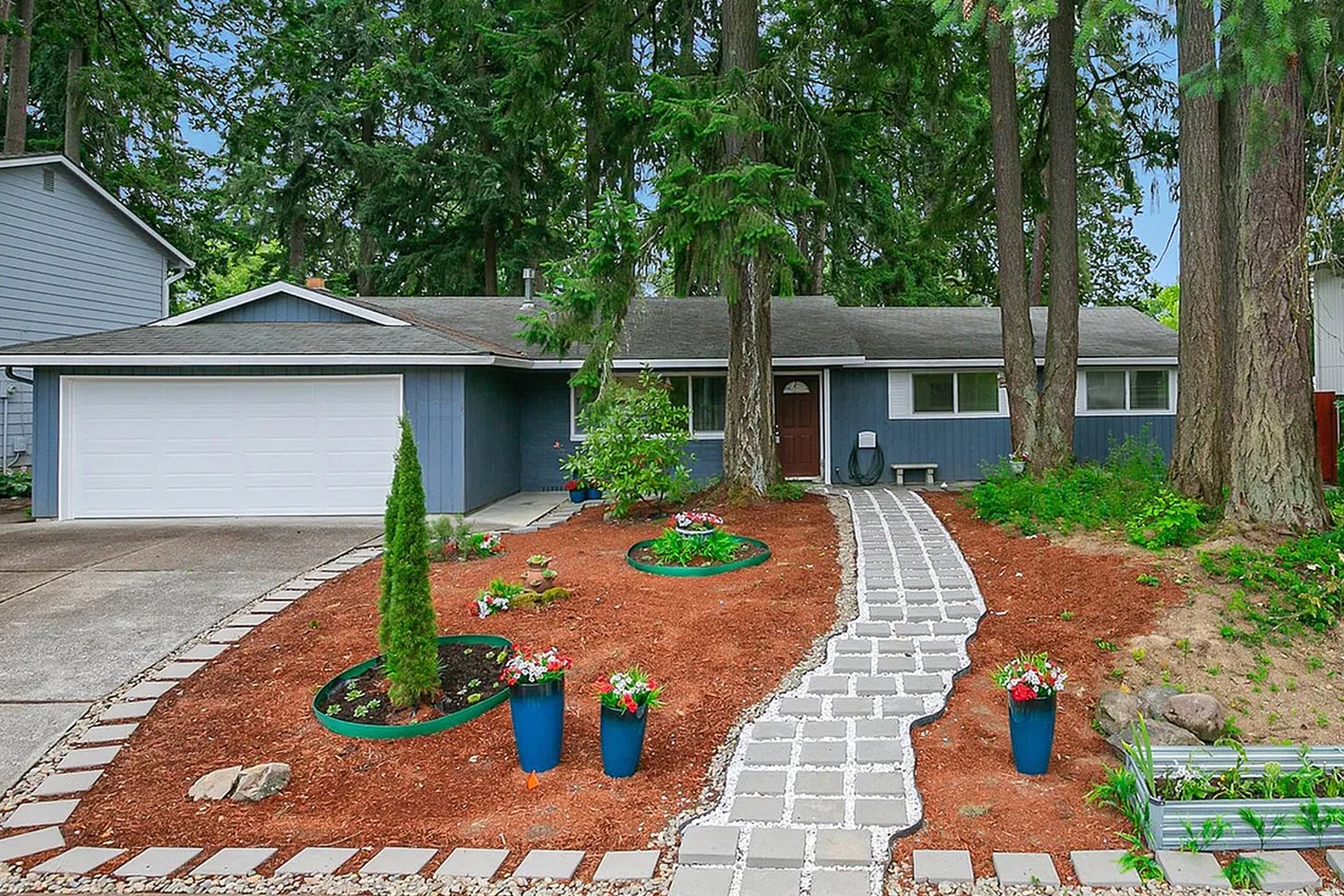
A front walkway can make a simple ranch home feel more welcoming. In this wooded yard, a curved paver path leads from the driveway toward the front door. Red mulch, small shrubs, and mature trees frame the walk and add color around the blue home.
You can create a similar look with a clear plan. Choose a route, pick pavers that suit the house, and build a firm base. These steps help the path look good and stay easy to use.
1. Choose a Route That Feels Natural
Start by watching how people move through the yard. The path should connect the driveway, sidewalk, or parking area to the front door. Keep it direct enough to be easy to follow, but add a gentle curve if it helps the path fit around trees or garden beds.
Mark the route with a garden hose or rope. Walk it from both ends. Check that it avoids tree roots, downspouts, and spots where water tends to collect. In the photo, the walkway bends through the planting bed and guides visitors toward the entrance.
Planning cues:
- Connect the path to the main entry.
- Use a gentle curve to work around trees or beds.
- Walk the marked route before you dig.
- Keep the path clear of low branches and obstacles.
2. Set a Comfortable Width
A walkway should feel easy to use. A path about three feet wide works for one person. A wider path gives two people room to walk side by side and can feel more welcoming at the front door.
Think about the whole route, not just the section near the house. Keep the width steady through curves and near steps. If you add a wider landing by the door, make sure it still connects smoothly to the walk.
Planning cues:
- Aim for at least three feet of clear walking space.
- Make the path wider if two people will use it often.
- Keep the width steady around curves.
- Add a landing where people pause at the door.
3. Pick Pavers That Suit the House
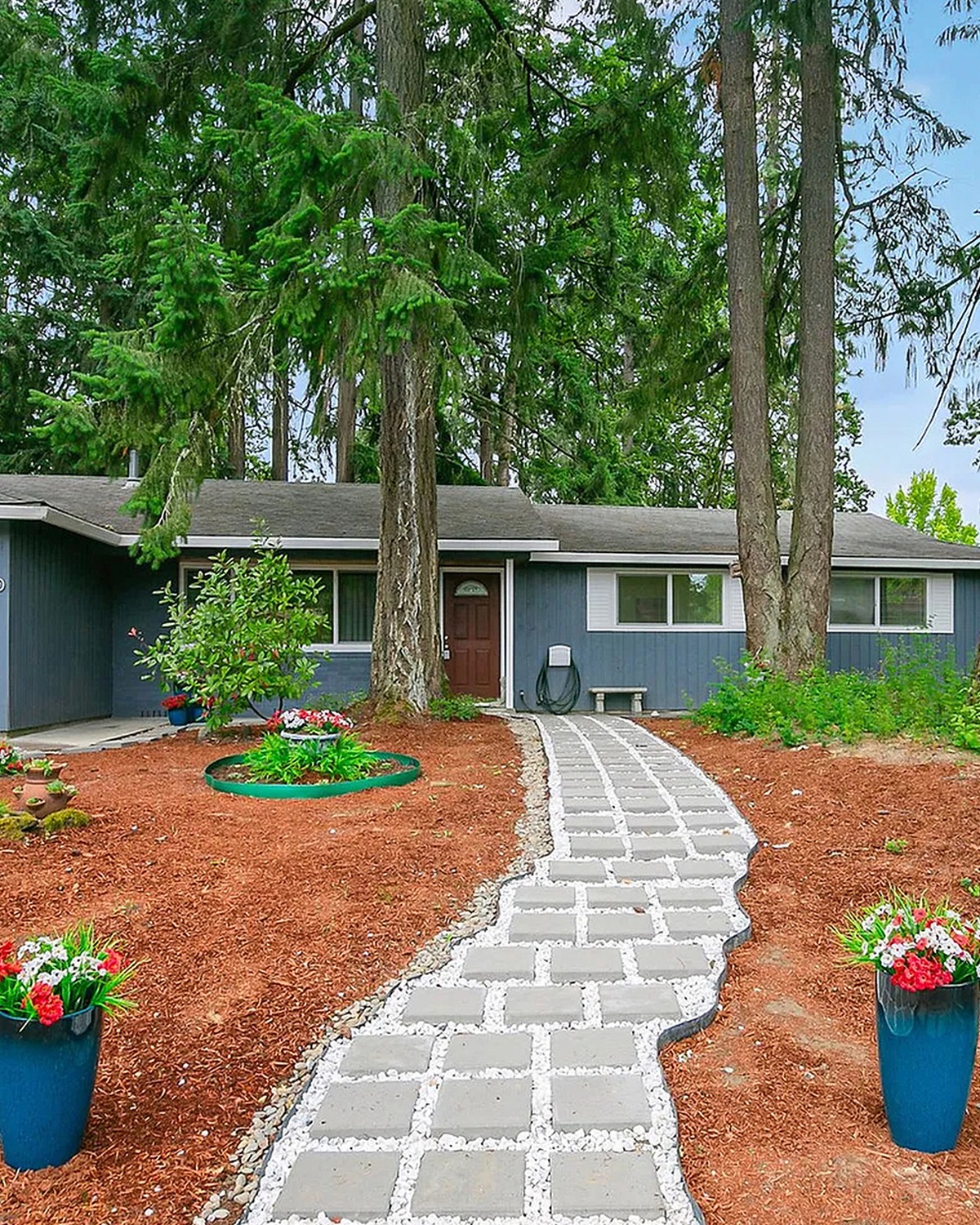
The gray pavers in this yard stand out against the red mulch. Their simple shape suits the clean lines of the ranch home. For a similar look, choose pavers in gray, charcoal, tan, or a blend of muted tones.
Use the house as your guide. Blue siding and white trim pair well with cool gray pavers. Warm brick or beige siding may look better with tan or brown tones. Before you buy, place a few sample pavers near the driveway and front door. Check them in sun and shade.
Choose a pattern that works with the path. Running bond gives a calm, classic look. Basket weave or herringbone adds more detail. A simple pattern often suits a ranch home best.
Design cues:
- Match the paver color to the siding, trim, and roof.
- Test samples in the yard’s light.
- Use a simple pattern for a clean, classic look.
- Add a contrasting border to define the path.
4. Plan the Garden Edges
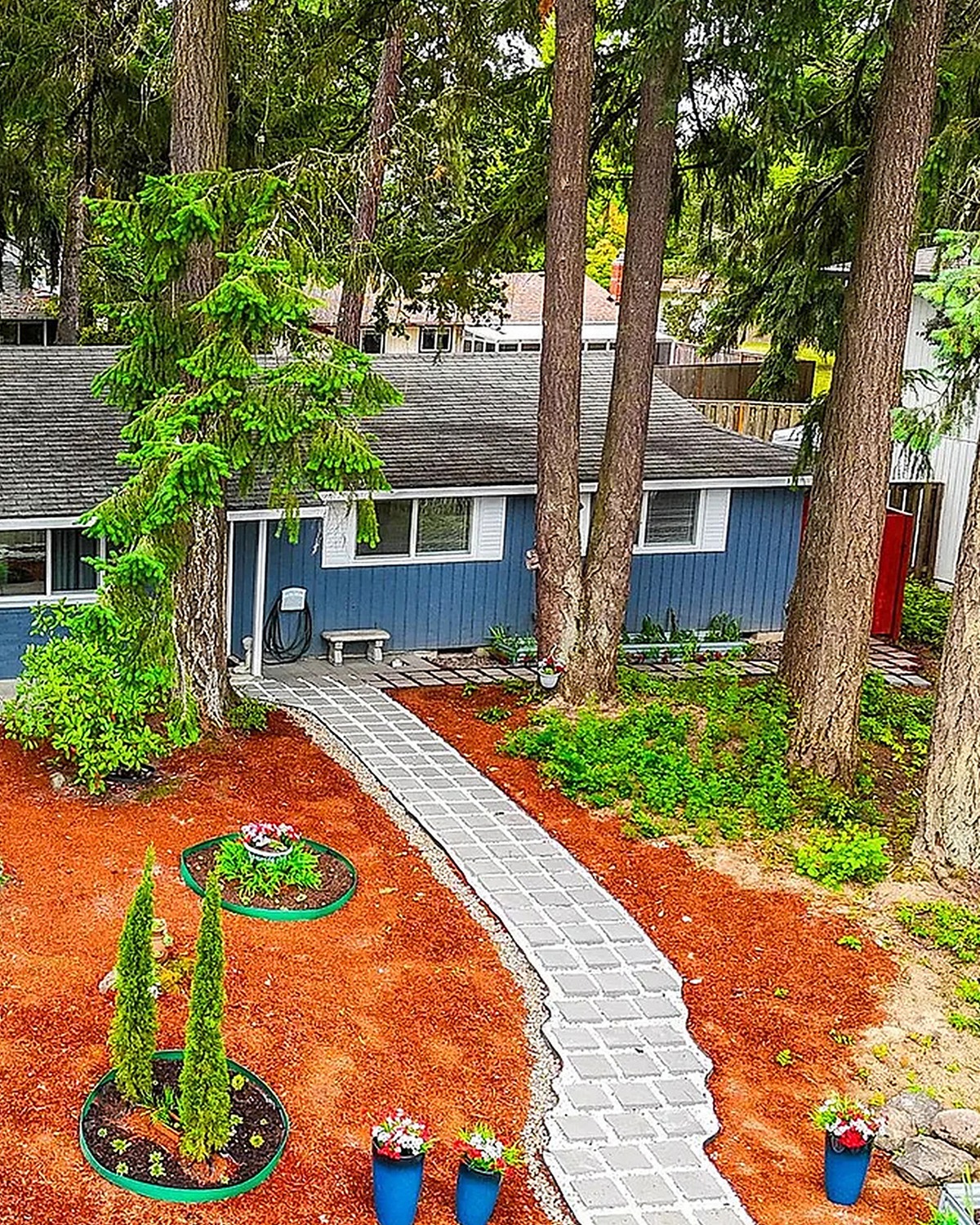
The walkway looks settled because the mulch beds frame it. A clear edge keeps mulch and soil from spilling onto the pavers. In this yard, small border blocks trace the bed beside the driveway and help define the path.
You can use stone, metal, plastic, or concrete edging. Choose a material that suits the pavers and the home. Keep plants low near the path so they do not crowd the walking space.
Garden cues:
- Add edging to separate pavers from mulch.
- Use shrubs and flowers to frame the route.
- Leave room for plants to grow.
- Keep plants away from the path’s clear walking area.
5. Build a Firm, Even Base
Good pavers need a stable base. Loose soil can lead to dips, tilted pavers, and puddles. Before digging, check for buried utility lines. Then remove grass and soil from the marked route.
Most paver paths use a compacted gravel base, a thin layer of bedding sand, and pavers set on top. The exact depth depends on the soil and local conditions. Compact the base in layers and check it as you go. A level, well-packed base helps the pavers stay in place.
Set the path so water drains away from the house. A slight slope can move rain toward the yard. Avoid sending water toward the front door, garage, or a neighbor’s property.
Installation cues:
- Check for buried utilities before digging.
- Remove soft soil and plant roots.
- Compact the gravel base in layers.
- Keep the finished path slightly sloped for drainage.
- Follow the paver maker’s installation guide.
6. Finish With Simple Planting
Plants and mulch help the walkway feel part of the yard. The red mulch in the photo creates a strong color contrast with the gray pavers. Small shrubs and potted flowers add life without hiding the house.
Use plants that fit your climate and the light in your yard. Mix a few shapes and heights, but leave open space around the path. If mature trees already give the yard plenty of shade, choose plants that can grow well beneath them.
A well-planned paver walkway can guide visitors to the door and make a ranch home feel more inviting. Mark a natural route, choose pavers that suit the house, and frame the path with tidy planting. A firm base and good drainage help the walkway stay useful for years.