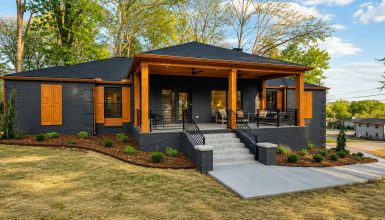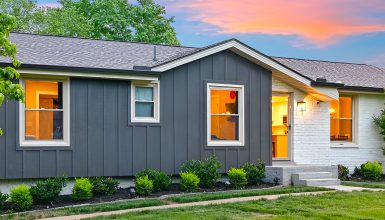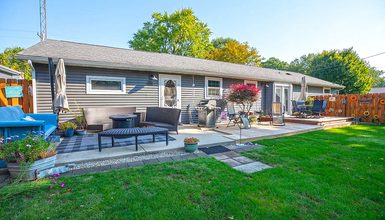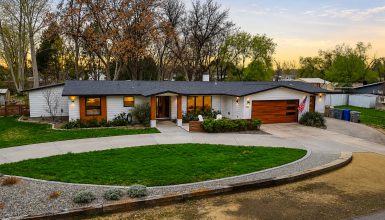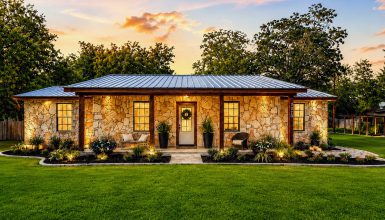
A ranch house can look even more welcoming when its garden feels full and calm. The secret is to plant in layers. Low flowers, rounded shrubs, and taller trees add depth without hiding the home.
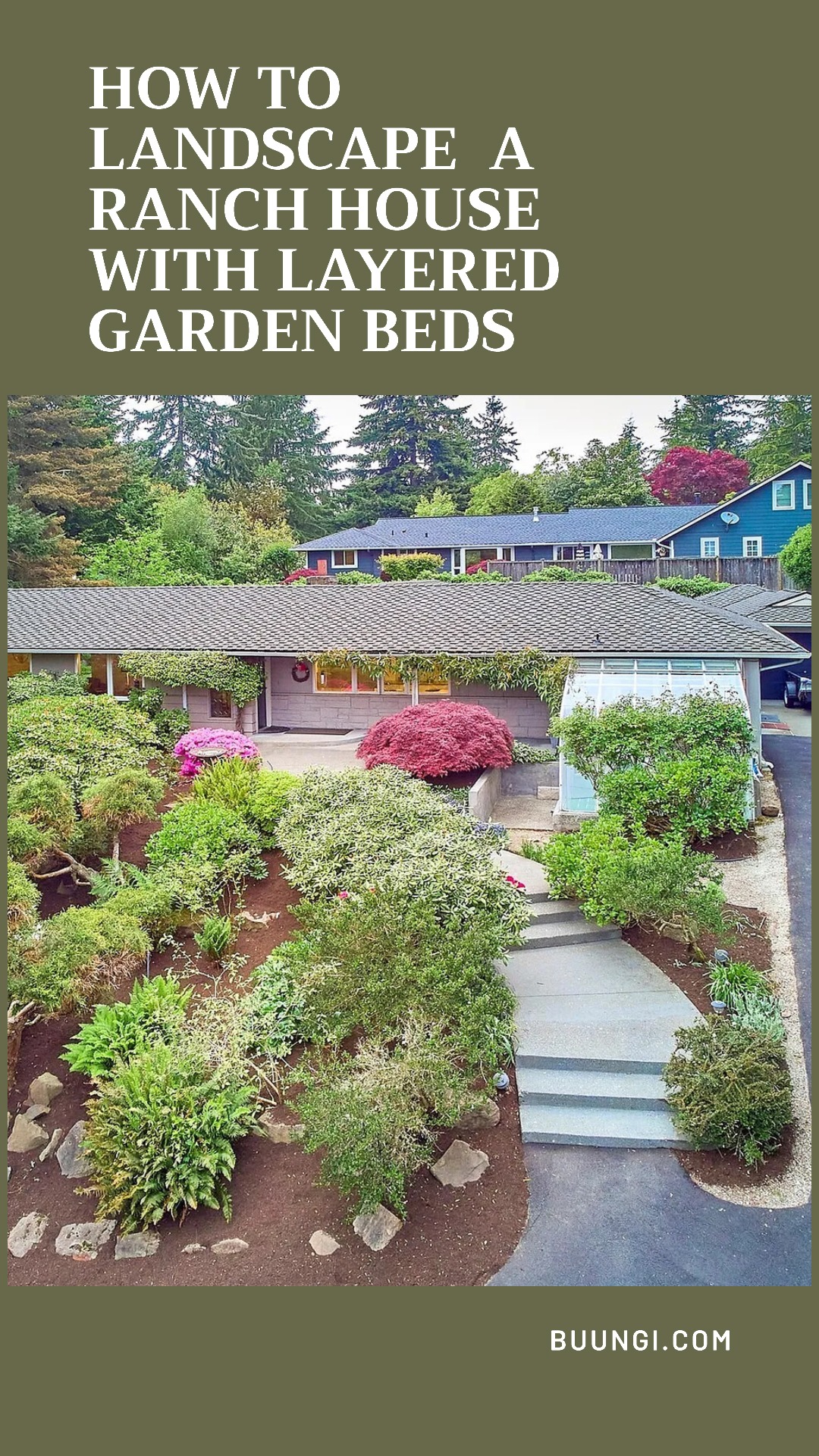
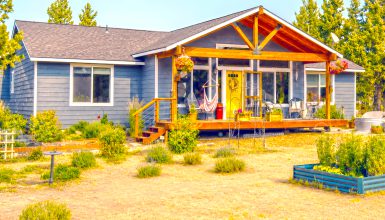
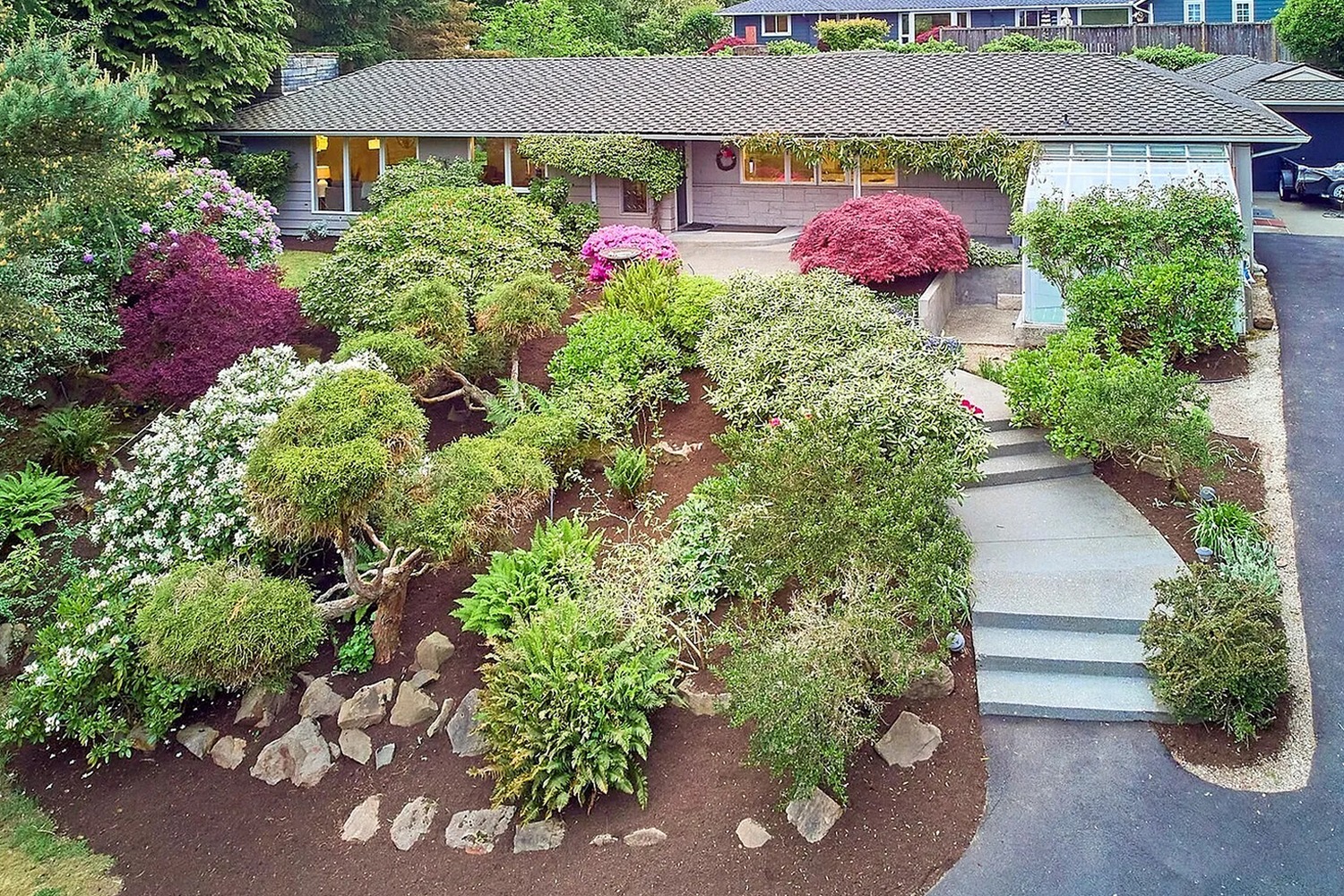
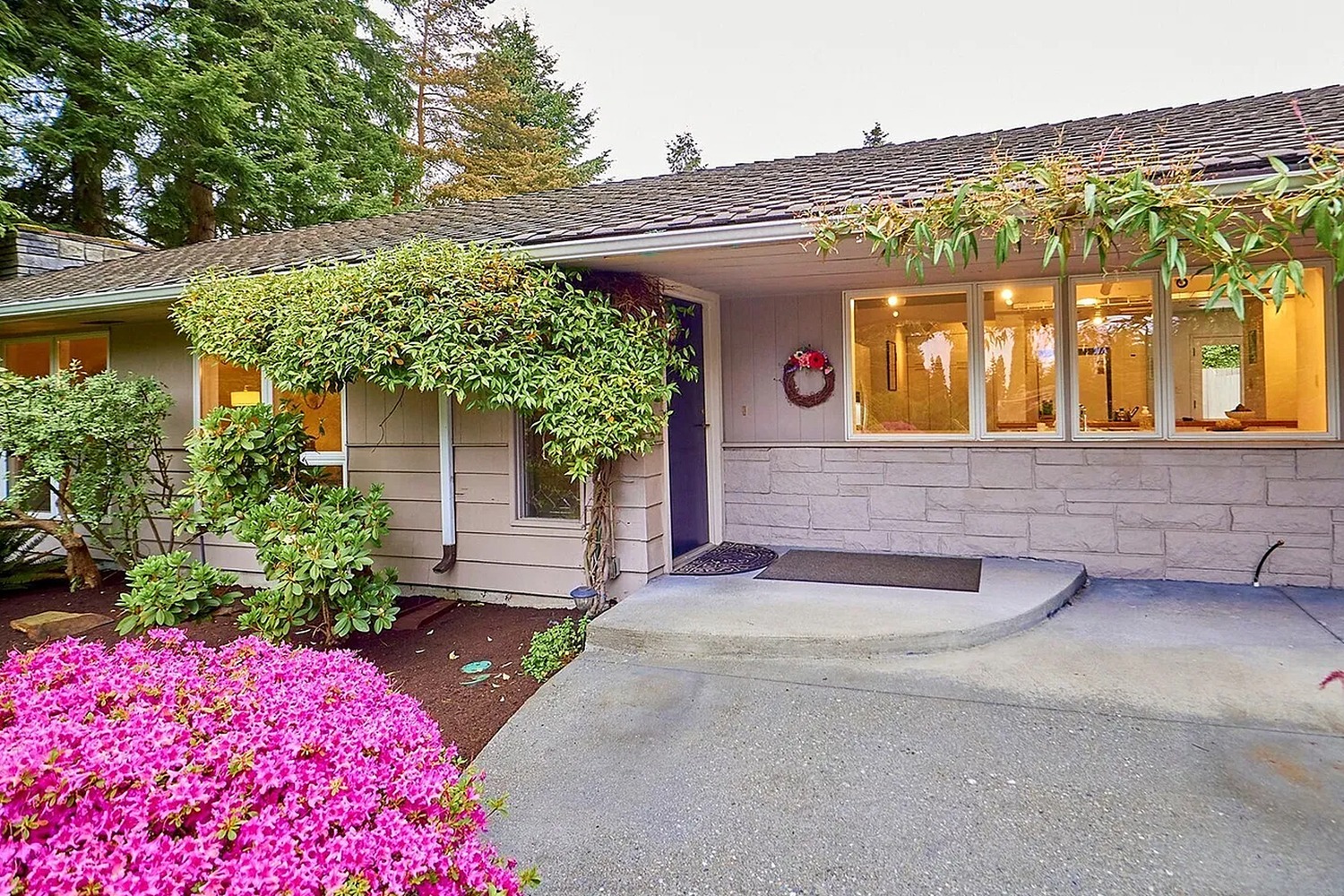
In this example, curved beds soften the long, low roofline. Dark mulch helps the green leaves and bright flowers stand out. A broad concrete path leads the eye to the entry, while steps and low walls guide the way up.
You can use the same ideas in a small yard. Start with the path, choose plants for three heights, then repeat a few colors and shapes.
1. Start With the House and the Walkway
Ranch homes often have a long front wall and a low roof. A straight row of plants can make that shape feel even longer. Curved garden beds add a softer line.
First, look at how people reach your front door. Keep the walkway clear and easy to follow. In the pictured yard, the wide concrete path and steps form a strong route through the garden. The plants frame it without blocking it.
Before you plant, mark the beds with a garden hose. Try wide curves that echo the path. Leave room between the plants and the house, too. This gives shrubs space to grow and keeps windows clear.
Design cues to borrow:
- Use a curved bed to soften a long, straight wall.
- Keep the path wide, open, and easy to see.
- Frame steps with low plants or small shrubs.
- Leave clear space around doors, windows, and the driveway.
- Use a low wall where the path or garden needs a clean edge.
2. Build the Garden in Three Layers
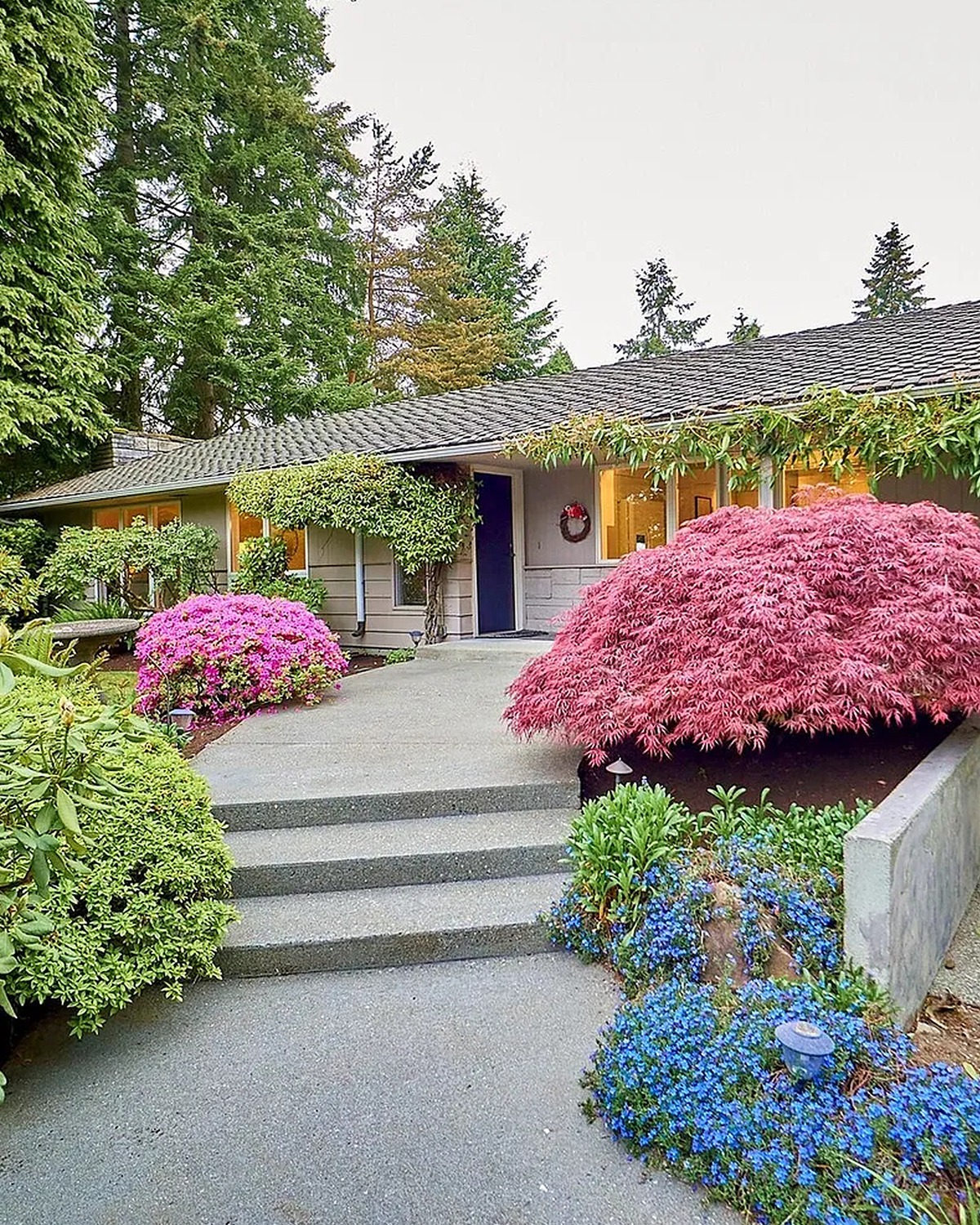
Layered beds feel full because they include plants at different heights. Place the tallest plants at the back, medium shrubs in the middle, and low flowers or ground covers near the front.
This simple plan helps each plant show. It also gives the garden a natural shape. In the photos, tall trees make a leafy backdrop. Smaller shrubs and flowers fill the space closer to the walkway.
Think about the view from the street and from inside the house. A tall shrub may add privacy, but it should not cover a window. A low ground cover can soften a bed’s edge without taking over the path.
A simple planting plan:
- Back row: Small trees or tall shrubs for height and privacy.
- Middle row: Rounded shrubs for shape and year-round structure.
- Front row: Ferns, flowers, or ground covers to soften the bed’s edge.
Check each plant’s mature size before you buy it. A small plant can grow much wider than it looks at the nursery. Give it enough room now, so you do not need to prune it often later.
3. Mix Leaf Shapes and Flower Colors
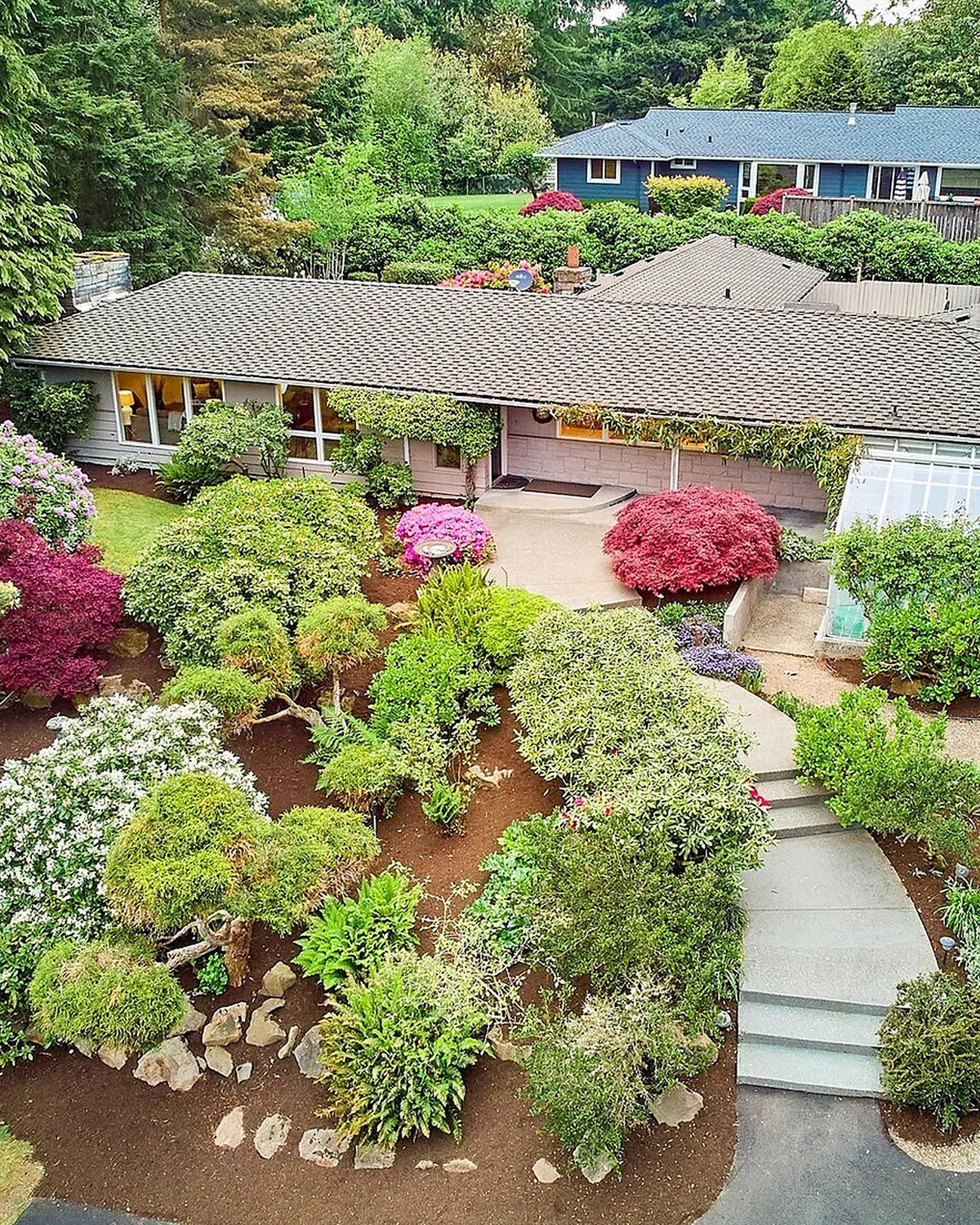
A garden does not need many colors to feel lively. Pick a few shades and repeat them across the yard. Here, green leaves set off pink and white flowers. Deep burgundy foliage adds another point of interest.
Leaf shape matters, too. Broad leaves look bold beside fine, feathery leaves. Rounded shrubs pair well with low, spreading plants. These small contrasts help the garden feel rich, even when few flowers are in bloom.
Choose plants that suit your local climate, soil, and sunlight. A plant that thrives in one region may struggle in another. Ask a local garden center for options that fit the light and conditions in your yard.
Color and texture cues:
- Repeat one or two flower colors in several spots.
- Pair dark leaves with lighter flowers or foliage.
- Mix broad leaves with fine or narrow leaves.
- Add evergreen plants for color in colder months.
- Choose blooms with different seasons so the garden changes over time.
4. Use Mulch and Stone to Define the Beds
A dark mulch gives the beds a tidy look. It also helps hold moisture in the soil and can reduce weeds. Keep mulch a few inches from trunks and stems. A thick pile against a plant can trap moisture and harm it.
Natural rocks add a casual edge to a bed. In the pictured yard, scattered stones link the garden to the sloped lawn. Use stones in groups, rather than placing them in a perfect line. This creates a more relaxed look.
You can also use a neat border where the lawn meets the bed. The right edge depends on the style of the house and the amount of upkeep you want.
Finishing cues:
- Spread mulch in an even layer.
- Keep mulch away from plant stems and tree trunks.
- Group rocks in small clusters for a natural look.
- Use edging to keep soil and mulch off the lawn.
- Leave a clear border beside the walkway.
5. Keep the Entry in View
A garden should lead visitors to the door, not hide it. Keep shrubs low near the entry and trim plants that spill onto the steps. If vines grow along the eaves, check them often. Keep them away from gutters, windows, and roof edges.
Lighting can make the path safer after dark. Place low lights along steps or key turns. Aim them toward the ground, so they guide the way without shining into windows.
Finally, plan for care. Choose plants that match the time you want to spend pruning, watering, and cleaning up. A beautiful garden works best when it fits your routine.
Quick planning checklist:
- Trace a clear route from the driveway to the front door.
- Sketch curved beds before digging.
- Arrange plants by mature height and width.
- Repeat a small set of colors and leaf shapes.
- Check sunlight, soil, and local growing conditions.
- Add mulch, edging, and path lights where needed.
- Leave space for plants to grow.
Layered garden beds can bring color and shape to a ranch house without hiding its simple lines. Start with the walkway, frame it with curved beds, and plant from tall to low. With a few repeated colors and textures, the whole front yard can feel welcoming and well planned.