A farmhouse kitchen can feel bright and fresh. A ranch house kitchen can feel open and easy to use. Bring the two styles together, and you get a room that feels both welcoming and practical.
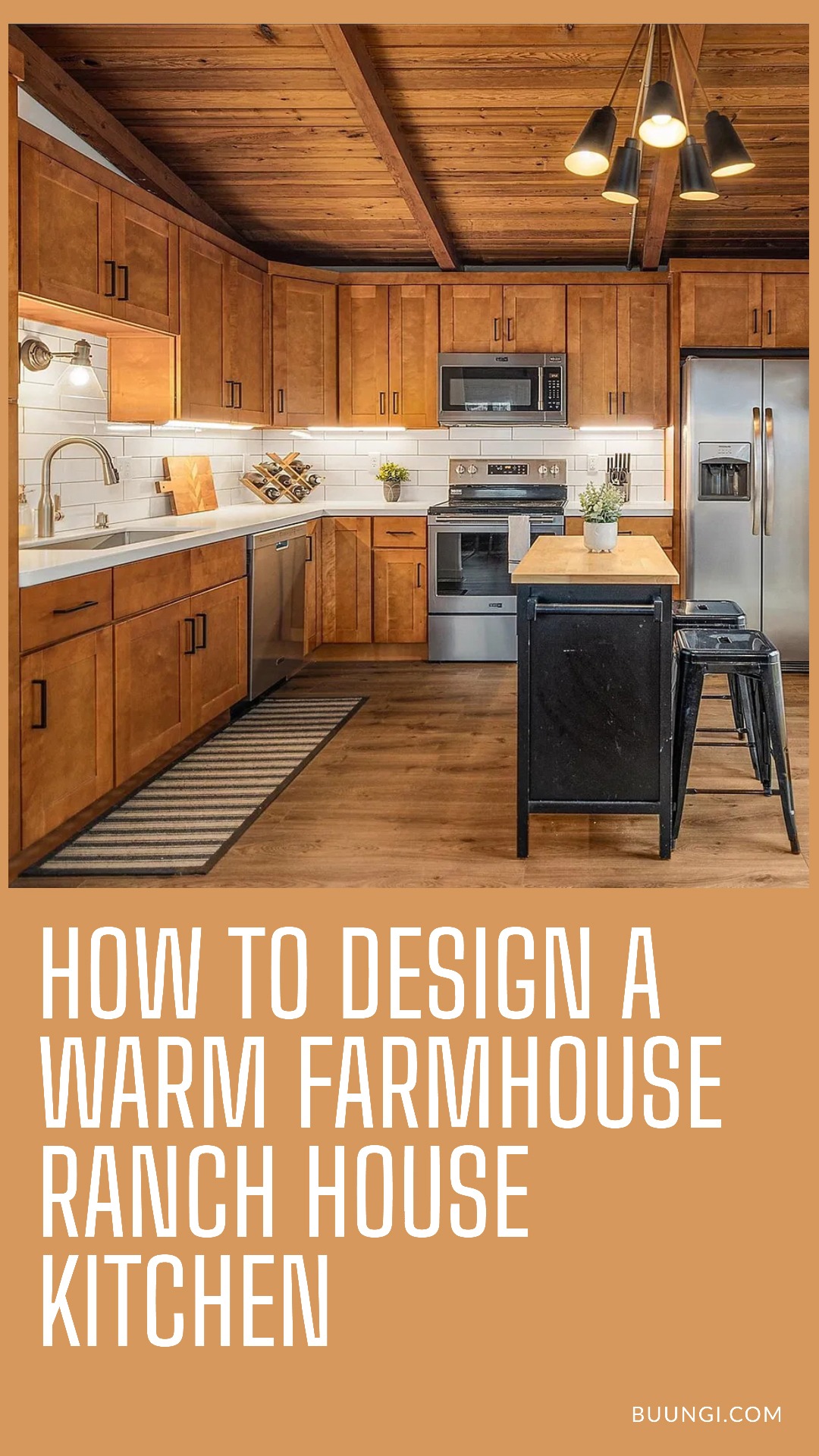
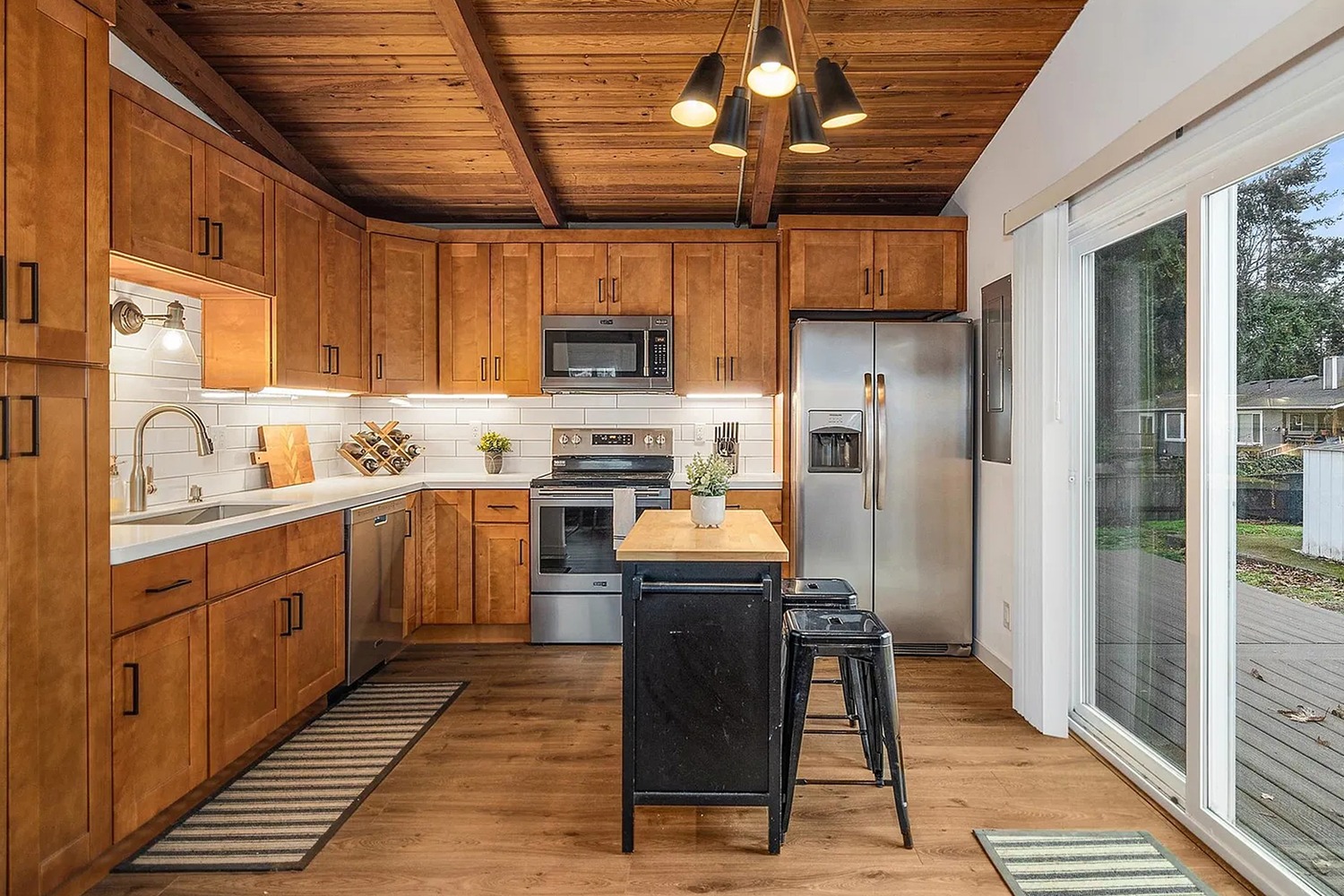
This kitchen shows how well the mix can work. Warm wood cabinets and a plank ceiling add a cozy feel. White tile and counters keep the room light. A dark island gives the space a strong center, while glass doors bring in daylight and open the kitchen to the deck.
1. Start With a Warm Color Palette
Use a small group of colors to make the room feel calm. This kitchen pairs honey-toned wood with white surfaces and dark accents. The wood adds warmth. White tile and counters reflect light. Black details give the room a crisp edge.
You can use this palette even if your kitchen has different cabinets. Try warm white walls, wood shelves, and dark cabinet pulls. If you plan to paint the cabinets, test samples beside the floor and counters first. Natural and electric light can change how a paint color looks.
Design cues:
- Pair warm wood with soft white.
- Add dark accents through hardware, lights, or stools.
- Repeat each color in more than one place.
- Test paint colors in the room before you commit.
2. Make the Island the Focal Point
A kitchen island can bring people together. It gives you space to prep food, serve a meal, or sit and talk. In this kitchen, a dark island stands out from the wood cabinets. Its lighter wood top softens the look and adds another natural finish.
Choose an island size that suits the room. Leave clear paths around it so people can move between the sink, stove, fridge, and nearby rooms. Add stools if the island has room for seating. Keep the top clear enough for daily tasks.
Design cues:
- Use a dark island to add contrast.
- Choose a wood top for a warm, natural look.
- Leave clear space around the island.
- Add stools that fit the counter height and room size.
3. Use Wood to Bring in Farmhouse Charm
Wood gives a kitchen a lived-in feel. Here, the cabinets, ceiling, and floor share a warm tone. The dark beams add depth and make the ceiling stand out.
If you do not have a wood ceiling, bring in wood in smaller ways. Try open shelves, a cutting board, or a wood-framed sign. Use one main wood tone, then add a second tone in small touches. This keeps the room from feeling too matched.
Design cues:
- Repeat wood tones in cabinets, floors, or decor.
- Let beams or a wood ceiling add character.
- Use wood shelves or cutting boards for a simple update.
- Limit the number of different wood colors.
4. Keep the Work Areas Bright and Practical
White counters and a white subway tile backsplash help balance the wood. They also create a clean surface that suits daily cooking. Under-cabinet lights make it easier to see while you prep food and wash dishes.
Choose finishes that fit how you use the kitchen. A smooth backsplash is easy to wipe down. A durable counter can handle meal prep and serving. Store daily items near the spot where you use them. This saves steps and keeps the counters neat.
Design cues:
- Use light counters and tile to brighten the room.
- Add task lights below the upper cabinets.
- Keep cooking tools near the stove.
- Store dish soap and towels by the sink.
5. Choose Lighting That Feels Cozy
Pendant lights over the island add a soft glow and help mark it as a gathering spot. Recessed lights brighten the rest of the room. This mix gives you light for cooking and a warmer feel for meals.
Pick lights that suit the room’s scale. Hang pendants high enough to keep sightlines open. Use warm bulbs for a cozy look, and add task lights where you need clear light for work.
Design cues:
- Hang pendants over the island.
- Use recessed lights for general room light.
- Add task lighting near counters and the sink.
- Choose warm bulbs for an inviting glow.
6. Connect the Kitchen to the Outdoors
Large glass doors bring daylight into this kitchen and lead to an outdoor deck. The view helps the room feel open. Keep the space near the doors clear so people can move in and out with ease.
You can echo this connection with plants, natural fabrics, or a simple bowl of fruit. These small details bring a fresh note to the room without adding clutter.
Design cues:
- Keep the path to the deck or patio clear.
- Use window coverings that let in daylight.
- Add a small plant or natural accent.
- Choose rugs that are easy to clean and do not slip.
7. Add the Finishing Touches
A few useful objects can make the kitchen feel personal. Try a striped runner, a wooden cutting board, or a small plant on the counter. Repeat black through the stools, hardware, or light fixtures to tie the dark island into the room.
Leave open space on the counters. Farmhouse style feels relaxed when it does not look overdone. Let the wood, tile, and island do most of the work.
A warm farmhouse ranch kitchen comes together through balance. Use wood for comfort, light surfaces for brightness, and dark accents for contrast. Add a useful island, good lighting, and a clear path through the room. Then finish with a few simple details that make the kitchen feel like home.