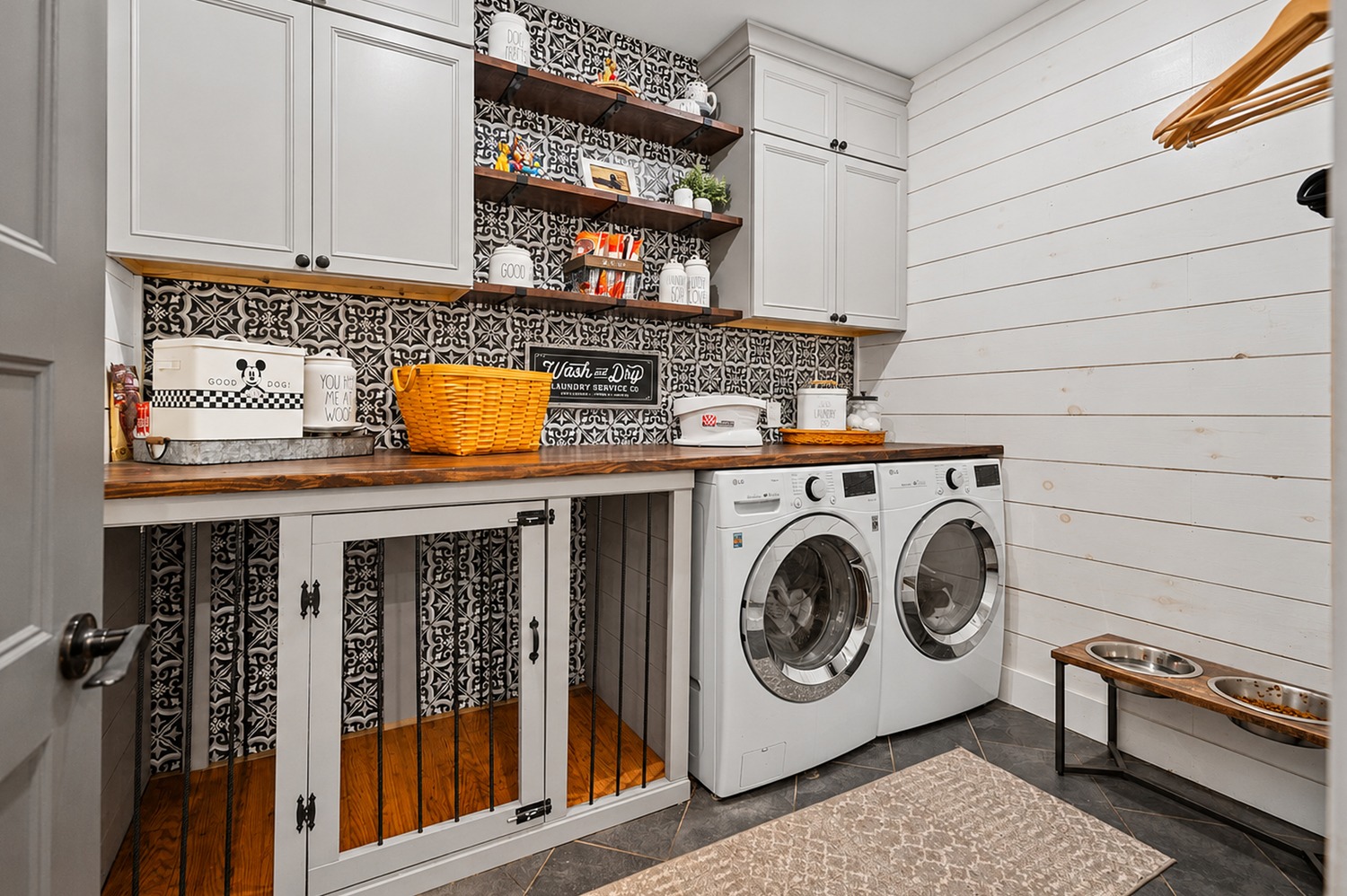
A laundry room can feel warm and lively without looking busy. Pair bold patterned tile with simple white shiplap, and each surface gets room to shine. The key is to give each material its own space and tie them together with a calm color palette.
1. Choose one feature wall for the tile
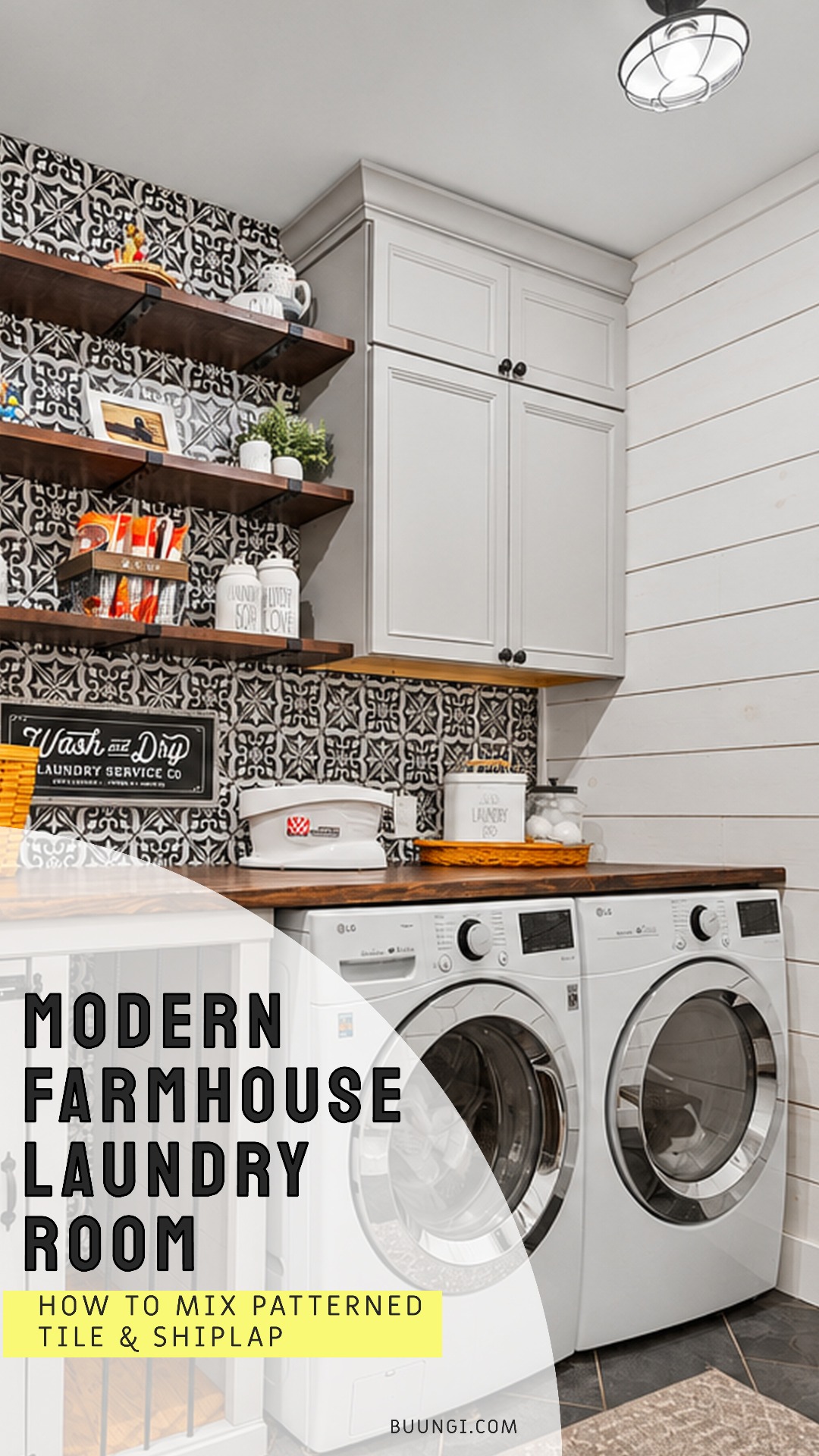
Patterned tile draws the eye. In this room, it creates a strong backdrop behind the counter, cabinets, and open shelves. That placement makes the work area feel special and helps protect the wall from splashes.
Choose a pattern that suits the size of your room. A large pattern can feel bold and open. A small pattern can add detail without taking over. Black-and-white tile is a classic choice because it pairs well with white shiplap and warm wood.
Cues list:
- Place tile behind the counter or sink.
- Pick a pattern that looks clear from across the room.
- Use black and white for a crisp farmhouse look.
- Keep nearby decor simple so the tile can stand out.
2. Use shiplap on a separate wall
Shiplap adds texture, but it has a quiet look. Install it on a wall beside the tile, as shown here. This gives the room two distinct finishes without making the walls compete.
Paint the boards white, warm cream, or a soft gray. White keeps the room bright and lets the tile supply the contrast. A warmer shade can soften a room with cool gray floors or stainless steel machines.
Cues list:
- Put shiplap on a wall beside the tile feature.
- Choose a light paint color to keep the room open.
- Use level, even boards for a neat finish.
- Let the tile and shiplap meet at a clear corner or trim line.
3. Keep the color palette simple
Two wall finishes can look busy if they bring in too many colors. Limit the main palette to a few tones. White shiplap, black-and-white tile, and natural wood make a balanced mix.
Then add small touches of color with baskets, jars, or plants. The orange basket in this room adds warmth. A wood counter and shelves bring in another natural note. These accents soften the strong black pattern.
Cues list:
- Choose two or three main colors.
- Repeat one color in the tile, hardware, or decor.
- Add warmth with wood, wicker, or a small accent color.
- Avoid adding several bold patterns in the same view.
4. Add a clean edge where materials meet
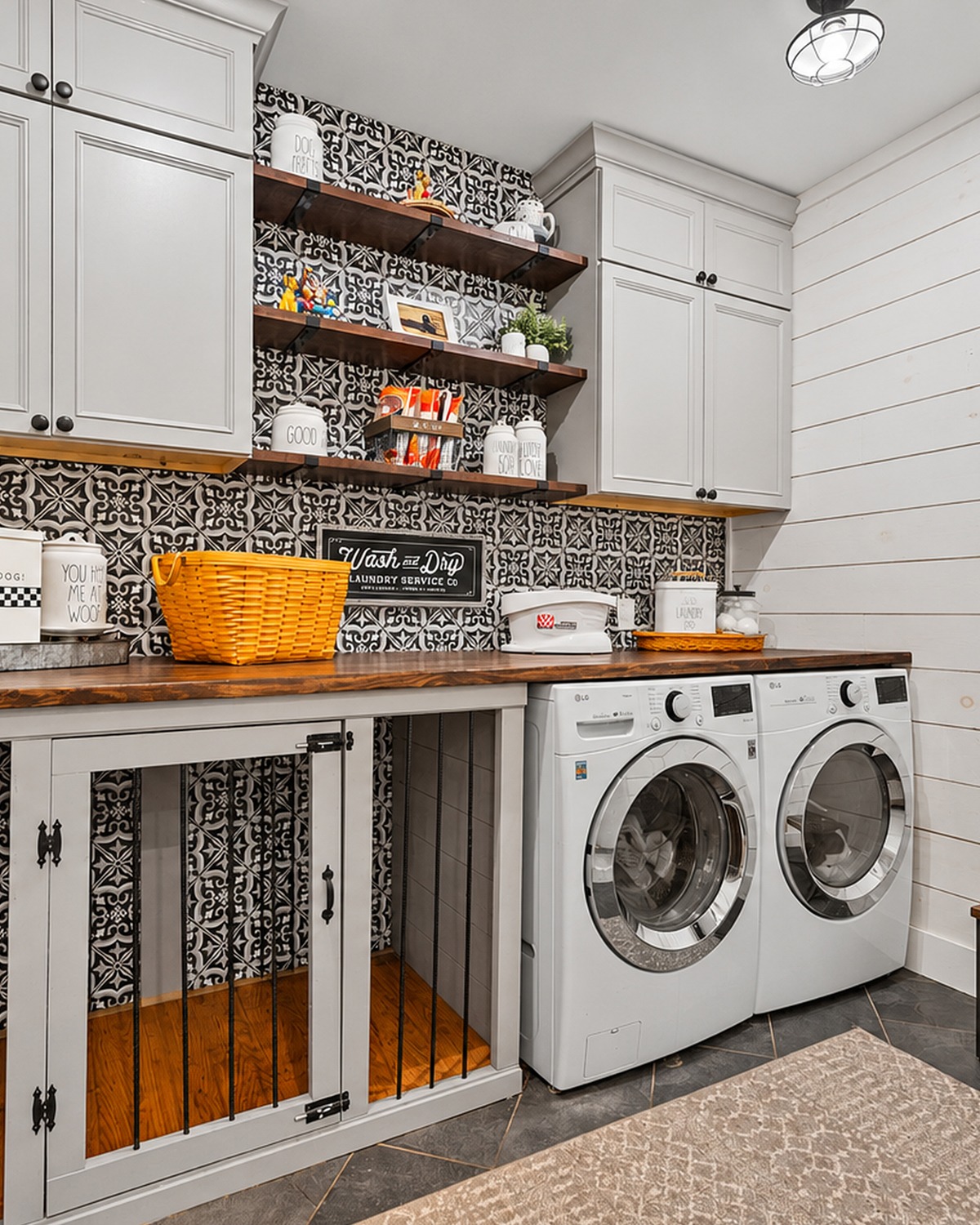
Tile and shiplap have different shapes and depths. A neat transition helps the mix look planned. Use a slim trim piece or a clean corner edge where the two surfaces meet. Match the trim to the wall, cabinets, or tile grout.
At the counter, keep the tile edge straight and even. If you use a patterned tile behind shelves, check that the pattern still looks balanced around the shelves and cabinets.
Cues list:
- Plan the tile and shiplap layout before installing either one.
- Use trim to finish exposed tile edges.
- Keep grout lines even and the shiplap gaps consistent.
- Check that cabinets and shelves do not cut off the pattern awkwardly.
5. Balance the pattern with plain surfaces
Patterned tile works best when the rest of the room gives the eye a place to rest. White cabinets do that well. So do a plain counter, simple flooring, and uncluttered shiplap.
Open shelves can show useful items and a few favorite pieces. Keep some empty space between them. Too many jars, signs, and baskets can make the patterned wall feel crowded.
Cues list:
- Pair patterned tile with plain cabinets and counters.
- Keep open shelves neat and lightly styled.
- Group small items in baskets or jars.
- Leave some wall and shelf space clear.
6. Choose finishes that suit a laundry room
Laundry rooms need surfaces that can handle daily use. Use tile in areas that may get wet or dirty. Choose paint and wall materials that suit the room’s moisture level. If the room has poor airflow, add ventilation and wipe up splashes as they happen.
For shiplap near a sink or utility area, use a durable finish and protect the wall from direct water. Follow the product maker’s care and installation advice, especially if you use real wood.
Cues list:
- Use tile where splashes are likely.
- Choose a durable, washable paint for shiplap.
- Keep water from sitting on wood boards.
- Make sure the room has good airflow.
7. Finish with warm farmhouse details
Once the walls are set, add a few details that make the room feel welcoming. Wood shelves and a wood counter add warmth. Black cabinet pulls echo the dark tile. Wicker baskets soften the hard surfaces and hold small supplies.
A simple ceiling light and a washable rug can finish the room without adding more patterns. Keep decor useful as well as attractive. A laundry room feels best when its design supports the work done there.
Cues list:
- Repeat black accents in the hardware or light fixture.
- Add wood shelves or a warm wood counter.
- Use baskets to store supplies and reduce visual clutter.
- Choose a rug that is easy to clean.
The finished look
Patterned tile brings energy to the work area. Shiplap adds a calm layer of texture. Together, they create a farmhouse laundry room that feels bright, useful, and full of character. Keep the colors simple, place each finish on its own wall, and use plain surfaces to balance the pattern.