A front porch can change the whole feel of a home. It can frame the front door, soften a large facade, and give you a sunny place to sit. These 18 modern farmhouse porches show how wood, white siding, dark trim, and thoughtful details can work together. Use the ideas that fit your home, your yard, and the way you like to spend time outside
1. A Timber Gable Makes a Warm First Impression
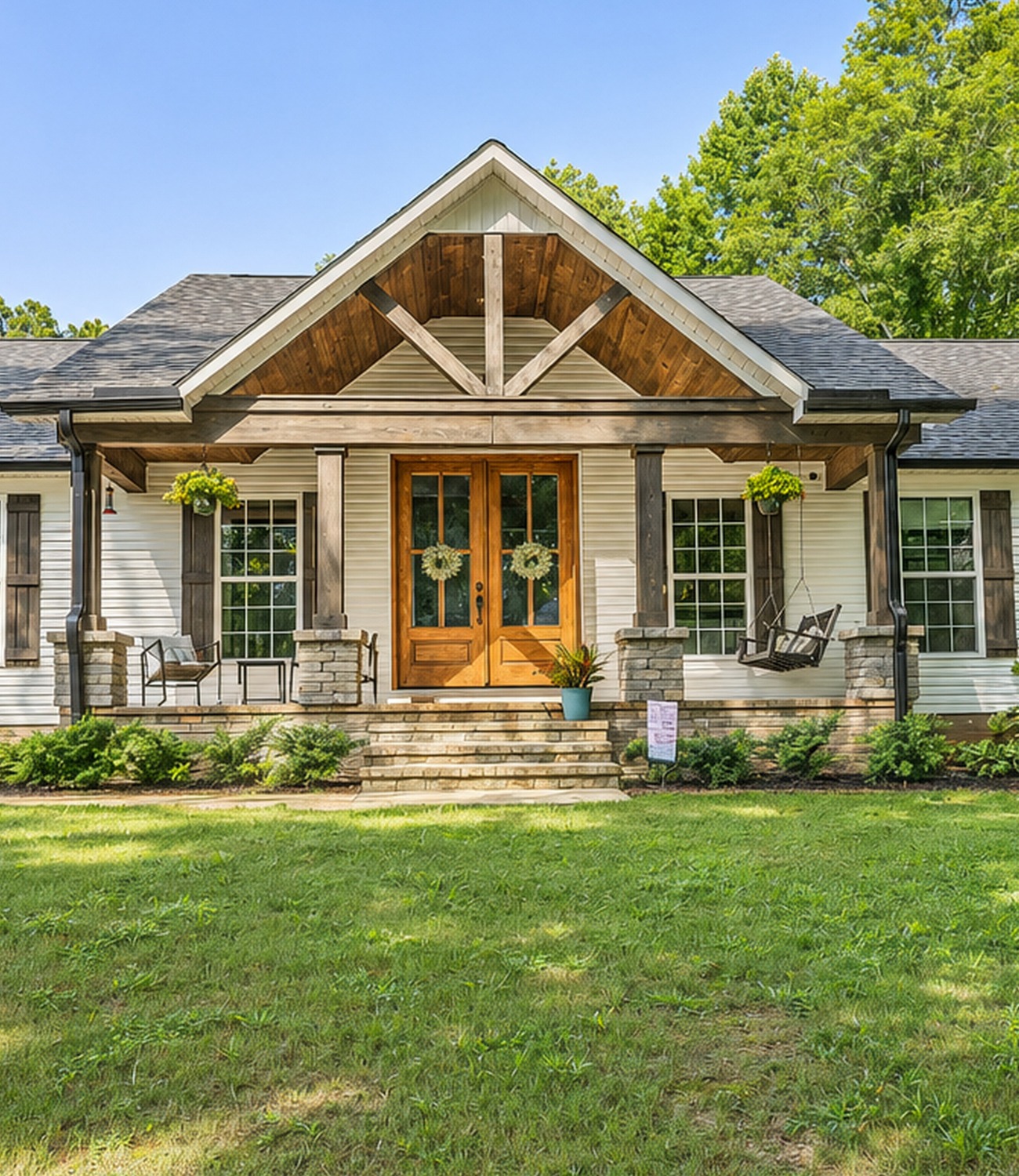
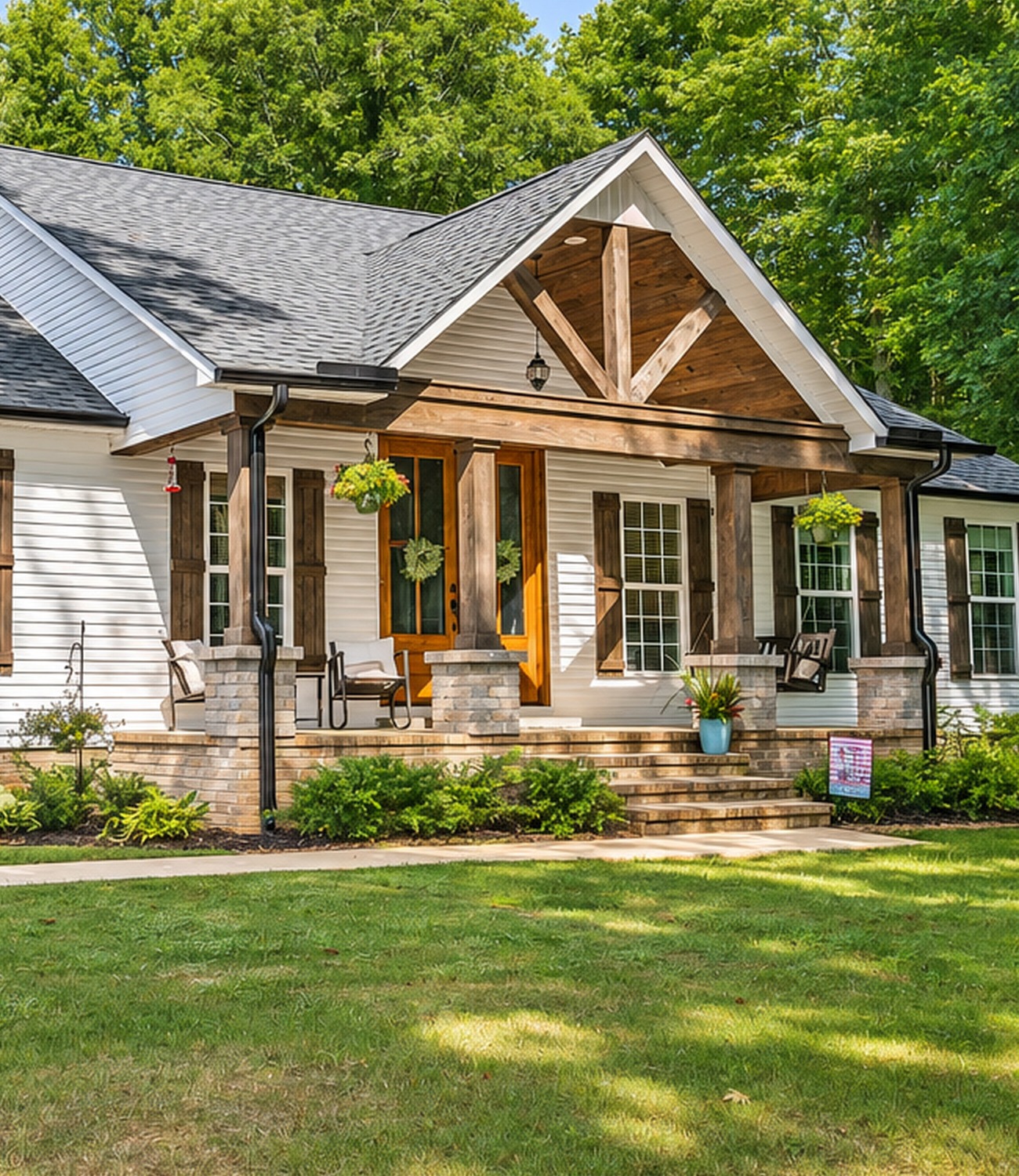
A large wood entry door sits at the center of this welcoming porch. Stone piers support sturdy columns, and a timber gable draws the eye up to the roof. That wood detail adds warmth to the light siding and gray shingles. It also gives the entrance a clear focal point.
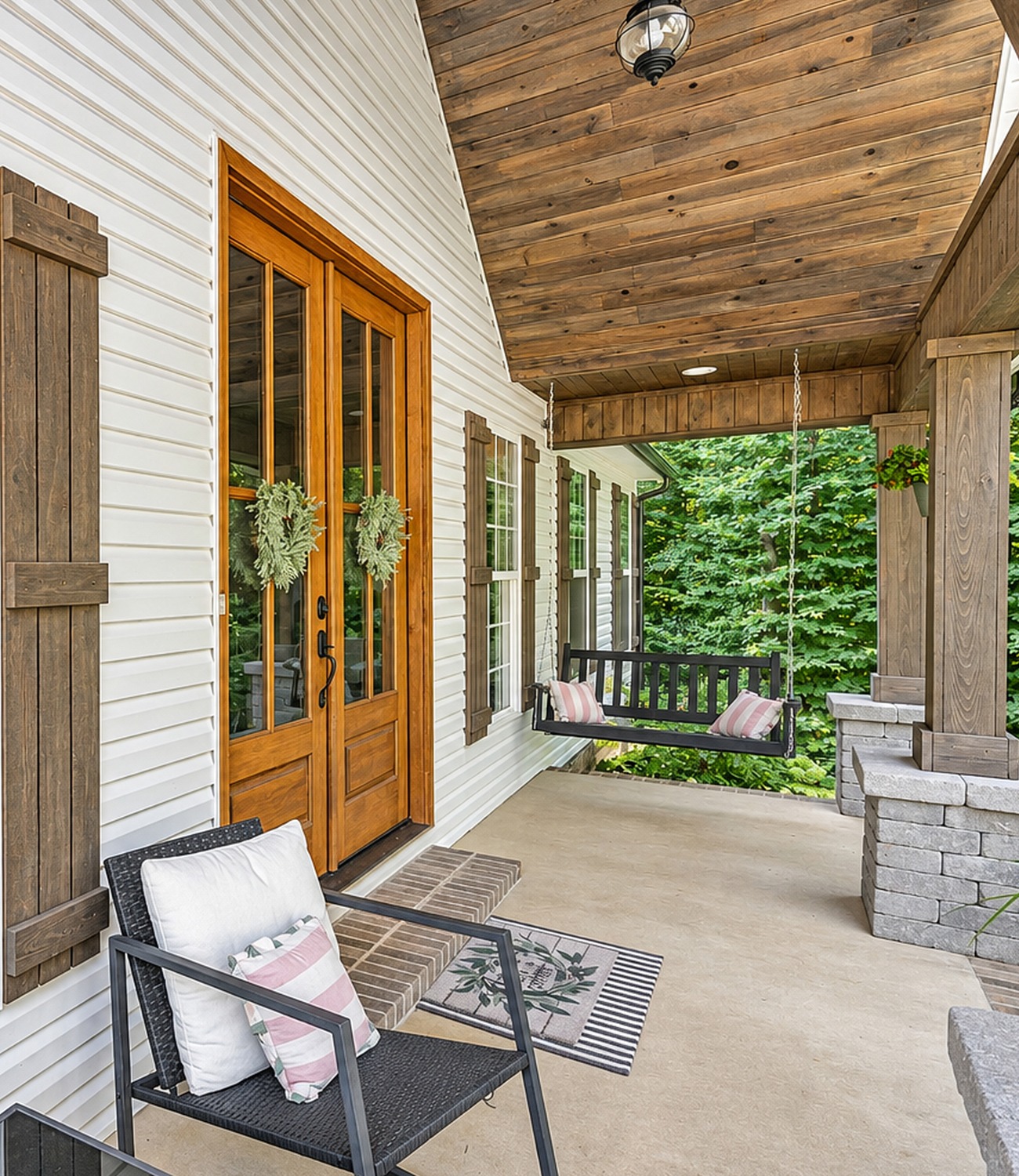
The porch has room for chairs on both sides of the door. Hanging baskets and small pots add color without crowding the steps. The front lawn and trees frame the house, while low garden beds soften the edges of the porch. A few strong materials make the wide house feel balanced and inviting.
Design cues
- Use a timber gable to mark the main entry.
- Pair wood columns with stone bases for texture.
- Choose a front door with a warm natural finish.
- Place chairs and planters beside the door, leaving a clear path.
2. Bright White Siding Meets Brick and Wood
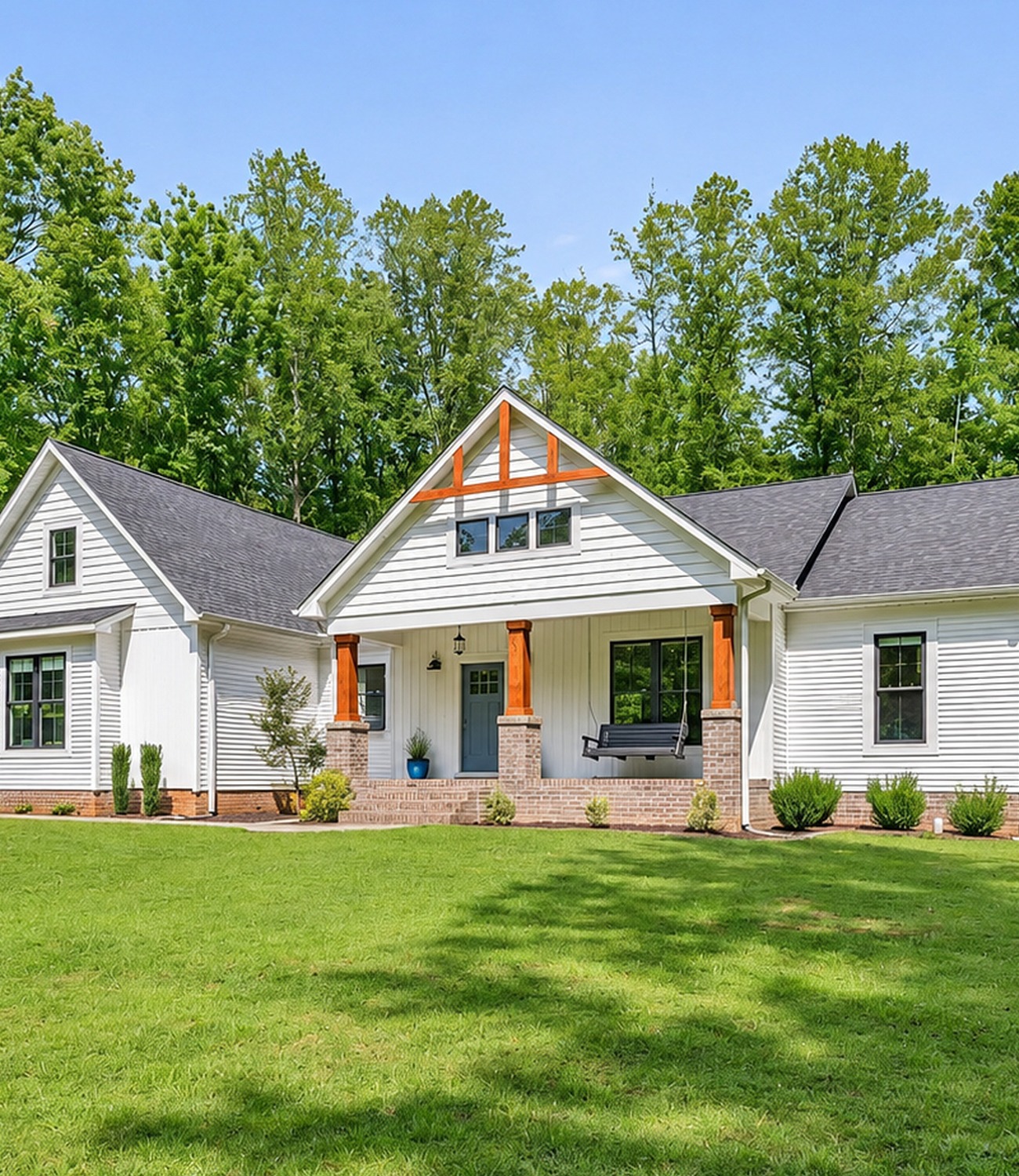
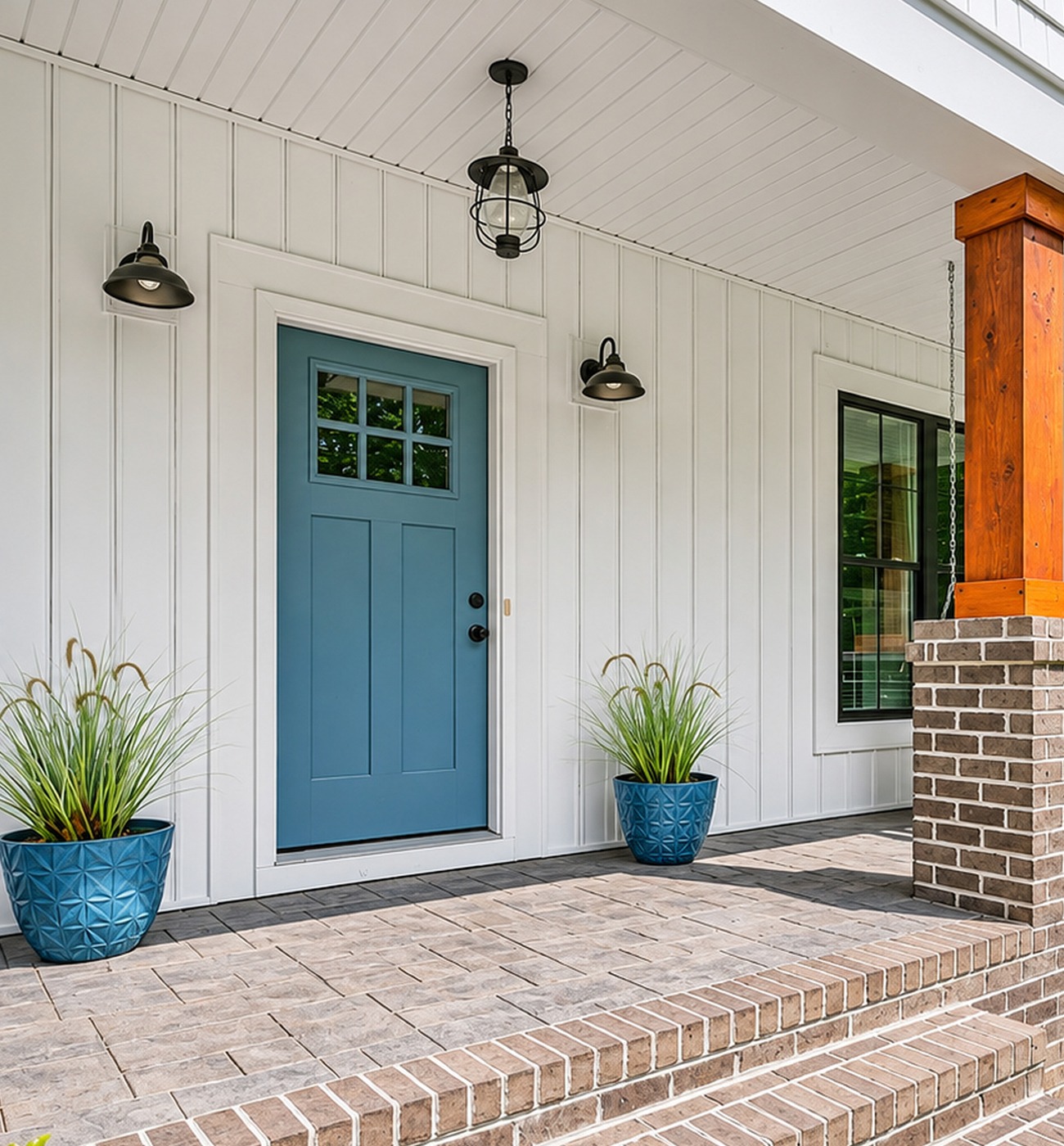
White siding keeps this home light and crisp. Brick wraps the lower porch wall, adding color and a solid base. Bright wood trim highlights the peaks and porch posts. These warm accents stand out against the white exterior without taking over.
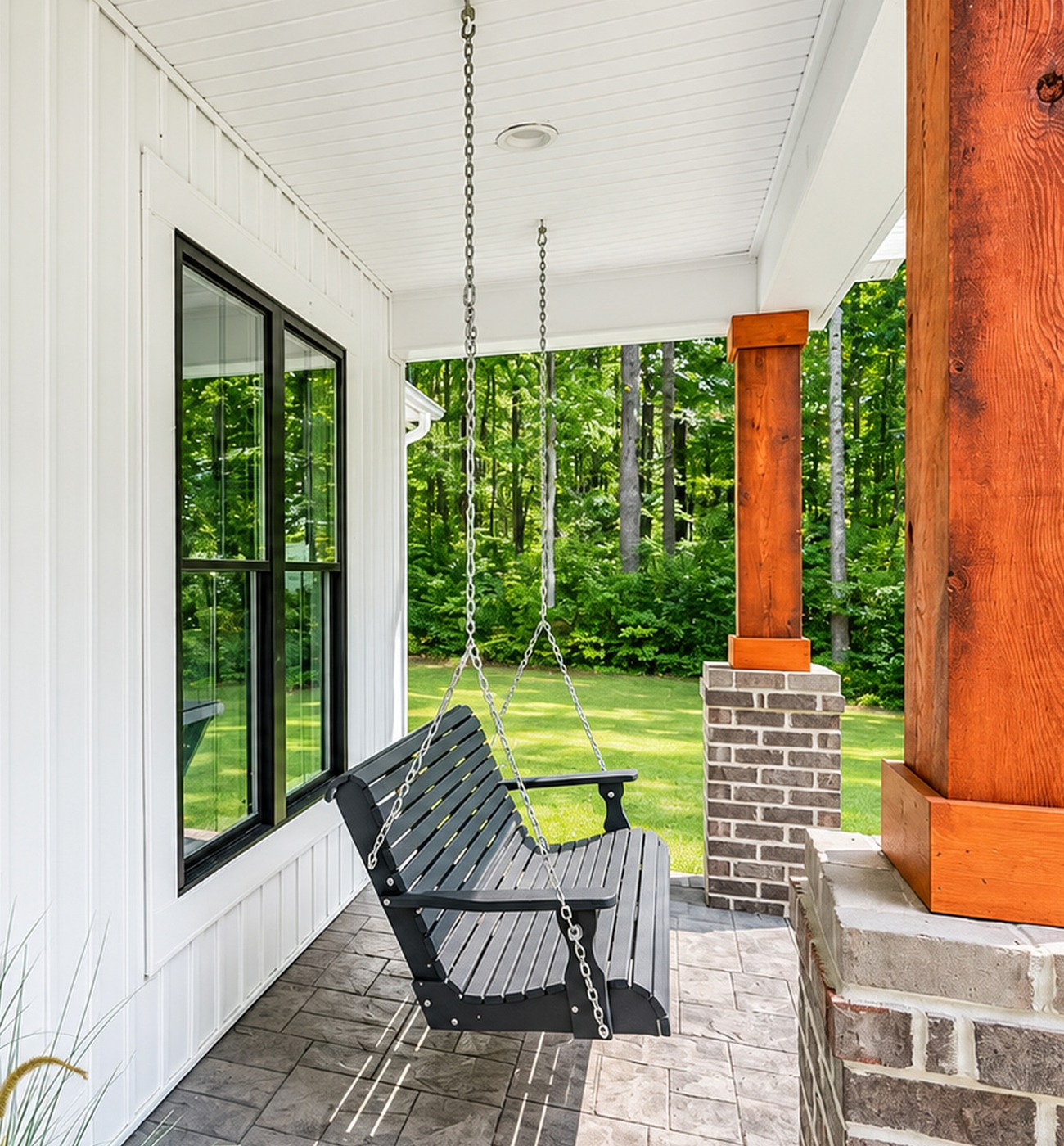
A porch swing creates a relaxed seat beside the front door. The simple porch roof shelters the entry, while the steep rooflines give the house height and shape. Small shrubs connect the brick base to the lawn. A blue door and a few pots add gentle color. The result feels cheerful and lived-in, with a mix of classic and new details.
Design cues
- Mix white siding, brick, and natural wood.
- Add a porch swing for a relaxed seating spot.
- Use a colored front door as a small accent.
- Plant compact shrubs along the brick base.
3. A Simple Porch With Black Details
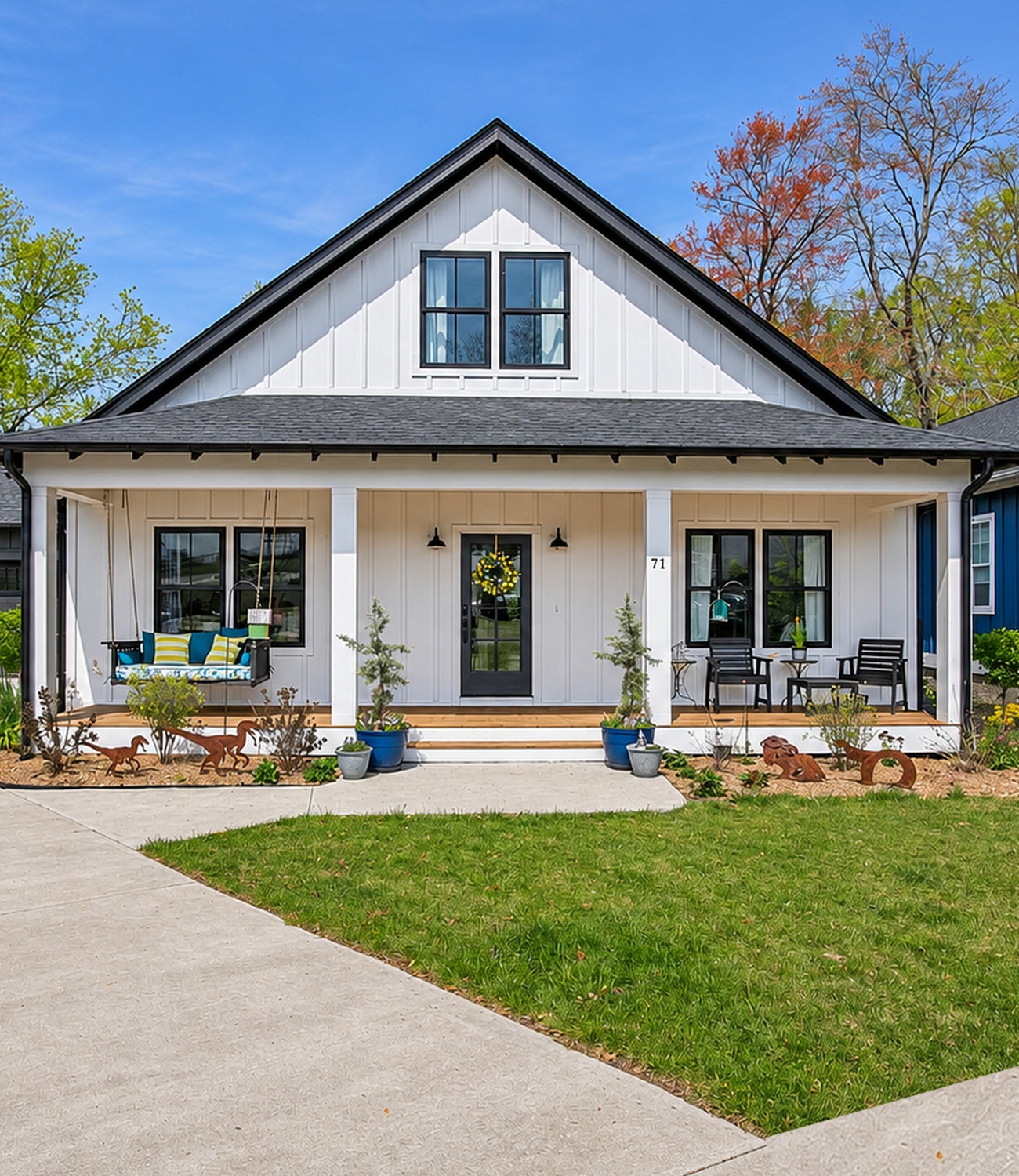
This porch keeps the look clean and easy to read. White siding covers the front gable. Black roof trim, window frames, and porch lights create a sharp outline. The centered door sits under a deep roof, so the entrance has shelter and shade.
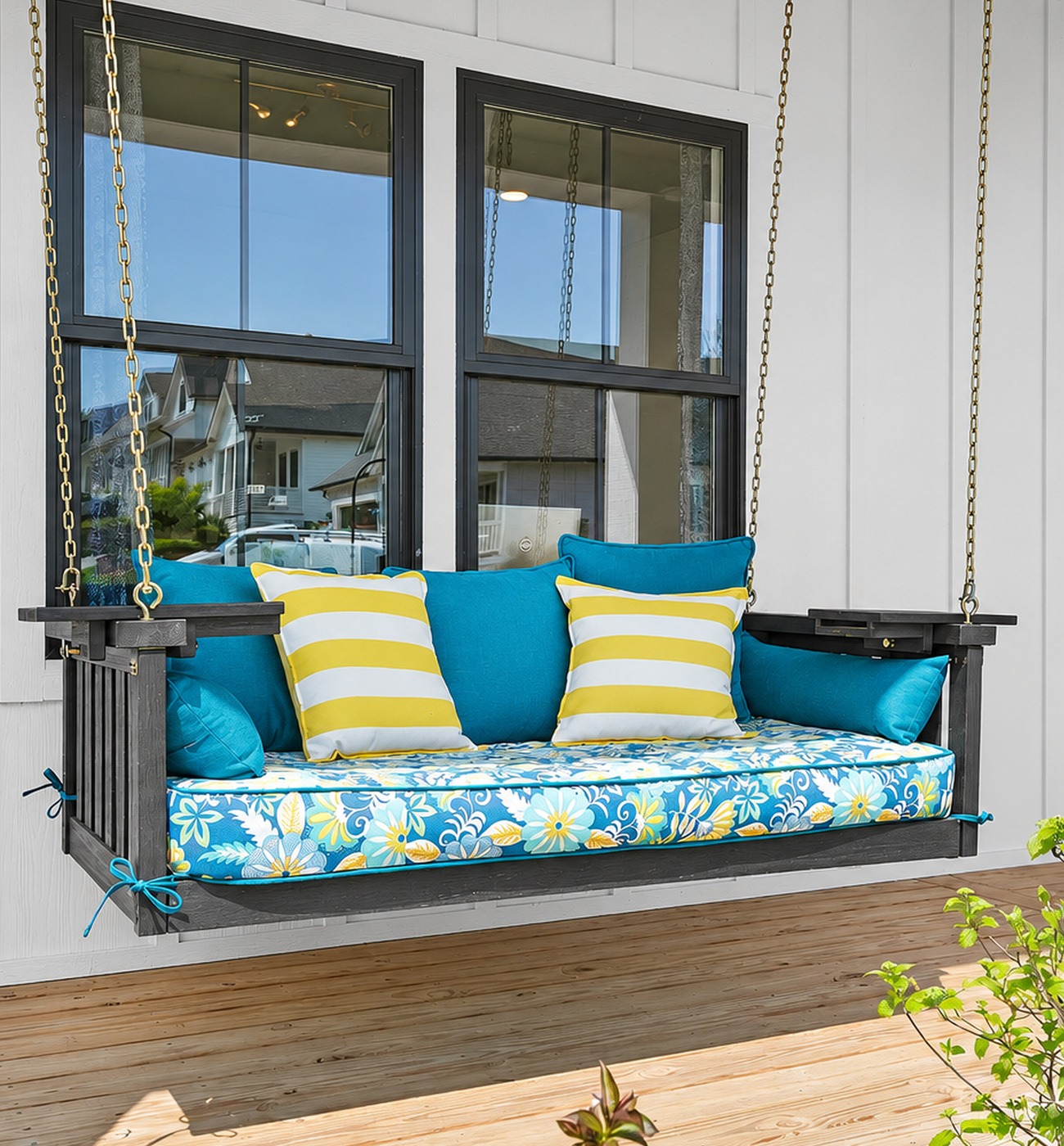
The long porch offers two small seating areas. A swing on one side adds a casual touch, while chairs and a table on the other side make room for conversation. Potted plants soften the hard lines. The contrast between white, black, and wood gives the front strong shape without a lot of extra decor.
Design cues
- Use black trim to define windows and roof edges.
- Keep the porch floor and walls light.
- Set up separate seating spots on a long porch.
- Add a few potted plants for a softer look.
4. A Long Porch With Rustic Wood Posts
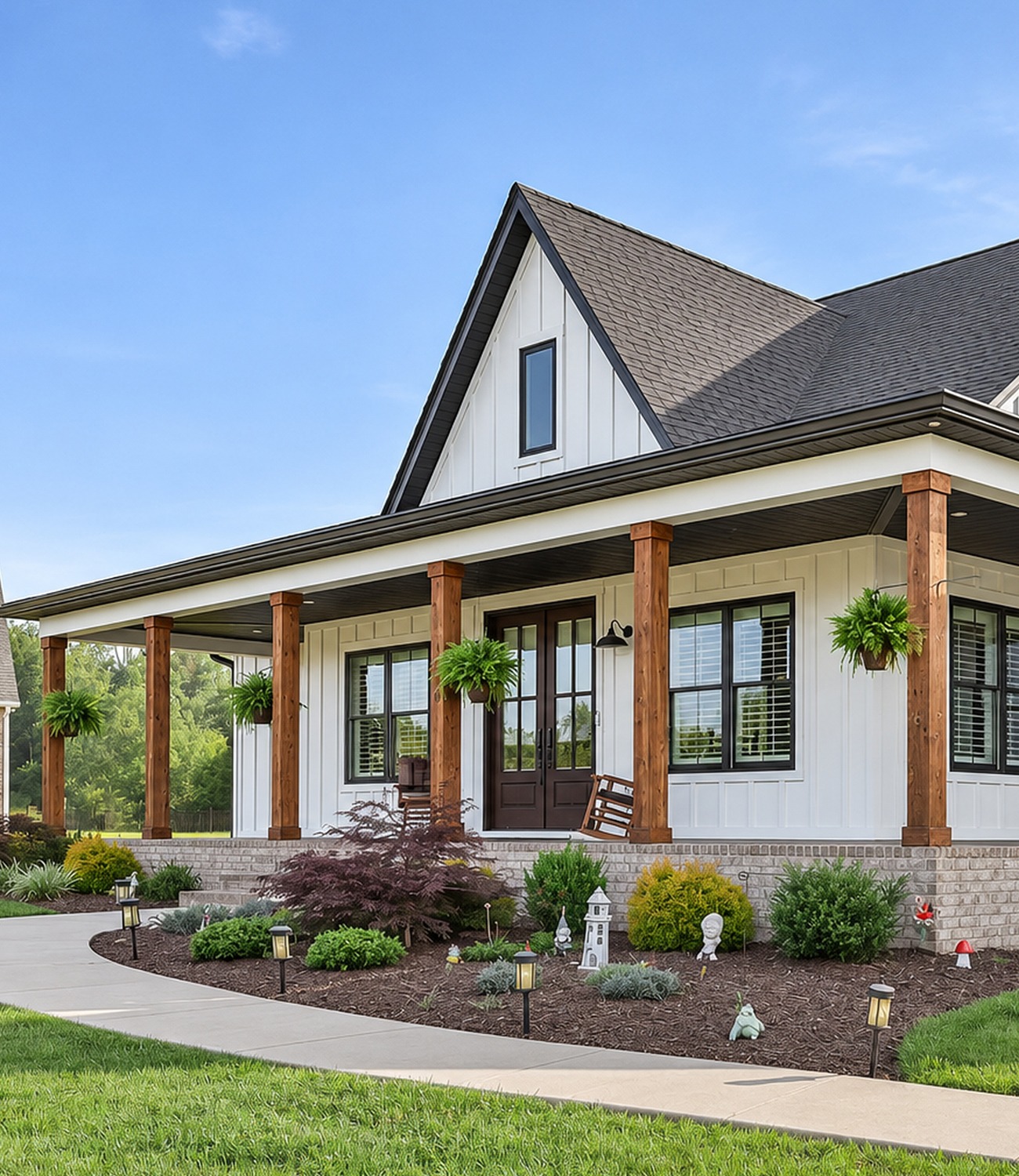
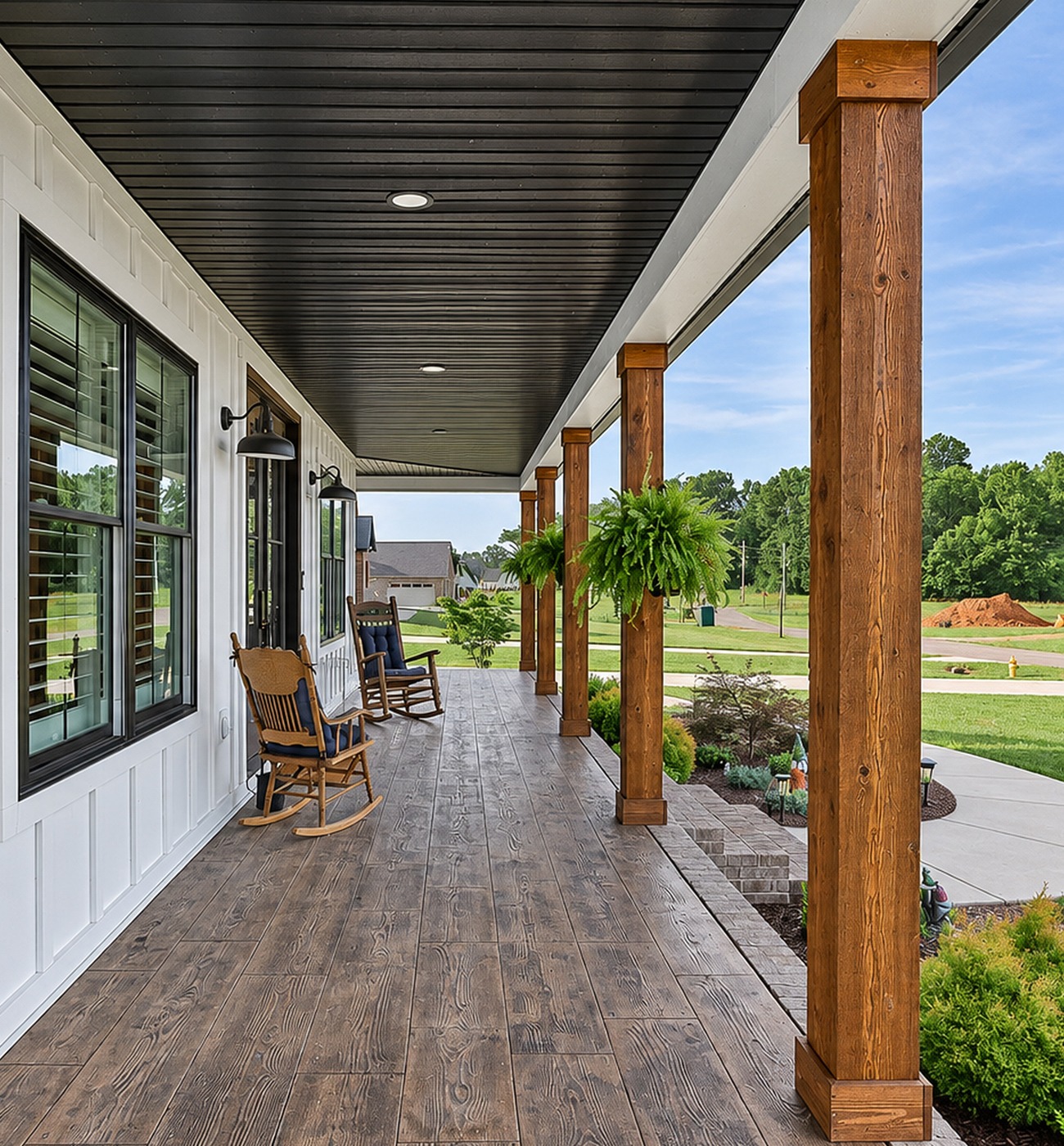
This wide porch runs across much of the front of the house. Tall wood posts give it a strong rhythm and bring a natural color to the white siding. The brick base grounds the porch and gives the house a sturdy, settled look. A dark roof adds contrast and ties the porch to the windows.
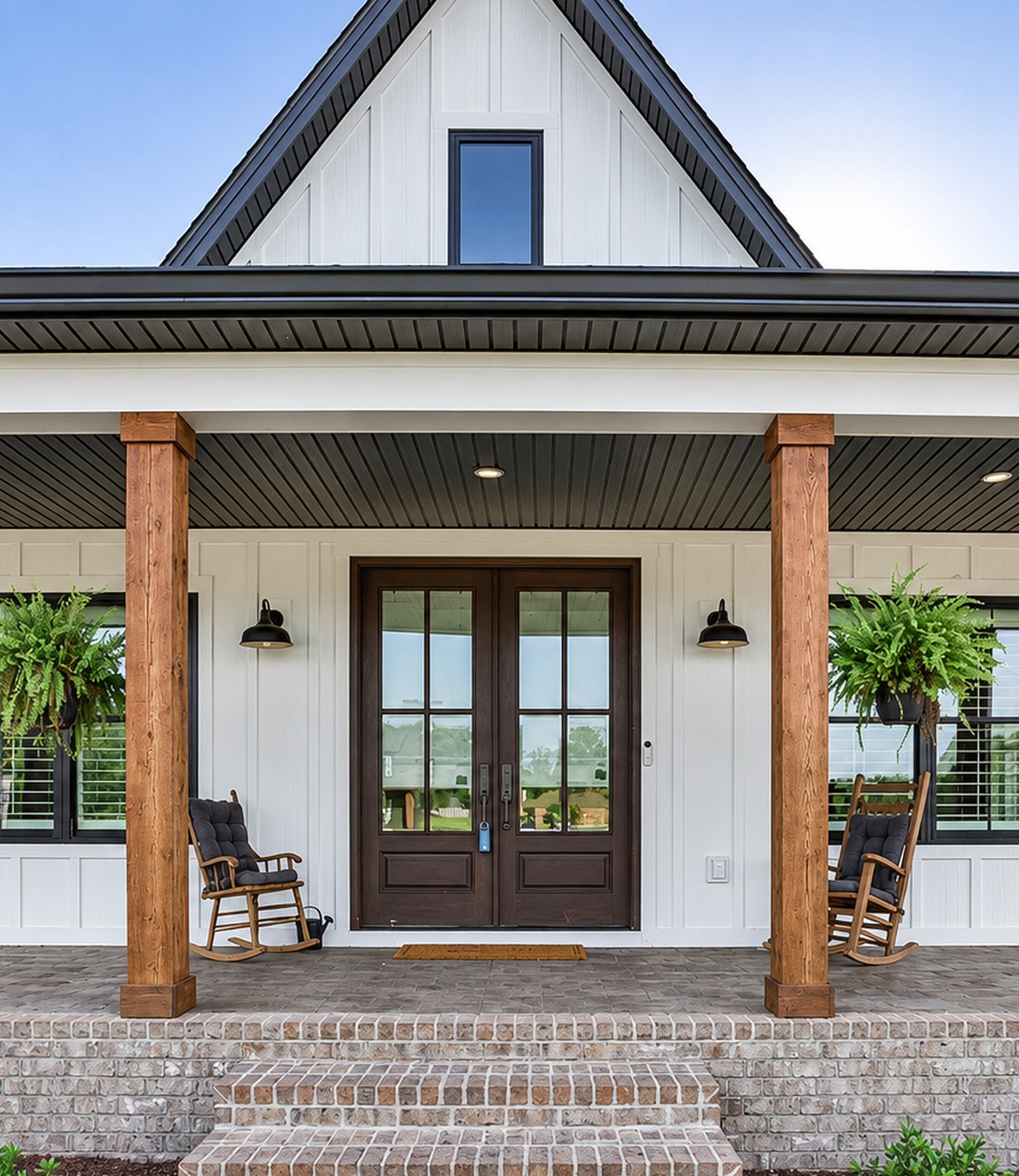
The porch is deep enough to hold chairs and still leave room to walk. A curved walkway and neat garden beds guide visitors toward the entry. The shrubs vary in height, so the front does not look flat. This design shows how a large porch can feel calm when its materials and plants stay simple.
Design cues
- Repeat wood posts along the porch for a steady pattern.
- Use brick at the base to anchor the structure.
- Choose seating that leaves a wide walking path.
- Add a curved walk and layered shrubs to guide the eye.
5. A Small Porch With Classic Rocking Chairs
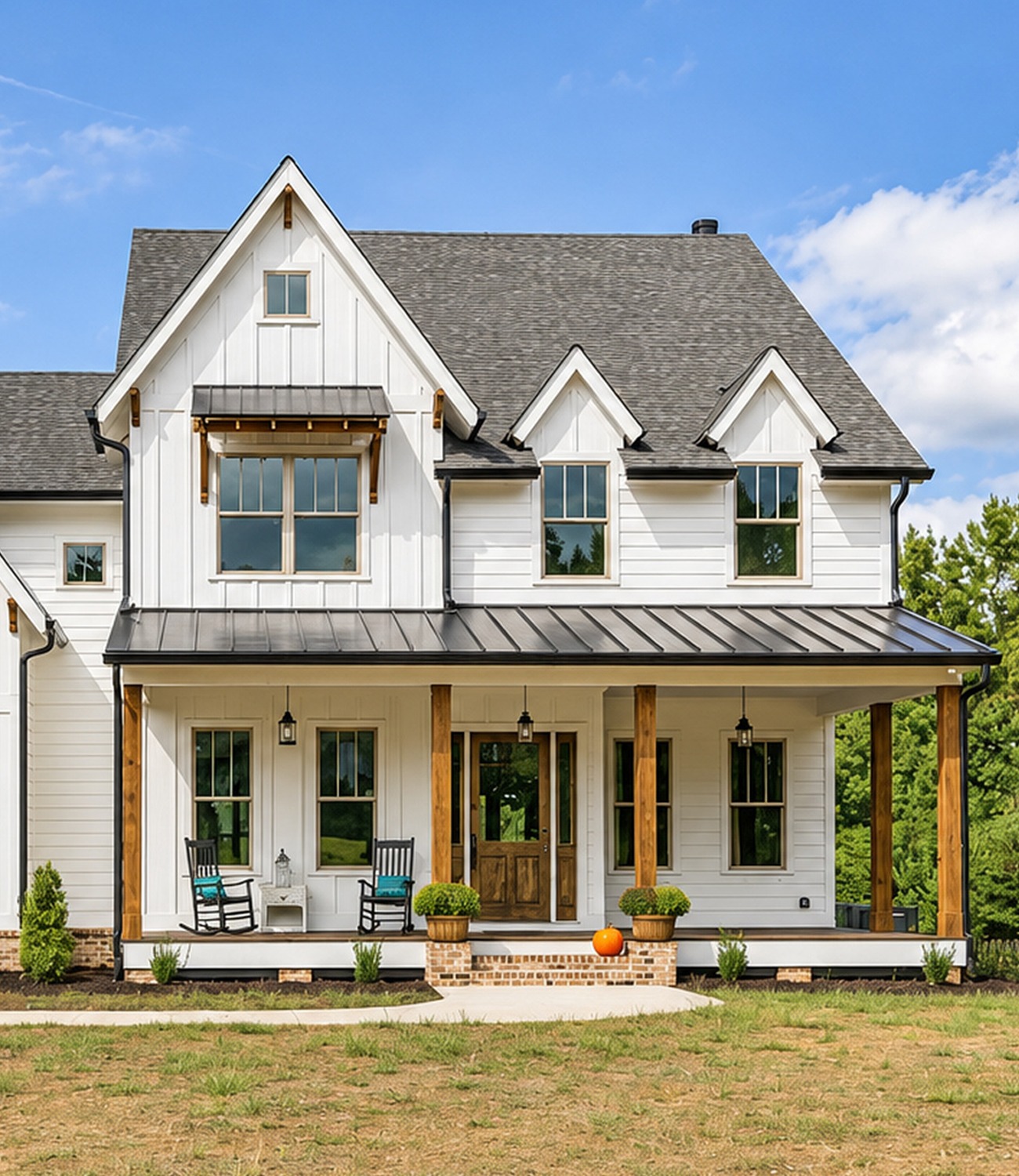
A smaller porch can still feel special. Wood posts warm the white exterior, while a dark metal roof gives the entry a crisp edge. The porch sits beneath a simple roofline, so it feels connected to the rest of the two-story home. Two rocking chairs make the space feel ready for a quiet break.
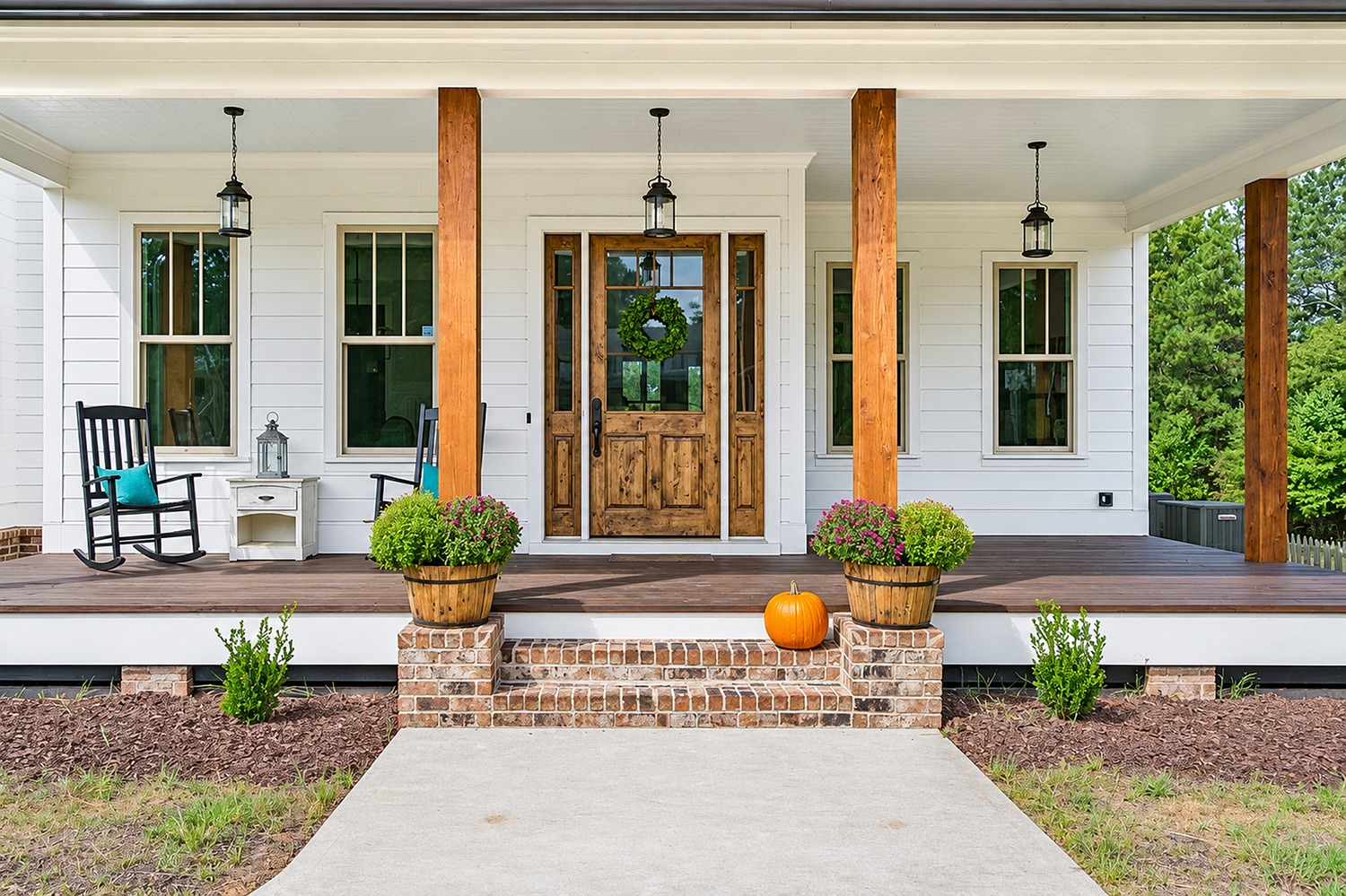
Brick steps add color and help the entry stand out from the lawn. A pair of planters brings a little green near the door. There is enough room to sit, greet a guest, or set down a bag, but the furniture does not crowd the entry.
Design cues
- Choose two chairs that fit the porch depth.
- Add a dark metal roof for a clean contrast.
- Use brick at the steps or porch base for warmth.
- Keep pots near the door, not in the main walkway.
6. A Raised Porch That Fits a Sloped Yard
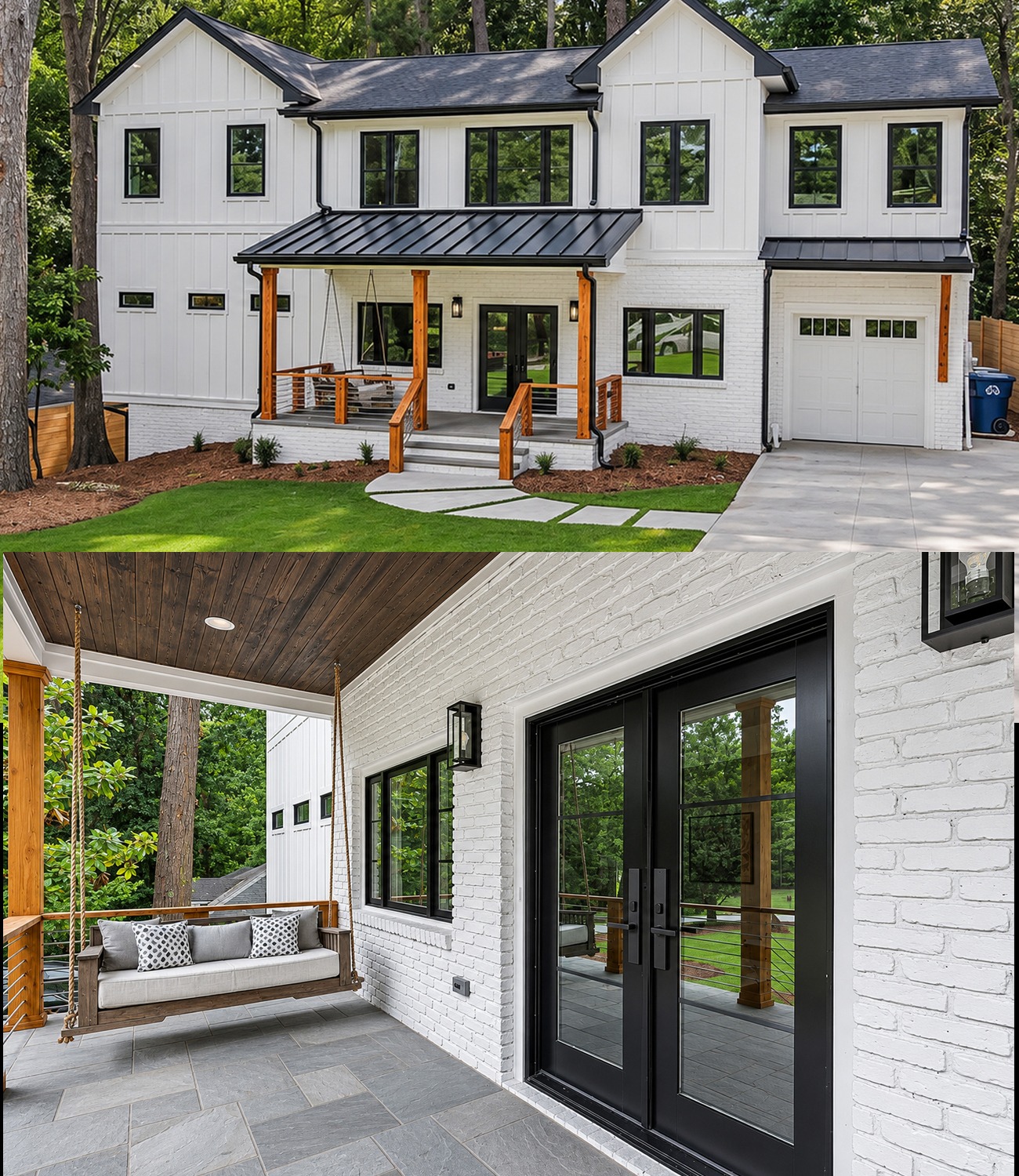
This home sits on a slope, and the raised porch helps it meet the yard with ease. A broad set of stairs leads to the entry. Wood railings and posts make the porch feel warm, while brick on the lower walls links it to the main house. The mix of materials helps the raised front feel planned and grounded.
The porch has room for seating near the door. A simple roof gives shelter without hiding the tall windows. The lawn, steps, and porch form a clear path to the home. For a sloped lot, a raised porch can make the entry easier to reach and give the front facade a strong center.
Design cues
- Use wide steps to connect a raised porch to the yard.
- Match the porch base to the home’s brick or stone.
- Add railings for a clear and safe edge.
- Keep furniture close to the wall to preserve floor space.
7. A Long Porch With Natural Wood Accents
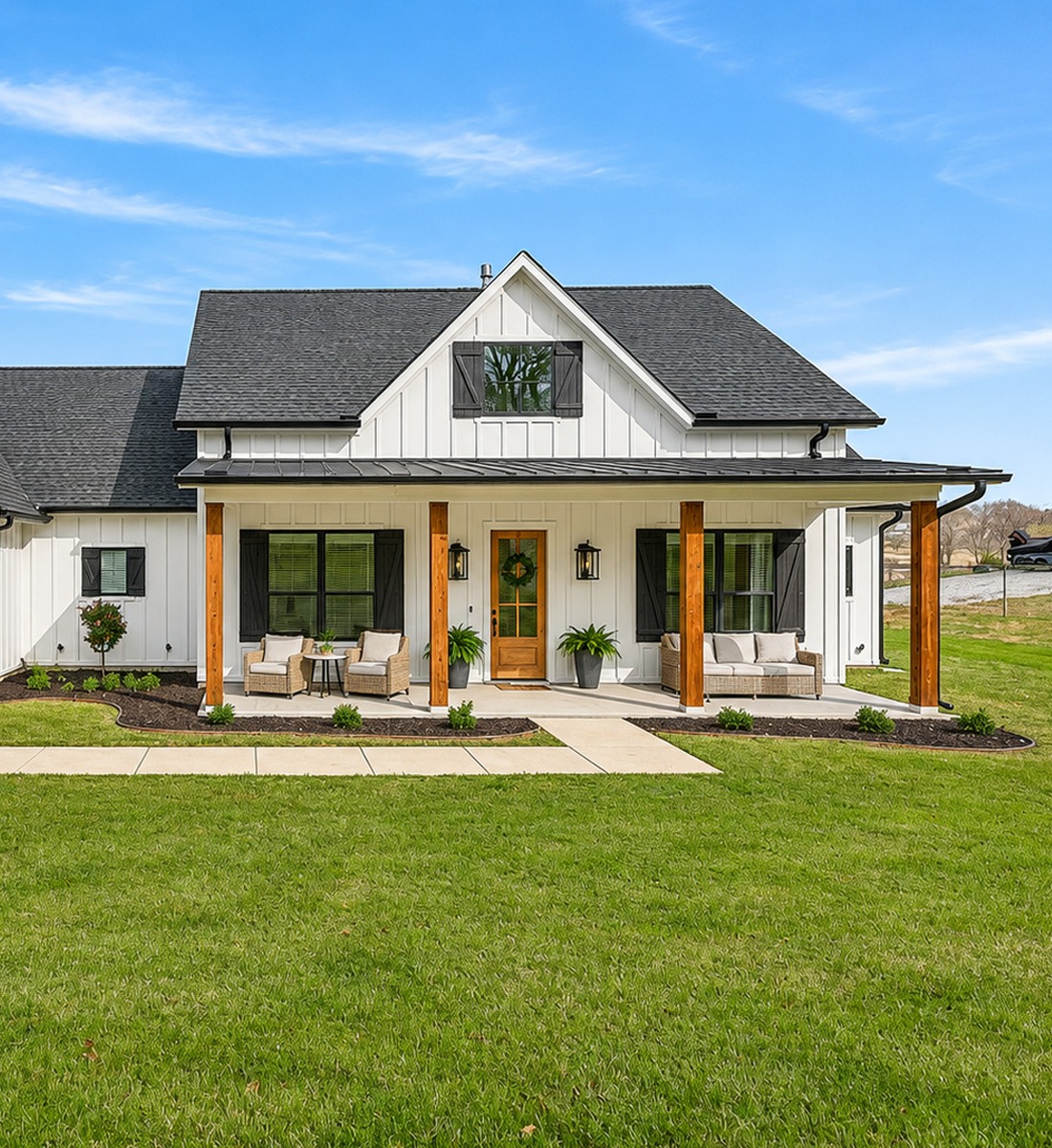
This single-story home uses a long porch to tie several parts of the facade together. Natural wood posts stand out against the white siding. A warm yellow door adds a soft burst of color, while the gray roof and dark window frames keep the palette grounded.
The porch has two seating areas. One sits near the door, and another rests under the wider roof section. That layout makes the long space feel useful instead of empty. Potted plants add height beside the posts and help link the porch to the garden beds. This design feels open and casual, with room for more than one small group.
Design cues
- Repeat natural wood posts across a long porch.
- Use a warm door color to add personality.
- Break a wide porch into two seating areas.
- Place planters near posts to soften the structure.
8. A Timber Gable Beside a Three-Car Garage
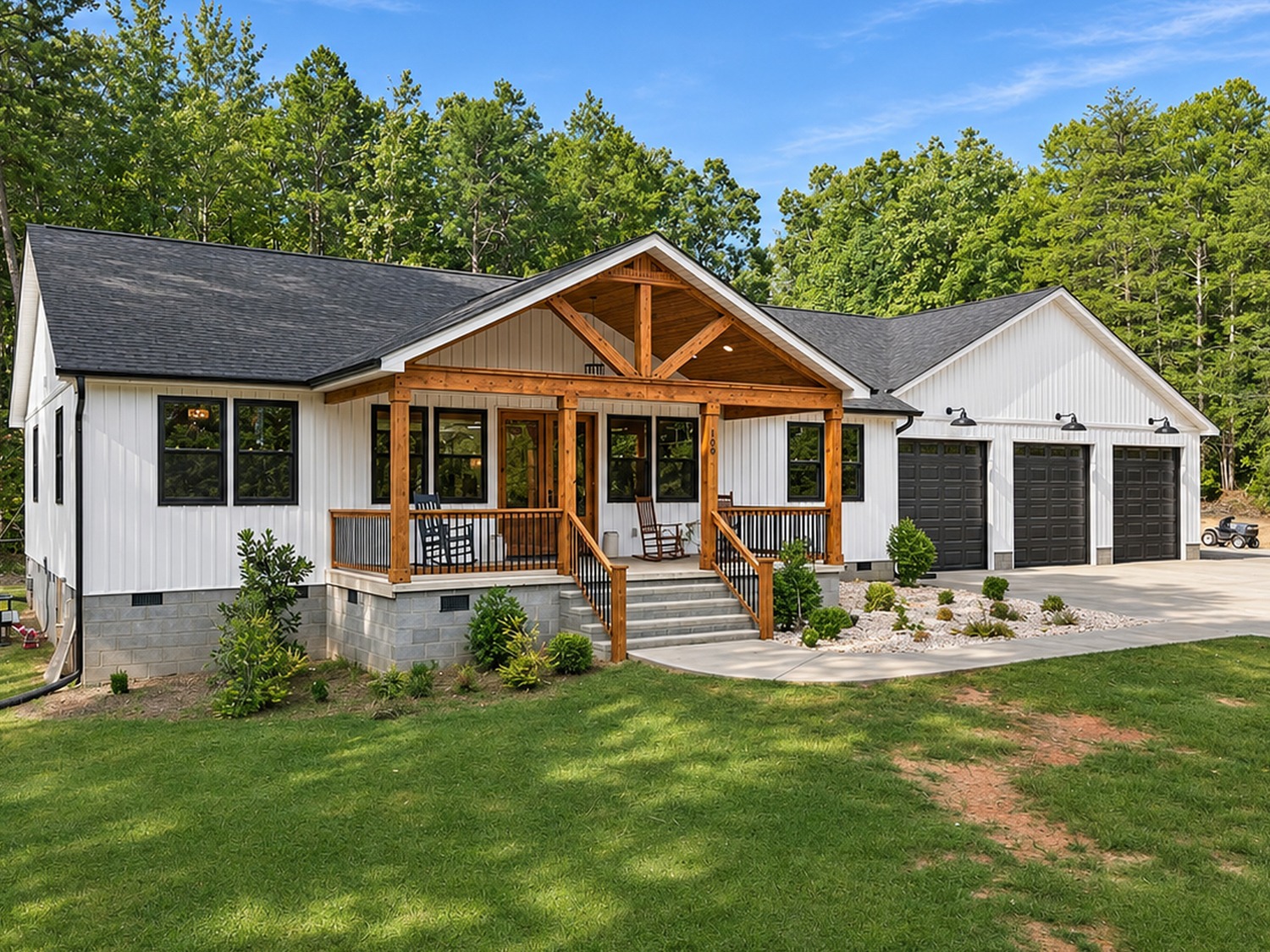
A bold timber gable gives this porch a strong focal point. Its exposed braces add a warm, rustic touch to the white siding and dark roof. The raised porch sits on a gray block base, which helps it feel grounded on the sloped lawn. A wide set of steps leads up to the front door.
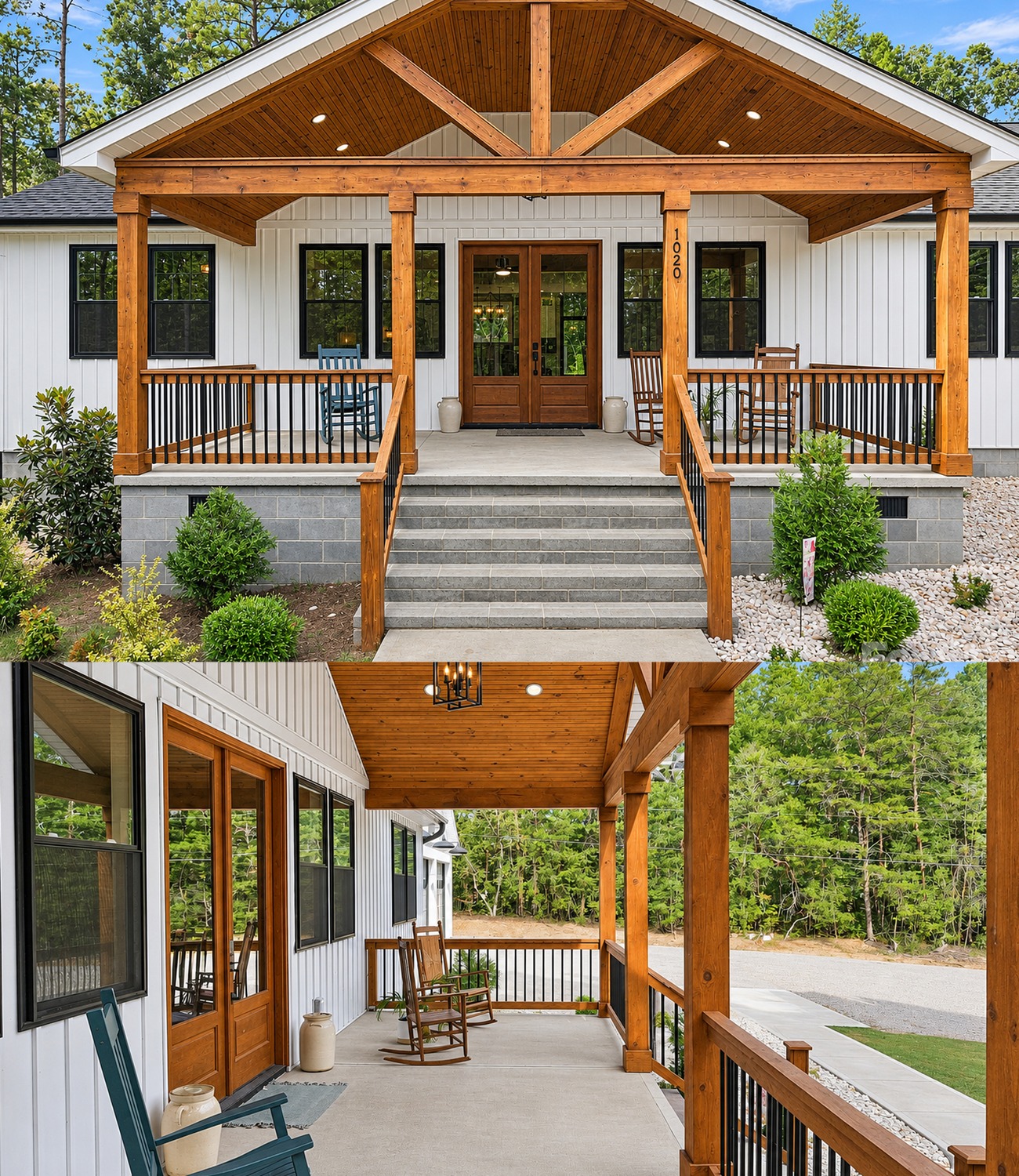
The three-car garage sits close to the entry, so the porch needs a clear design of its own. The wood frame does that well. Simple chairs and dark railings add function without competing with the beams. Pale gravel and a few low plants keep the area neat.
Design cues
- Frame the entry with a timber gable and exposed braces.
- Use a block or stone base to anchor a raised porch.
- Add wide steps for a clear route to the door.
- Keep porch decor simple when the beams make a strong statement.
9. A Straightforward Porch With Wide Center Steps
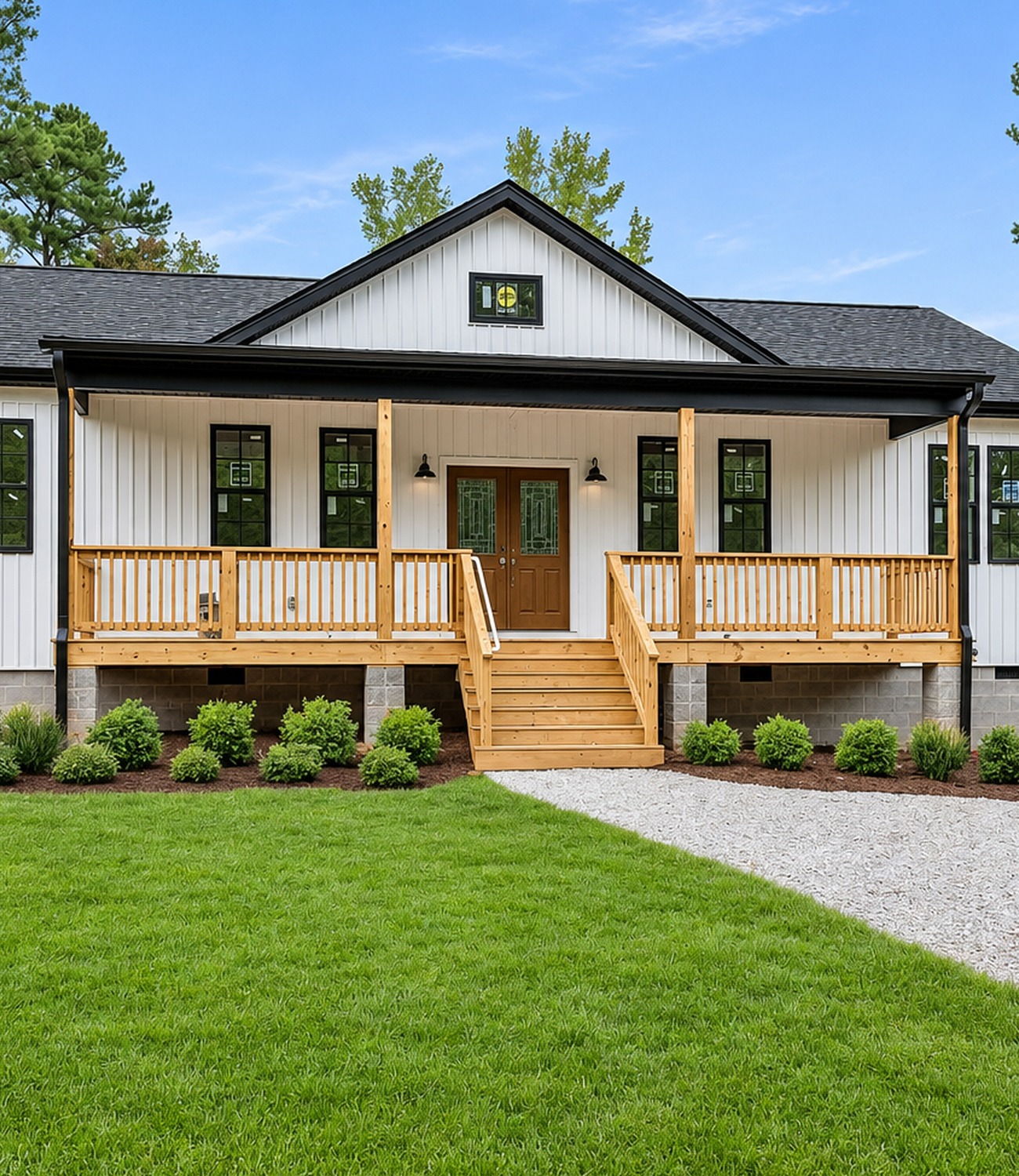
This porch has a simple, balanced layout. Wide steps lead to the centered front door, while light wood railings and posts bring warmth to the white siding. Black window trim and roof edges add a crisp outline. The shallow roof gives the entry shelter without hiding the windows.
Rounded shrubs line the base of the home and add a tidy green border. A pale gravel path meets the steps and stands out against the lawn. This design keeps the focus on the door and makes the porch easy to approach. It offers a useful model for a home that needs a welcoming entry without a deep outdoor seating area.
Design cues
- Center the stairs on the front door.
- Choose light wood railings to warm up white siding.
- Use black trim for contrast around windows and roof edges.
- Plant low shrubs that leave the porch base visible.
10. A Long Porch With Hanging Chairs
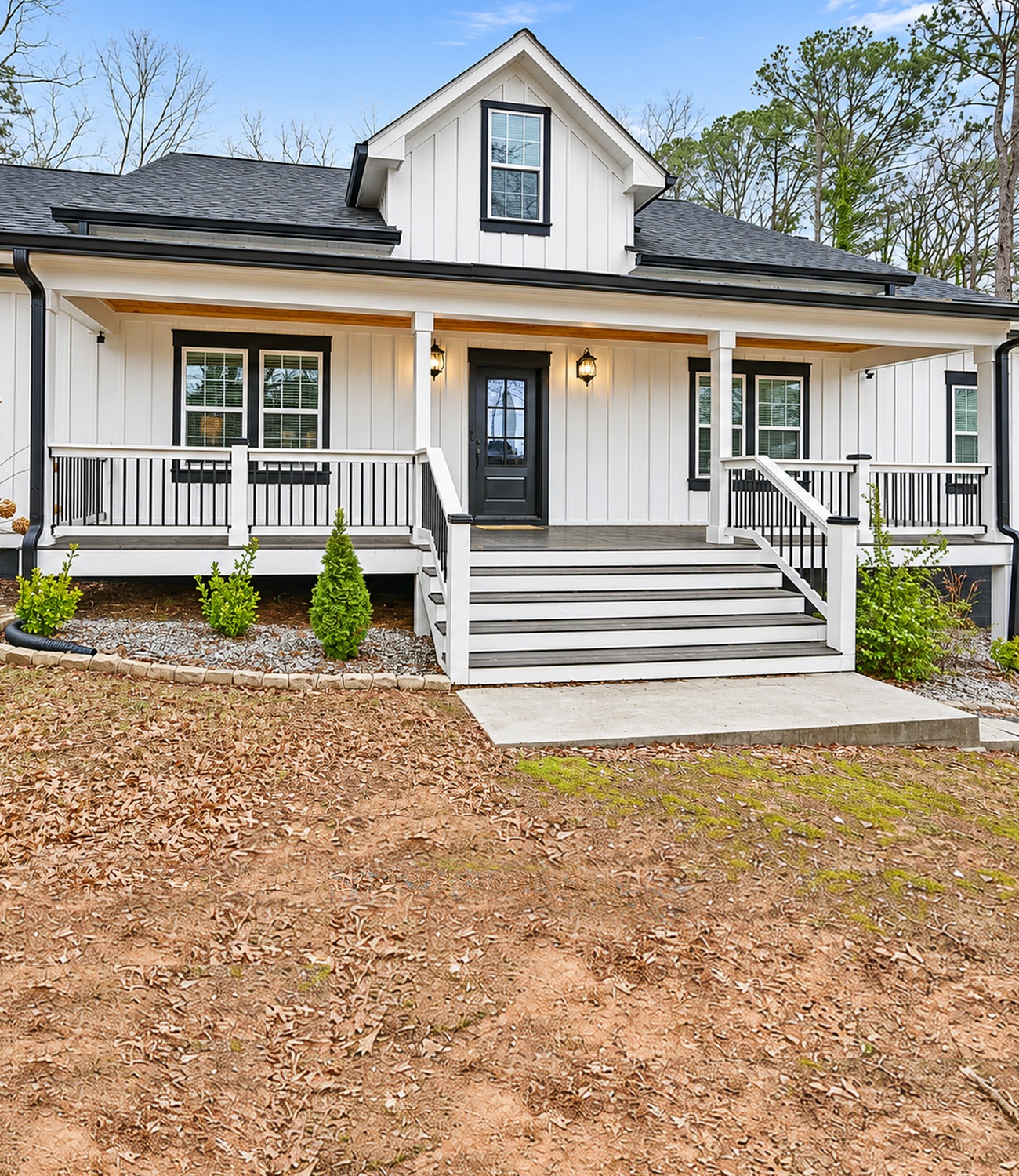
This long porch pairs pale wood posts with black metal railings. The dark details give the white house a clean, modern edge. Hanging chairs sit on both sides of the entry, creating cozy spots to relax while keeping the center path open.
The porch has room for plants along its edge, but the pots stay low and close to the walls. That leaves clear space by the steps and railings. If you add hanging chairs to your porch, check that the ceiling or beam can support them. Place each chair where it can swing without hitting a post or rail.
Design cues
- Mix light wood posts with black metal railings.
- Place hanging chairs on either side of the entry.
- Keep the steps and center path clear.
- Check that the porch structure can safely hold each chair.
11. A Full-Length Porch With Timber Posts
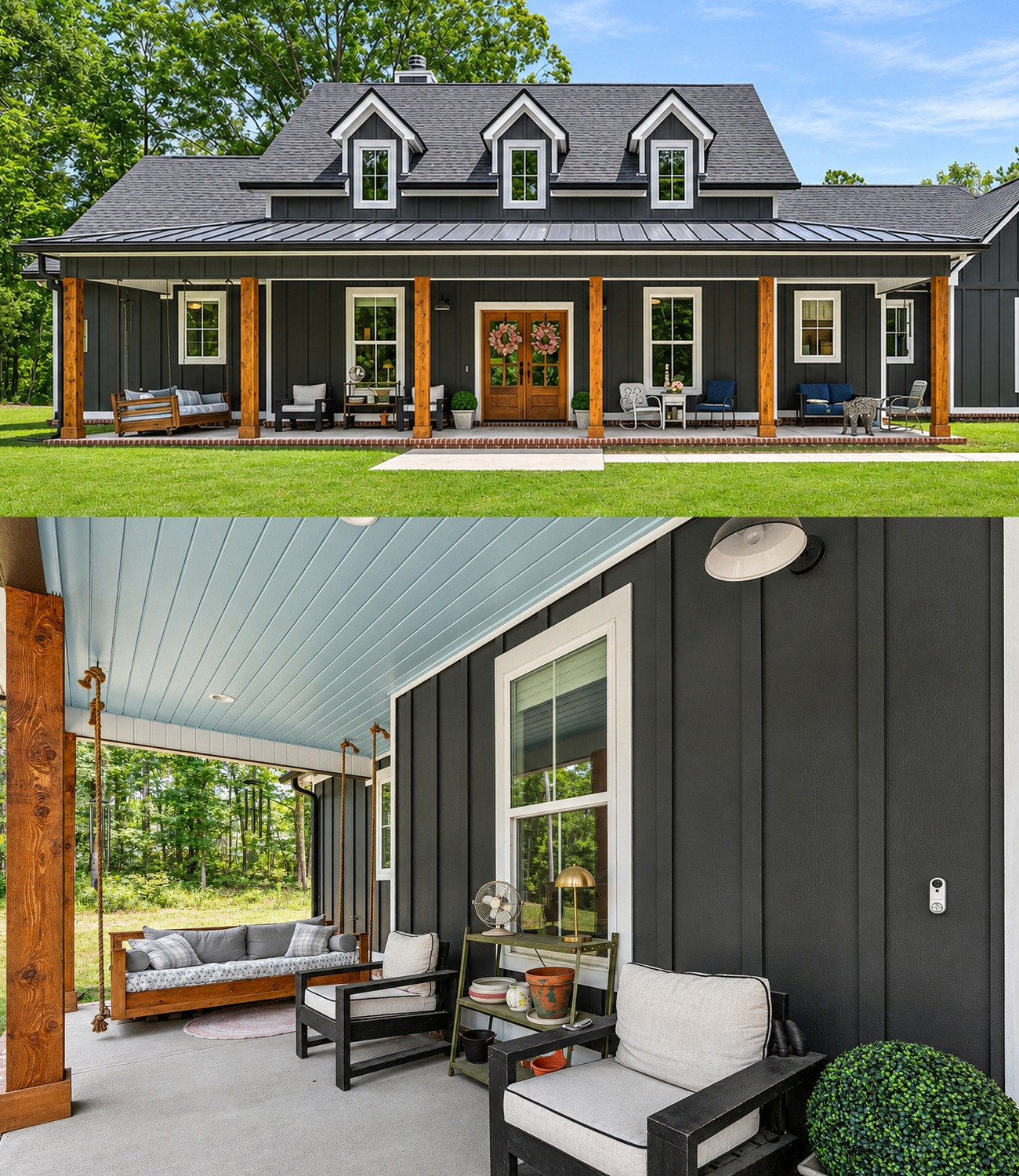
A long porch links the front door, windows, and garage into one welcoming facade. Tall wood posts and braces give the white home a warm, natural detail. The double wood doors make a clear center point. Rocking chairs add a classic farmhouse touch and invite people to sit.
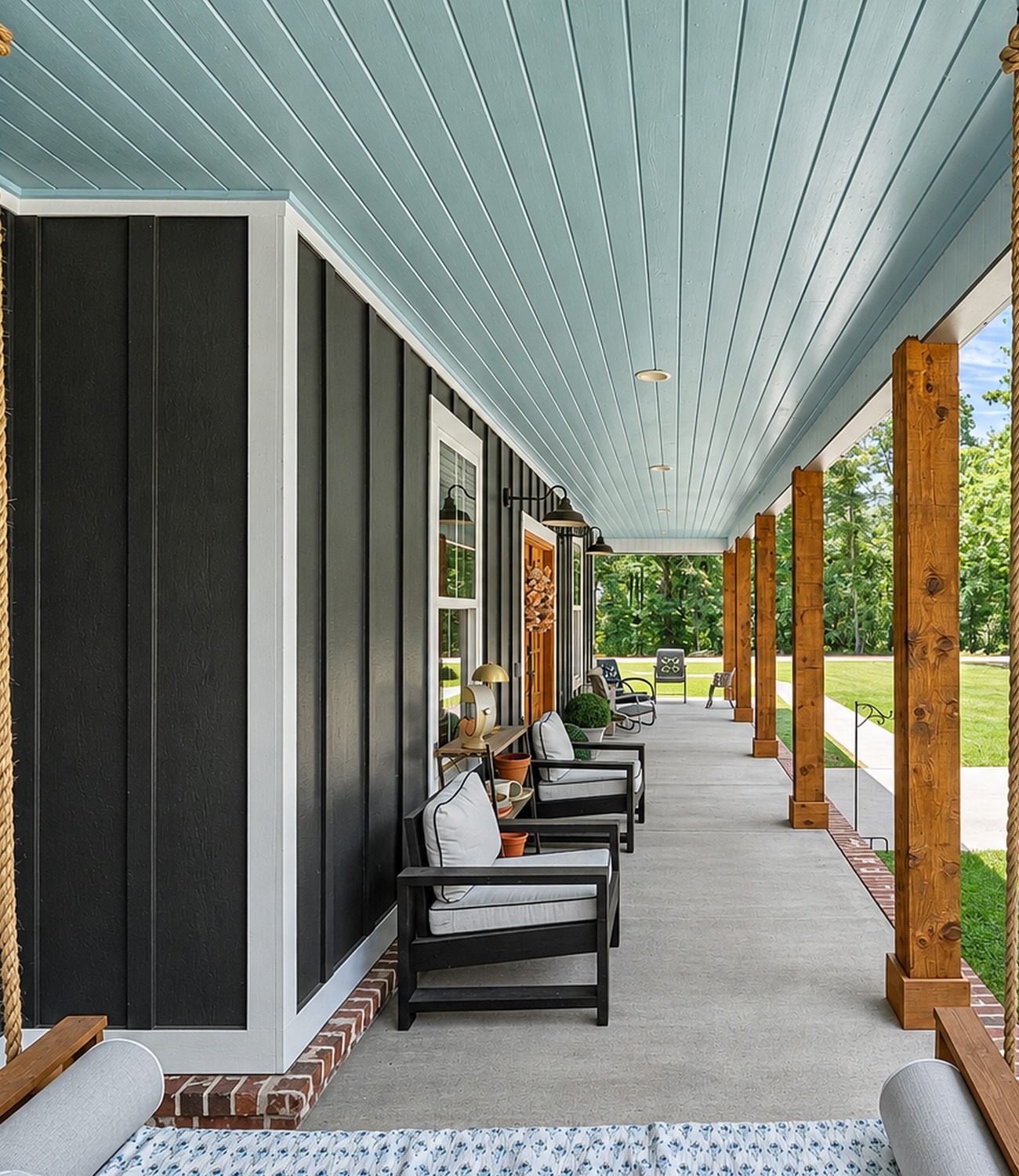
Because the porch stretches across much of the front, it has room for more than one small seating spot. Keep each group near the wall, so people can still walk easily from the steps to the door. The repeated posts also give the broad porch a steady rhythm.
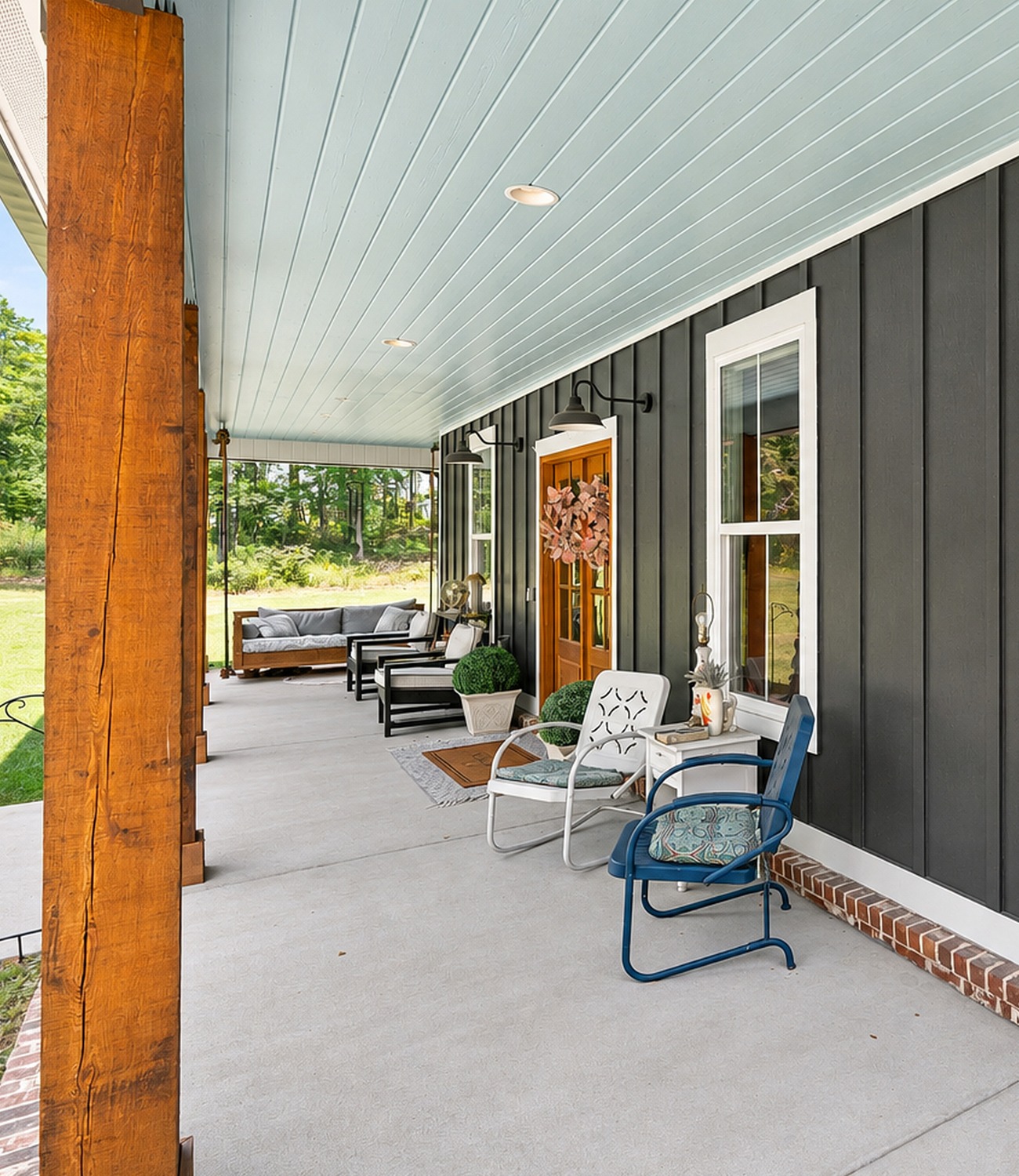
Design cues
- Extend the porch across the main front of the home.
- Use timber posts and braces to add warmth.
- Make the front door stand out with a natural wood finish.
- Leave an open route from the steps to the entry.
12. A Charcoal Farmhouse With a Deep Porch
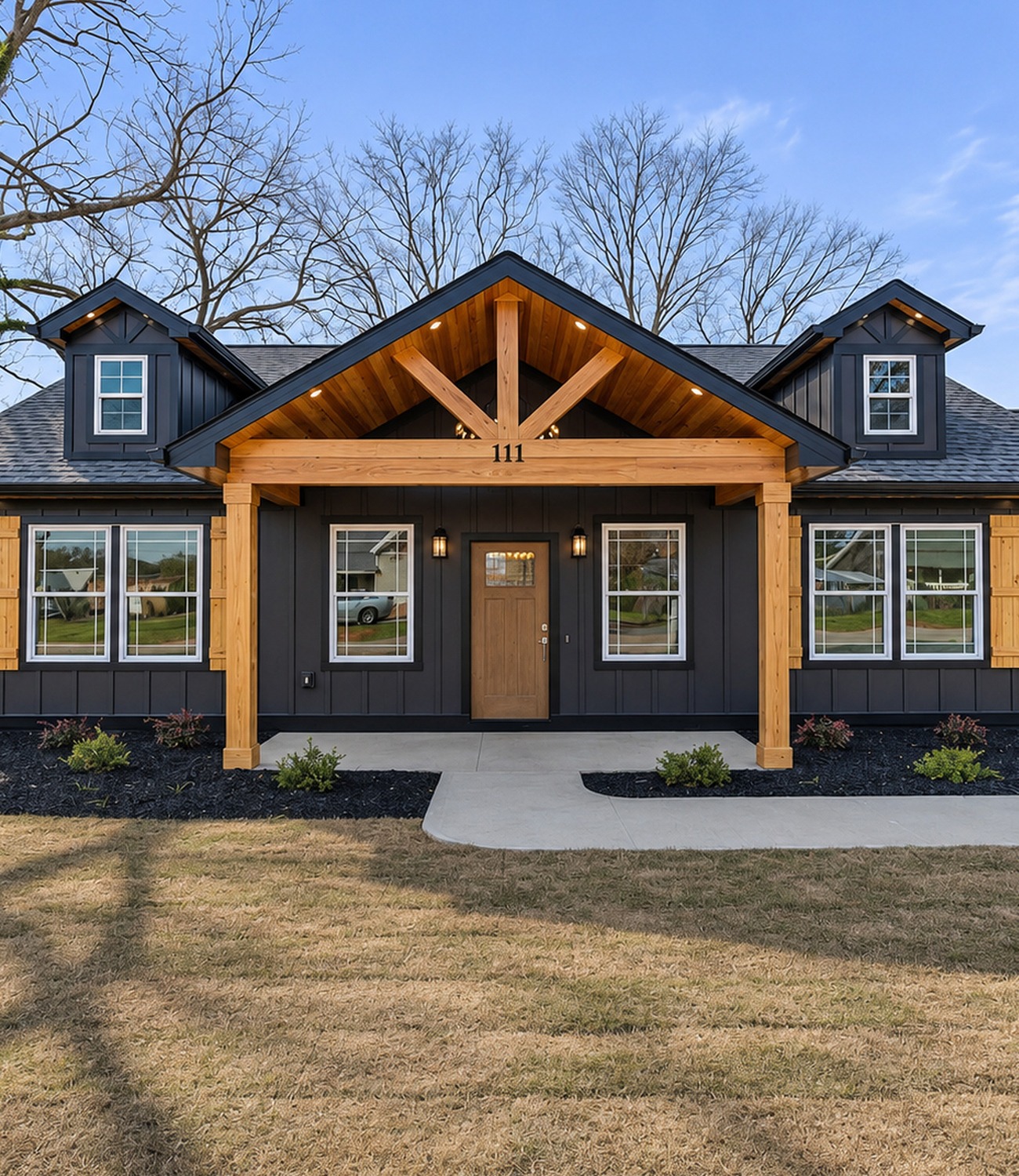
Dark charcoal siding gives this home a bold look. A deep porch softens the dark exterior and creates a comfortable place to sit. Natural wood posts add warmth, while the dark metal porch roof blends with the roofline. Dormer windows add shape above the porch.
Several seating areas make the long porch feel useful. The wood front door draws the eye to the center, while chairs and small tables offer places to gather on either side. This design shows how a dark palette can still feel warm. The wood, seating, and green lawn balance the deep siding.
Design cues
- Pair charcoal siding with natural wood posts.
- Use a deep porch for shade and outdoor seating.
- Arrange chairs in small groups along the front.
- Add a wood door to warm up the dark color scheme.
13. A Dark Exterior With a Timber Entry Frame
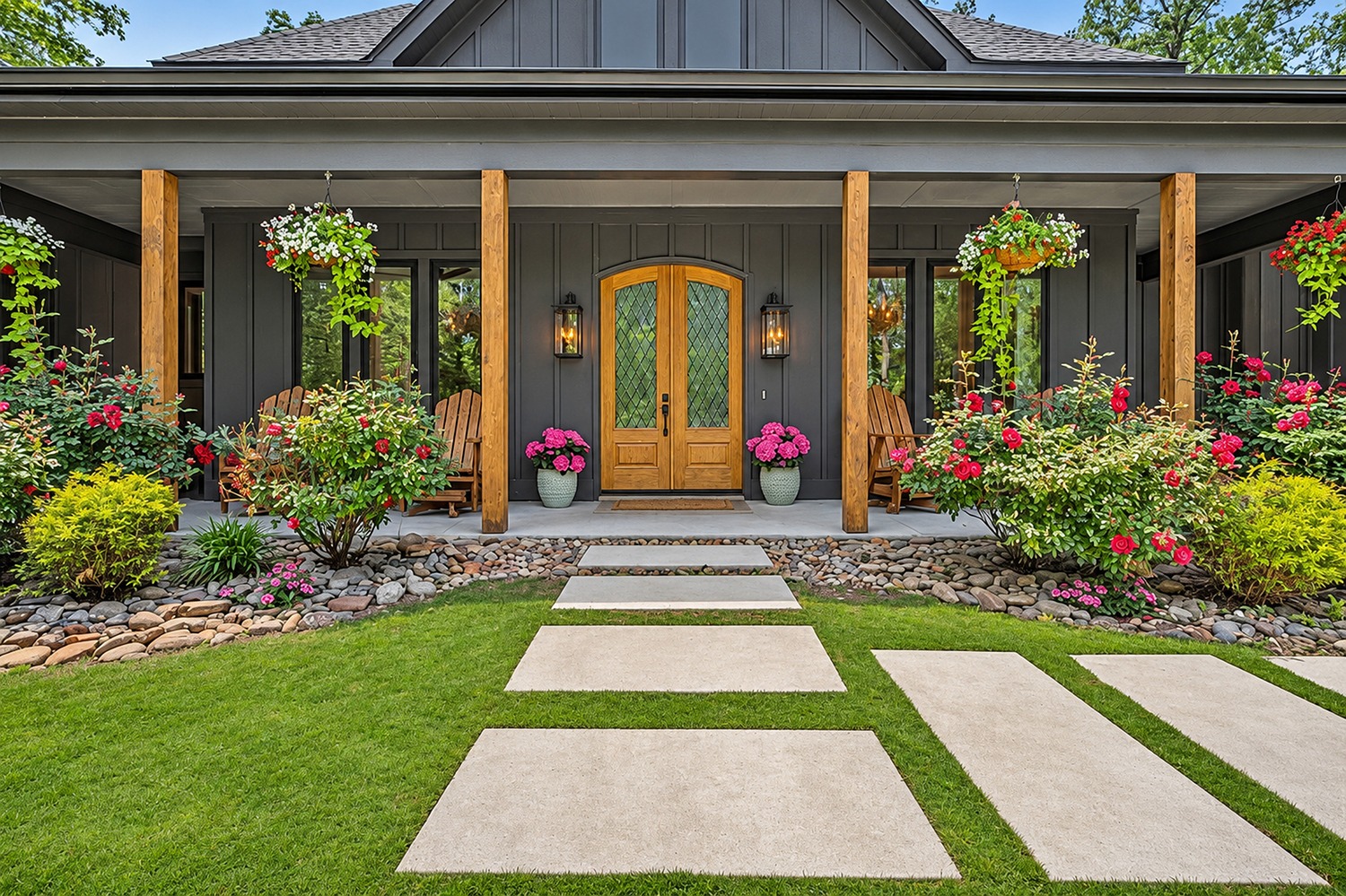
A timber frame gives this dark farmhouse a striking entry. The wood gable and posts stand out against the deep siding, while pale shutters add another warm accent. The porch itself is compact, so the strong frame does much of the visual work. A short concrete walk leads straight to the door.
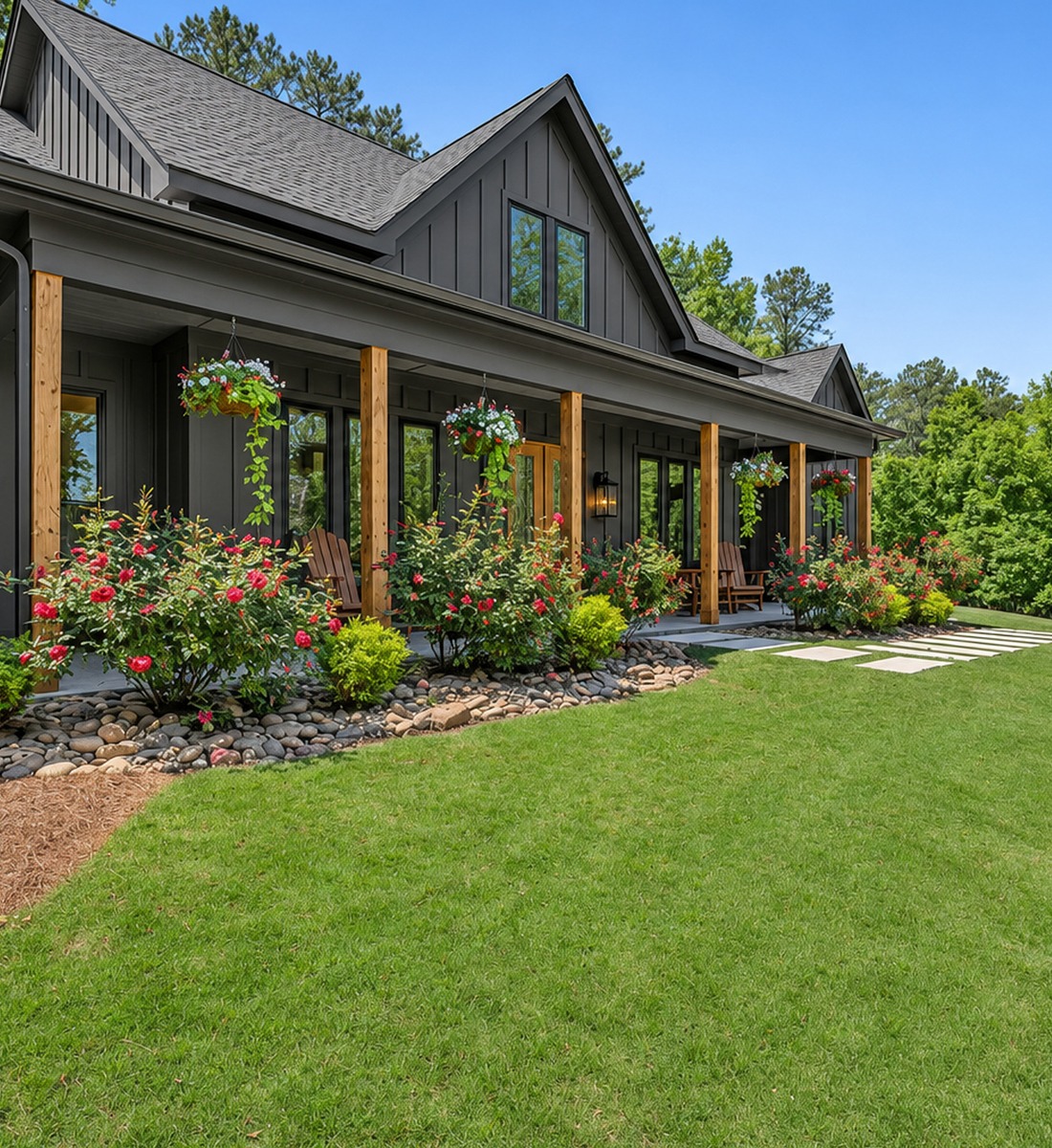
Dark mulch and low shrubs follow the shape of the home. A stone path adds texture near the entry and helps connect the porch to the yard. This is a smart idea for a home that does not have room for a full-width porch. A small, well-framed entry can still feel welcoming and distinct.
Design cues
- Use a timber frame to highlight a compact entry.
- Pair dark siding with warm wood and pale shutters.
- Create a clear walkway to the front door.
- Use low plants and stone to add texture near the porch.
14. A Simple Porch With a Warm Wood Door
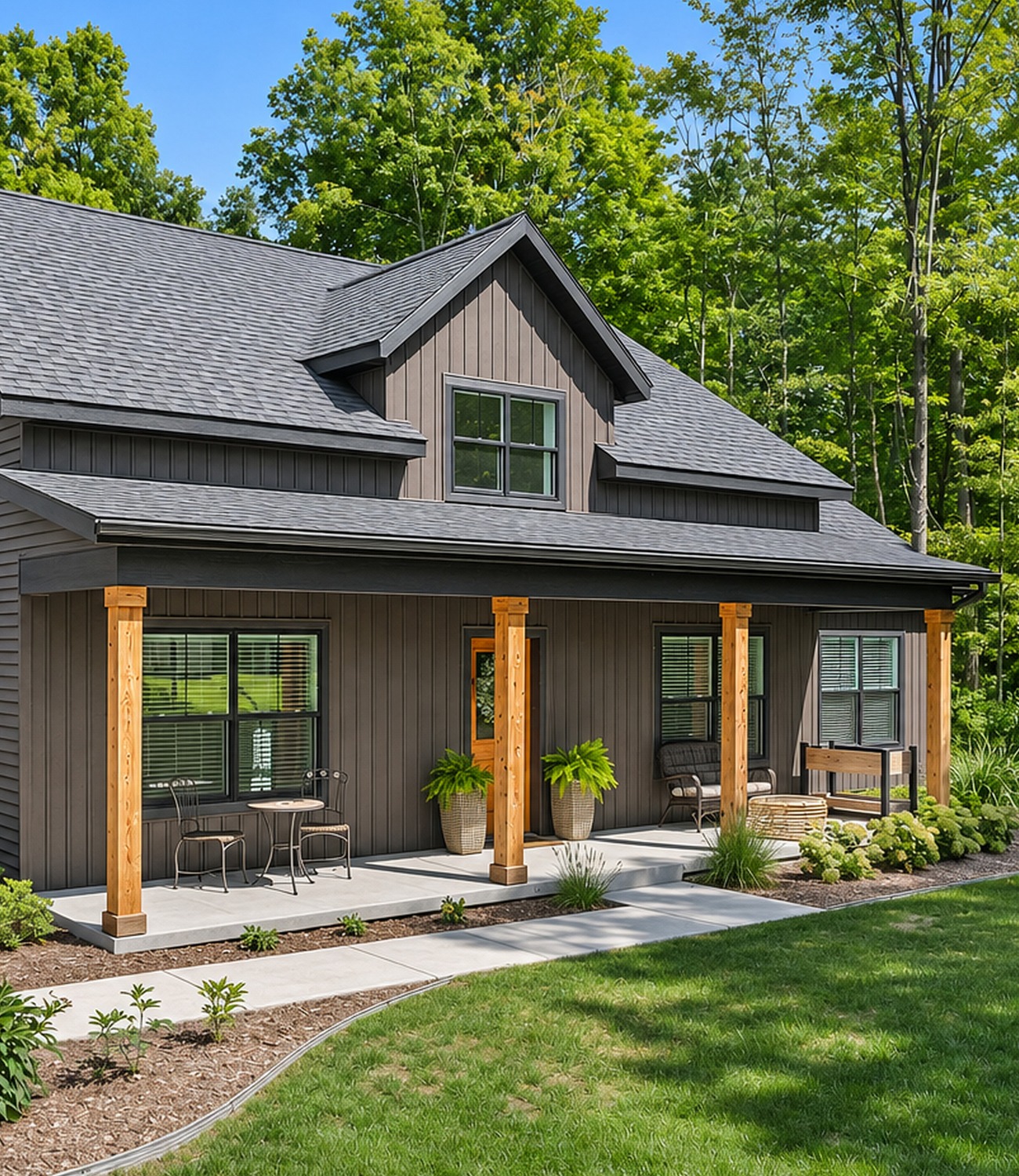
This porch keeps its lines clean. Dark brown siding gives the house a rich, quiet look. Natural wood posts bring light and warmth to the covered entry. The porch roof extends across the front, creating shade for the windows and seating area.
Small chairs and a table make the porch useful without taking up too much room. The pale walkway adds contrast and leads visitors toward the front door. Low plants near the foundation keep the space from feeling bare. A dark wall, warm wood, and simple furniture can create a polished look without lots of decor.
Design cues
- Pair dark siding with light, natural wood.
- Use a small table between porch chairs.
- Keep foundation plants low and neat.
- Choose a pale path to brighten the approach.
15. A Cottage Porch With a Brick Walk
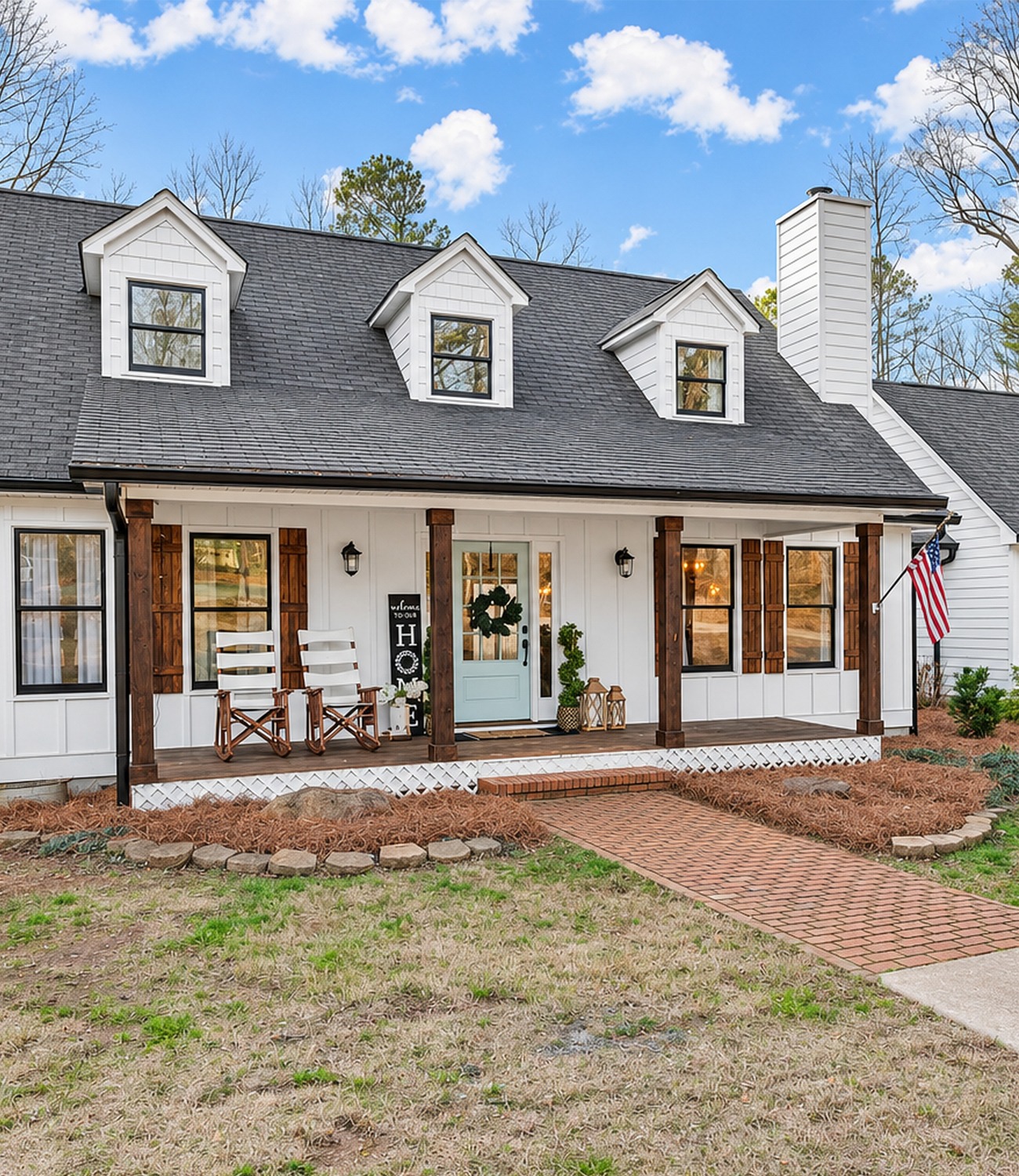
This front porch has a gentle, lived-in feel. Dark posts frame the white siding, and a pale blue door adds a soft touch of color. Wood shutters bring a rustic note to the windows. Two rocking chairs sit near the entry, while the brick path leads straight from the drive to the porch.
The lattice skirt under the porch adds detail and hides the open space below. A few shrubs and natural ground cover make the front feel settled. The brick path gives the entry a clear route and adds a warm color underfoot.
Design cues
- Add a brick path to lead guests to the porch.
- Choose a soft door color for a gentle accent.
- Use rocking chairs for a classic farmhouse touch.
- Add lattice below an elevated porch for a finished look.
16. A Metal Roof With Hanging Porch Chairs
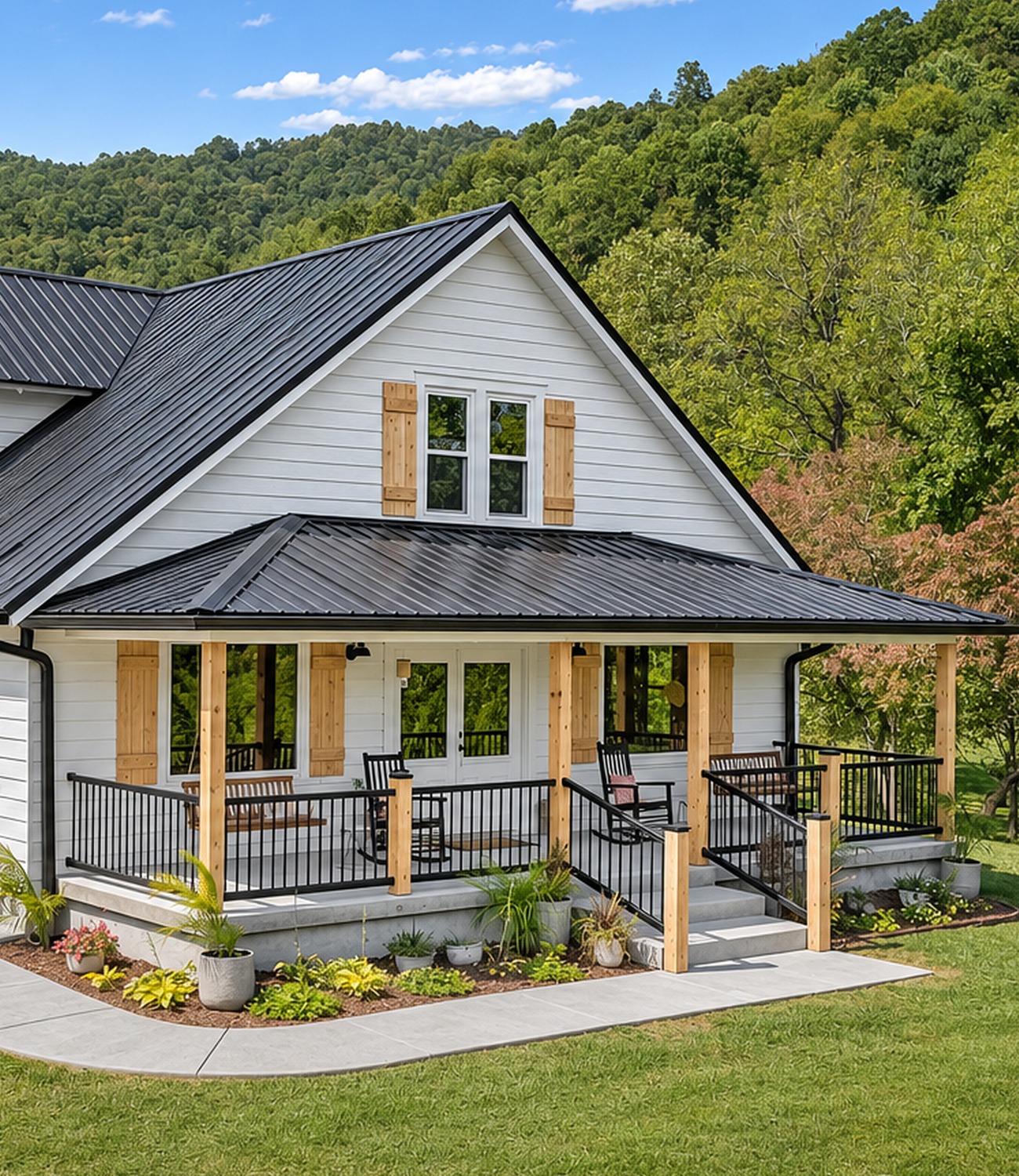
This porch blends a dark metal roof with natural wood posts and black railings. The white siding keeps the front bright. Hanging chairs on both sides of the entry add a playful touch and make the long porch feel inviting. The centered steps create a clear approach to the door.
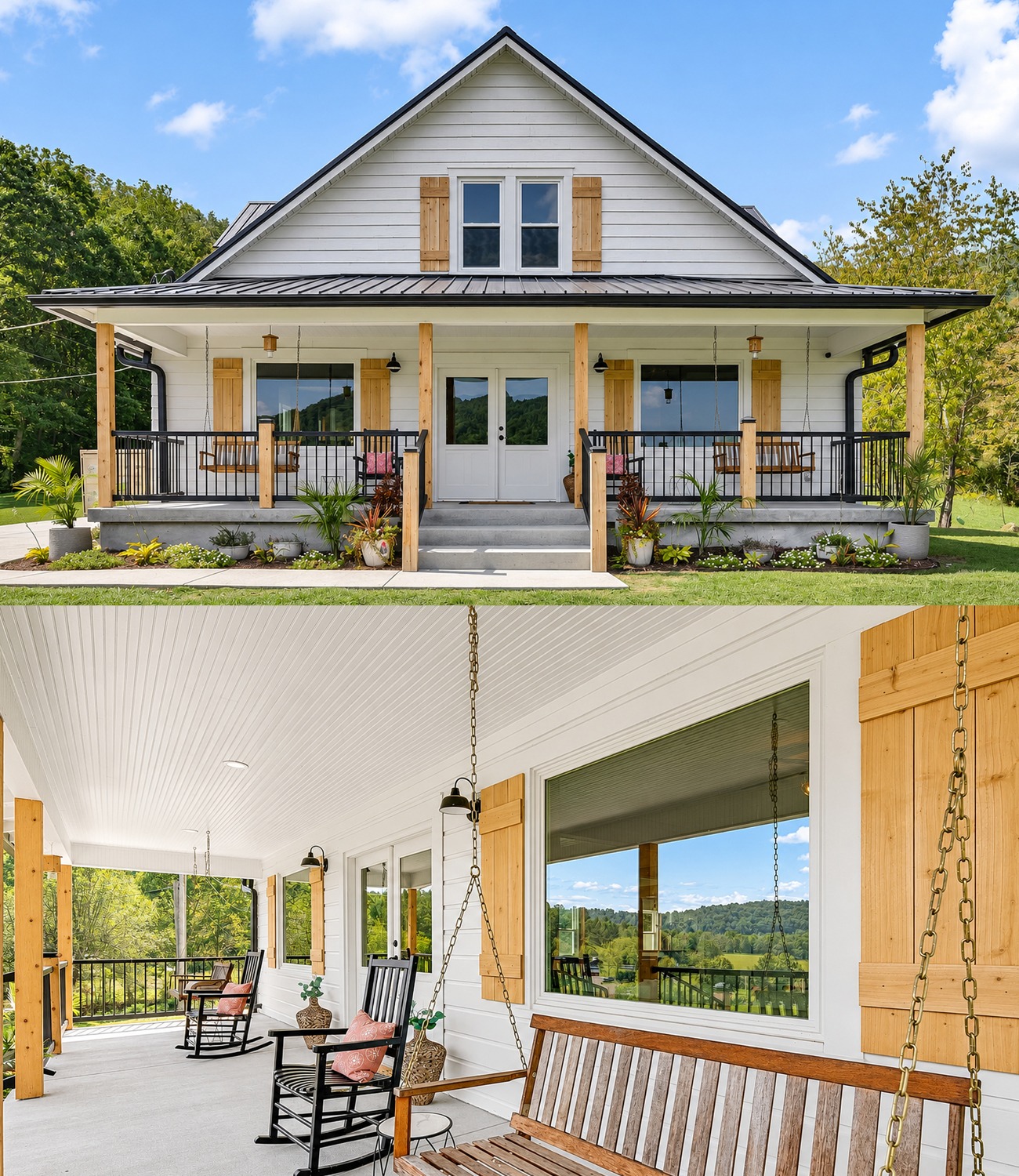
Wood shutters and posts repeat warm tones across the facade. Potted plants fill the corners and soften the straight railings. Before hanging chairs, check that the porch structure can support them. Then choose a style that leaves enough room to walk and open the door with ease.
Design cues
- Use a metal roof for a crisp farmhouse detail.
- Hang chairs only from a secure support.
- Keep the center steps and door path open.
- Repeat wood accents through posts and shutters.
17. A Wraparound Feel With Timber Brackets
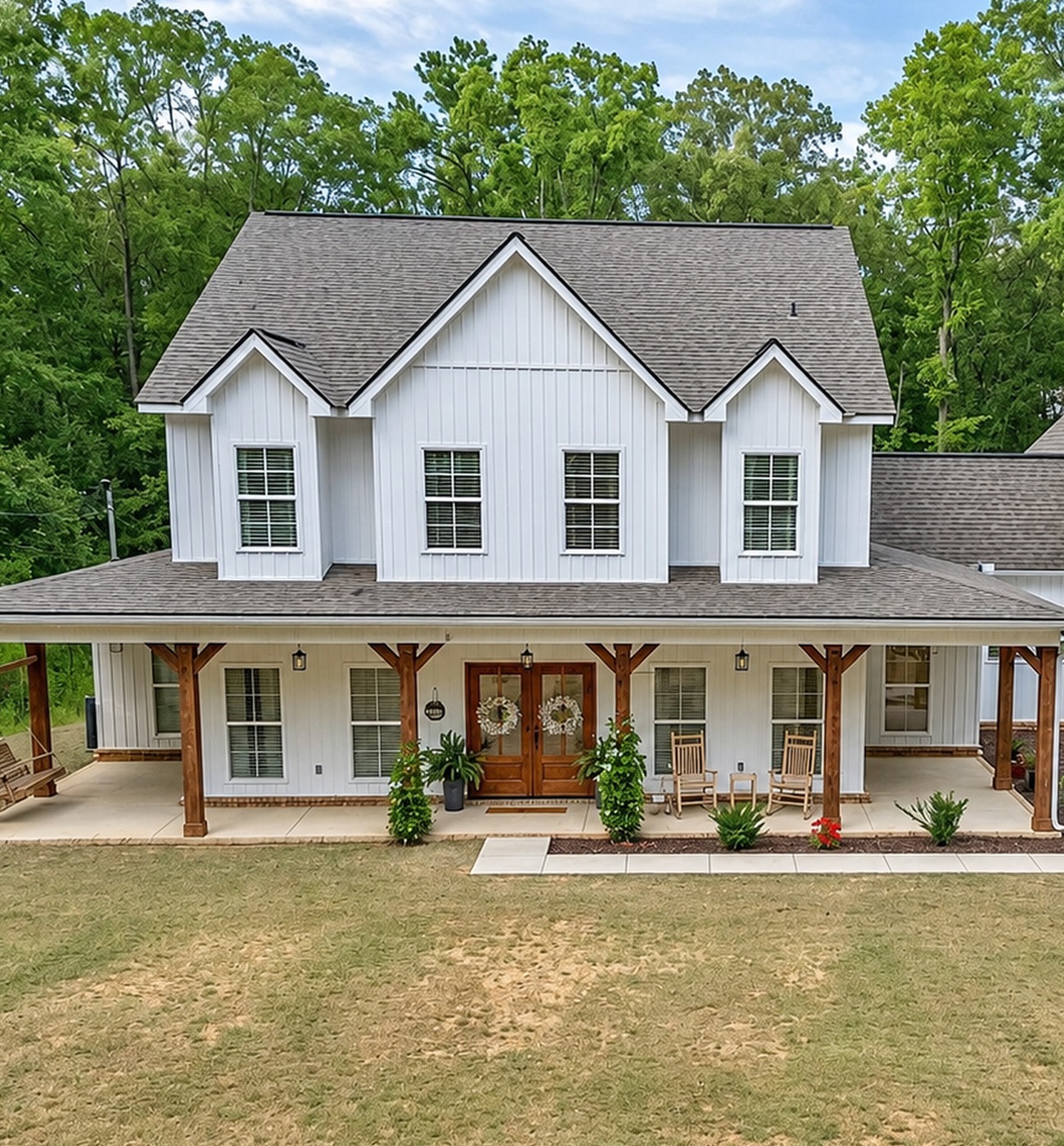
The porch stretches across the front and turns toward the side. Timber brackets create a repeating pattern under the roof. Wood posts and a pair of rocking chairs add a warm, familiar feel. White siding and a gray roof keep the look light and classic.
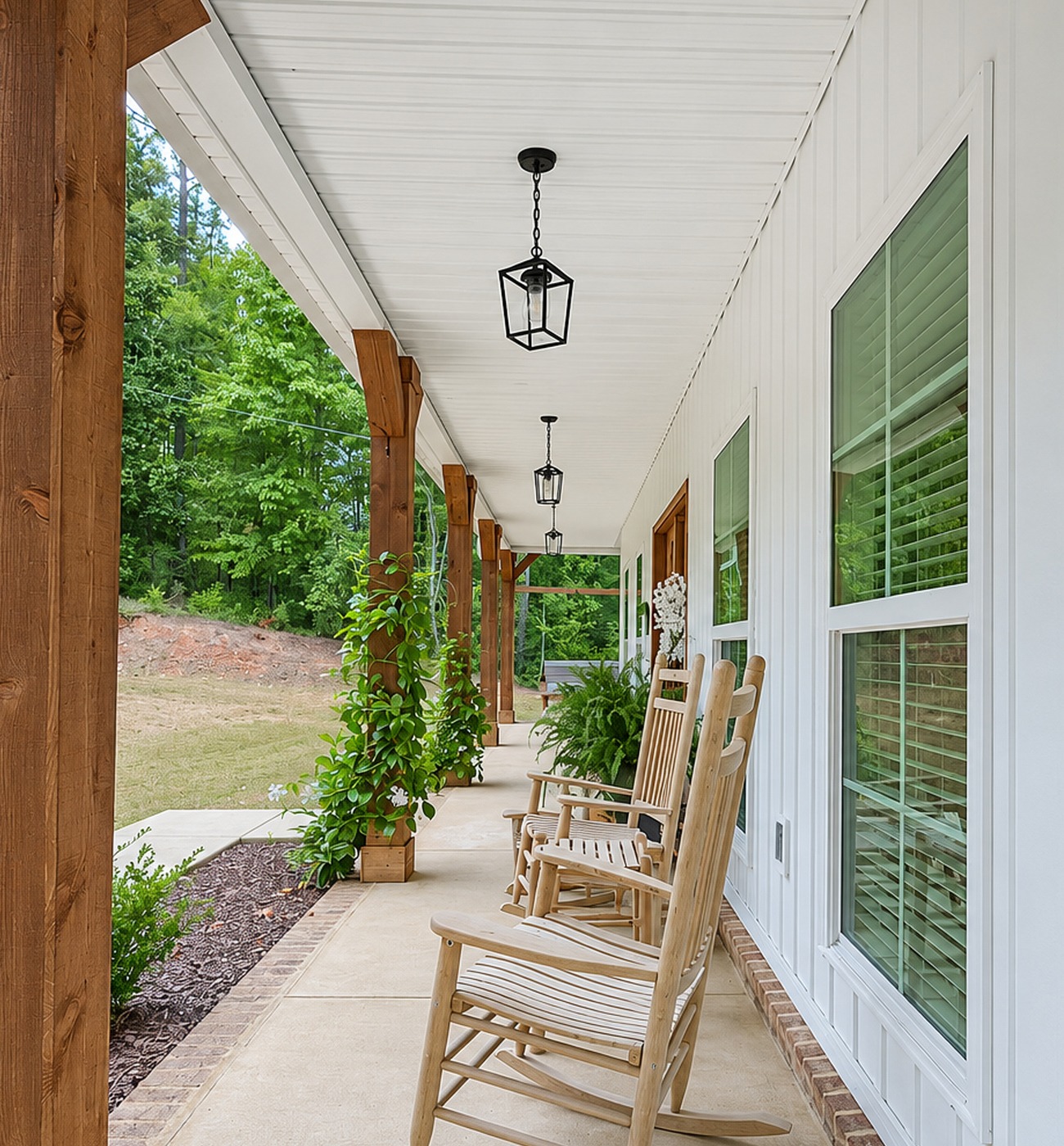
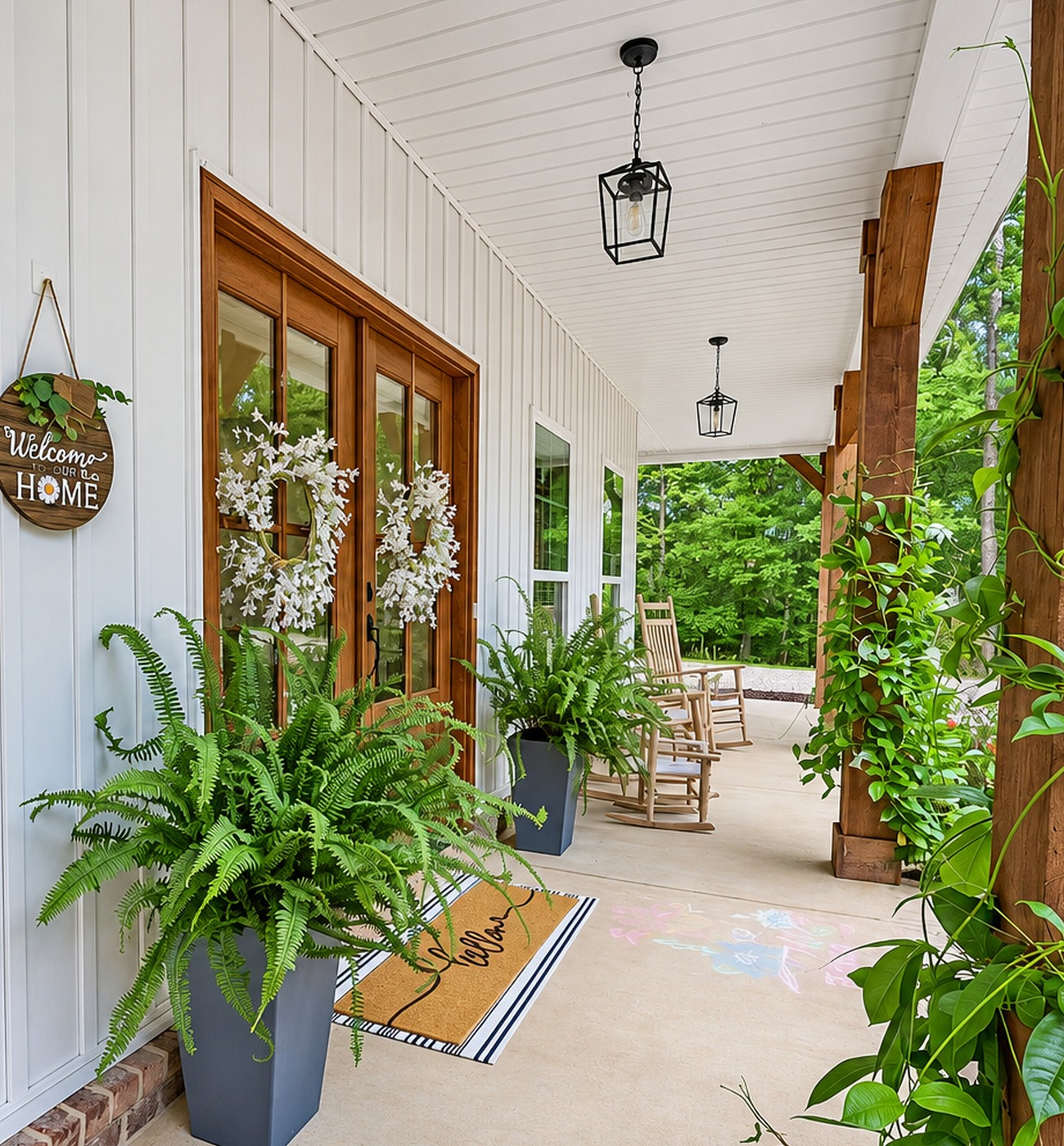
The broad porch helps connect the front entry to the garage wing. It also gives the house a comfortable scale, even with its tall upper story. Small plants near the steps and porch posts add green without filling the whole yard. The long roof protects more of the front and creates a place to sit in several spots.
Design cues
- Extend the porch around a corner for more covered space.
- Repeat timber brackets along the roof edge.
- Use rocking chairs to keep the look relaxed.
- Add small plants where the porch meets the yard.
18. A Compact Timber Portico With a Bold Gable
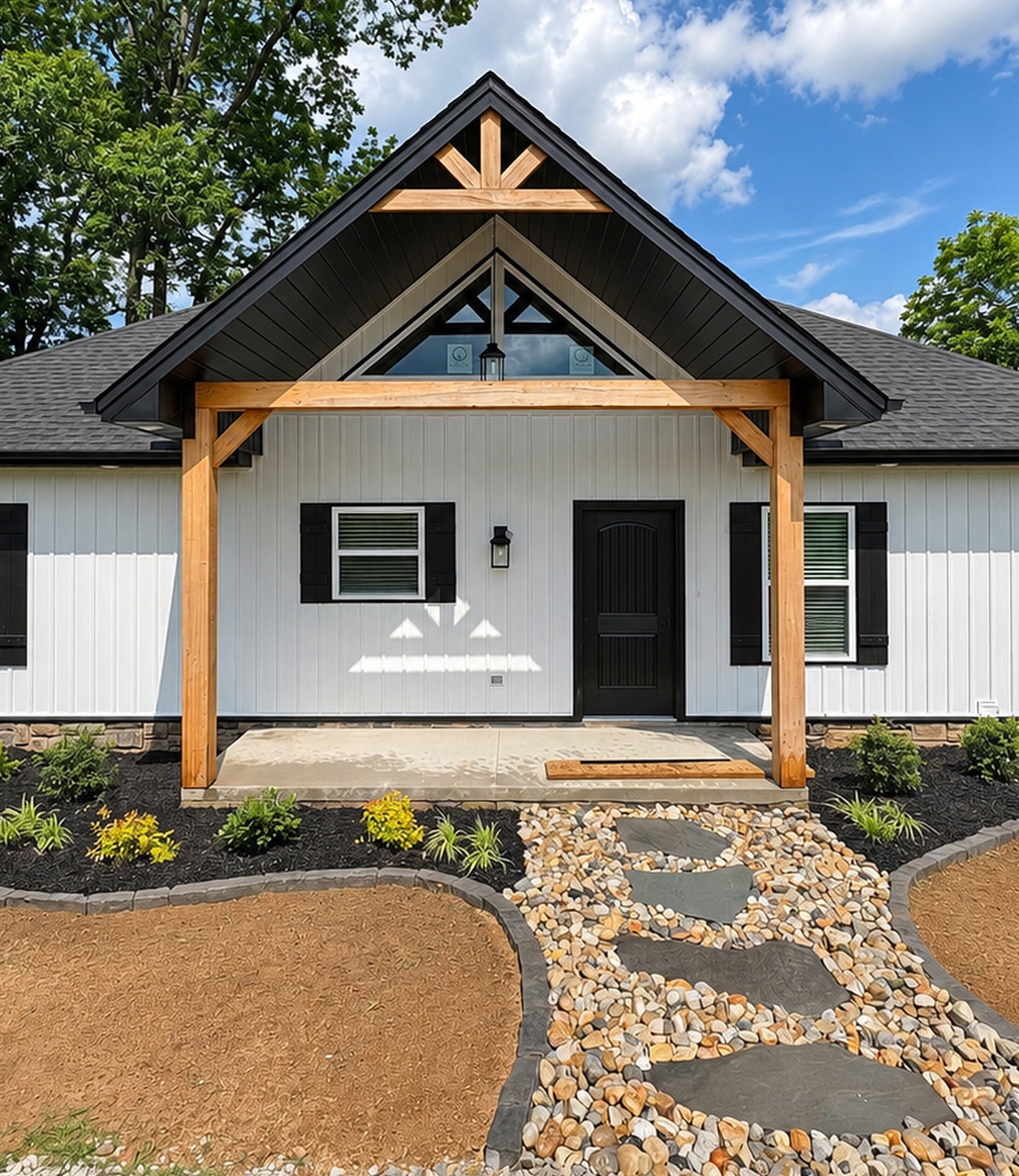
This home uses a small portico to give its front door more presence. Two large wood posts support a simple frame. Above them, a dark gable with exposed timber braces stands out against the white siding. The black door and window shutters echo the dark roof trim.
A stone-and-gravel path leads toward the entry. Curved planting beds with dark mulch and low plants soften the straight lines of the house. This design is a smart choice when a full porch will not fit the house or the budget. The timber frame adds shelter and a clear focal point, while the path and garden beds help the small entry feel complete.
Design cues
- Build a compact portico to frame the front door.
- Use dark trim to define the gable and windows.
- Lay a clear stone path to the entry.
- Shape planting beds to soften the hard edges.
Conclusion
A modern farmhouse porch can be long or small, open or raised, simple or rich with timber detail. Start with the shape of your home and the way you plan to use the space. Then choose a few materials that work well together. White siding, dark trim, warm wood, brick, stone, and green plants offer many ways to create a front porch that feels fresh and welcoming.