A tall ceiling can make a living room feel open and bright. It can also make the room feel cold or unfinished. The right mix of white walls, warm wood, soft seating, and layered light brings the space back down to earth.
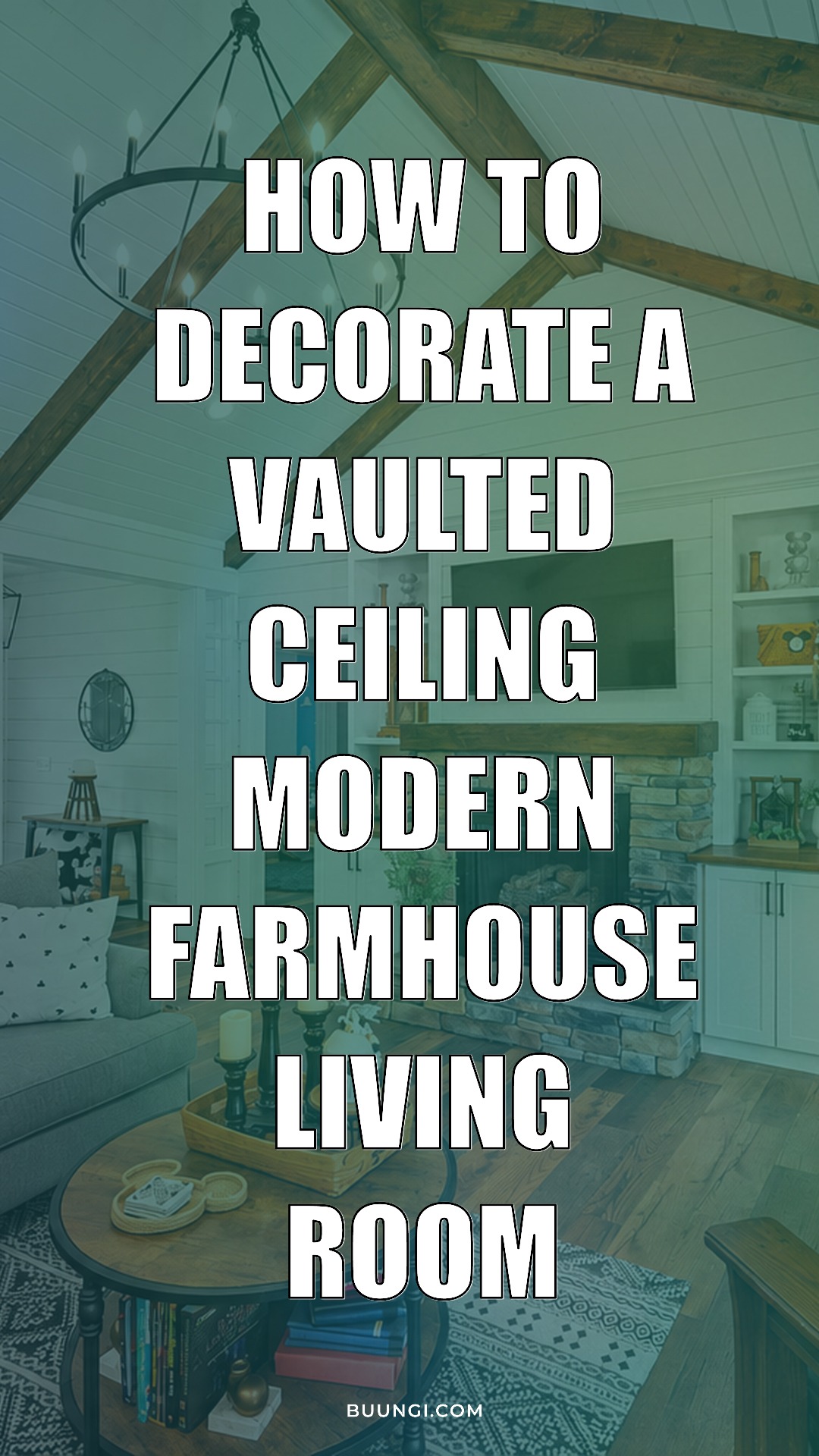
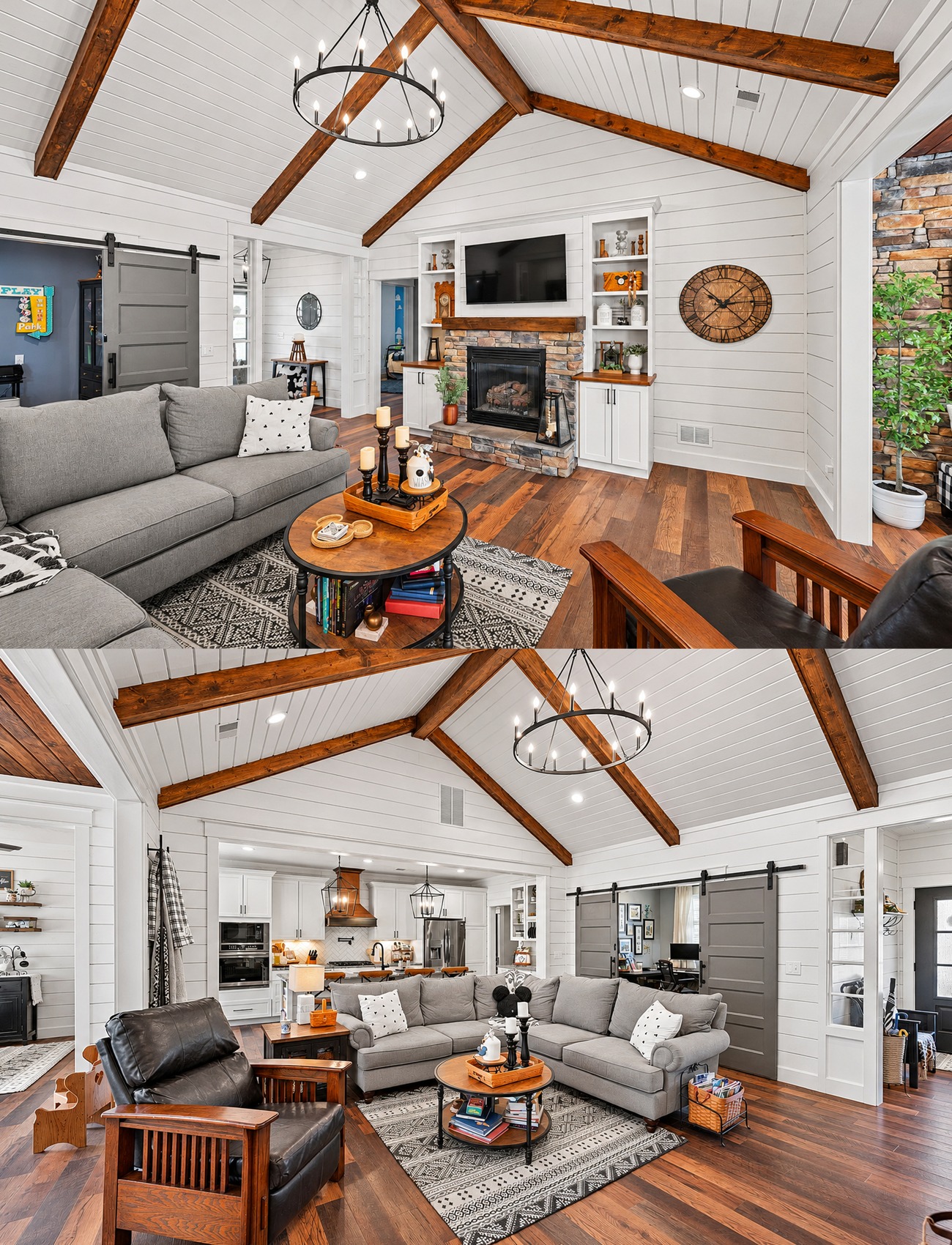
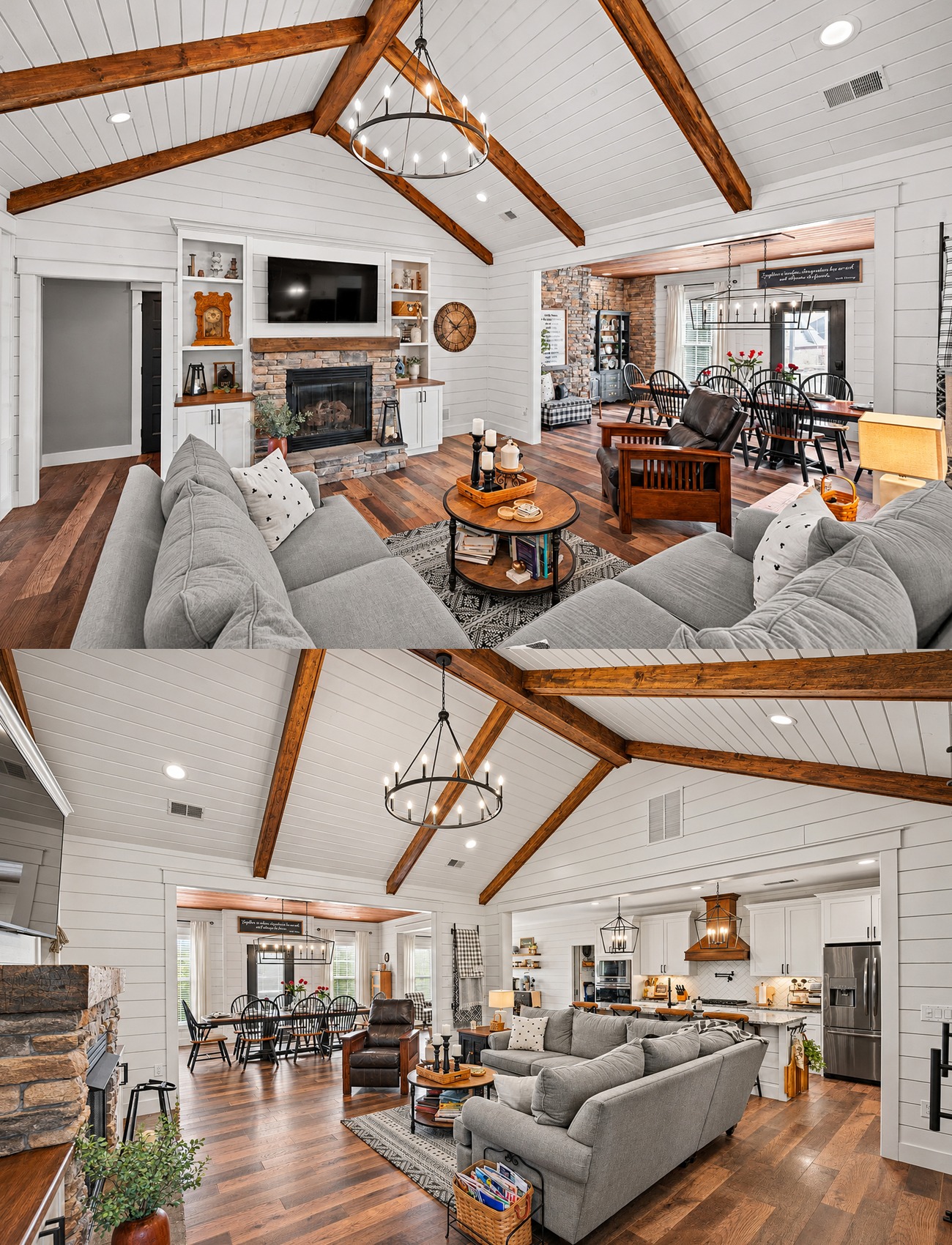
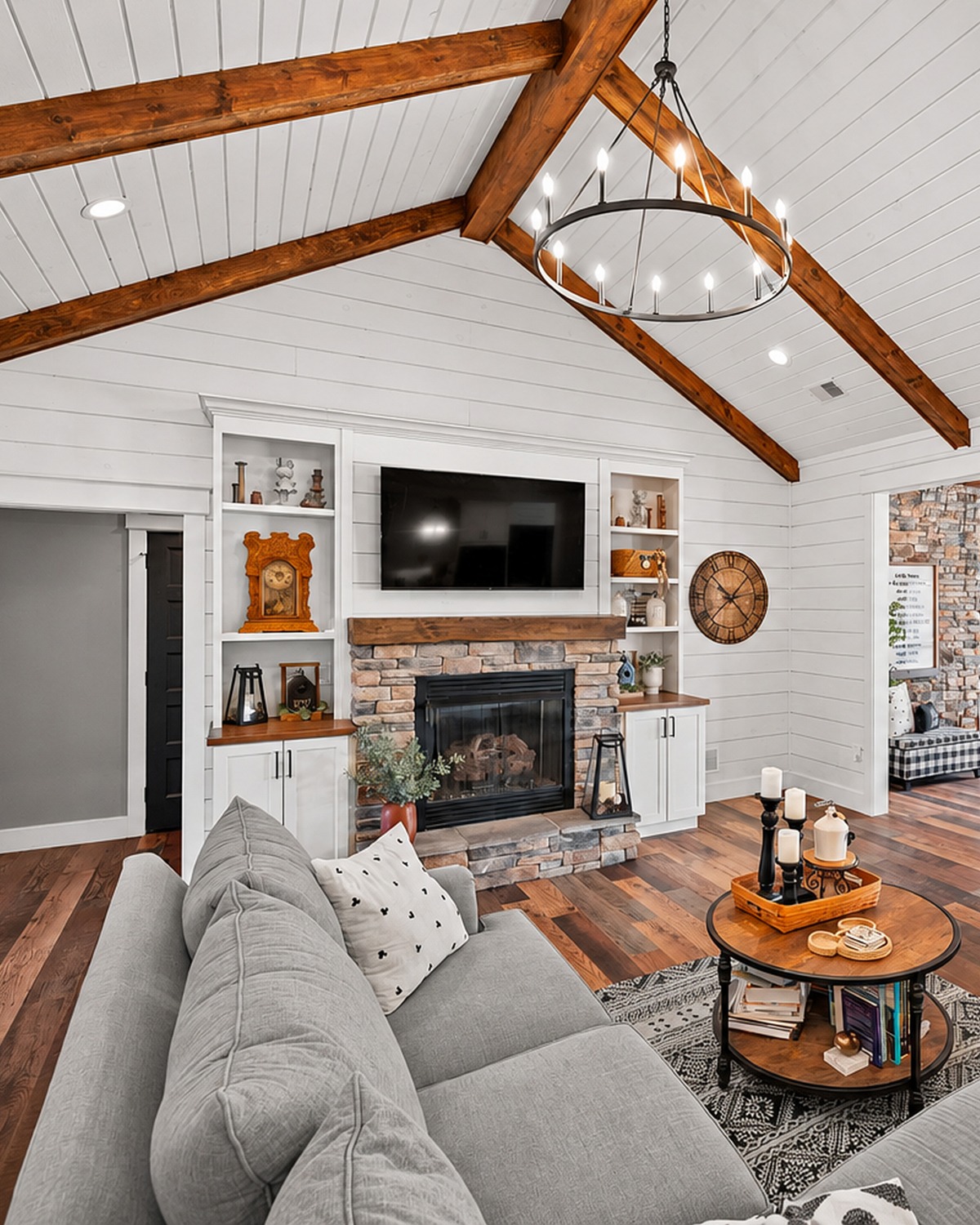
This room shows how to make that mix work. White shiplap covers the walls and vaulted ceiling. Dark wood beams draw the eye upward, while a stone fireplace gives the room a strong center. A large gray sectional, patterned rug, and warm wood floor make the space feel relaxed and lived in.
1. Let the Ceiling Set the Mood
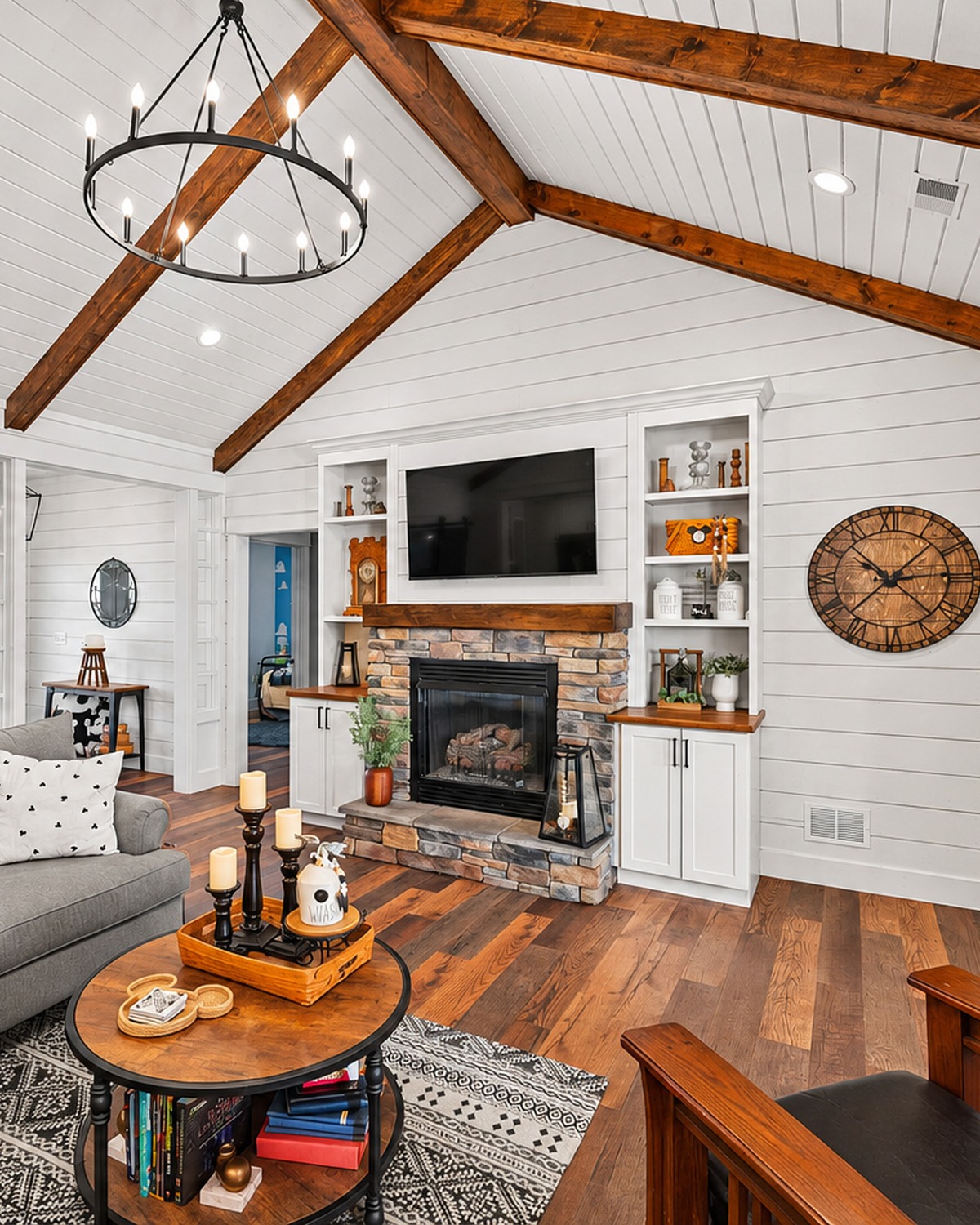
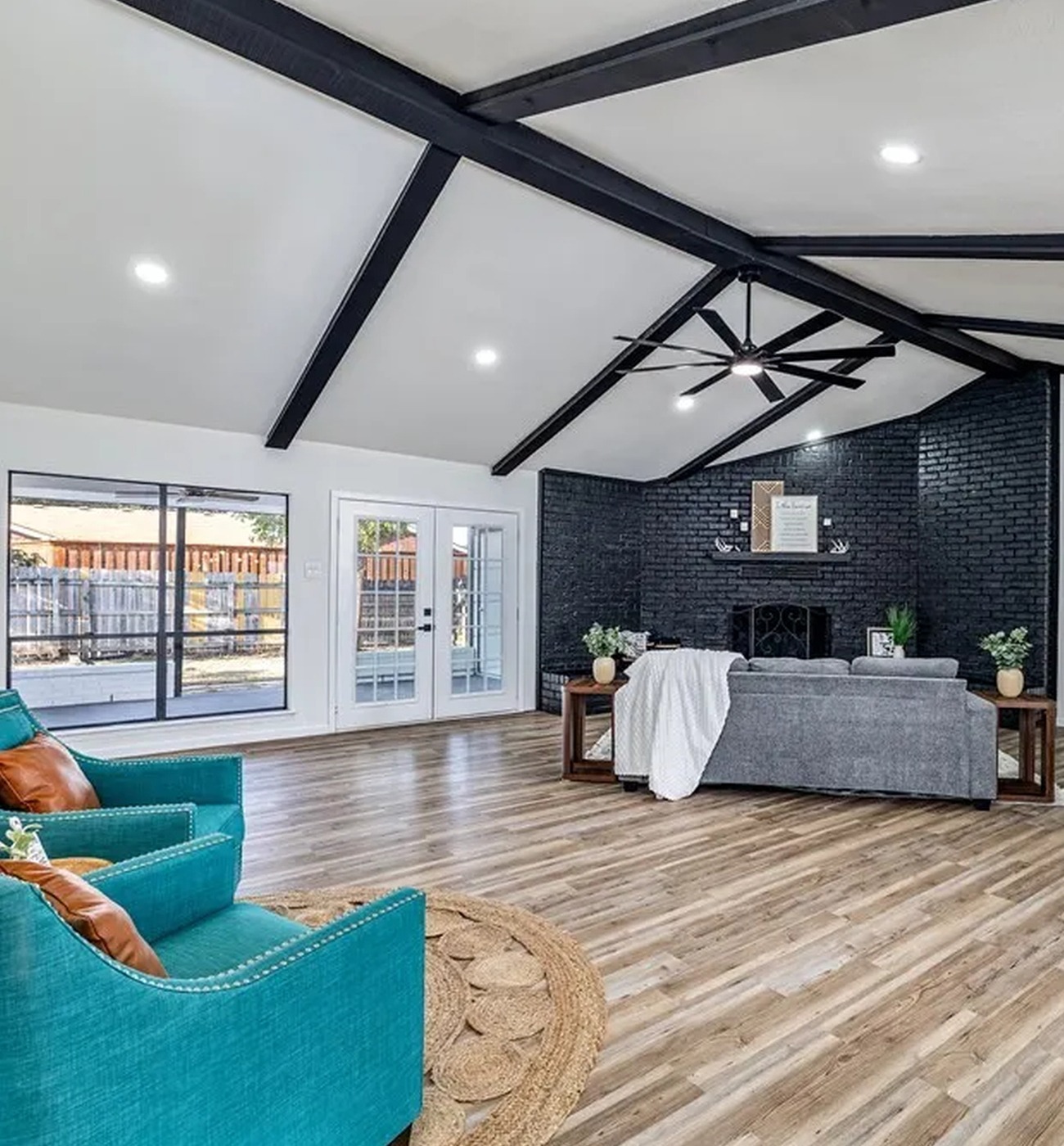
A vaulted ceiling is a natural feature, so make it part of the design. In this room, white planks follow the roofline and help the ceiling feel bright. The dark beams stand out against the pale surface. They also lead the eye across the room and make the high ceiling feel connected to the walls.
If your ceiling has no beams, you can still create warmth. Add wood beams if the structure allows, or use a wood ceiling detail that suits your home. Before adding beams, ask a builder whether they can safely attach to the ceiling. Some beams are decorative, while others carry weight.
Keep the finish simple. Too many colors or patterns overhead can make a high ceiling feel busy. A light ceiling with a few warm details gives the room a calm look.
Cues to use:
- Paint the ceiling a soft white or warm cream.
- Add wood beams that contrast with the ceiling.
- Follow the angle of the roofline when placing beams.
- Keep ceiling colors simple so the room feels open.
- Check beam placement and support with a qualified builder.
2. Use Shiplap to Tie the Room Together
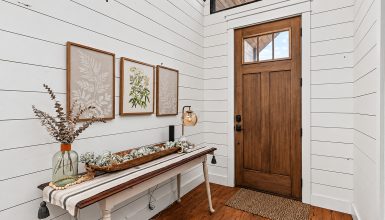
White shiplap gives the room texture without making it feel dark. The horizontal boards add a casual farmhouse touch. When the same finish covers the walls and ceiling, it also helps the whole room feel connected.
Choose a white that works with your floor, stone, and furniture. A cool white can look stark beside warm wood. A soft white or pale cream often feels more inviting. You can paint the trim the same color for a quiet look, or use a slightly brighter white to frame windows and doors.
Shiplap does not need to cover every surface. If your walls already have texture, try adding it to one main wall or the ceiling. This can bring in farmhouse character without crowding the room.
Cues to use:
- Use white or warm cream boards for a bright backdrop.
- Match the paint undertone to the wood and stone.
- Keep trim simple and clean.
- Use shiplap on one feature wall if a full room feels too busy.
- Add small decor pieces so the wall texture remains visible.
3. Make the Fireplace the Focal Point
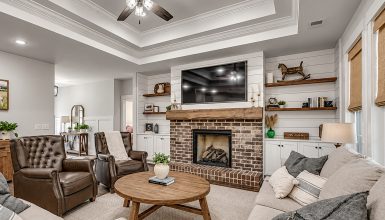
The stone fireplace gives this living room weight and warmth. Its varied colors link the white walls to the wood floor and beams. A thick wood mantel adds another natural detail, while built-in shelves and cabinets make the wall useful.
If you are decorating around an existing fireplace, let its color guide your choices. Pull one or two tones from the stone for pillows, baskets, or small decor. Keep the mantel styled with a few items in different heights. Leave open space too, so the stone remains the star.
Built-ins can frame a fireplace and add storage. Use closed cabinets for everyday items and open shelves for books or a few chosen objects. Avoid filling every shelf. A little empty space helps the whole wall feel neat.
Cues to use:
- Center the main seating toward the fireplace.
- Choose a mantel tone that works with nearby wood.
- Repeat one or two stone colors in small accents.
- Mix closed storage with open shelves.
- Keep mantel decor low and simple if a TV sits above it.
- Follow local safety rules for the fireplace and mantel.
4. Choose Seating That Feels Soft and Easy
A large gray sectional makes this room feel ready for family time. Its color is calm, so it does not compete with the fireplace or beams. The broad shape also helps fill the room beneath the high ceiling.
To choose the right sofa, start with the room’s floor plan. Measure the area and leave clear paths to doors, windows, and nearby rooms. In an open-plan space, the sofa can help mark the living area. Place it so people can talk with one another and still enjoy the fireplace.
Add comfort with pillows and throws. Mix a few textures, such as cotton, linen, and chunky knits. Use a small number of patterns that share a color. This keeps the sofa cozy without making it look cluttered.
Cues to use:
- Pick a sofa size that suits the room and leaves clear walkways.
- Use gray, oatmeal, or another soft neutral for a calm base.
- Add pillows in simple checks, stripes, or small prints.
- Keep throws within reach in a basket or over the sofa arm.
- Add an accent chair if the room needs more seats.
5. Ground the Room with a Rug and Coffee Table
High ceilings can make furniture feel small. A large area rug helps bring the seating group together. In this room, the dark pattern adds contrast beneath the gray sofa and warm floor.
Choose a rug that reaches under at least the front legs of the main seating. That makes the group feel like one clear zone. A round coffee table softens the straight lines of the fireplace, shelves, and planked walls. Wood adds warmth, while a lower shelf can hold books or baskets.
Leave enough space around the table for people to sit and walk. A coffee table should feel easy to reach from the sofa, but it should not block the path through the room.
Cues to use:
- Use a rug large enough to anchor the sofa and chairs.
- Pick a pattern that hides daily wear.
- Repeat colors from the fireplace, pillows, or floor.
- Choose a wood table for warmth or a metal detail for contrast.
- Leave comfortable space between the table and seating.
6. Add a Light Fixture That Fits the Scale
A small ceiling light can disappear in a vaulted room. This space uses a large black chandelier with an open frame. Its shape stands out against the white ceiling, and its dark finish echoes the smaller black details in the room.
When choosing a fixture, think about both size and light. A chandelier can add character, but it should not hang too low over a main walkway. Use recessed lights or wall lights to brighten darker corners. Table lamps can bring a softer glow near the sofa.
Place lighting on separate switches when possible. That lets you use bright light for reading or cleaning and softer light for a quiet evening.
Cues to use:
- Choose a fixture large enough to suit the room.
- Use black metal for a crisp farmhouse accent.
- Add lamps to soften the light near seating.
- Use dimmers or separate switches for better control.
- Ask an electrician to confirm safe placement and wiring.
7. Keep the Decor Warm but Simple
The room has strong features already: beams, shiplap, stone, and wood floors. Small accents can finish the look without adding clutter. A wood tray on the coffee table, a few books, a leafy plant, and a simple wall clock bring in texture and shape.
Try to repeat materials across the room. If the beams are dark wood, add one or two smaller wood details nearby. If the chandelier is black, use a few black accents in the room. Repeating a finish helps the design feel planned.
Plants can soften hard surfaces and add color. Set one near a window or in a bright corner. Choose a pot that suits the room, such as ceramic, woven, or aged metal.
Cues to use:
- Repeat wood and black metal in a few places.
- Use baskets to store blankets, toys, or magazines.
- Add greenery to soften stone and wood.
- Style shelves in small groups with open space around them.
- Keep surfaces clear enough for daily use.
Conclusion
A vaulted-ceiling modern farmhouse living room feels balanced when you pair its height with warm, grounded details. White shiplap keeps the space bright. Wood beams add depth. A stone fireplace, soft seating, and a large rug make the room feel welcoming.
Start with the features your room already has. Then add comfort, useful lighting, and a few natural textures. The result can feel open and airy while still feeling like home.