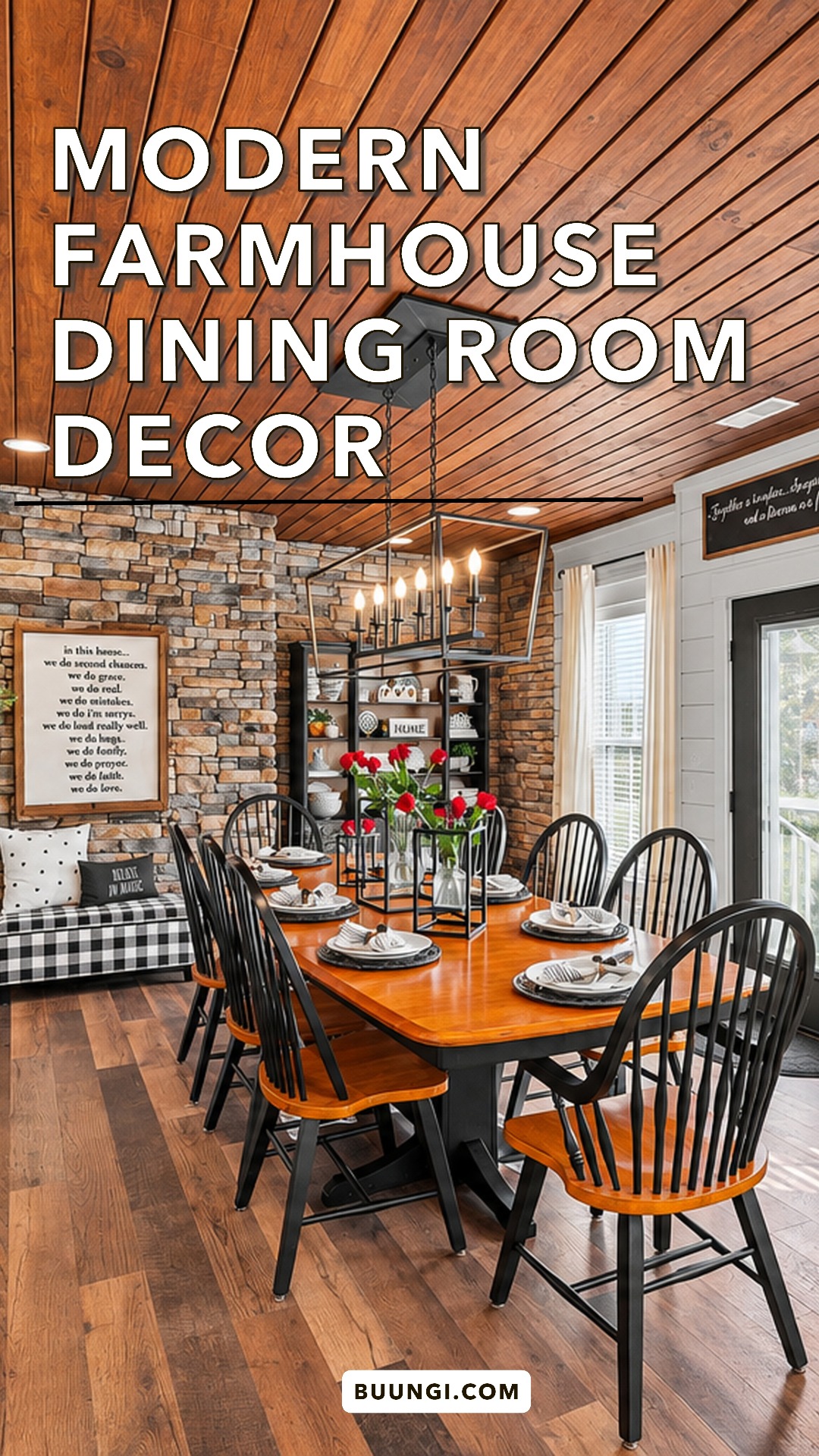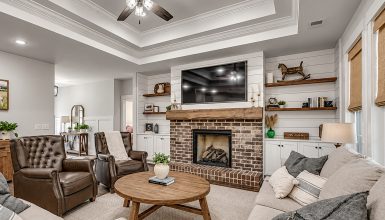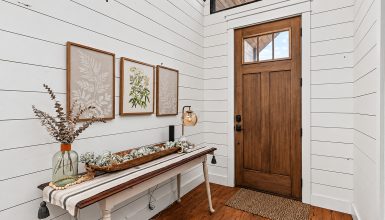
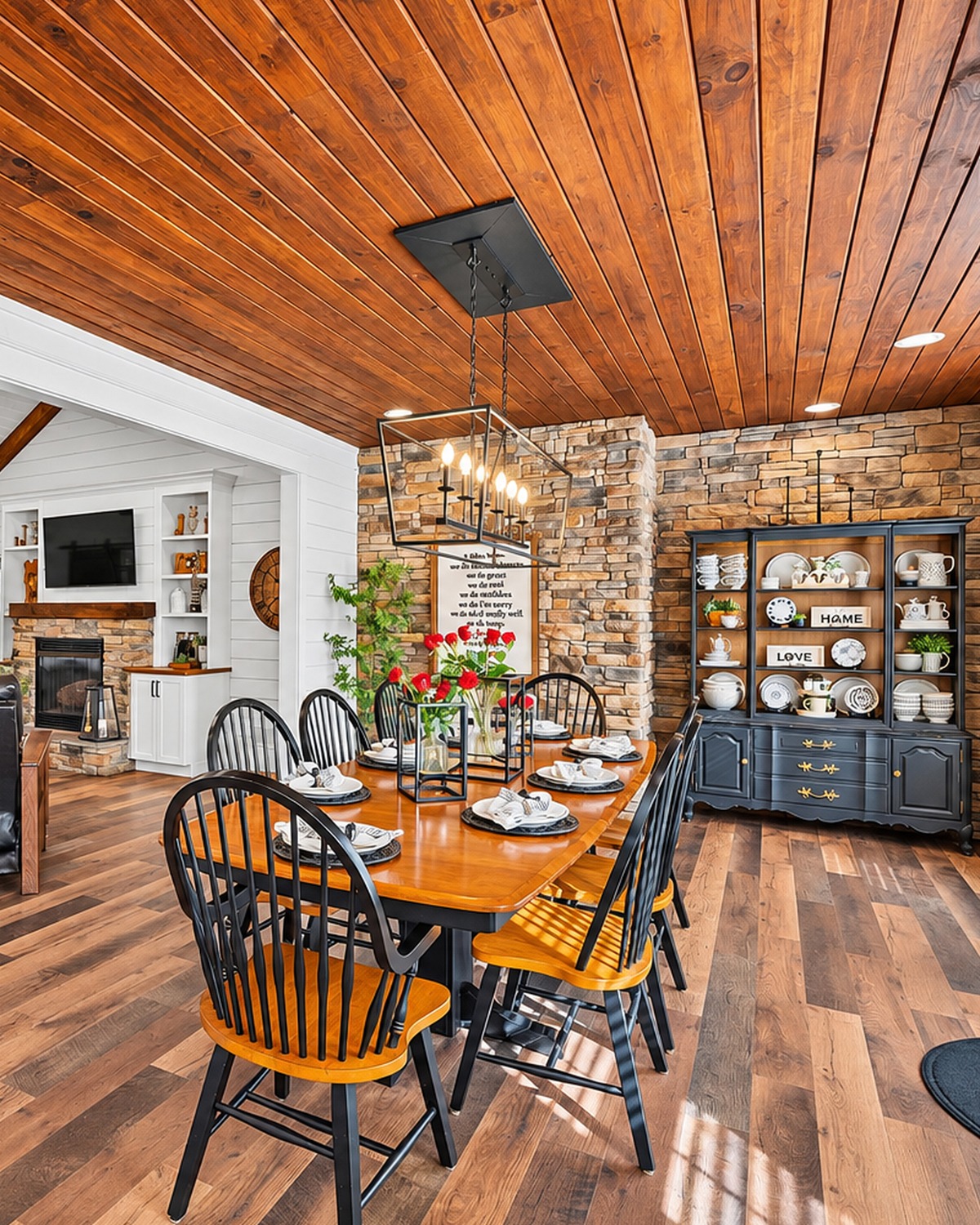
A dining room can feel warm and personal without matching every chair, finish, or accessory. This room shows how: rich wood, pale shiplap, rough stone, and black furniture come together in a way that feels relaxed and complete. The key is to repeat a few colors and materials, then let each piece bring its own character.
Start With a Simple Color Story
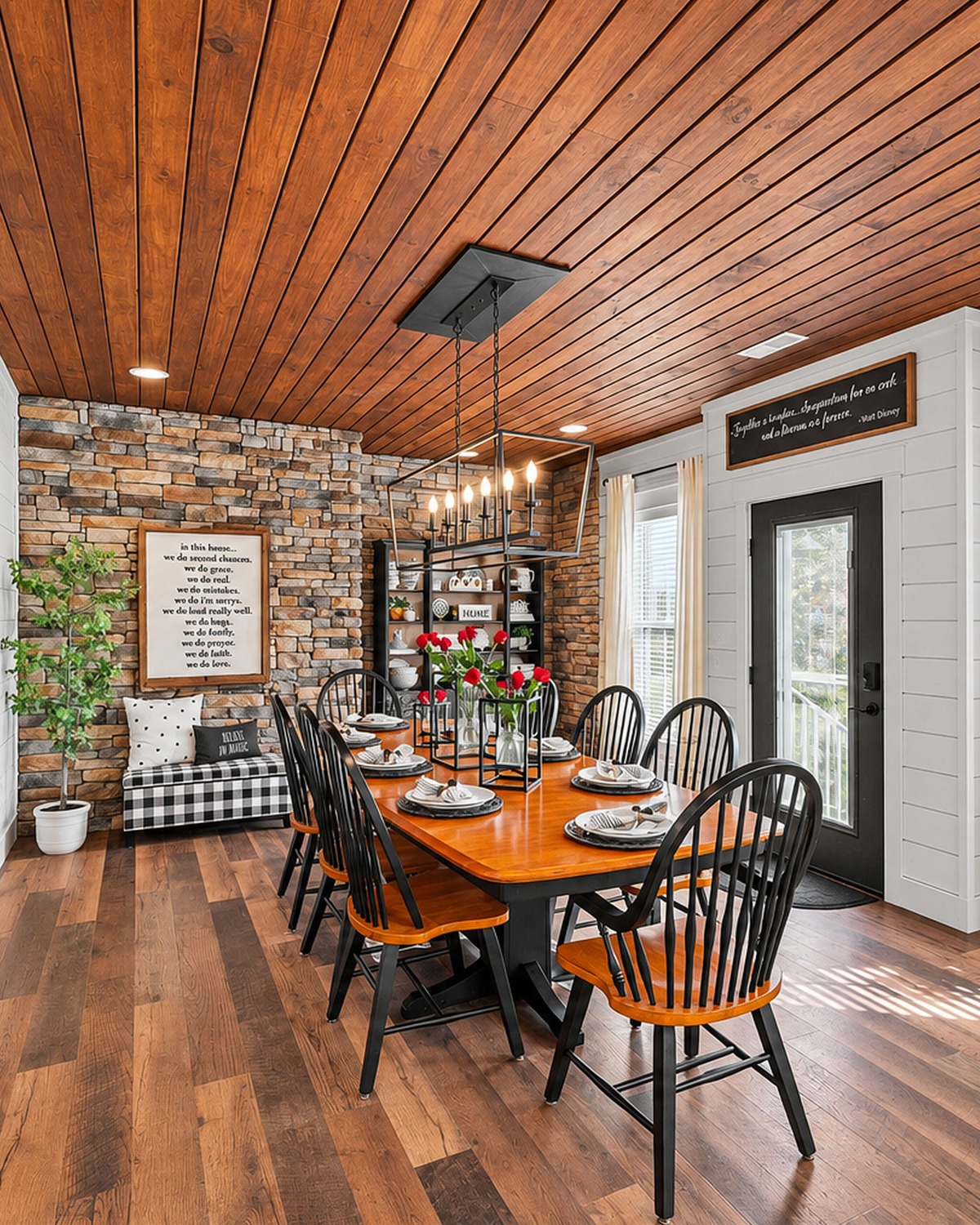
A collected room still needs a clear thread. Here, white walls and trim keep the space bright. Warm wood adds depth, while black details give the eye a place to rest. Stone brings in natural shades of tan, gray, and rust.
Use these colors throughout the room. Repeat black in the chairs, light fixture, and cabinet. Echo the warm wood of the ceiling in the table and floor. Then let white shiplap balance the darker, richer finishes.
Cues to use:
- Choose three main colors: warm white, natural wood, and black.
- Add a few soft stone tones through decor or a feature wall.
- Repeat each color in at least two places.
- Keep the largest surfaces simple so the room feels calm.
Mix Textures for a Lived-In Feel
The room feels layered because its surfaces look and feel different. Smooth painted shiplap sits beside rough stone. The polished table contrasts with the grain in the ceiling and floor. Black metal adds a clean edge to the rustic materials.
You do not need a stone wall to get this effect. Add texture with a woven runner, linen napkins, a wood bowl, or a basket under a console. A mix of finishes makes the room feel gathered over time.
Cues to use:
- Combine smooth, rough, soft, and natural surfaces.
- Pair painted walls with visible wood grain.
- Add woven or linen details to soften hard surfaces.
- Limit strong textures to a few areas so they do not compete.
Choose a Table That Anchors the Room
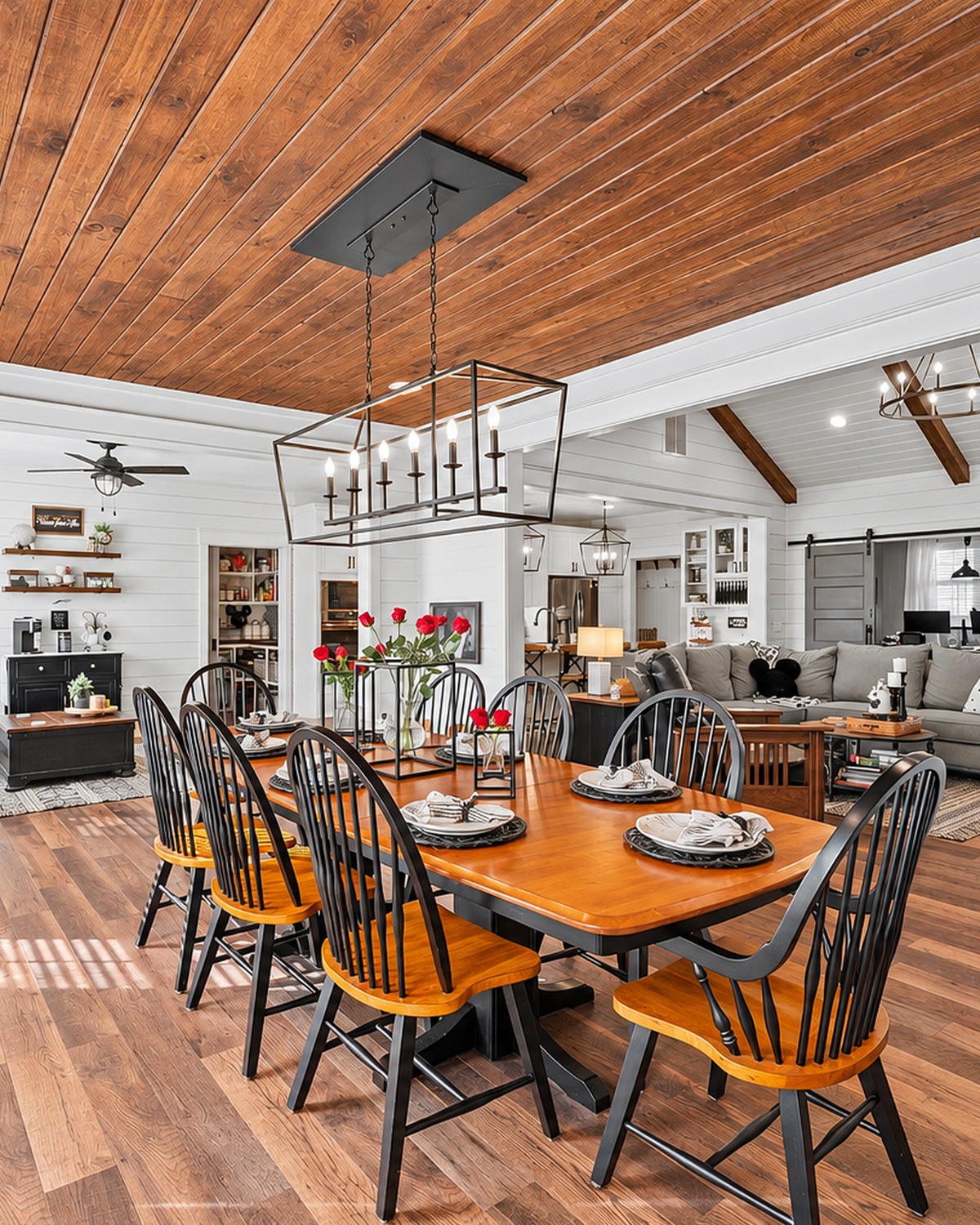
The long wood table takes center stage. Its warm finish links the floor and ceiling, while its size suits family meals and larger gatherings. A sturdy table also gives the room a practical base for everyday use.
Look for a table that fits the room and leaves space to move around it. A simple shape can work well with more detailed chairs or decor. If your table is new, add character with a wood tray, a bowl, or a cloth runner in a natural fabric.
Cues to use:
- Measure the room before choosing the table.
- Leave clear paths around the chairs.
- Pick a durable finish that suits daily meals.
- Use a simple centerpiece that does not block conversation.
Mix Chairs With a Shared Detail
Black spindle-back chairs bring a classic farmhouse shape to the room. Their dark finish repeats the black metal in the light fixture and cabinet. The chairs have a similar look, but the wood seats add warmth and keep them from feeling too formal.
A collected dining room can use different chairs. To make the mix feel planned, repeat one feature: the same color, seat height, material, or overall shape. You can also pair a bench with chairs for a casual, flexible setup.
Cues to use:
- Mix chair styles while keeping one detail consistent.
- Repeat black, wood, or another finish across the room.
- Check that every seat fits comfortably under the table.
- Add a bench if you want more seating with a relaxed feel.
Let the Ceiling Add Warmth
The wood-plank ceiling draws the eye upward and makes the dining area feel cozy. Its rich color balances the white walls and helps connect the room to the wood floor and table. Recessed lights add practical light without taking focus away from the boards.
If you cannot add wood overhead, bring that warmth in at a smaller scale. Try a wood-framed mirror, open shelving, or a ceiling fixture with wood accents. The goal is to repeat natural tones, not cover every surface in wood.
Cues to use:
- Use one large wood feature to create warmth.
- Repeat its color in the table or floor.
- Balance dark wood with light walls or curtains.
- Add soft lighting for evening meals.
Make the Light Fixture a Focal Point
The black lantern chandelier stands out above the table. Its open frame keeps the fixture from feeling heavy, and its dark finish ties it to the chairs. The candle-style bulbs add a warm glow that suits the rustic materials.
Hang the fixture low enough to define the table, but high enough to keep sightlines clear. Choose a size that feels balanced with the table. For a long table, a linear fixture can spread light more evenly.
Cues to use:
- Center the fixture over the dining table.
- Choose a shape that suits the table’s size.
- Repeat the fixture’s finish in nearby furniture or hardware.
- Use warm bulbs for a softer evening mood.
Style a Hutch With Everyday Pieces
The dark hutch gives the room storage and a sense of history. Plates, bowls, and small signs turn the shelves into a display. The black finish repeats the chairs and chandelier, while the dishware keeps the cabinet from looking too solid.
A collected display needs a little breathing room. Group similar pieces, vary their heights, and leave some open shelf space. You can mix useful items with a few personal finds, such as a framed print or a small vase.
Cues to use:
- Group dishes by color or type.
- Add a few taller pieces to vary the display.
- Leave gaps between objects.
- Mix useful dishware with a small number of personal accents.
Add Decor That Feels Personal
A collected look comes from pieces that seem chosen with care. A vase of flowers, framed art, a clock, or a favorite serving bowl can make the room feel like yours. In this room, the large wall art and displayed dishes bring personality to the stone backdrop.
Choose decor that fits the scale of the room. One large piece can have more impact than many small items. Keep the table center low and simple so people can talk across it.
Cues to use:
- Display items you use or enjoy seeing.
- Mix framed art with useful objects.
- Use fresh or leafy stems for a natural touch.
- Keep table decor low and easy to move.
Balance Rustic Features With Soft Details
Stone, wood, and metal give the room its farmhouse character. Soft curtains and bright walls keep those materials from feeling too heavy. This balance matters, especially in a room with a dark ceiling or a strong stone feature.
Try linen or cotton panels in a warm white. Add a small cushion to a bench or a cloth runner to the table. These soft details bring comfort without changing the room’s simple palette.
Cues to use:
- Add curtains in a light, natural fabric.
- Use a runner or napkins to soften the table.
- Keep soft furnishings in a quiet color.
- Let rustic materials remain the main focus.
Pull the Look Together
The room feels collected because its pieces share a few clear links. Black appears in the chairs, cabinet, and chandelier. Warm wood repeats across the ceiling, table, and floor. White walls keep the mix bright, and stone adds a rugged layer.
Start with the pieces you already own. Then add one item at a time, checking how its color, texture, and scale fit the room. A thoughtful mix will feel more inviting than a space where every piece matches.
Cues to use:
- Repeat key colors across the room.
- Mix old and new pieces with similar finishes.
- Keep the main walkways open.
- Edit decor until each item has room to stand out.
A modern farmhouse dining room does not need a perfect set of matching furniture. It needs a strong color story, a few natural textures, and details that feel personal. Bring those elements together, and the room will feel warm, useful, and collected.