Salt air can be charming. It can also be tough on a home. That is why the best coastal beach house exteriors do more than look pretty. They stand up to wind, sun, rain, sand, and salty air with style.
A great beach house exterior feels fresh the moment you see it. It may have crisp white siding, soft blue shutters, a deep porch, or a metal roof that shines in the sun. Yet the real magic comes from balance. The home feels relaxed, but never flimsy. It looks airy, but it still feels strong. It welcomes sandy feet, wet towels, and long sunset dinners on the deck.
So, let’s walk through the coastal details that make a beach house exterior feel timeless, warm, and ready for real seaside living.
1. Classic White Siding with Soft Blue Accents
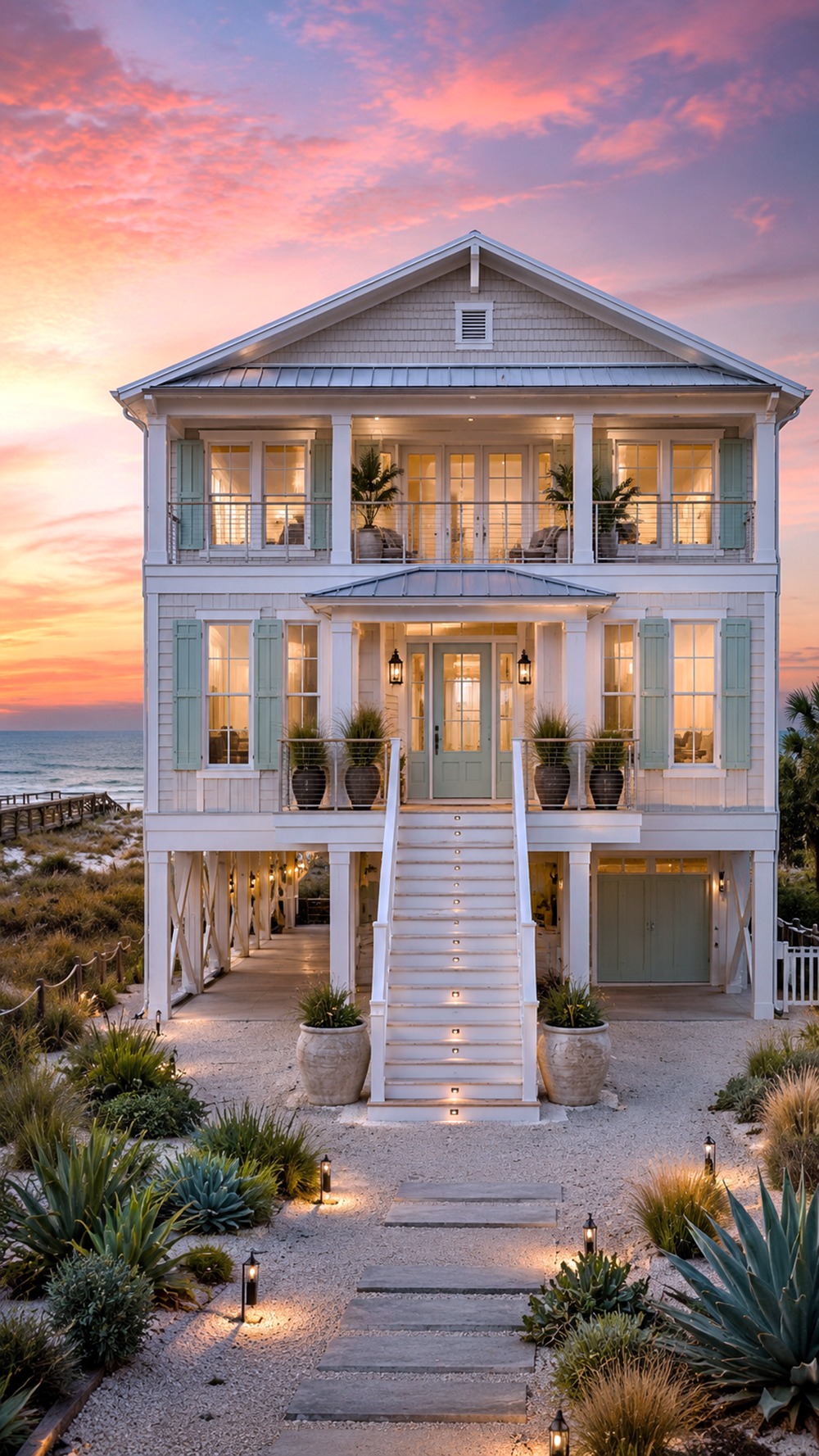
White siding is a coastal favorite for good reason. It looks clean, bright, and breezy. It also reflects sunlight, which helps the home feel cooler in hot beach towns. Pair it with soft blue shutters or a blue front door, and the whole house starts to feel like a seaside escape.
For a lasting finish, choose fiber cement siding or engineered PVC siding. These materials handle damp air better than real wood. They also resist rot, swelling, and insect damage.
Keep the white warm, not stark. A creamy white feels softer and more welcoming. Then bring in pale blue, seafoam, or dusty navy for a relaxed coastal touch.
Design cues to copy:
- Warm white fiber cement siding
- Seafoam blue shutters
- Soft navy front door
- White trim around windows
- Light gray porch flooring
- Wicker chairs with blue cushions
2. Light Gray Exterior with Crisp White Trim
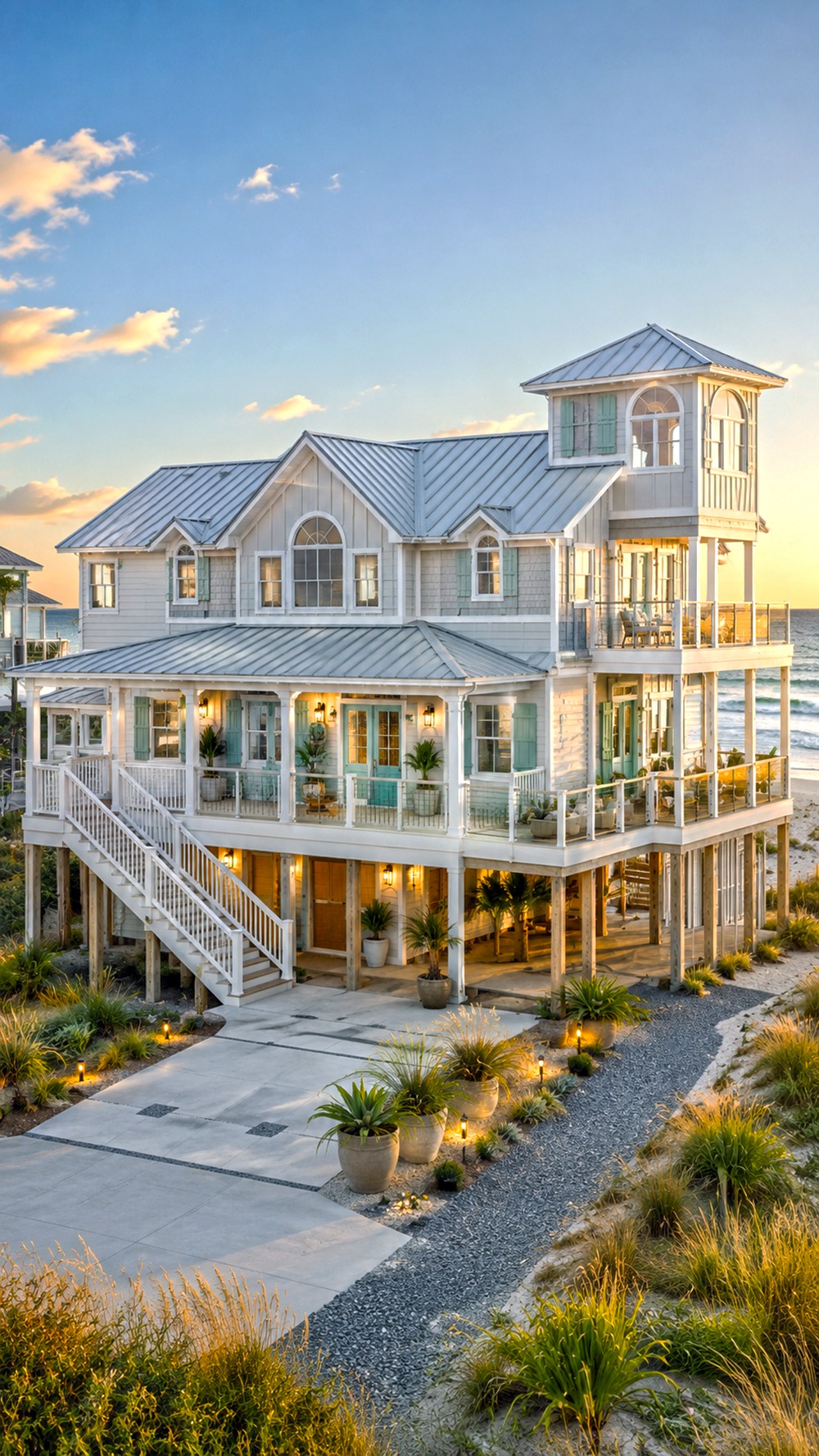
Light gray gives a beach house a calm and polished look. It feels modern, but still soft. It also works well with stone paths, white railings, and silver metal roofs.
This color scheme fits coastal homes that need a little more depth than all-white exteriors. A pale gray body with bright white trim creates sharp lines without feeling harsh. Add a dark blue or black front door for contrast.
Gray also hides windblown sand and light dirt better than pure white. That makes it a smart choice for busy beach homes.
Design cues to copy:
- Pale gray siding
- Bright white trim
- Charcoal or navy front door
- White porch columns
- Brushed metal lanterns
- Natural wood planters
3. Standing-Seam Metal Roof
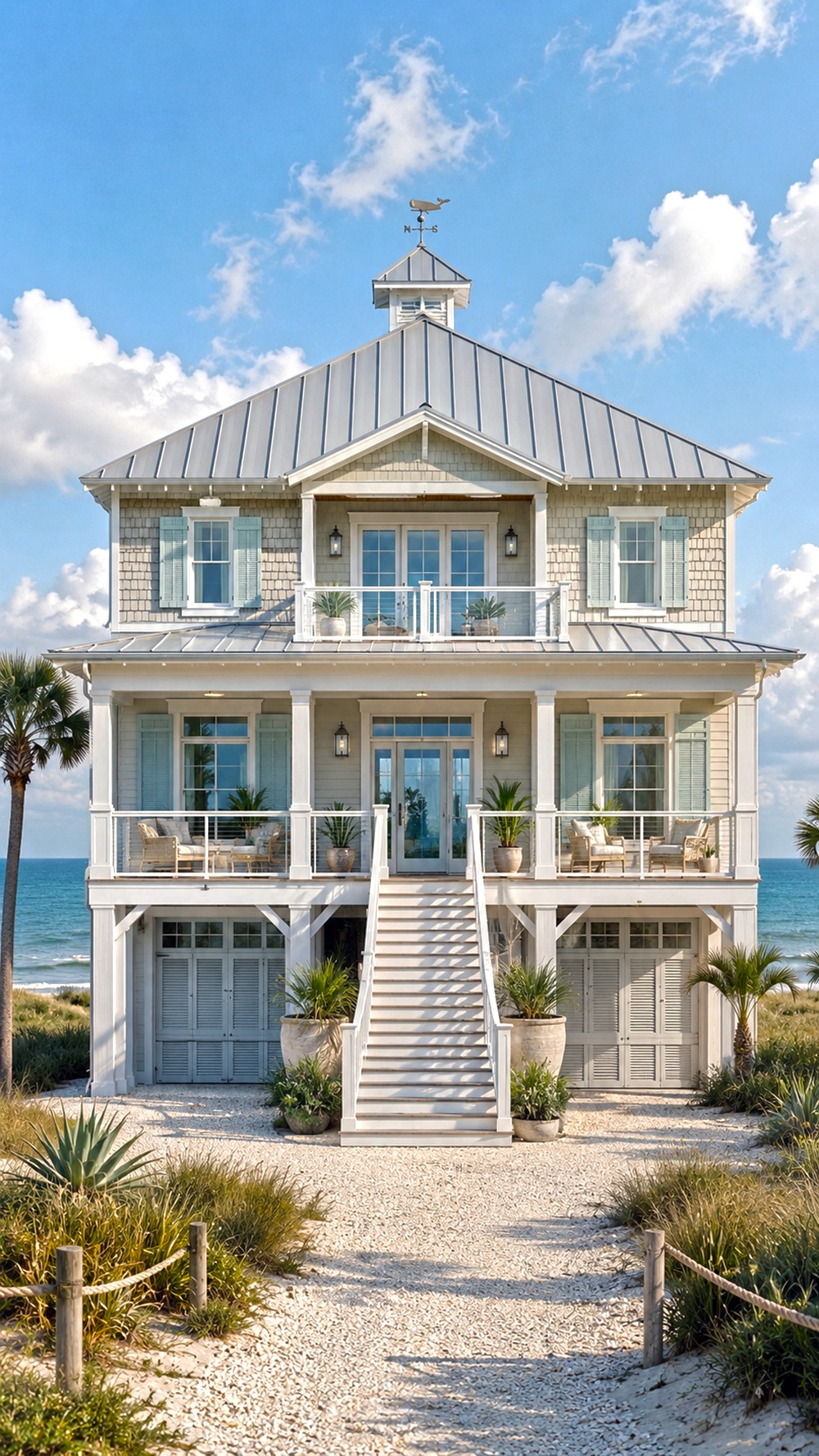
A standing-seam metal roof gives a beach house instant coastal character. It also works hard. This roof style sheds rain fast. It handles strong winds well when installed the right way. Plus, it has a clean look that pairs well with both cottage and modern coastal homes.
Choose silver, charcoal, white, or soft bronze for a beach-friendly finish. A lighter roof can help reflect heat. A darker roof adds contrast to white or cream siding.
Metal roofs also bring that classic seaside sound during a light rain. It feels cozy, simple, and very beach-house worthy.
Design cues to copy:
- Standing-seam metal roof
- White or light gray siding
- Slim roof overhangs
- Simple gutters
- Clean rooflines
- Matching metal porch roof
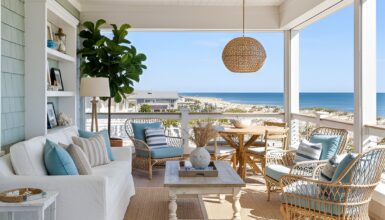
4. Wrap-Around Porch with Breezy Railings
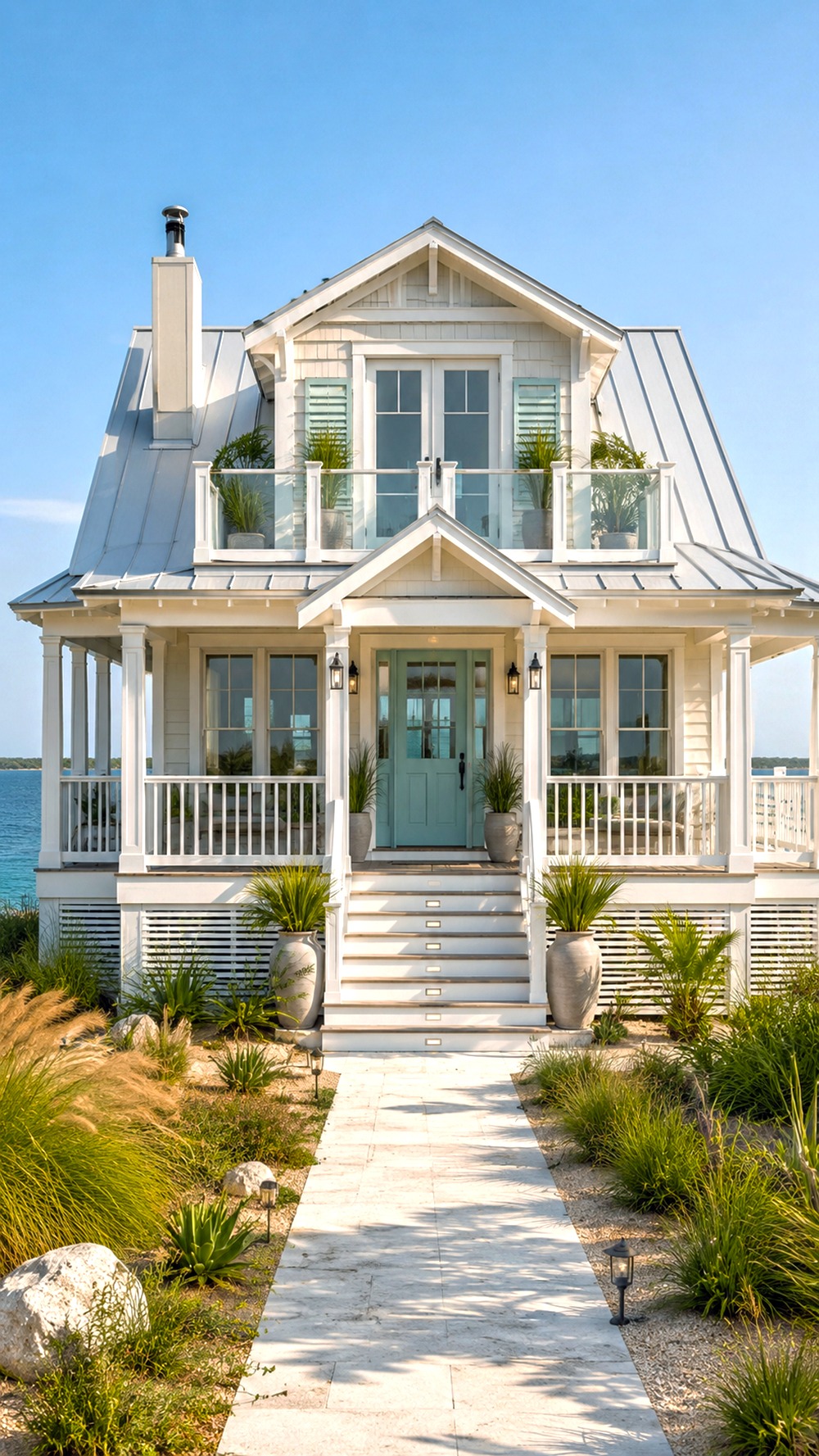
A wrap-around porch turns a beach house into a true retreat. It gives the home shade, charm, and extra outdoor living space. It also helps with airflow, which matters in warm coastal areas.
Keep the porch open and easy to use. Choose simple white railings, wide steps, and deep seating. Add ceiling fans for comfort. Use outdoor fabrics that resist fading and mildew.
A wrap-around porch works well on classic coastal cottages, Lowcountry homes, and raised beach houses. It creates that slow, easy feeling people love about seaside living.
Design cues to copy:
- Deep covered porch
- White railings
- Wide porch steps
- Outdoor ceiling fans
- Rocking chairs
- Striped cushions
- Hanging lanterns
5. Raised Foundation with Pretty Skirting
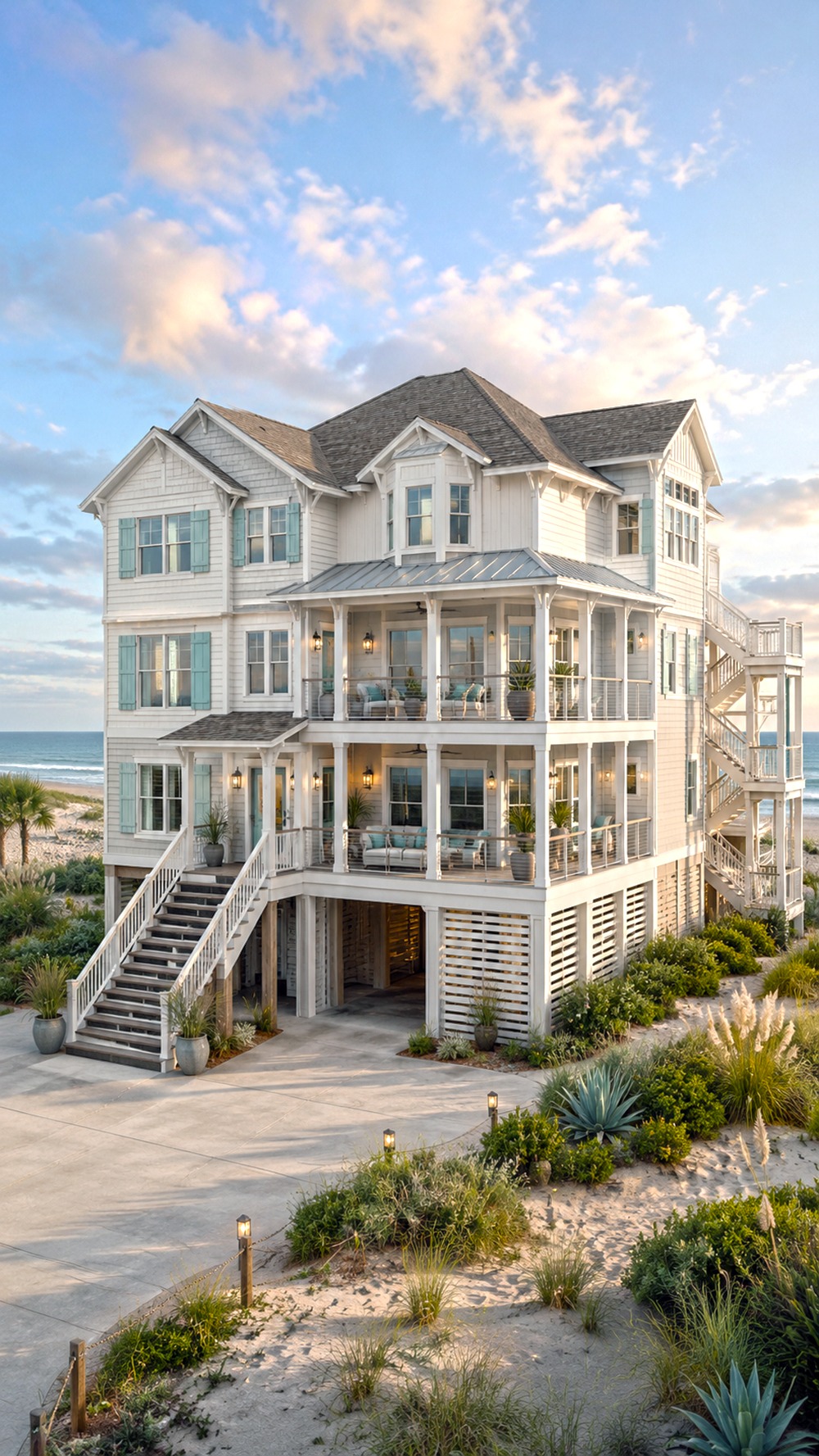
Many beach homes sit on raised foundations or pilings. This helps protect the home from flood water and storm surge. Yet raised homes can still look beautiful from the street.
The trick is to treat the lower level with care. Use clean lattice, horizontal slat skirting, masonry piers, or painted breakaway panels. Keep the look neat and intentional.
A raised home can also create useful space below. Use it for parking, storage, an outdoor shower, or a shaded lounge area. Just keep local building rules in mind.
Design cues to copy:
- Elevated foundation
- White lattice skirting
- Painted support posts
- Gravel or shell driveway
- Outdoor shower below
- Neat storage screens
- Coastal plants around the base
6. Impact-Rated Windows with Big Views
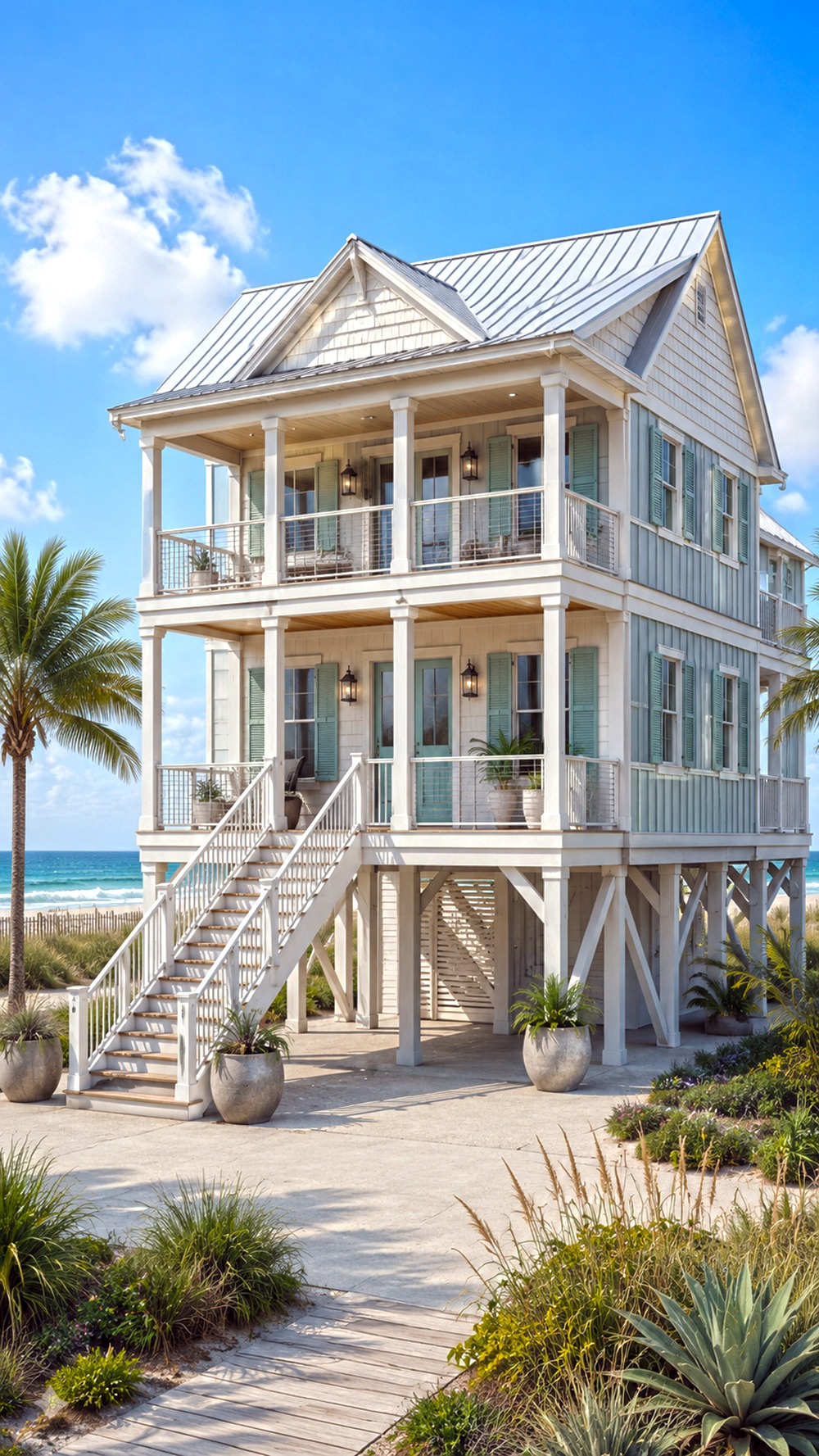
Beach houses need windows that do two jobs. They need to bring in light and frame the view. They also need to handle harsh weather.
Large impact-rated windows work well for coastal homes. They help protect the home during storms. They also reduce the need for bulky storm panels. Choose windows with strong frames and corrosion-resistant hardware.
For style, keep the trim simple and clean. White trim feels classic. Black trim gives a modern coastal look. Blue-gray trim adds charm without shouting.
Design cues to copy:
- Large impact-rated windows
- White or black window frames
- Simple trim
- Wide glass doors
- Transom windows
- Shutters for style
- Clear ocean-facing views
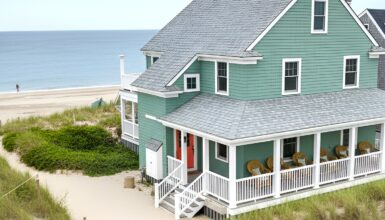
7. Soft Sage Green Coastal Cottage
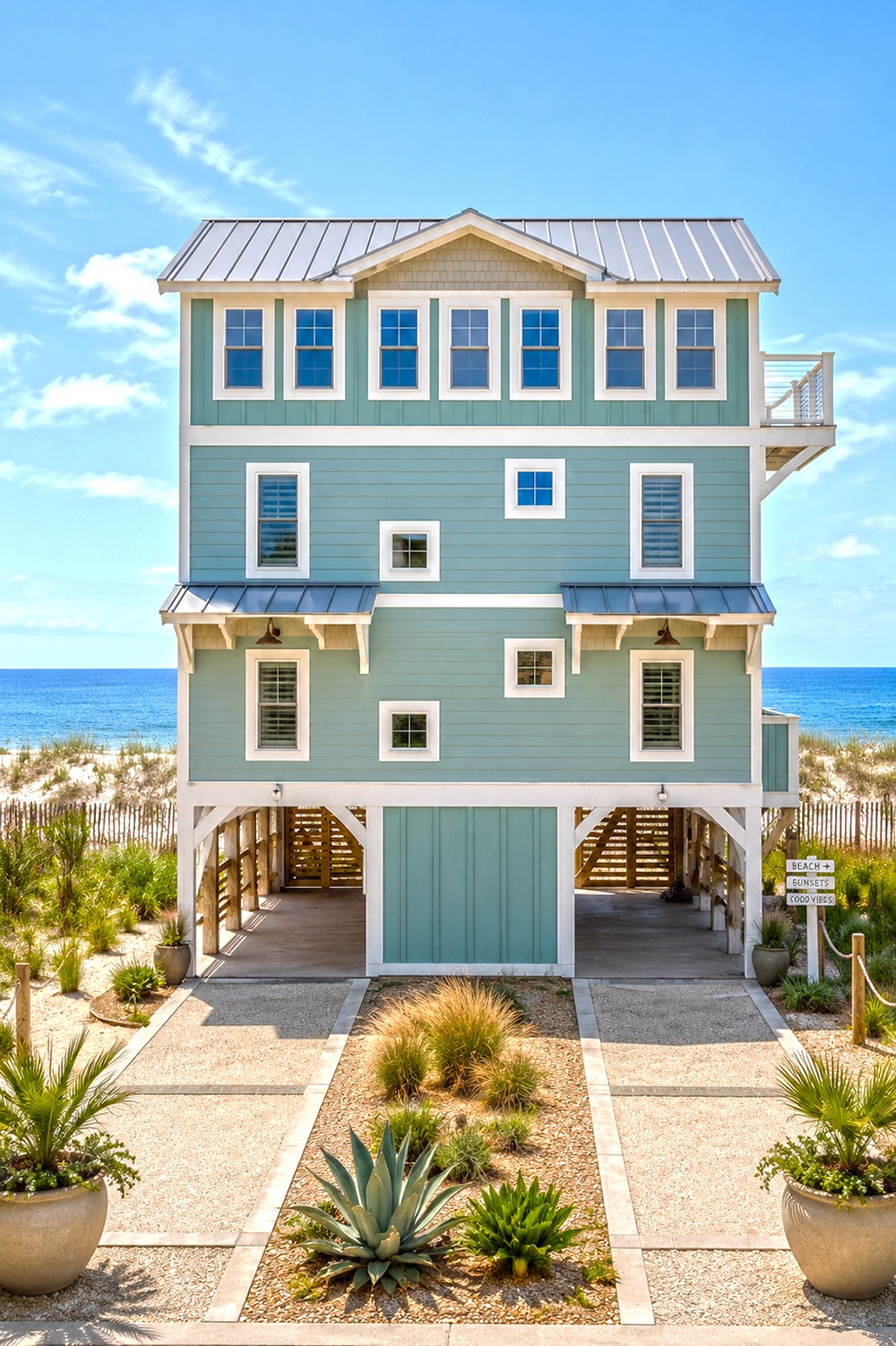
Sage green feels fresh, quiet, and natural. It works beautifully near dunes, sea grass, and sandy paths. This color gives a beach house a softer look than blue, while still feeling coastal.
Pair sage siding with white trim and a warm wood door. Add black lanterns for a crisp edge. For a sweet cottage look, use window boxes filled with white flowers and trailing greenery.
Sage also blends well with natural textures. Think cedar shakes, woven porch furniture, and shell-covered paths.
Design cues to copy:
- Sage green siding
- White trim
- Natural wood front door
- Black outdoor lights
- White flower boxes
- Woven porch chairs
- Sand-colored walkway
8. Navy Door as a Coastal Focal Point
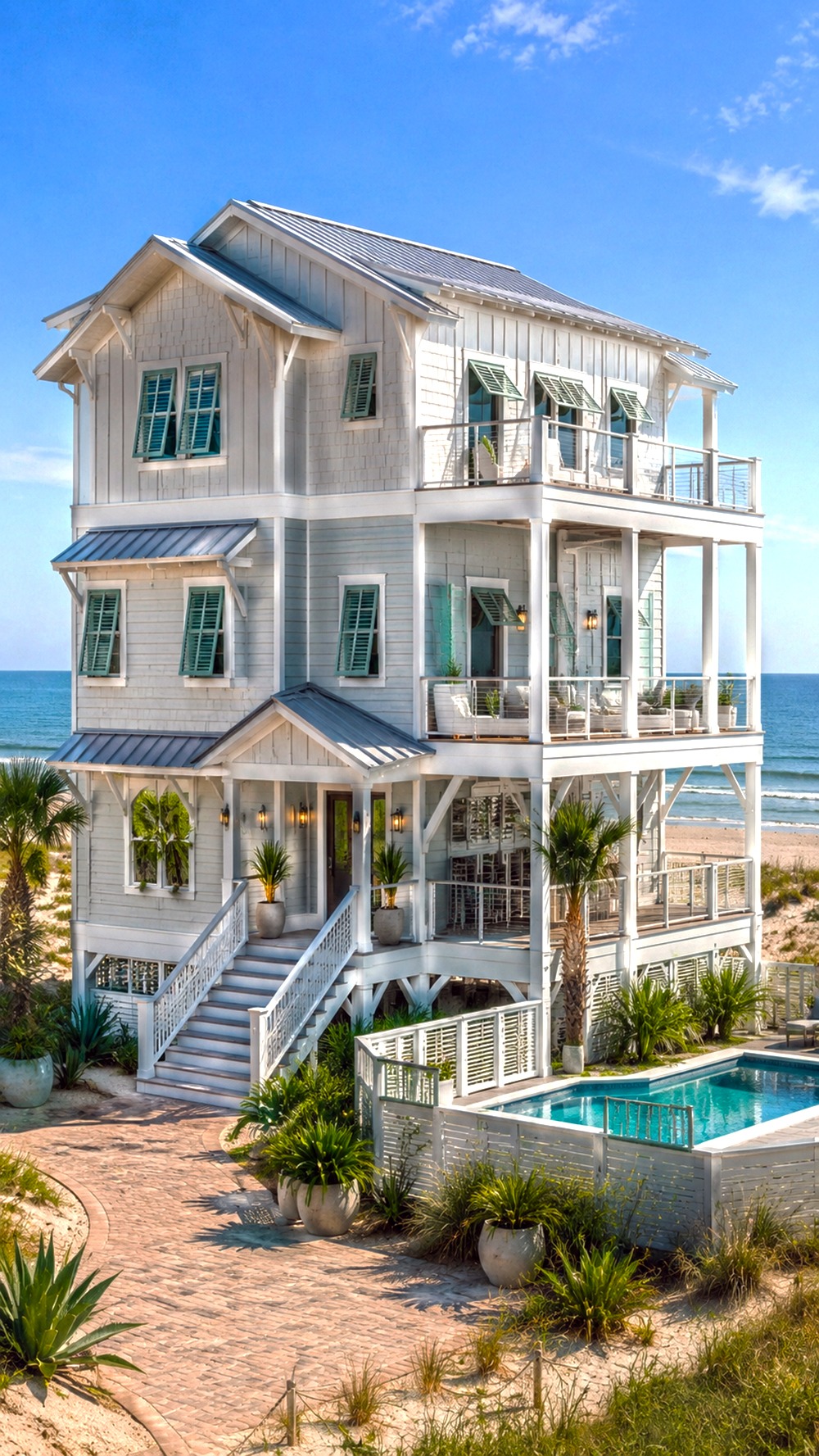
A navy front door adds instant polish. It feels classic, bold, and coastal. It also works with almost any beach house color. Try it with white, cream, gray, pale blue, or cedar shake siding.
Navy feels stronger than aqua or seafoam. So it works well when you want a refined beach look. Add brass or brushed nickel hardware for a little shine.
Keep the rest of the entry light. Use white trim, simple planters, and a natural fiber doormat. The navy door will do the heavy lifting.
Design cues to copy:
- Deep navy front door
- White trim
- Brass door hardware
- Clear glass sconces
- Matching navy shutters
- Large planters
- Simple welcome mat
9. Weathered Cedar Shake Style
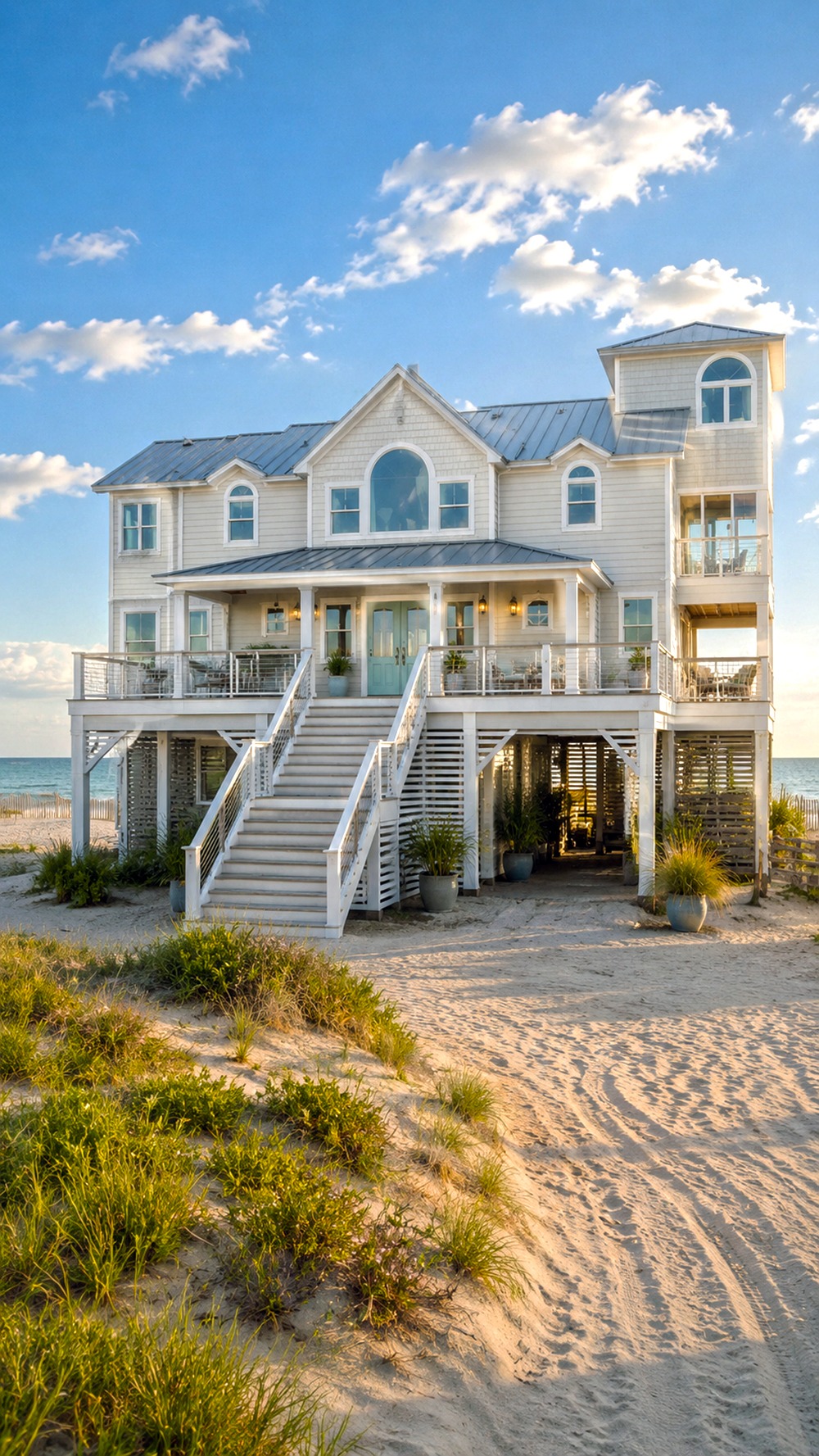
Cedar shakes create a classic beach cottage look. Real cedar can weather beautifully, but it needs care near salt air. For less upkeep, use fiber cement or composite shingles that mimic cedar.
A weathered gray shake finish feels natural and relaxed. It pairs well with white trim, blue doors, and stone paths. This look works best when you want the house to feel like it belongs near the dunes.
Add simple porch furniture and native grass. Avoid heavy, formal details. The charm comes from texture, softness, and age-worn beauty.
Design cues to copy:
- Weathered shake-style siding
- White trim
- Blue-gray shutters
- Stone or shell path
- Dune grass landscaping
- Simple porch railings
- Lantern-style lighting
10. Elevated Decks and Upper Balconies
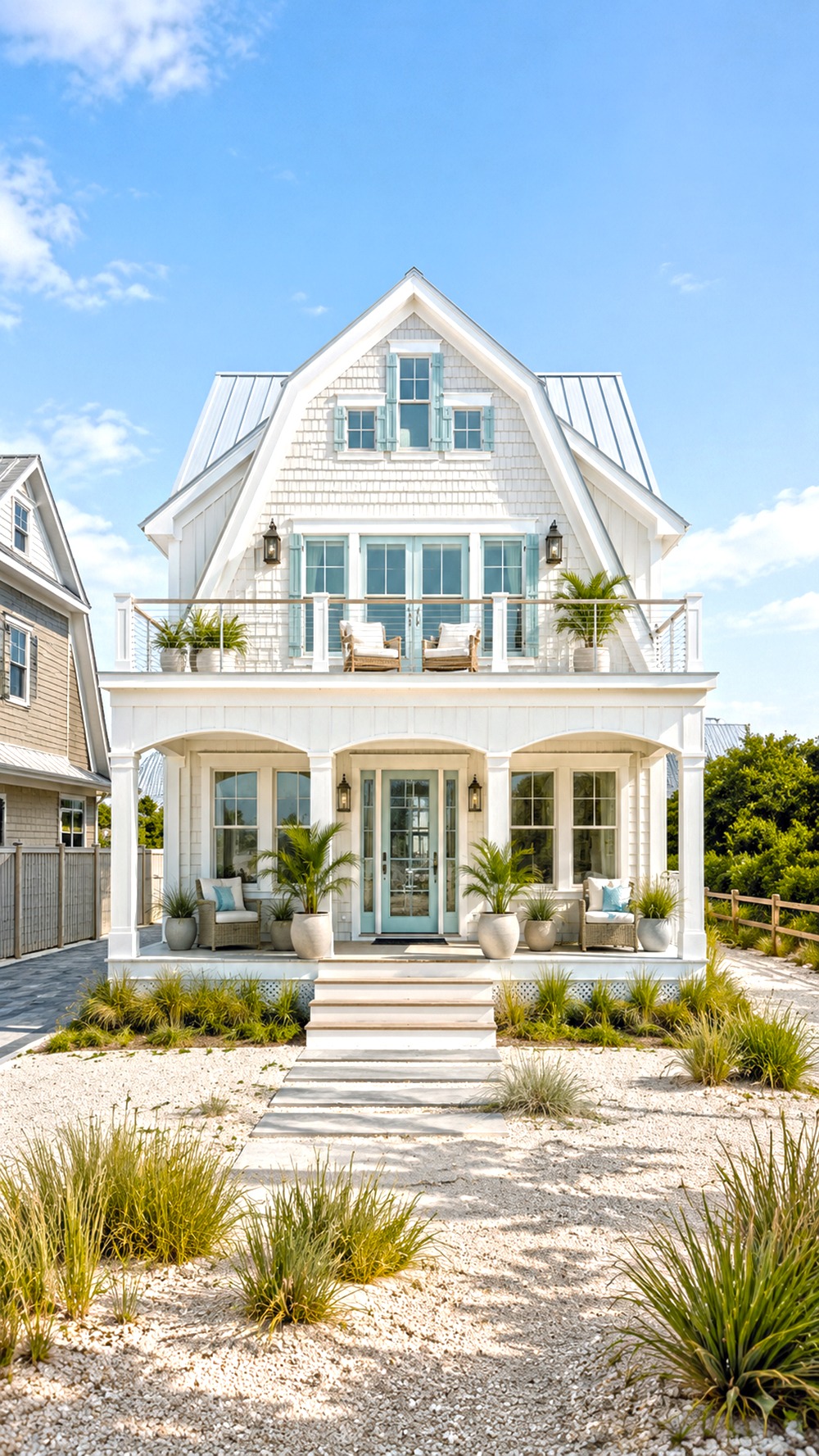
A beach house should make the most of the view. Upper decks and balconies help with that. They give you a place to watch sunrise, sunset, waves, or passing boats.
Use strong, weather-resistant decking. Composite boards work well because they resist moisture and fading. Cable railings or glass railings help keep the view open. White railings feel more classic.
Add built-in seating, potted plants, and low-profile furniture. Keep the layout open so the deck feels calm, not crowded.
Design cues to copy:
- Upper-level balcony
- Composite decking
- White or cable railings
- Outdoor lounge chairs
- Potted palms
- Slim outdoor table
- Simple stair access
11. Creamy Exterior with Warm Beige Accents
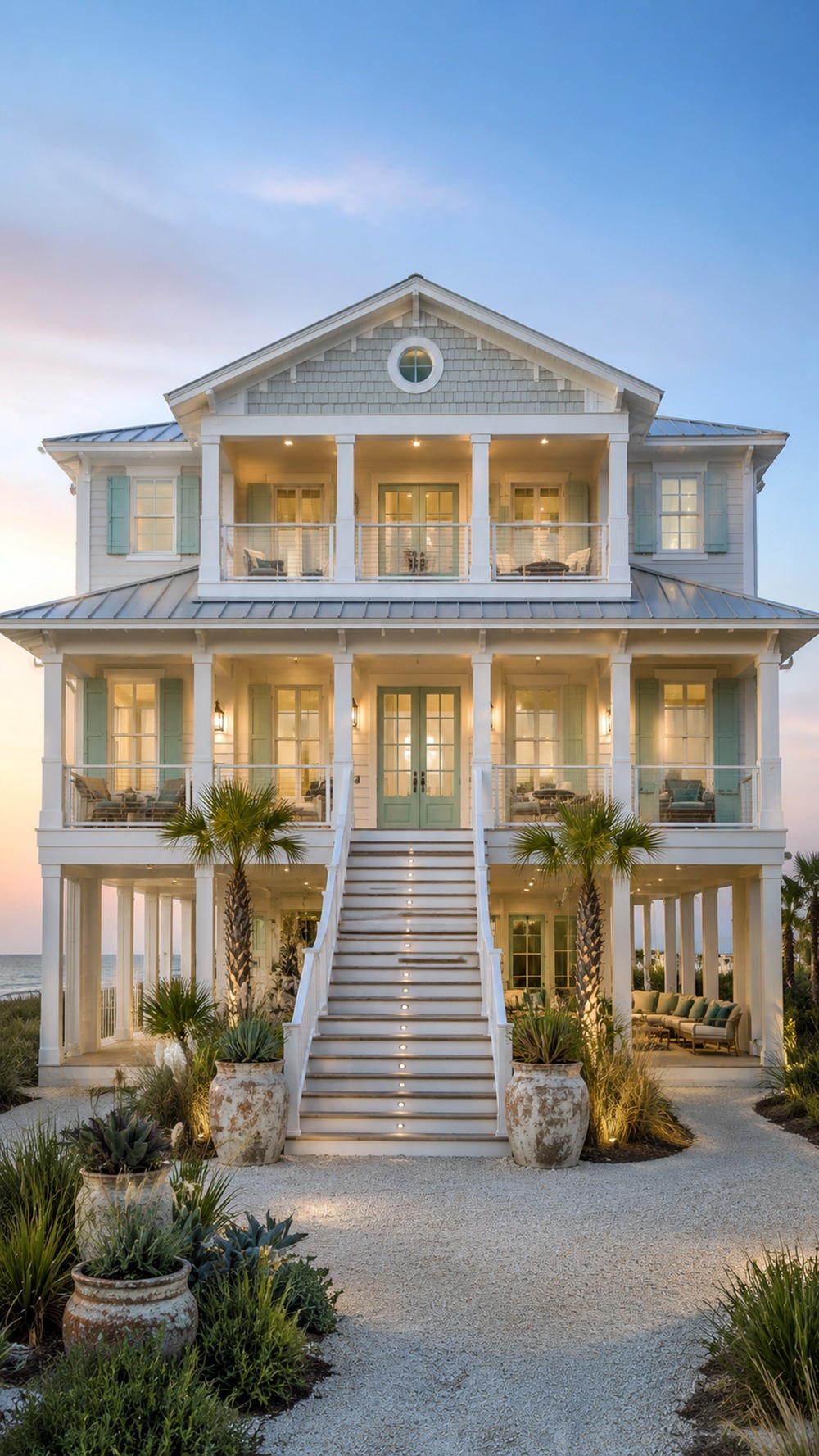
Cream and beige can make a coastal home feel soft and sun-washed. This palette works well for homeowners who want a beach look without strong blues.
Use creamy siding as the base. Then add warm beige shutters, tan porch flooring, and natural wood details. The result feels calm, sandy, and timeless.
This color story also works well with stone, shell, gravel, and rattan. It feels less nautical and more relaxed. Think quiet beach cottage, not themed beach décor.
Design cues to copy:
- Cream siding
- Beige shutters
- White trim
- Tan porch floor
- Natural wood door
- Rattan seating
- Shell or gravel path
12. Coastal Board-and-Batten Details
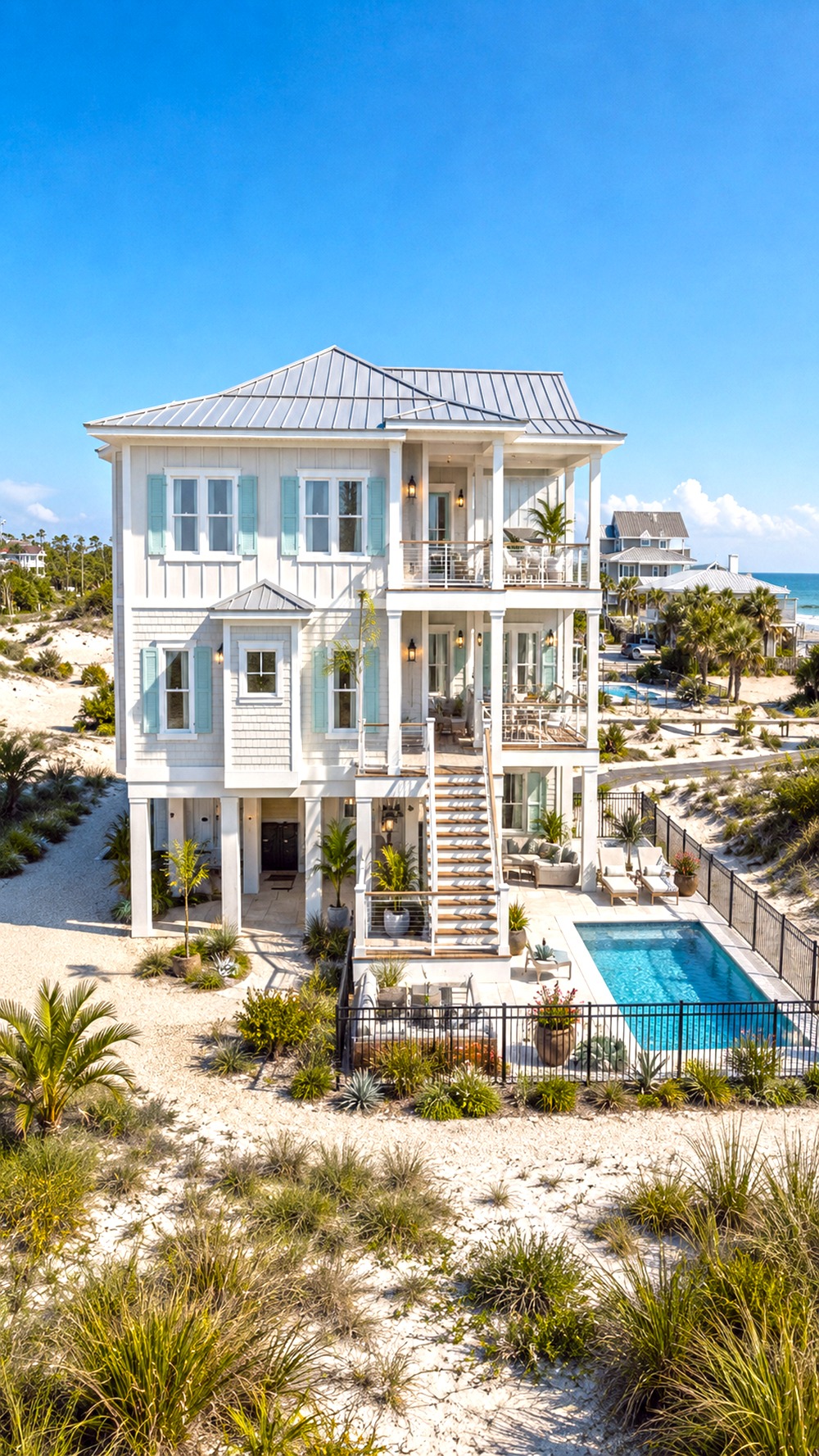
Board-and-batten siding adds height and texture. It gives a beach house a crisp, fresh look. It also works well on gables, porch walls, and entry areas.
Use it as the main siding for a modern coastal home. Or mix it with lap siding for more depth. White board-and-batten looks bright and clean. Pale blue or gray gives it a softer feel.
This detail can make a simple home look custom. It adds shadow lines and charm without adding clutter.
Design cues to copy:
- Vertical board-and-batten siding
- White or pale gray paint
- Lap siding on lower walls
- Clean trim lines
- Metal roof accents
- Simple porch posts
- Modern lanterns
13. Black Accents for a Modern Coastal Look
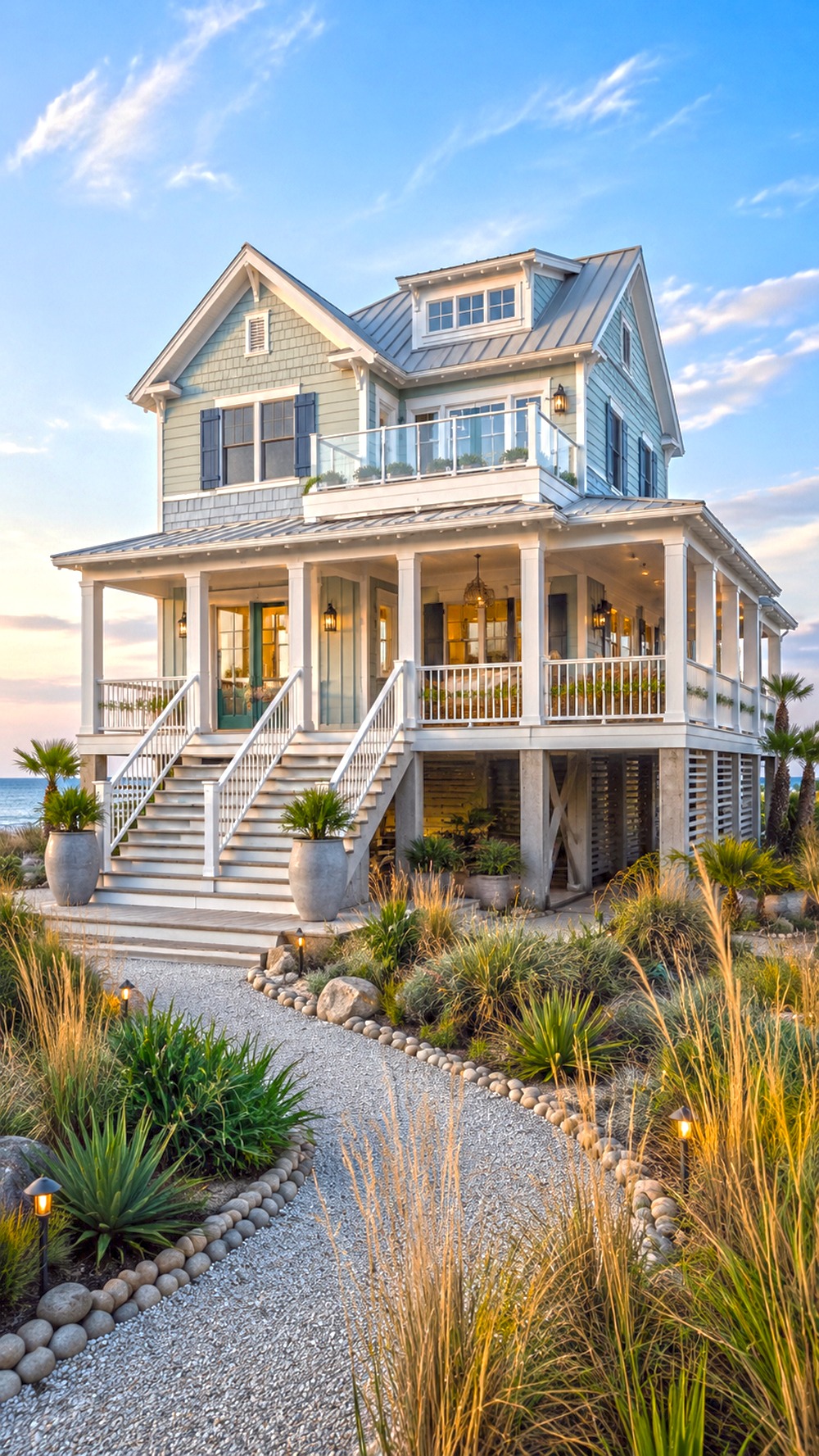
Black accents give a coastal home a sharp, modern edge. Use them with care. A little goes a long way.
Try black-framed windows, black lanterns, black railings, or a black front door. These details look striking against white, gray, or natural wood siding. They also help ground a light color palette.
To keep the home from feeling too stark, add warm textures. Use wood decking, woven chairs, beige cushions, and green plants. That mix keeps the look fresh and livable.
Design cues to copy:
- Black window frames
- White siding
- Black lantern sconces
- Natural wood porch floor
- Beige outdoor cushions
- Green planters
- Simple roofline
14. Outdoor Shower with Beach-House Charm
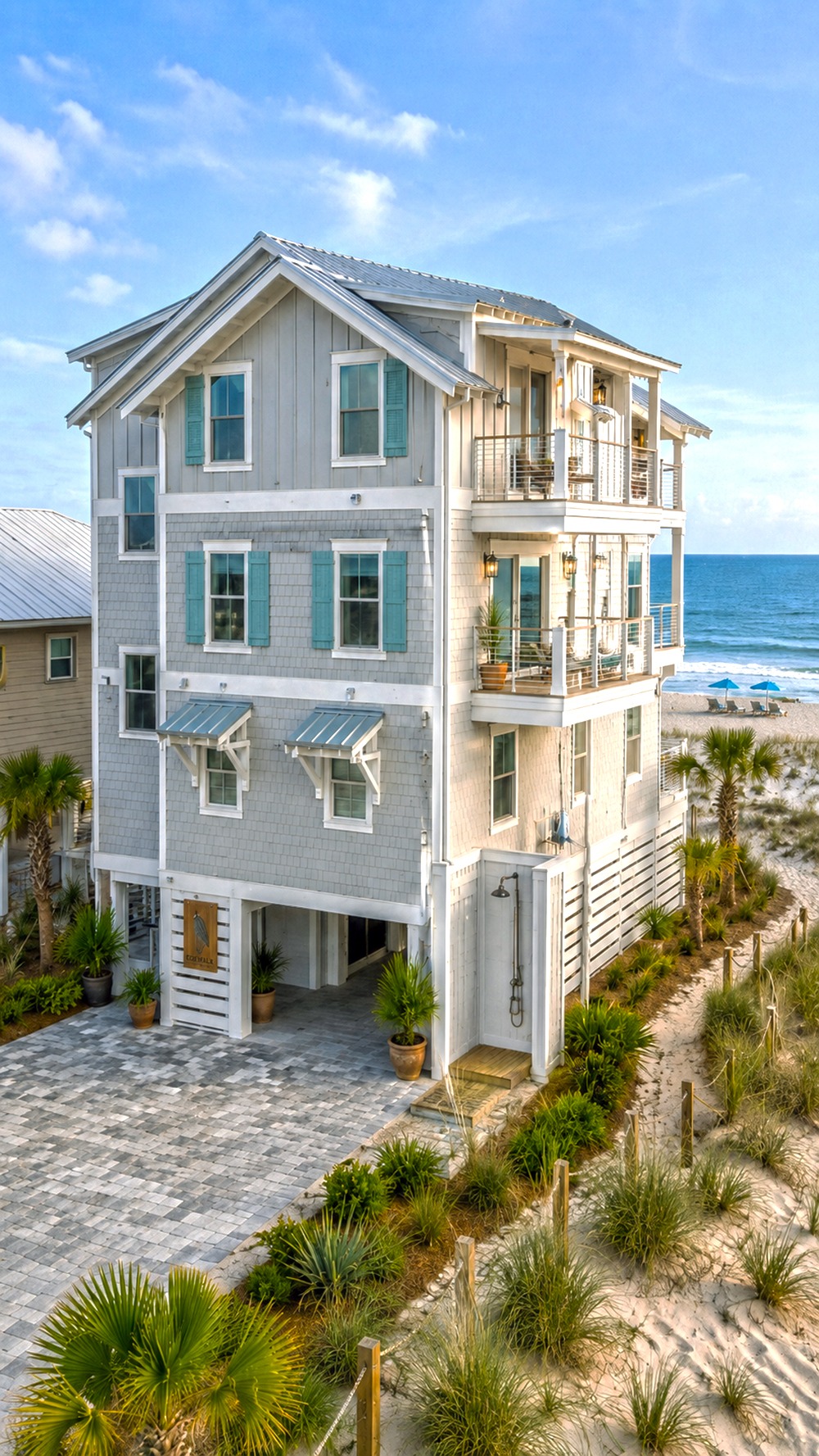
An outdoor shower is one of the most useful coastal features. It keeps sand out of the house. It also adds charm to the exterior.
Place the shower near a side entrance, under the raised home, or near the deck stairs. Use durable materials like PVC trim, composite decking, teak, or sealed cedar. Add hooks for towels and swimsuits.
Keep the design simple. A slatted wood screen, white enclosure, or blue painted door can make it feel cute and custom.
Design cues to copy:
- Enclosed outdoor shower
- Slatted privacy screen
- Towel hooks
- Foot-washing station
- Composite floor boards
- Weatherproof hardware
- Nearby storage bench
15. Shell, Gravel, or Sand-Colored Walkways
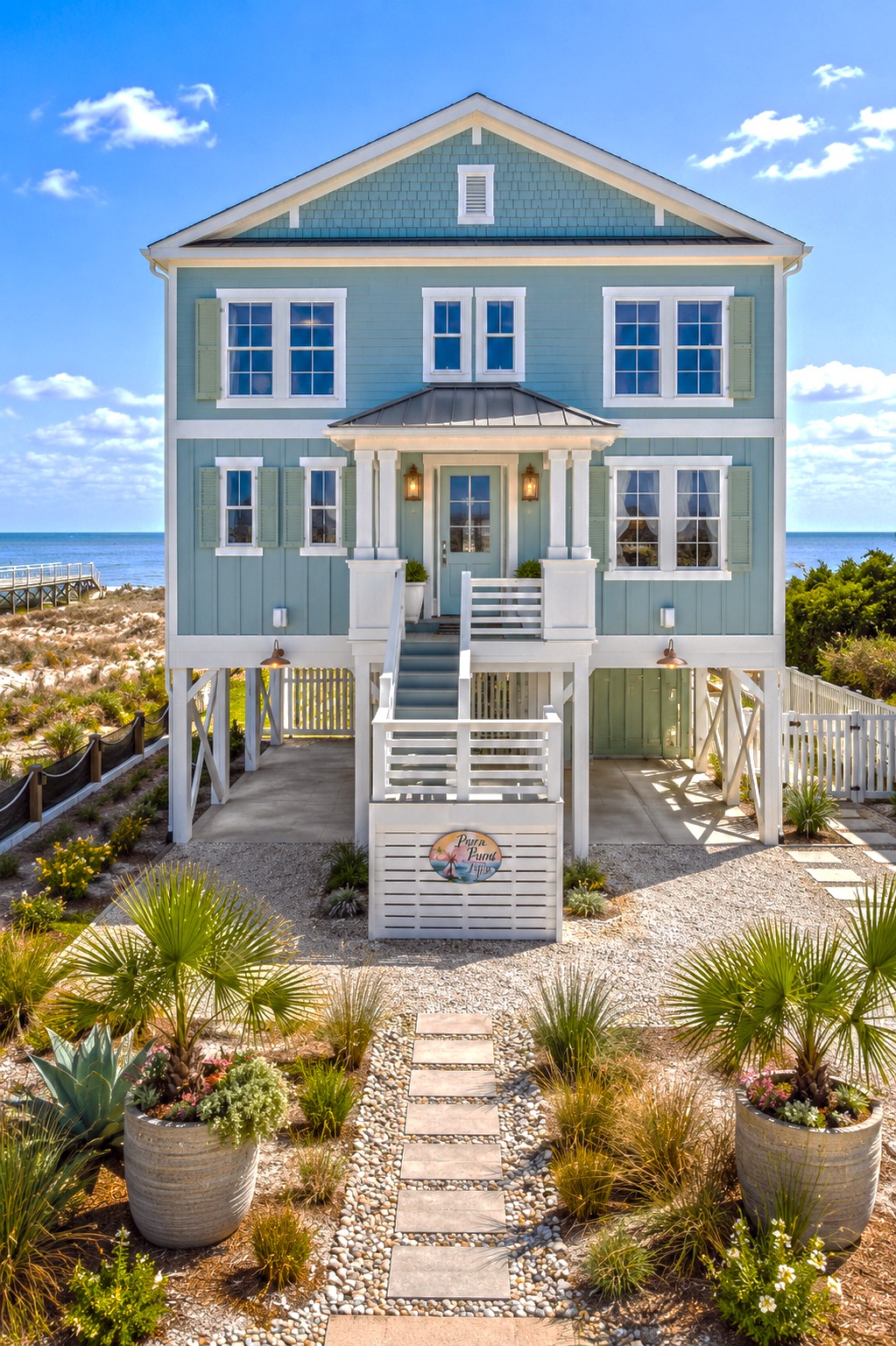
A coastal path should feel easy and natural. Shell, gravel, stone, and sand-colored pavers all work well. They suit the setting and drain better than many solid surfaces.
Use a wide path from the driveway to the porch. Add low grasses or shrubs along the sides. Keep plants loose and wind-friendly. This creates a soft welcome before guests even reach the door.
For a cleaner look, choose large pavers with gravel joints. For a cottage feel, use crushed shell with a simple border.
Design cues to copy:
- Crushed shell path
- Gravel driveway
- Sand-colored pavers
- Low coastal grasses
- Simple edging
- Solar path lights
- White porch steps
16. Hurricane Shutters That Add Style
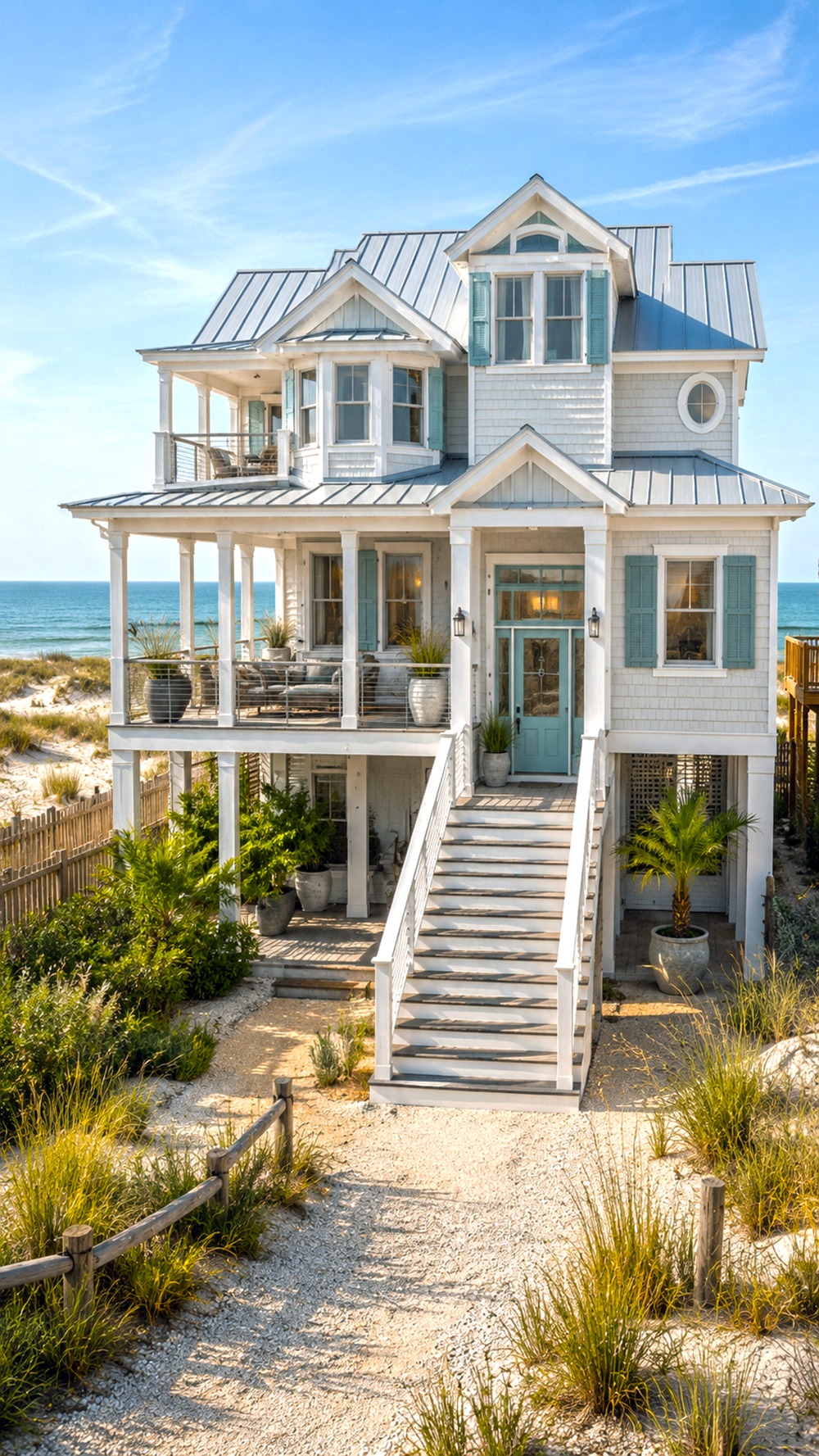
Shutters can do more than look pretty. In coastal areas, functional hurricane shutters can protect windows during storms. They can also add charm and color.
Bahama shutters look especially beachy. They angle out from the window and provide shade. Board-and-batten shutters feel more cottage-like. Louvered shutters add classic Southern charm.
Choose durable materials that resist moisture. Fiberglass, aluminum, and composite shutters often work better than real wood near the coast.
Design cues to copy:
- Bahama shutters
- Board-and-batten shutters
- Soft blue or sage paint
- Corrosion-resistant hinges
- White trim
- Impact-rated windows
- Simple storm-ready hardware
17. Low-Maintenance Coastal Landscaping
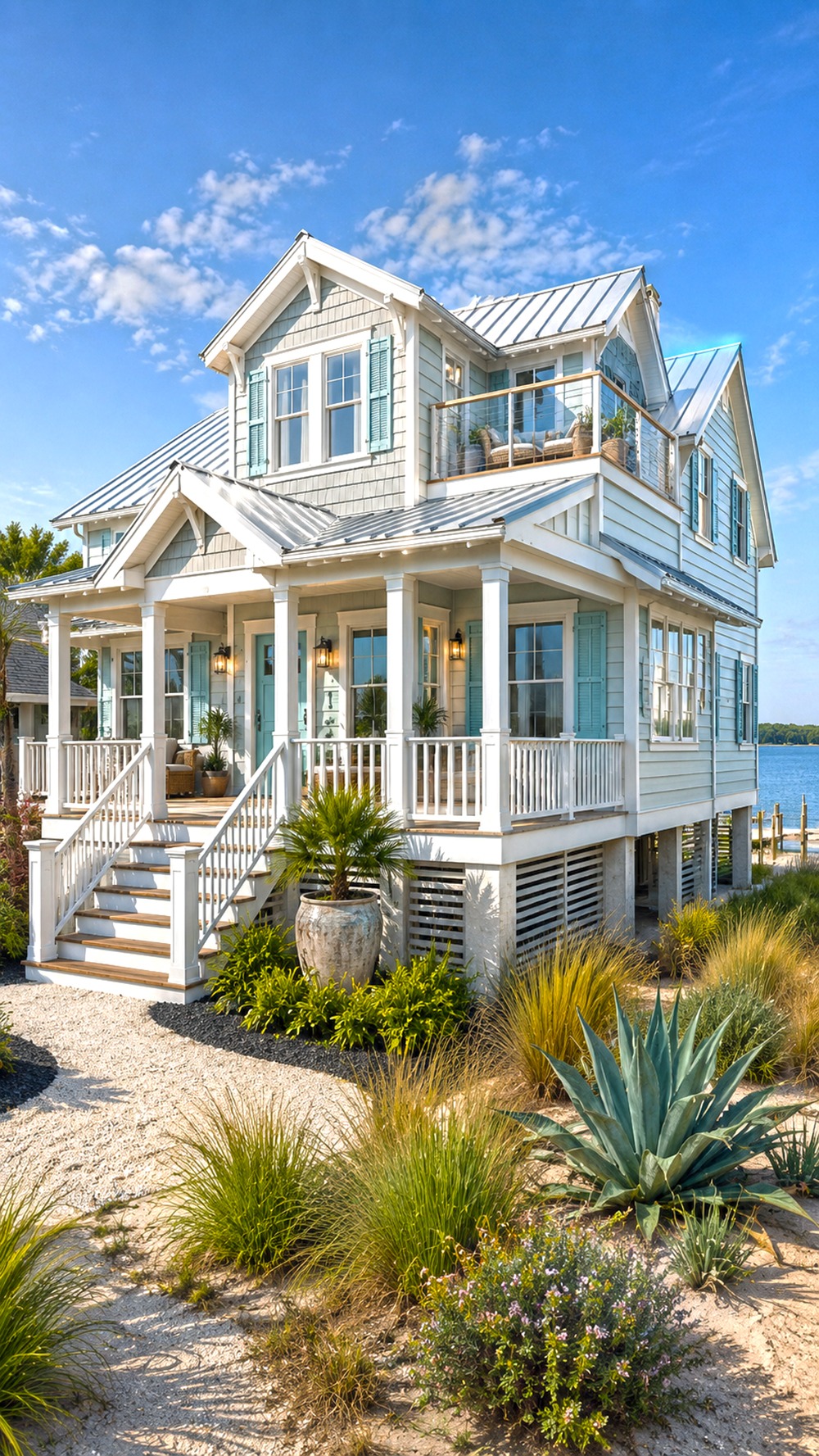
Beach landscaping should look relaxed, not fussy. Choose plants that can handle sun, wind, sandy soil, and salty air. Native grasses, palms, sea oats, yucca, rosemary, lantana, and wax myrtle can all work in the right climate.
Keep the beds loose and layered. Use mulch, gravel, or shells to reduce upkeep. Avoid plants that need constant watering or trimming.
A coastal yard should frame the house, not hide it. Let the porch, windows, and front door stay visible.
Design cues to copy:
- Native grasses
- Palm trees
- Sea oats
- Gravel or shell mulch
- Raised planters
- Drought-tolerant shrubs
- Curved garden beds
18. Lantern Lighting for a Warm Glow
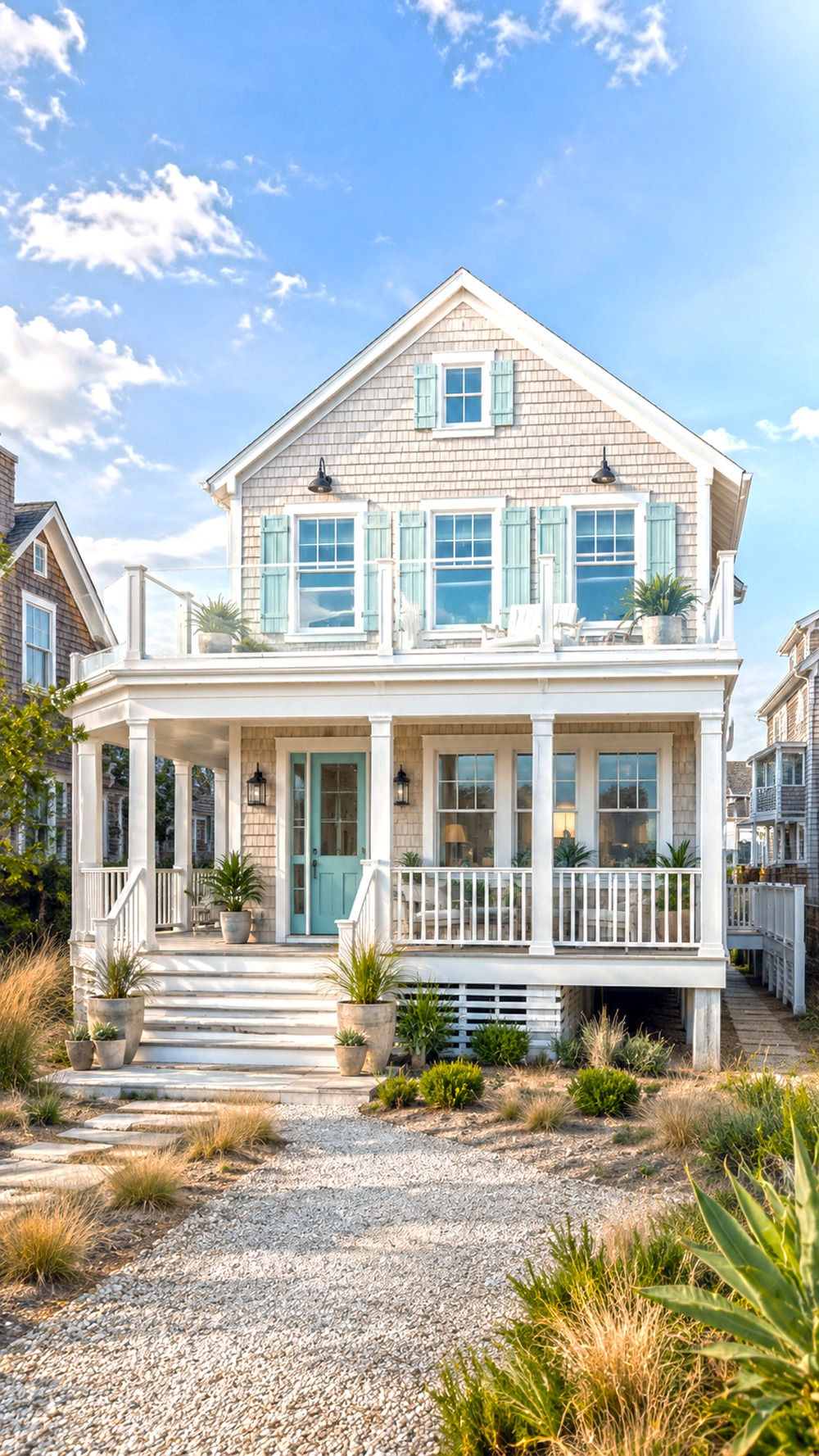
Outdoor lighting gives a beach house evening charm. It also helps guests move around safely after dark.
Lantern-style fixtures suit coastal homes well. Try black, bronze, brass, or brushed nickel finishes. Choose marine-grade fixtures when possible. Salt air can wear down cheap metal fast.
Place lights by the front door, garage, porch steps, deck stairs, and outdoor shower. Add path lights for a soft glow. Keep the bulbs warm, not icy white. Warm light feels cozy and calm.
Design cues to copy:
- Lantern sconces
- Marine-grade metal finish
- Warm white bulbs
- Path lights
- Porch ceiling light
- Step lighting
- Subtle deck lights
19. Simple White Railings and Wide Stairs
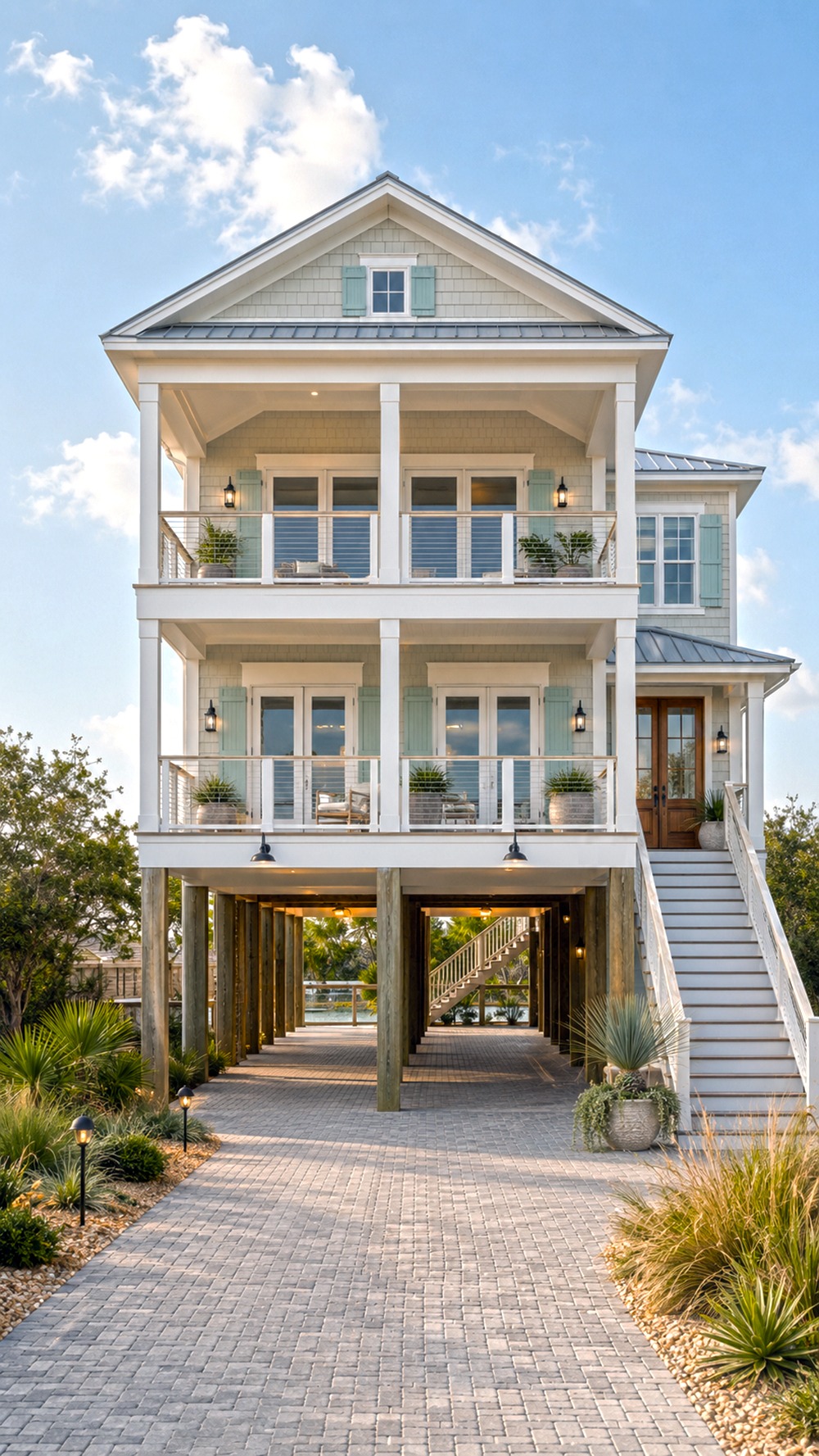
White railings give a beach house that classic coastal look. They make porches, decks, and balconies feel clean and open. They also pair well with almost any siding color.
Wide stairs create a grand but relaxed entry. They make the home feel more welcoming. Use durable stair materials that can handle wet feet and sandy shoes.
For a more modern look, use cable railings. For a cottage look, use square white balusters. Keep the design simple so it does not compete with the view.
Design cues to copy:
- White porch railings
- Wide front stairs
- Square balusters
- Composite stair treads
- Simple post caps
- Potted plants on steps
- Clear sightlines
20. Breezy Porch Furniture and Coastal Décor
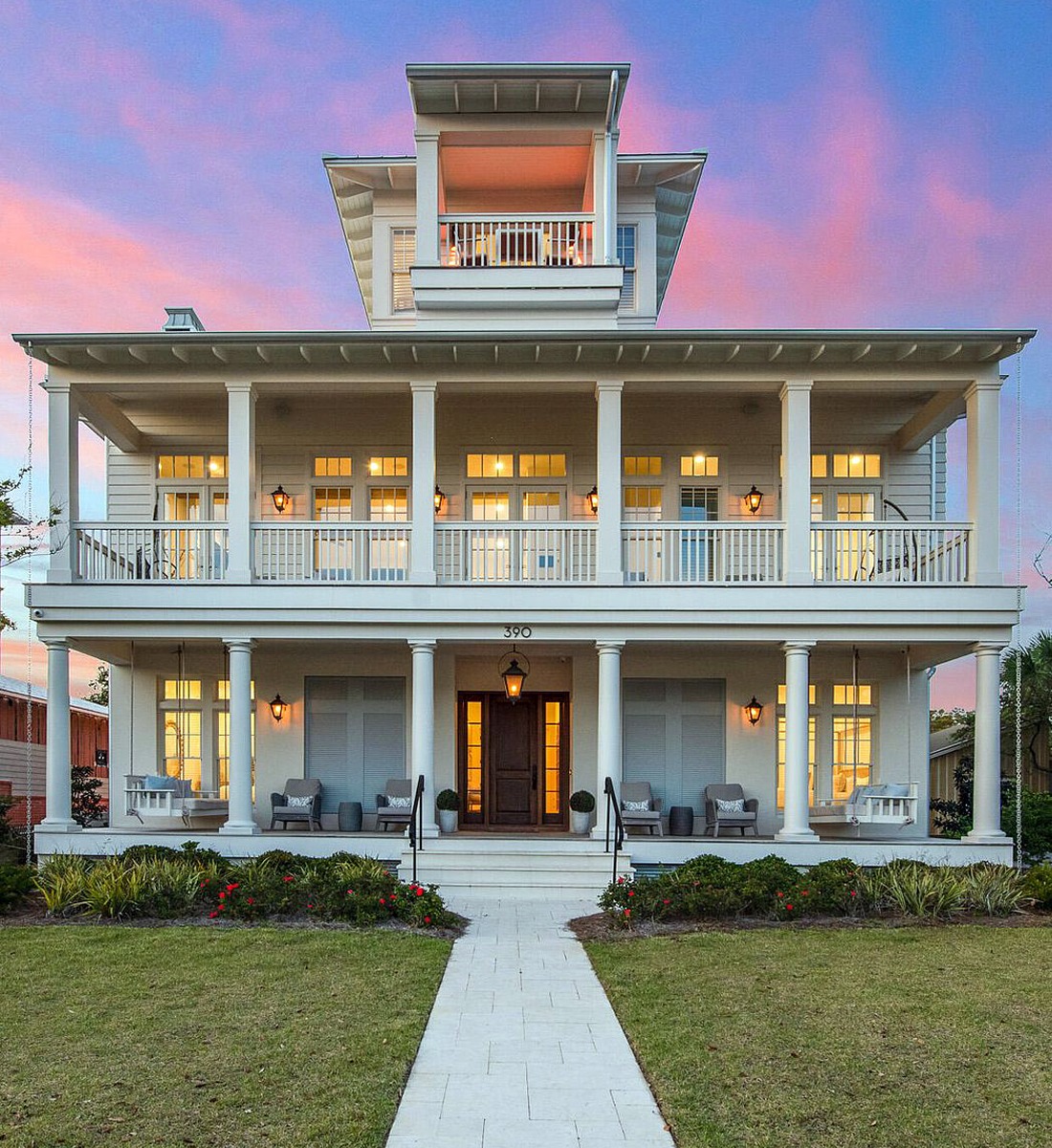
The final layer comes from outdoor furniture and décor. This is where the beach house starts to feel lived in.
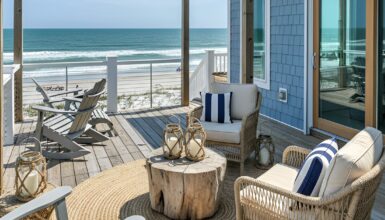
Choose pieces that can handle sun and moisture. Resin wicker, teak, aluminum, and all-weather rope work well. Use cushions in white, navy, beige, aqua, or soft gray. Then add a few striped pillows for a classic coastal touch.
Keep décor useful. A storage bench, outdoor rug, side table, and towel hooks all make life easier. Add plants for color and softness.
Design cues to copy:
- All-weather wicker seating
- Navy and white cushions
- Striped pillows
- Outdoor rug
- Teak side tables
- Storage bench
- Potted palms or ferns
Best Coastal Beach House Exterior Color Palettes
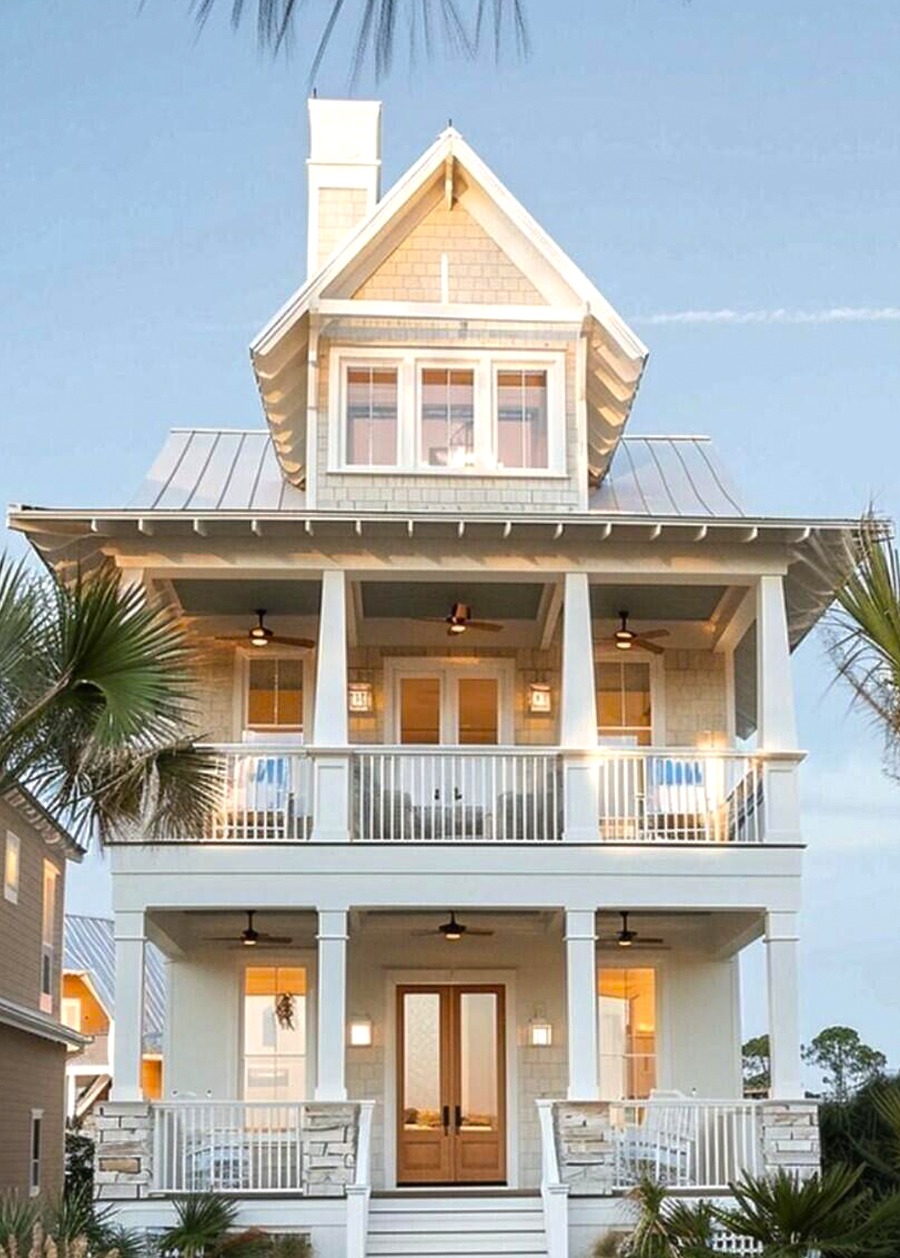
A great coastal palette should feel fresh, calm, and tied to the setting. Think of sand, shells, driftwood, cloudy skies, dune grass, and ocean water.
Here are a few easy color pairings that always work:
1. White + Navy + Natural Wood
This look feels crisp and classic. Use white siding, a navy door, and warm wood accents.
2. Soft Gray + White + Seafoam
This palette feels gentle and airy. It works well for cottages and beach bungalows.
3. Cream + Beige + Sage Green
This look feels warm and natural. It suits homes near dunes or marsh views.
4. Weathered Gray + White + Pale Blue
This palette has that old beach cottage charm. It looks relaxed and timeless.
4. White + Black + Tan
This mix feels modern, clean, and sharp. Add wood and plants to warm it up.
Best Materials for a Coastal Beach House Exterior
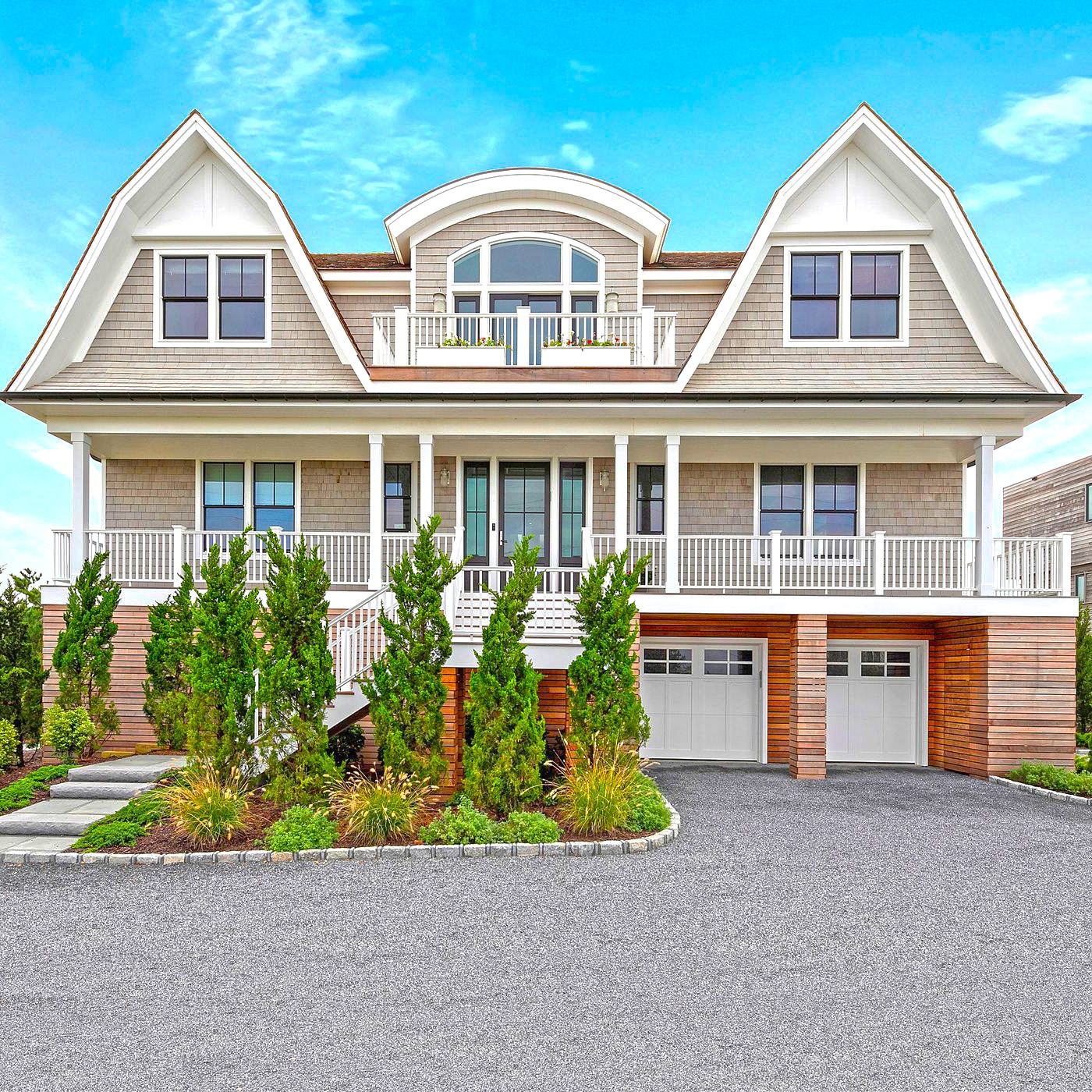
The coast can be hard on a home. So, the right materials matter.
- Fiber cement siding works well because it resists rot, pests, and moisture. It also comes in lap siding, shingles, and board-and-batten styles.
- Engineered PVC trim works better than wood in damp areas. Use it around windows, doors, porches, and rooflines.
- Composite decking holds up well on porches and balconies. It resists moisture and splinters less than wood.
- Standing-seam metal roofing gives the home a clean look and strong weather protection.
- Marine-grade lighting and hardware help prevent rust. This small choice makes a big difference near salt air.
- Impact-rated windows and doors help protect the home during storms. They also keep the house bright and open.
Final Thoughts
A beautiful coastal beach house exterior starts with charm. Yet it also needs strength. Salt, wind, heat, and storms can wear down the wrong materials fast. So, choose finishes that look good and work hard.
Crisp siding, durable roofing, raised foundations, big impact-rated windows, and shaded porches all help the home last. Then add soft colors, natural textures, and breezy outdoor spaces to bring in that beach-house magic.
The best coastal homes feel easy. They look bright in the sun. They welcome wet feet and sandy towels. Most of all, they make everyday life feel a little closer to vacation.