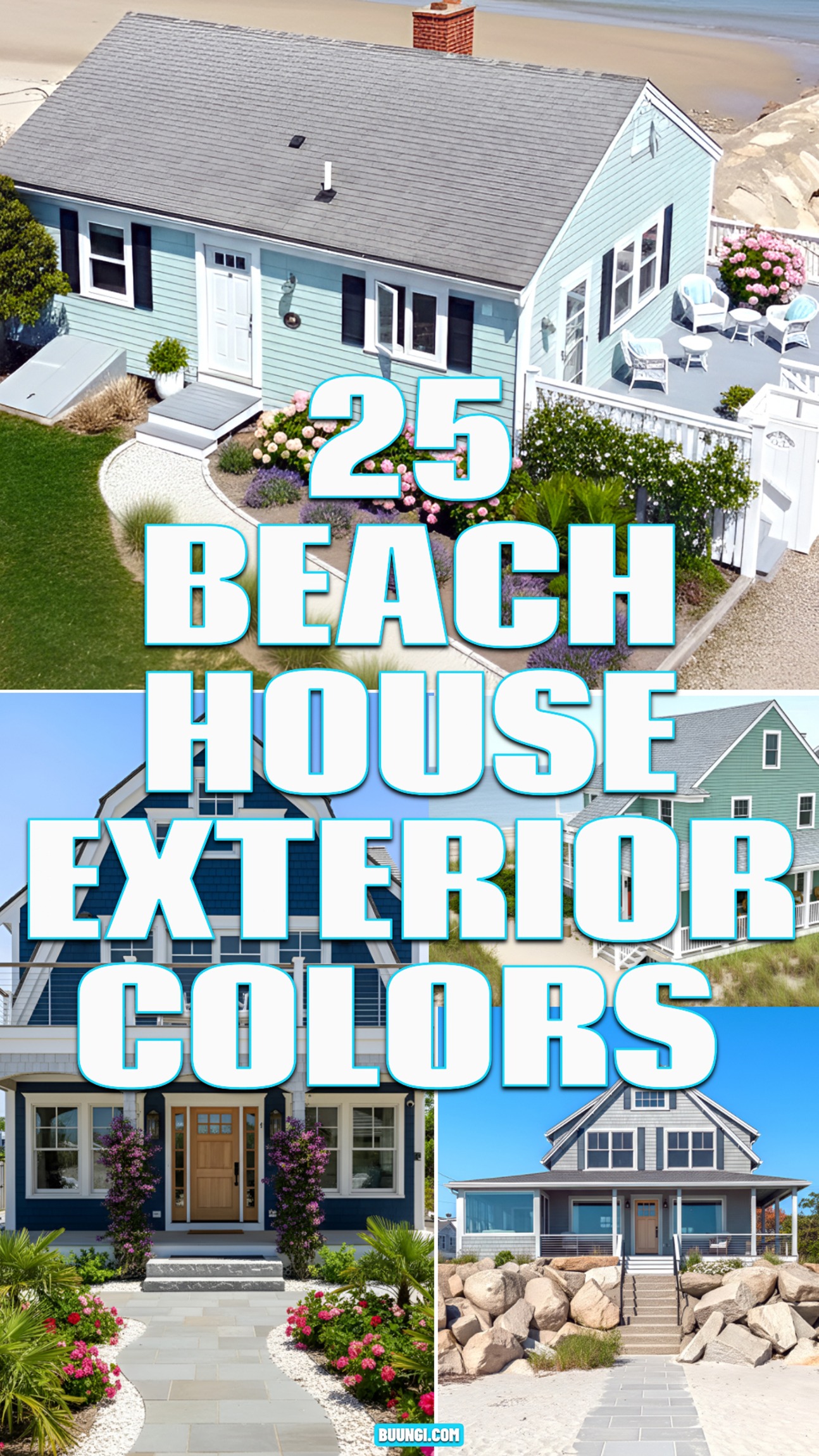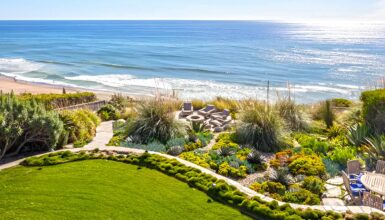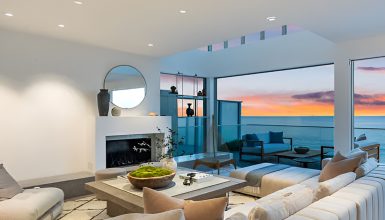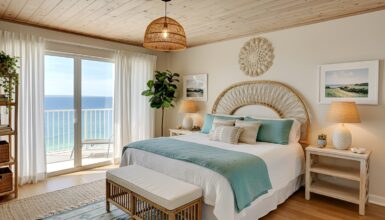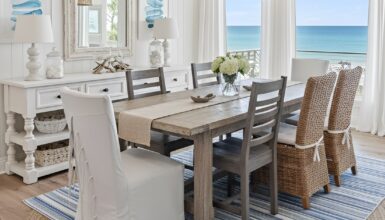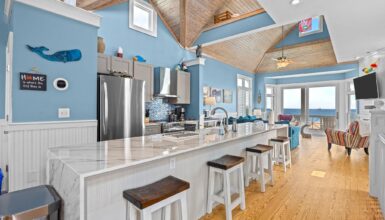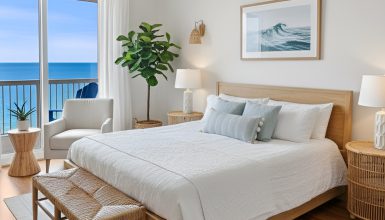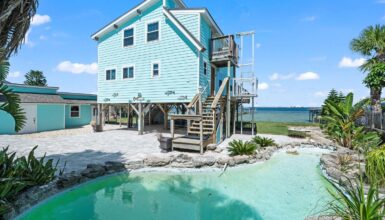
A beach house should feel like a deep breath. It should look bright in the sun, calm in the shade, and warm when the porch lights turn on at night. The right exterior color can do all of that.
Color sets the whole mood before anyone steps inside. A white beach house feels crisp and classic. A pale blue cottage feels soft and sweet. A charcoal gray exterior feels modern and bold. Then, when you add the right trim, roof, shutters, railing, and front door, the whole home comes to life.
So, if you want a beach house exterior that feels relaxed, polished, and full of charm, start with the color. These beach house exterior colors can help you create a look that feels coastal, fresh, and easy to love.
1. Crisp White
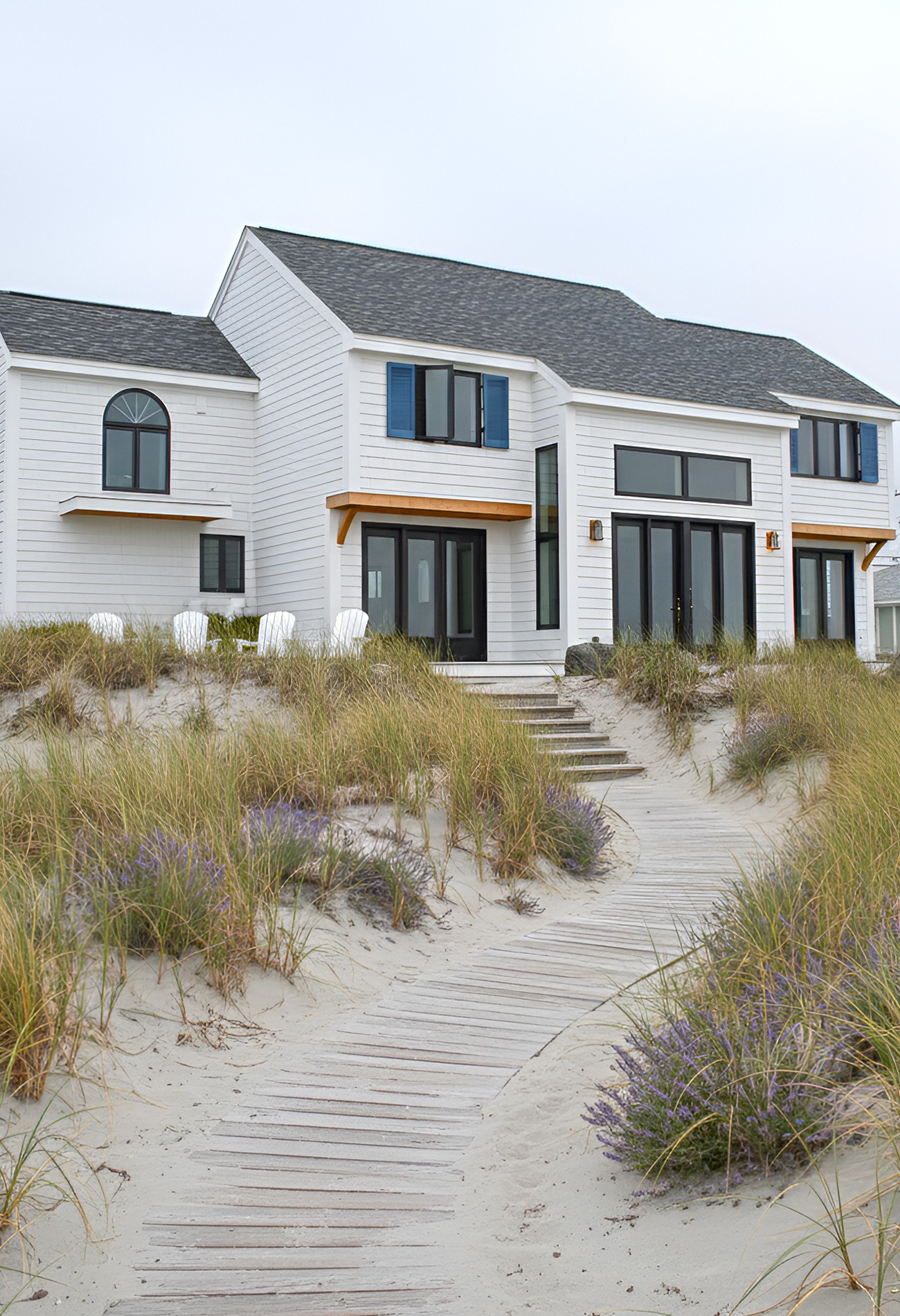
Crisp white is one of the most classic beach house exterior colors. It feels clean, bright, and open. It also reflects sunlight, which helps the house look fresh even on hot days.
This color works well on almost any beach home style. It can look simple and cottage-like. It can also feel sleek and modern. The key is to layer it with texture. Think board and batten siding, cedar shakes, stone steps, or natural wood beams.
White also gives you room to play with accents. A navy door makes it feel nautical. A pale blue ceiling on the porch adds charm. Black windows add a modern edge.
Design cues:
- Use white siding for a clean coastal base.
- Add black windows for contrast.
- Pair it with natural wood doors or beams.
- Use blue shutters for a classic seaside look.
- Add warm porch lights so the home does not feel too stark.
2. Soft Sand Beige
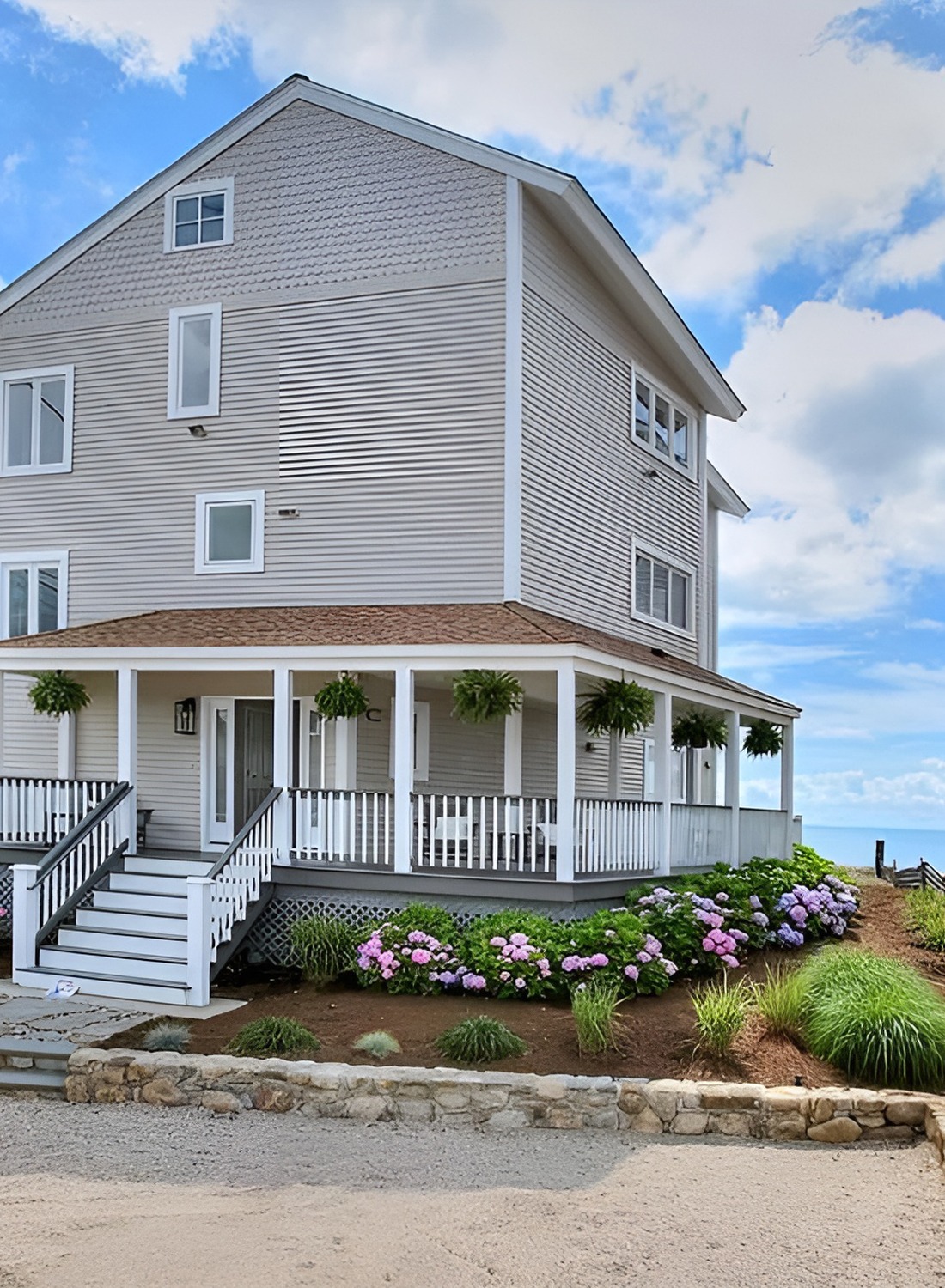
Soft sand beige feels warm, calm, and natural. It blends beautifully with the beach setting. It looks like dunes, shells, and sun-bleached stone.
This color is perfect if you want a home that feels relaxed but not plain. It works well with white trim, tan stone, and light wood decks. It also looks lovely with soft blue or sage green accents.
Because beige can feel flat, texture matters. Use shingles, lap siding, stone bases, or woven outdoor decor. These layers help the color feel rich and cozy.
Design cues:
- Pair sand beige siding with white trim.
- Use cedar shutters or wood columns.
- Add a blue-gray front door.
- Choose stone paths in warm tones.
- Plant beach grass for a soft, natural look.
3. Weathered Gray
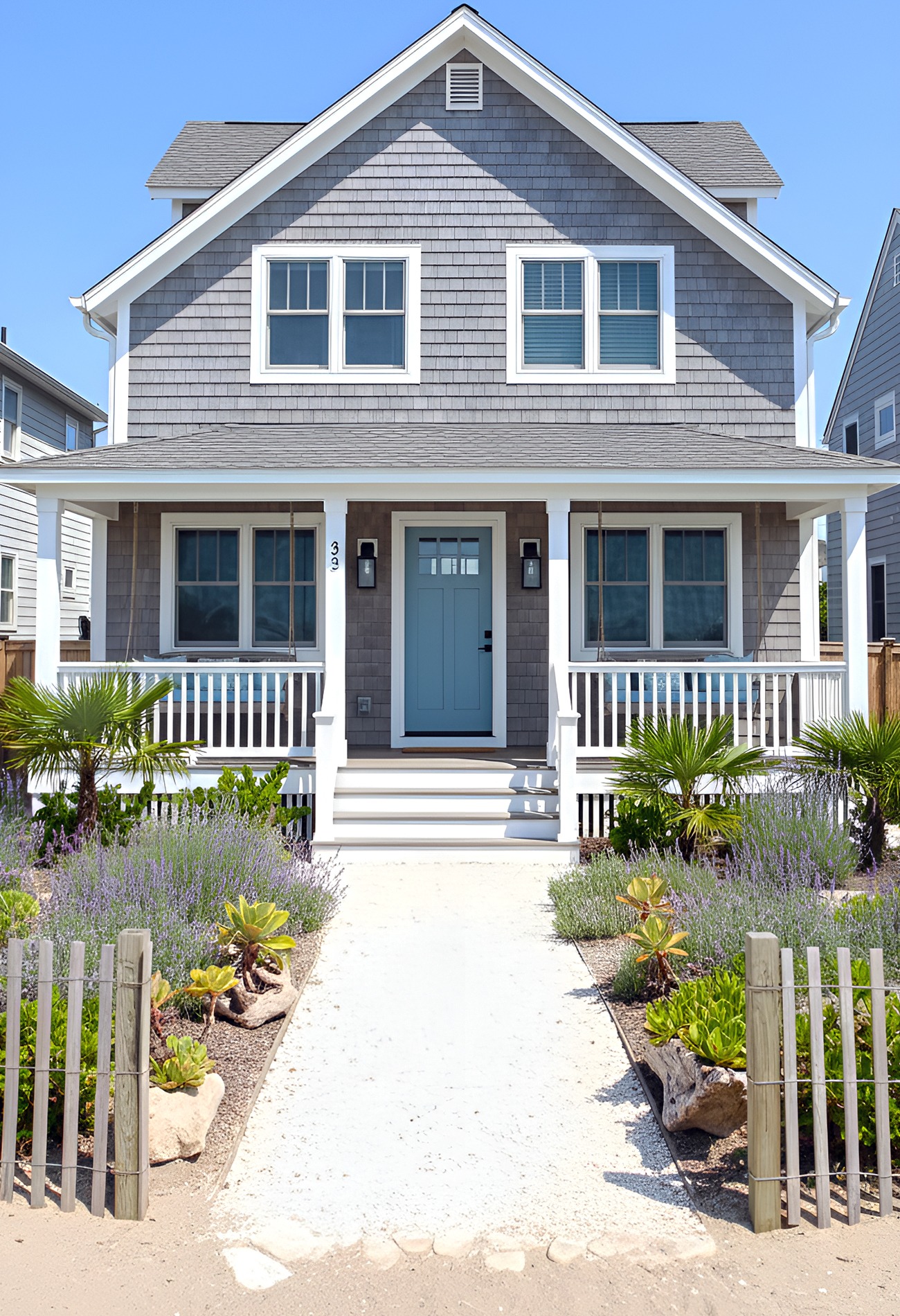
Weathered gray gives a beach house that easy, windswept look. It feels like driftwood, cloudy skies, and old boardwalks. This color works well for homes near the water because it already has a sun-faded feel.
It can lean rustic, coastal, or modern. For a softer look, pair it with white trim. For a bolder look, use black windows and metal railings. For a cottage look, add pale blue shutters.
Weathered gray also works well with cedar shingles. Over time, natural cedar turns gray, which gives the home a timeless beach style.
Design cues:
- Use gray shingles or gray painted siding.
- Add white trim for a fresh finish.
- Choose black lighting for a modern touch.
- Use wood steps or porch railings.
- Add soft blue accents for a relaxed coastal feel.
4. Pale Sky Blue
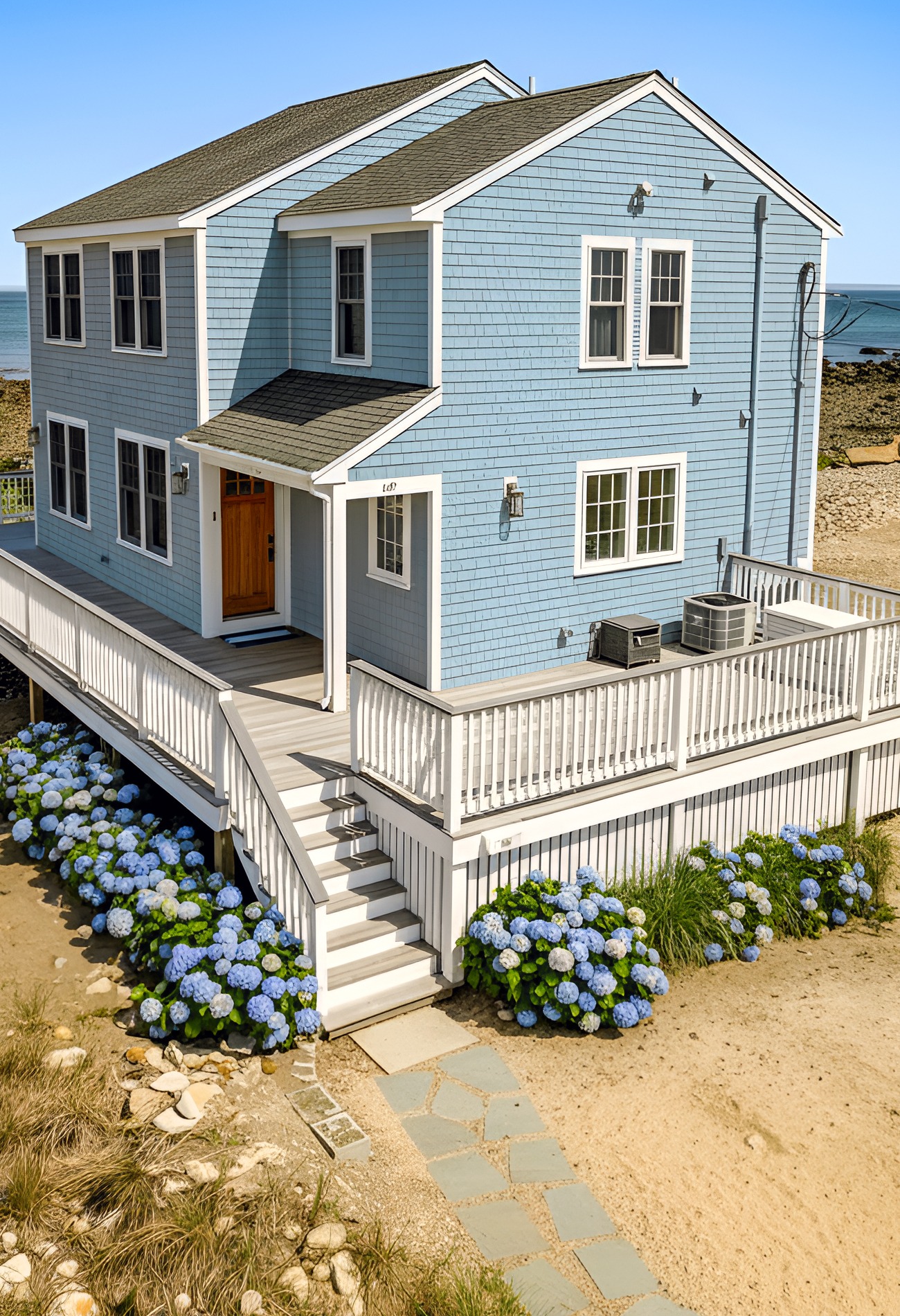
Pale sky blue is sweet, soft, and full of charm. It brings a breezy coastal mood to the exterior. It also feels light without being too bold.
This color looks best with crisp white trim. The white keeps the blue clean and bright. You can add a natural wood door to bring warmth. Or, add navy shutters for a classic beach cottage style.
Pale blue works especially well on small cottages. It makes them feel cheerful and welcoming.
Design cues:
- Pair pale blue siding with bright white trim.
- Add a white porch railing.
- Use a natural wood front door.
- Choose silver or black lanterns.
- Add hydrangeas or beach grass near the entry.
5. Seafoam Green
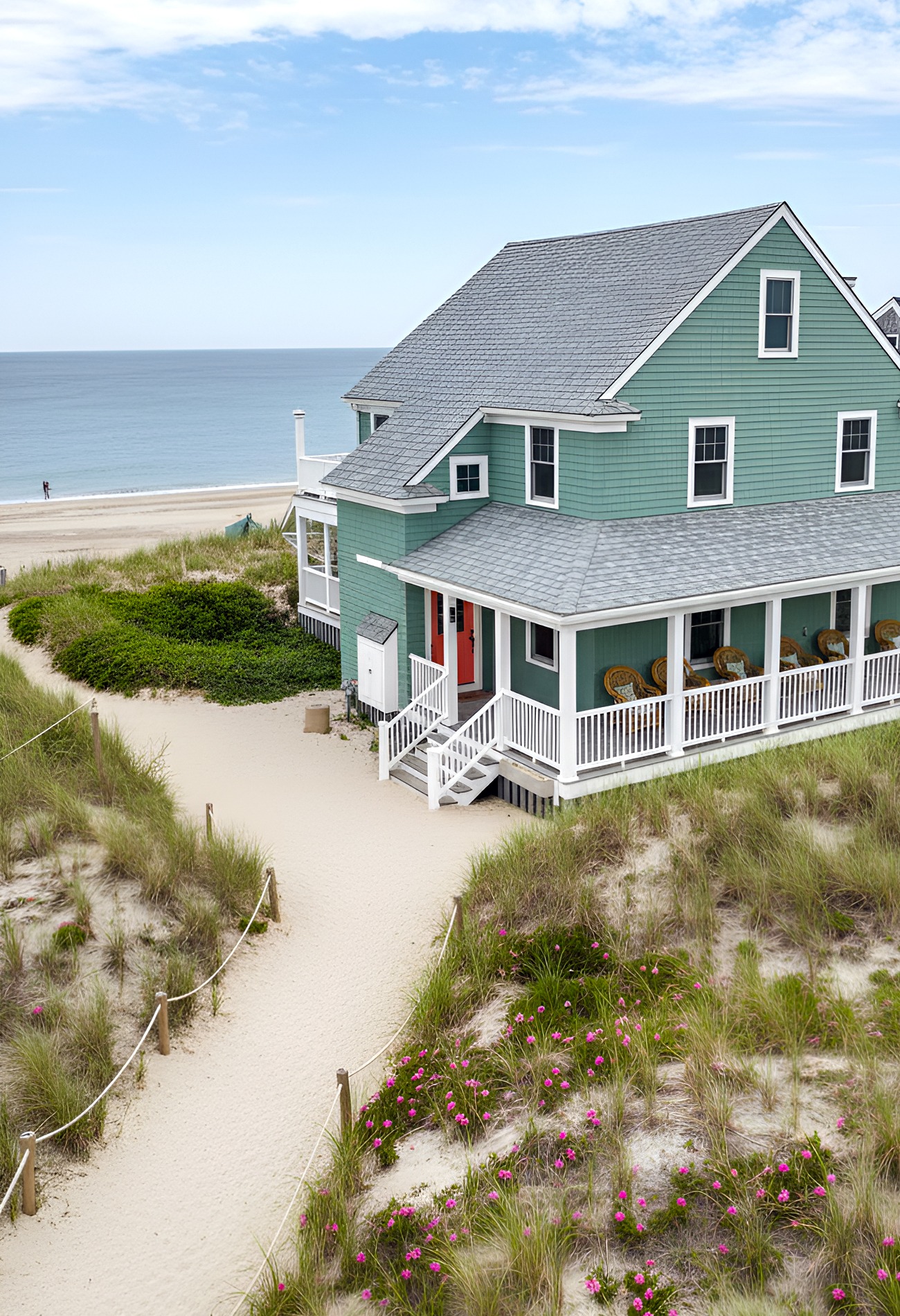
Seafoam green is fresh, playful, and coastal. It has a soft mix of green and blue, so it feels light and watery. It is a great choice if you want color without going too bright.
This shade looks beautiful with white trim and pale gray roofs. It also pairs well with sandy paths and wicker porch furniture. For a fun pop, add a coral or yellow front door.
Seafoam green works best when the rest of the exterior feels simple. Let the color shine, but keep the trim and roof calm.
Design cues:
- Use seafoam siding with white trim.
- Add a light gray roof.
- Choose natural wicker porch chairs.
- Try a coral front door for a sunny accent.
- Keep landscaping soft and airy.
6. Driftwood Taupe
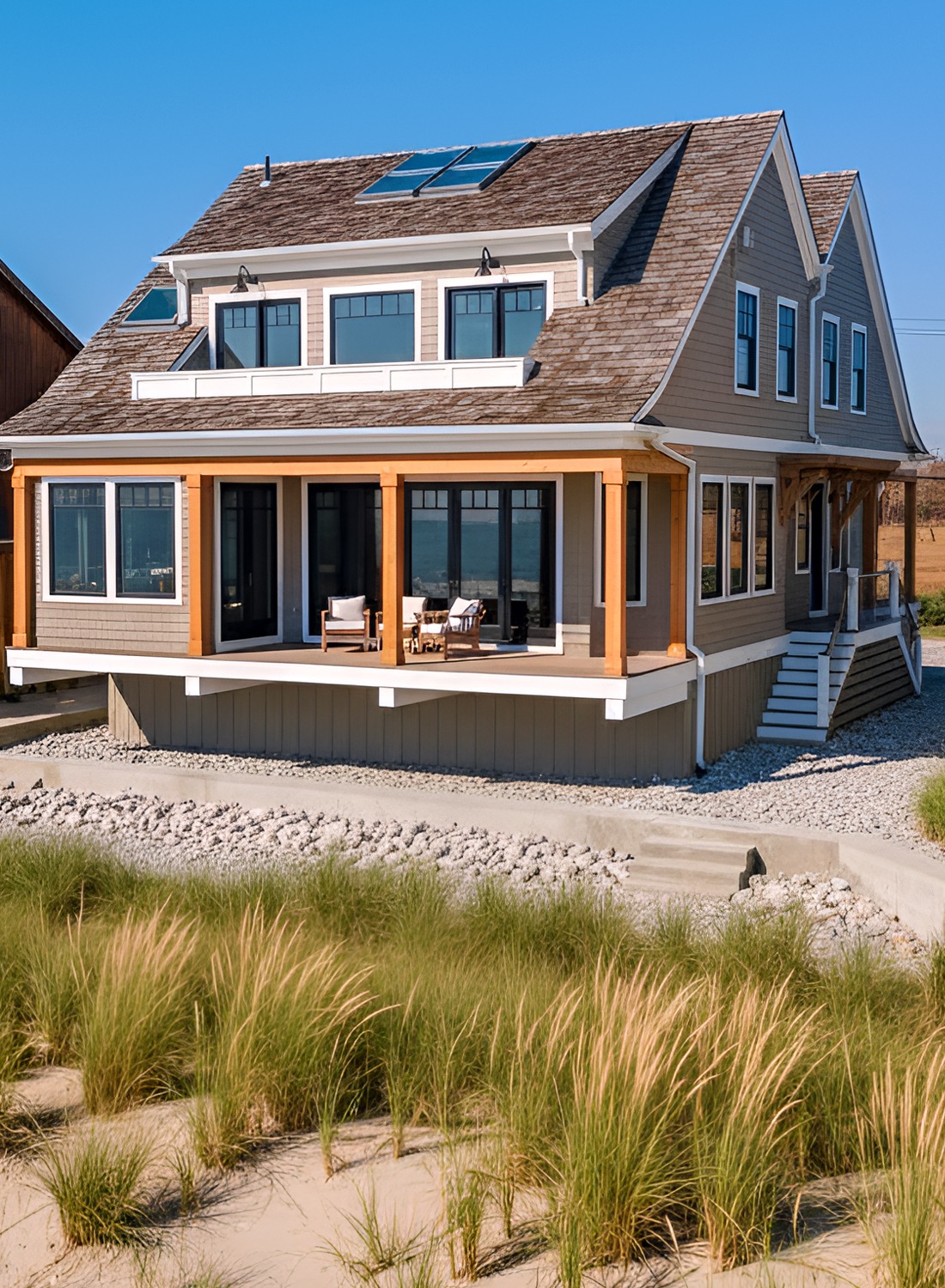
Driftwood taupe is a mix of gray, brown, and beige. It feels earthy and coastal at the same time. This color is perfect for beach homes that need warmth without looking dark.
It works well with white trim, black windows, and cedar details. It also looks great with stone steps and gravel paths. Because it has a natural feel, it blends well with dunes, palms, and native grasses.
Driftwood taupe is a smart choice for a home that should feel calm, grown-up, and easy to style.
Design cues:
- Use taupe siding for a soft neutral base.
- Add white trim to brighten the look.
- Use black window frames for contrast.
- Add cedar beams or porch posts.
- Pair it with gravel, stone, and beach grass.
7. Warm Ivory
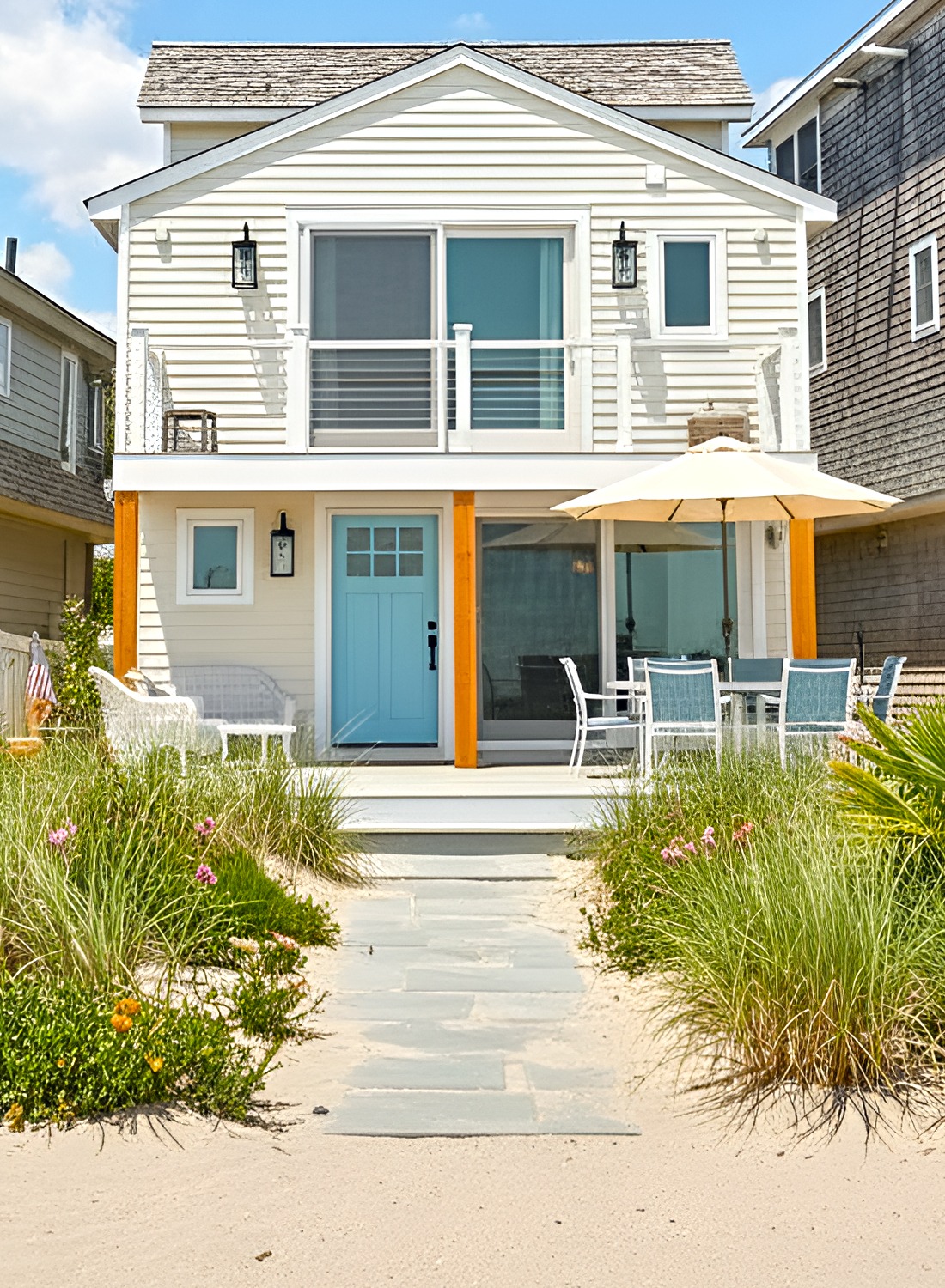
Warm ivory is softer than pure white. It still feels bright, but it has a cozy glow. This color works well if you want a clean beach house exterior that does not feel cold.
It pairs well with tan stone, wood shutters, black lanterns, and soft blue doors. It also looks beautiful with a metal roof or cedar shake roof.
Warm ivory is a great choice for coastal homes with classic details. It makes trim, columns, and porch railings look elegant.
Design cues:
- Use ivory siding for a soft, bright look.
- Add cream or white trim.
- Choose warm wood accents.
- Try a pale blue front door.
- Use black lanterns for a crisp finish.
8. Navy Blue
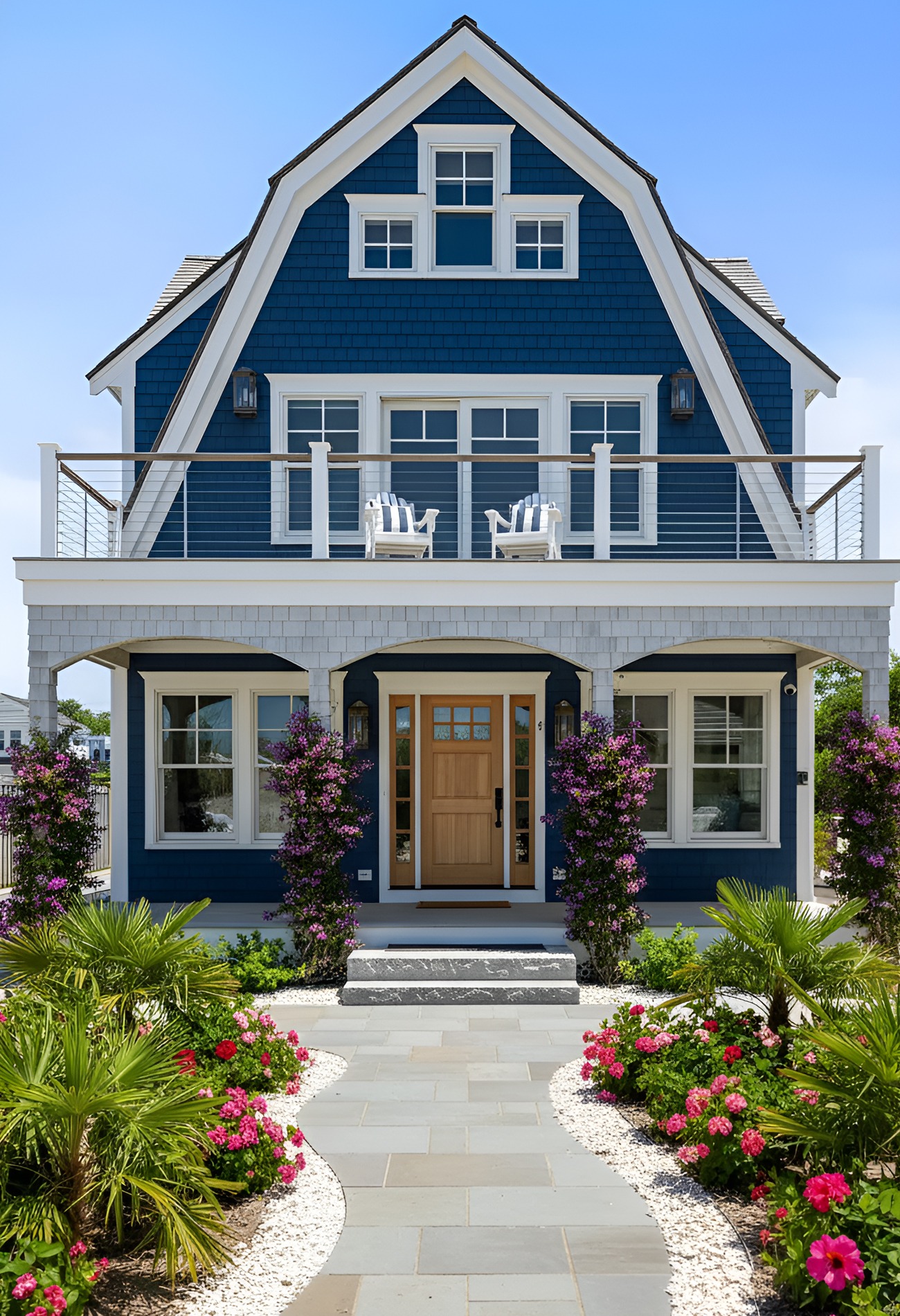
Navy blue is bold, classic, and rich. It gives a beach house a strong nautical look. It feels sharp with white trim and polished with brass or black hardware.
This color works well on larger homes because it adds depth. It also helps simple siding look more dramatic. For balance, use lots of white on the trim, railing, and porch ceiling.
Navy blue also looks great with natural wood. A cedar door or wood garage door can soften the dark color.
Design cues:
- Pair navy siding with white trim.
- Use brass, black, or bronze hardware.
- Add a cedar front door.
- Choose white porch railings.
- Use striped outdoor pillows for a nautical touch.
9. Aqua Blue
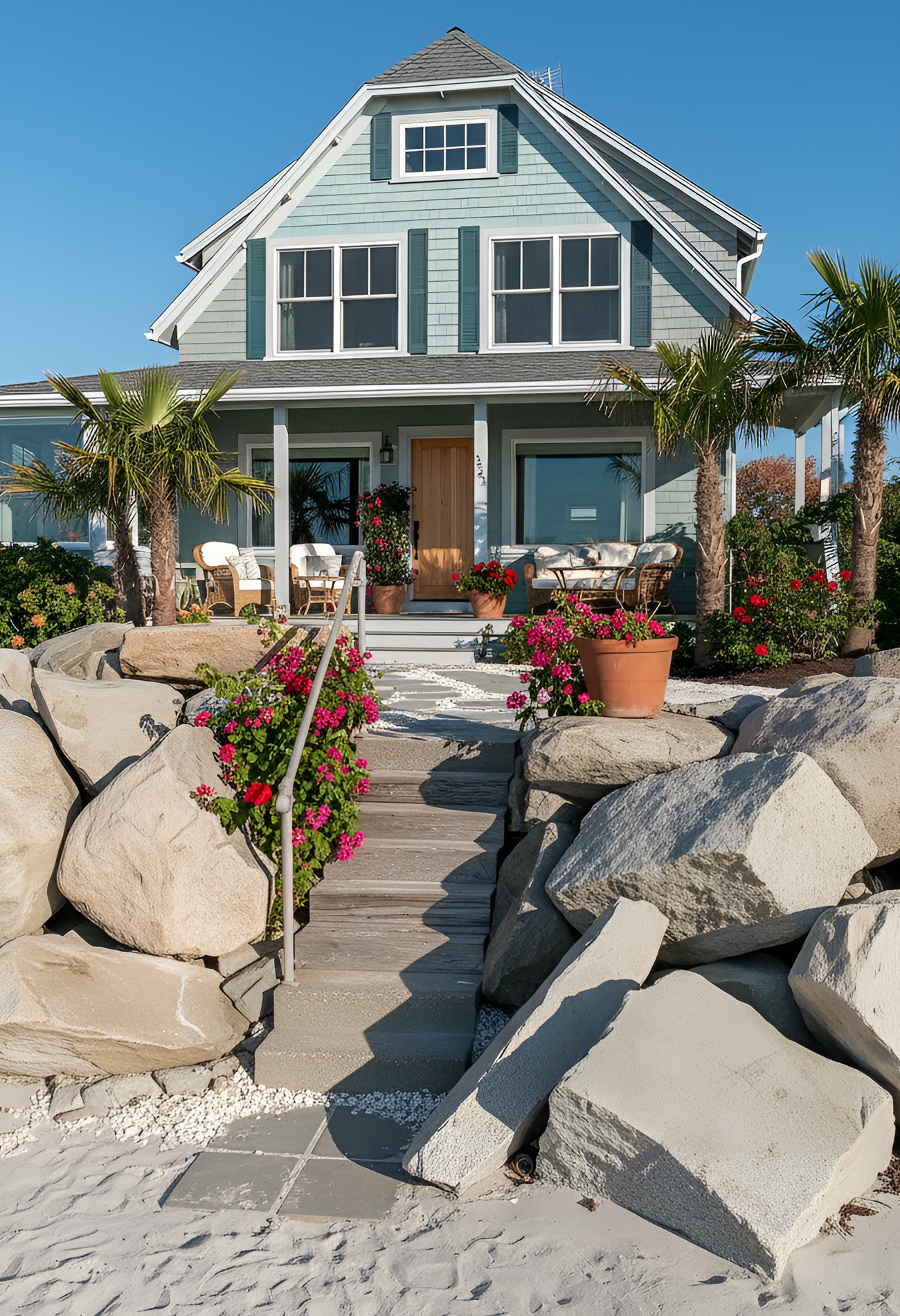
Aqua blue feels bright, fun, and beachy. It brings a vacation mood to the home. This color works well for tropical cottages, lake houses, and cheerful coastal homes.
Because aqua has a strong personality, pair it with simple trim. White is the safest choice. Light gray can also work if you want a softer look.
Aqua looks best when the landscaping feels lush and casual. Think palms, potted flowers, and relaxed porch seating.
Design cues:
- Use aqua siding with white trim.
- Keep the roof color soft and neutral.
- Add rattan or white porch furniture.
- Use tropical plants near the entry.
- Try a natural wood door to ground the color.
10. Light Sage Green
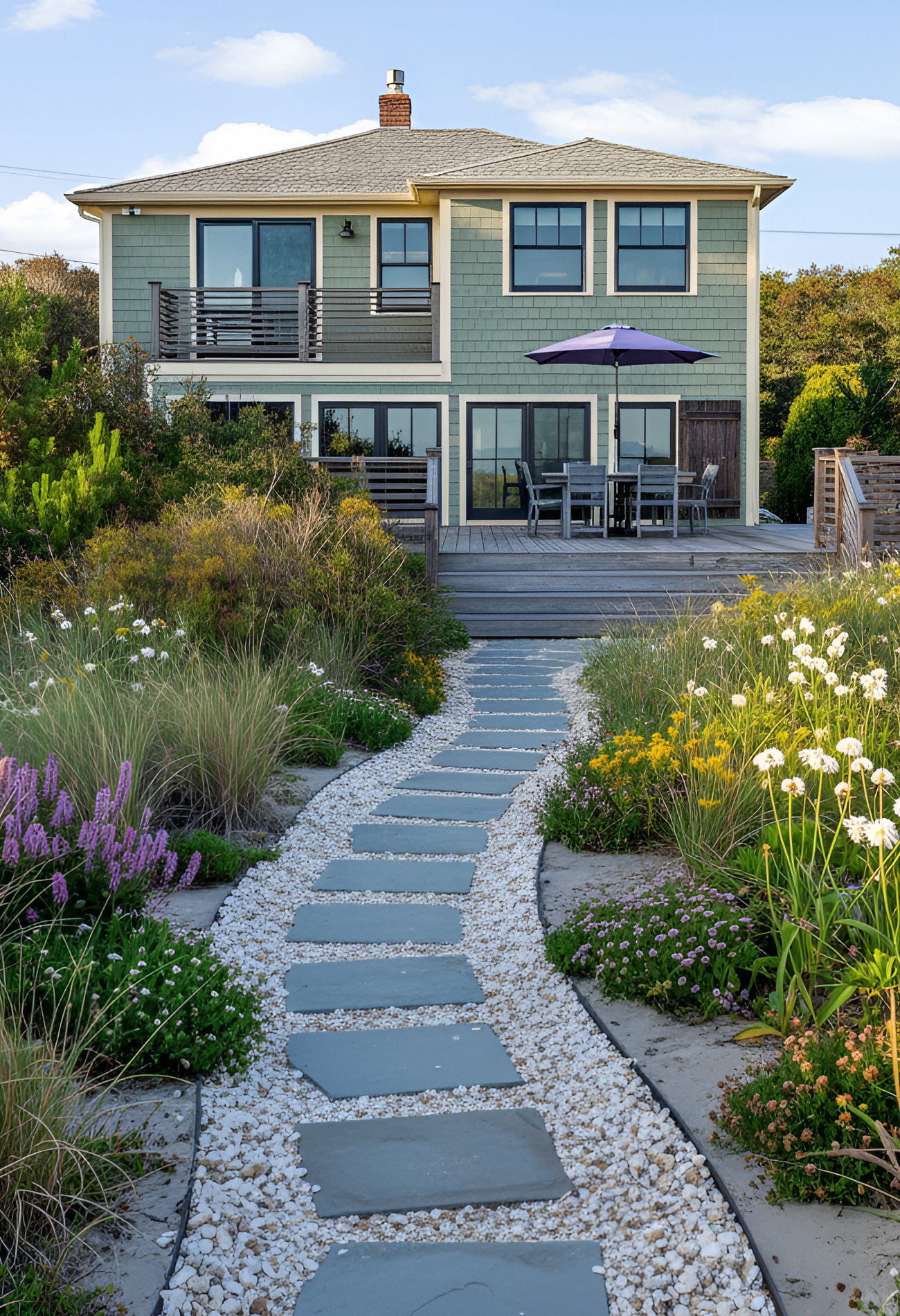
Light sage green feels peaceful and earthy. It gives a beach house a softer, nature-inspired look. It works well near dunes, woods, marshes, or quiet coastal streets.
Sage green pairs beautifully with white, cream, tan, and wood. It also looks lovely with stone. For a modern touch, add black windows or black porch lights.
This color is ideal if you want a beach house that feels calm, not too bright, and full of quiet charm.
Design cues:
- Pair sage siding with cream trim.
- Add black windows for a modern edge.
- Use wood shutters or porch posts.
- Choose stone steps or a stone walkway.
- Add soft grasses and low shrubs.
11. Coastal Cream
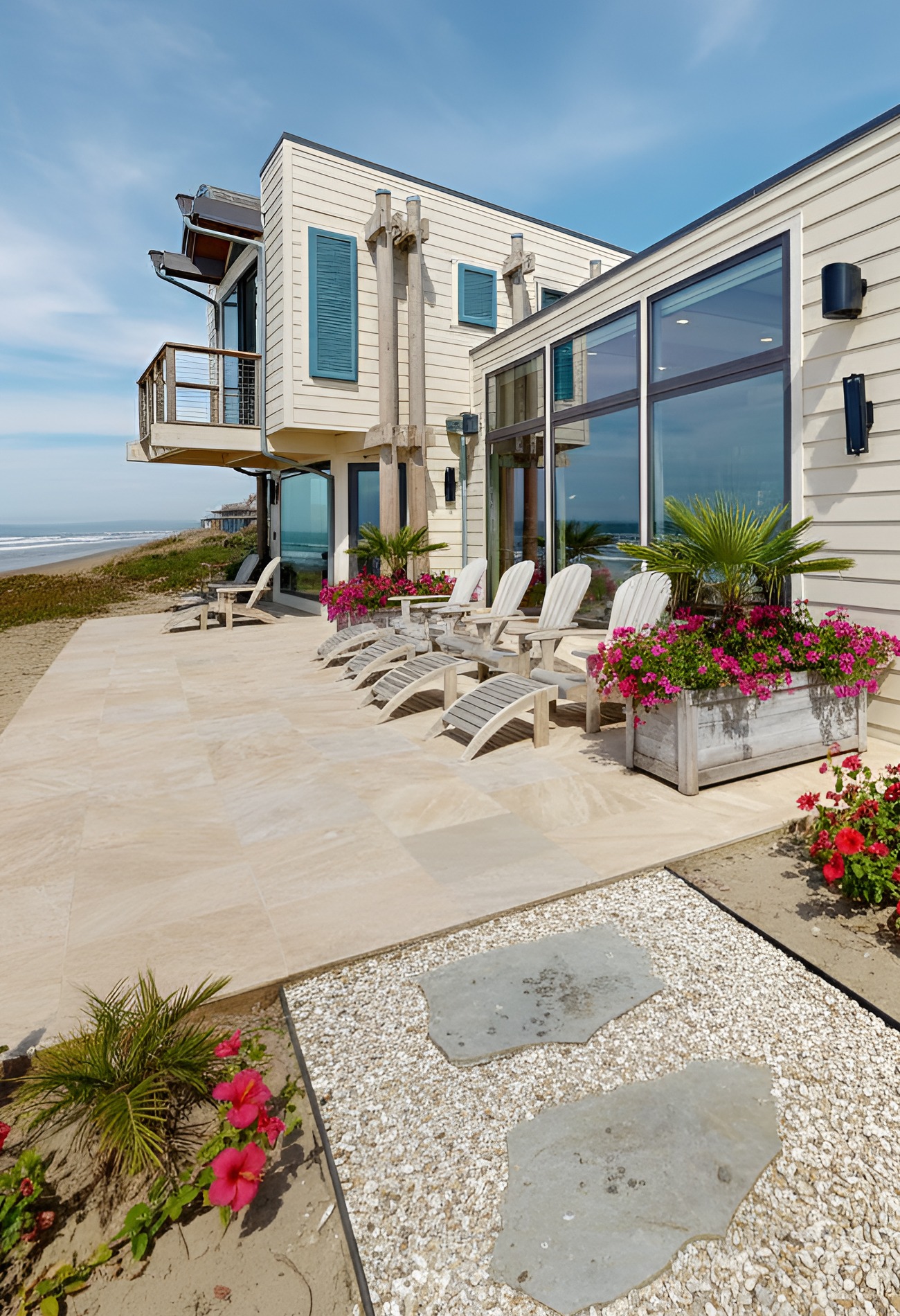
Coastal cream is warm, soft, and timeless. It gives the home a sunny look without feeling yellow. It also works with many roof colors, from gray to brown to black.
This shade looks great on beach cottages, farmhouse-style coastal homes, and classic seaside houses. It feels inviting and easy to decorate.
For a fresh look, pair cream with white trim. For more contrast, add blue shutters or a black front door.
Design cues:
- Use cream siding for warmth.
- Add white trim for a clean look.
- Choose blue shutters for beach charm.
- Use black lights and house numbers.
- Add wood planters for texture.
12. Charcoal Gray
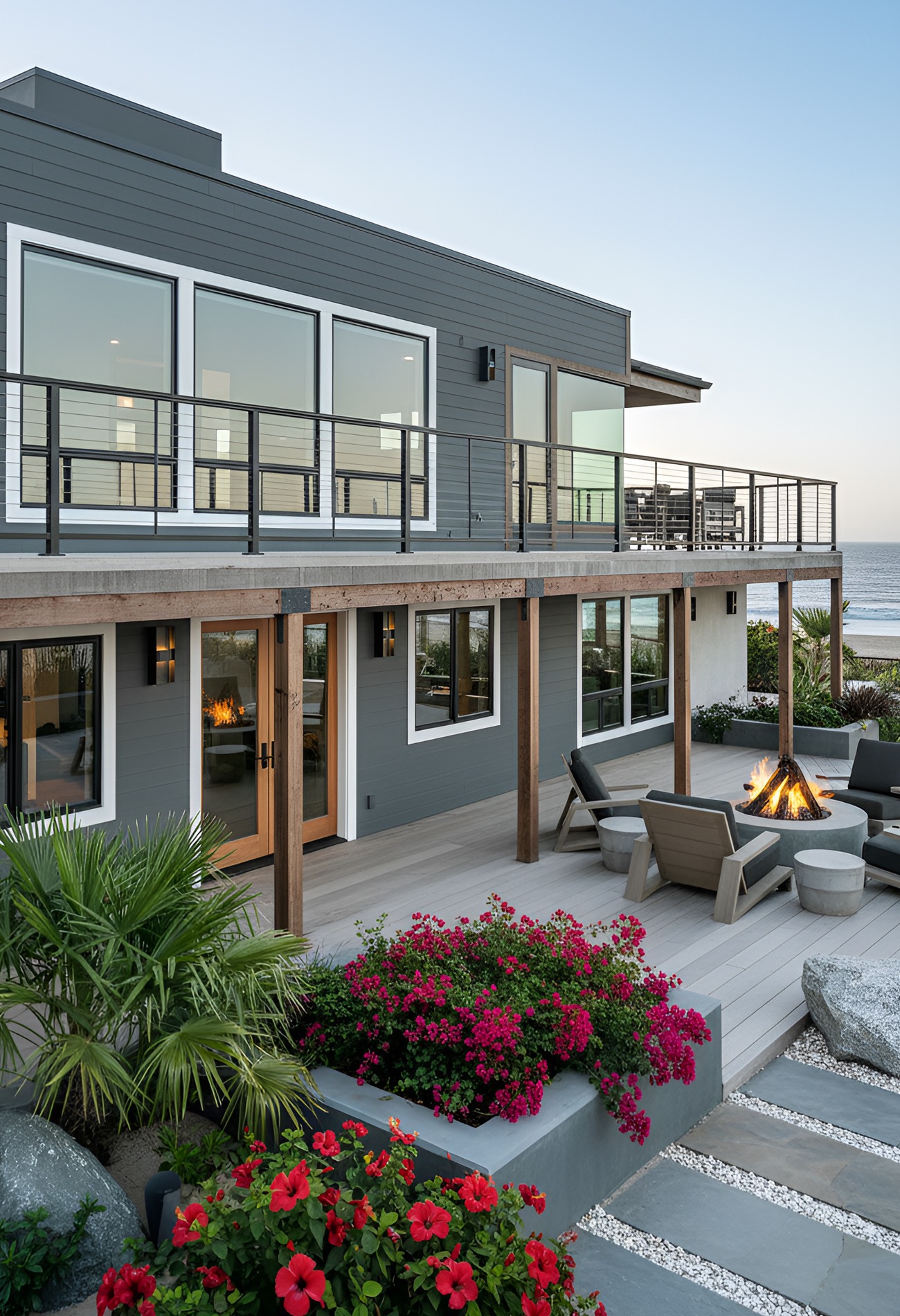
Charcoal gray gives a beach house a modern, dramatic look. It feels strong, clean, and stylish. It also works well with white trim, metal roofs, and large windows.
This color is a smart pick for modern coastal homes. It makes simple lines look bold. It also pairs well with natural wood, which keeps it from feeling too cold.
Use charcoal with care on very sunny homes, since dark colors can feel heavier. Balance it with bright trim, glass, and warm wood.
Design cues:
- Use charcoal siding for a sleek look.
- Add white trim for sharp contrast.
- Choose cedar doors or wood beams.
- Use black metal railings.
- Add large windows to keep it light.
13. Powder Blue
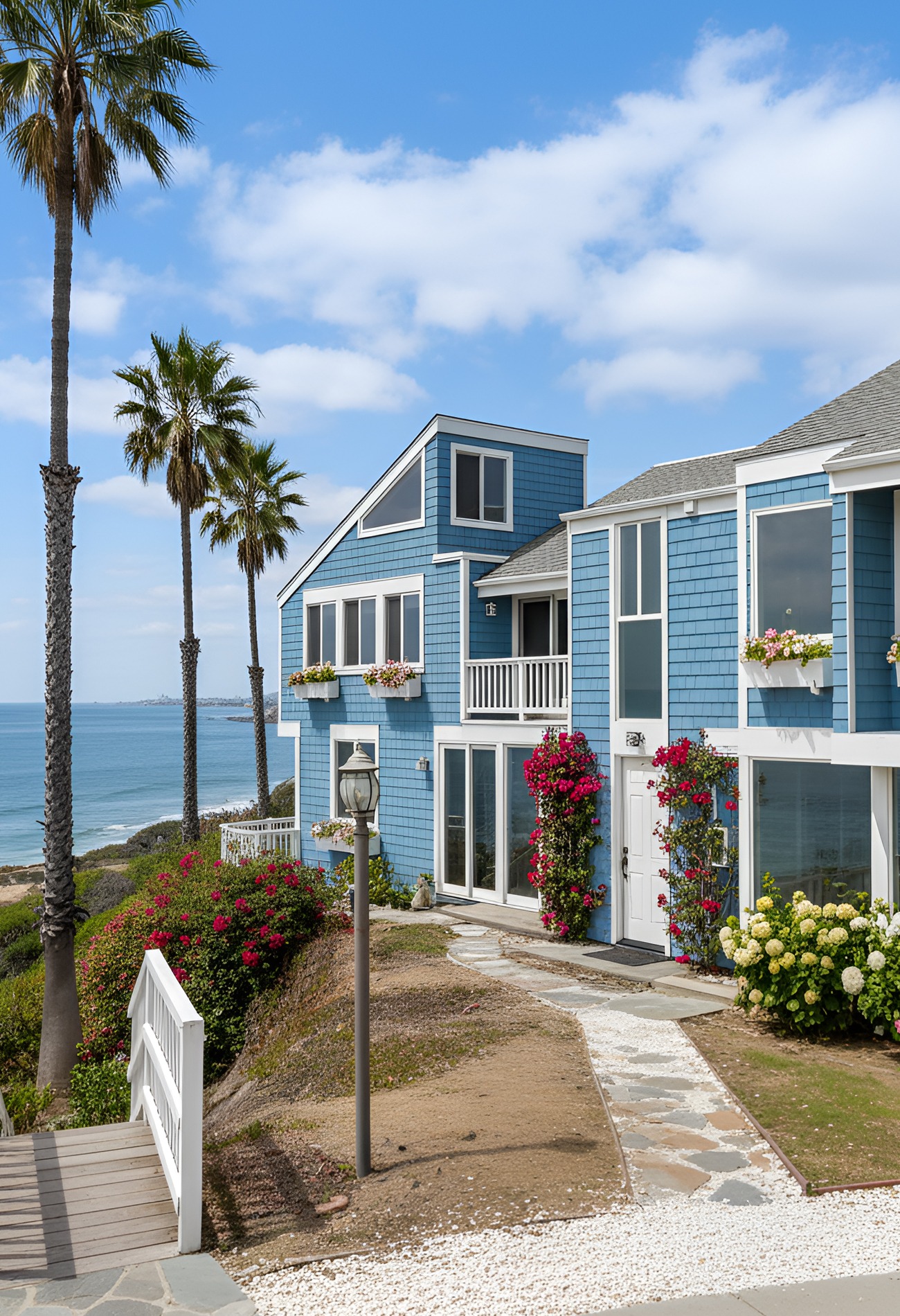
Powder blue is soft, sweet, and classic. It gives a beach house a gentle cottage feel. It works well for homes with porches, shutters, flower boxes, and white railings.
This color feels cheerful but not loud. It also looks pretty with gray roofs, white trim, and pale wood decks.
Powder blue is a great choice if you want a home that feels friendly and bright from the street.
Design cues:
- Use powder blue siding with white trim.
- Add white shutters or porch rails.
- Choose a light gray roof.
- Add flower boxes with soft blooms.
- Use a white or wood front door.
14. Coral Pink
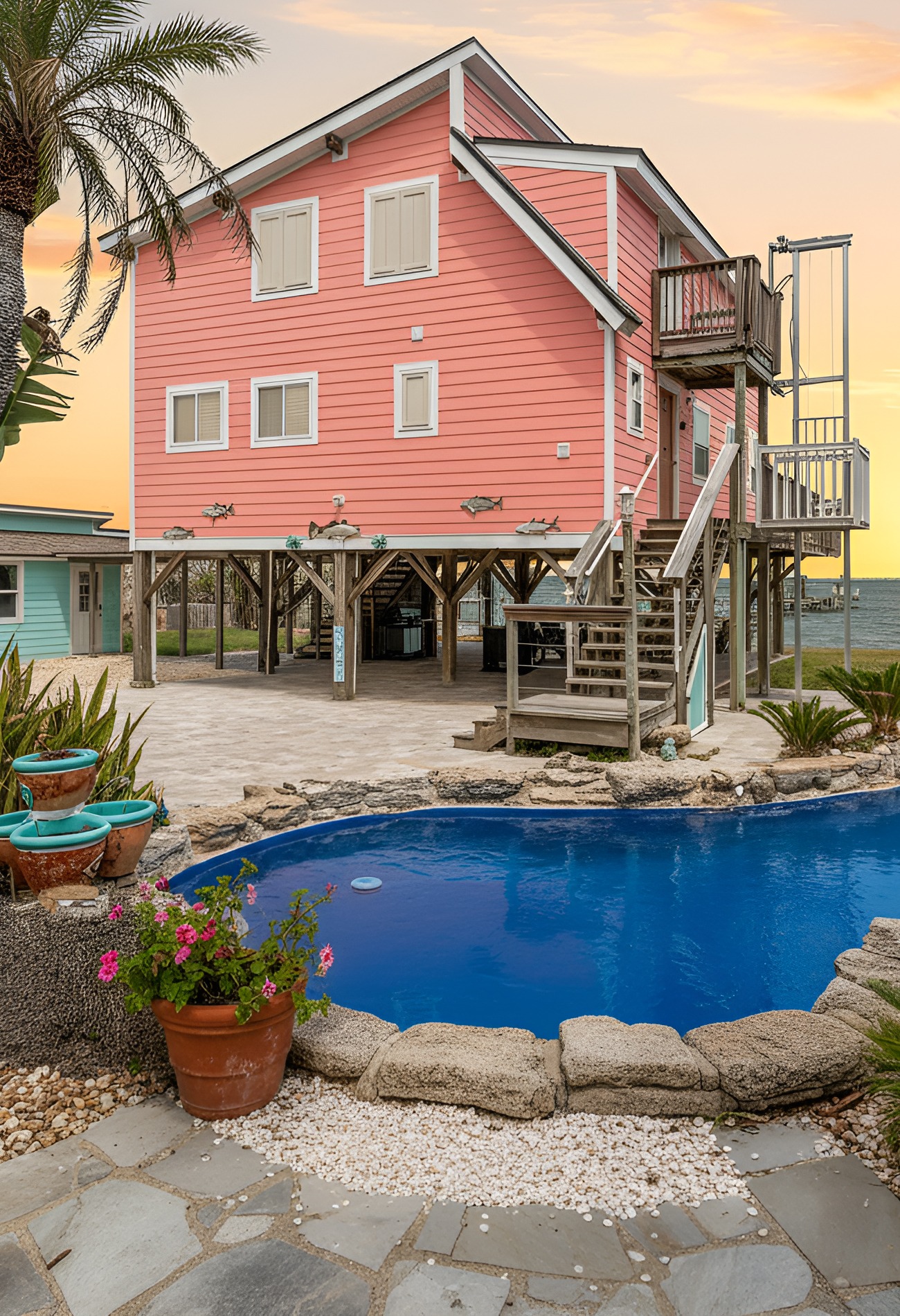
Coral pink is bold, cheerful, and full of sunshine. It works well for island homes, tropical beach cottages, and playful coastal exteriors.
This color has warmth, so it pairs well with white trim and natural wood. Keep the rest of the exterior simple so the coral does not feel too busy.
Coral pink also looks beautiful with palm trees, woven furniture, and brass or bronze accents.
Design cues:
- Use coral as the main siding color or front door color.
- Pair it with crisp white trim.
- Add wood railings or a wood porch floor.
- Use tropical plants for a resort feel.
- Keep shutters simple and neutral.
15. Light Greige
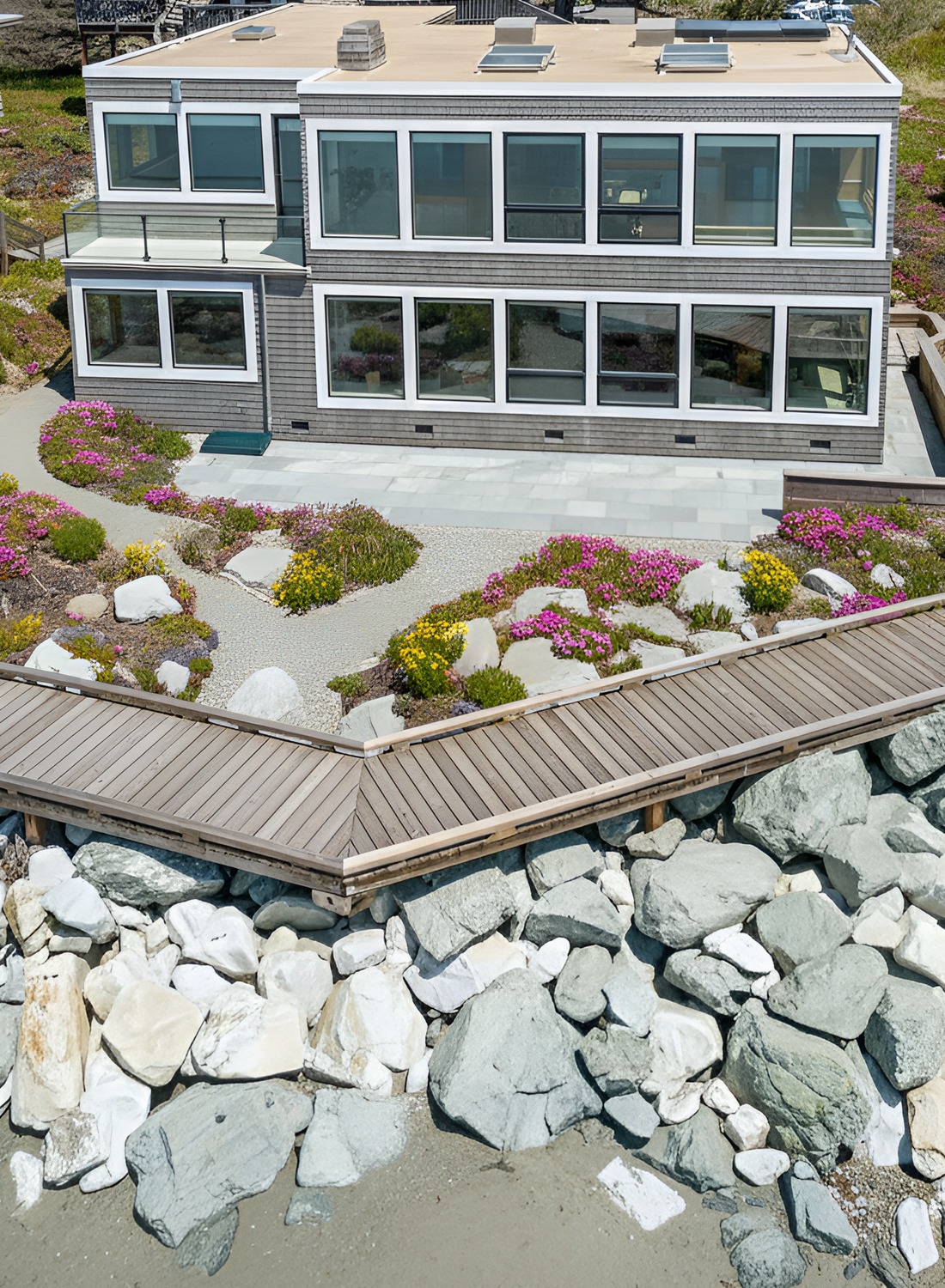
Light greige is a mix of gray and beige. It feels modern, soft, and warm. It is a great choice if you want a neutral beach house exterior that still has depth.
This color works with white trim, black windows, stone, and wood. It also pairs well with both cool and warm roof colors.
Light greige is very flexible. It can feel coastal farmhouse, modern beach, or classic cottage, based on the details you choose.
Design cues:
- Use greige siding for a soft neutral base.
- Add white trim for brightness.
- Use black windows for a clean look.
- Choose wood accents for warmth.
- Add gray stone or pavers.
16. Muted Teal
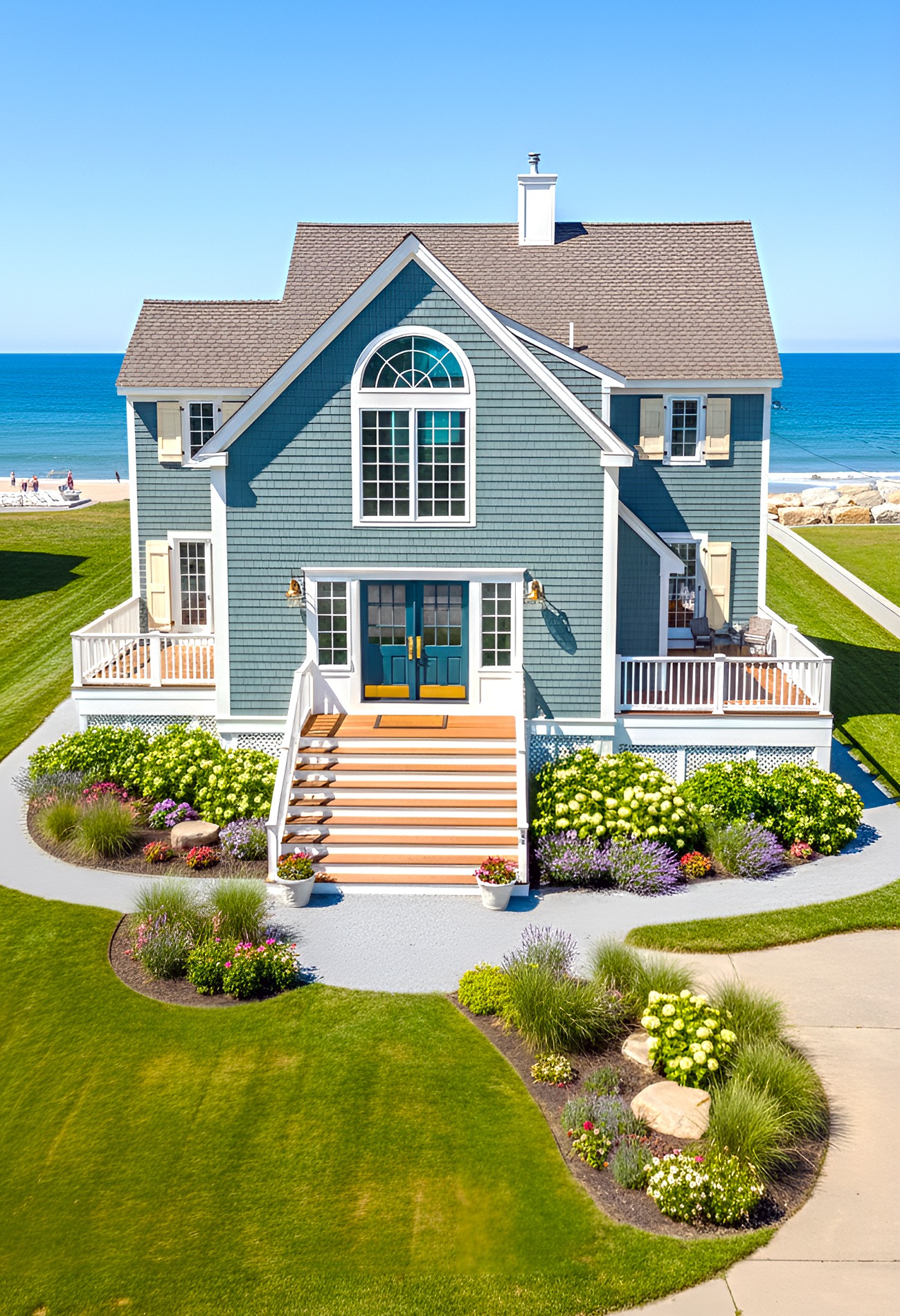
Muted teal is rich, coastal, and full of style. It has more depth than aqua but feels softer than bright turquoise. It brings color to the exterior without feeling too playful.
This shade looks beautiful with white trim, brass hardware, and natural wood. It also works well as a front door color if you want a smaller dose.
Muted teal feels special. It gives a beach house a custom look that stands out in the best way.
Design cues:
- Use muted teal on siding, shutters, or the front door.
- Pair it with white or cream trim.
- Add brass or bronze hardware.
- Use wood decking to warm it up.
- Keep the roof neutral.
17. Classic Shingle Gray
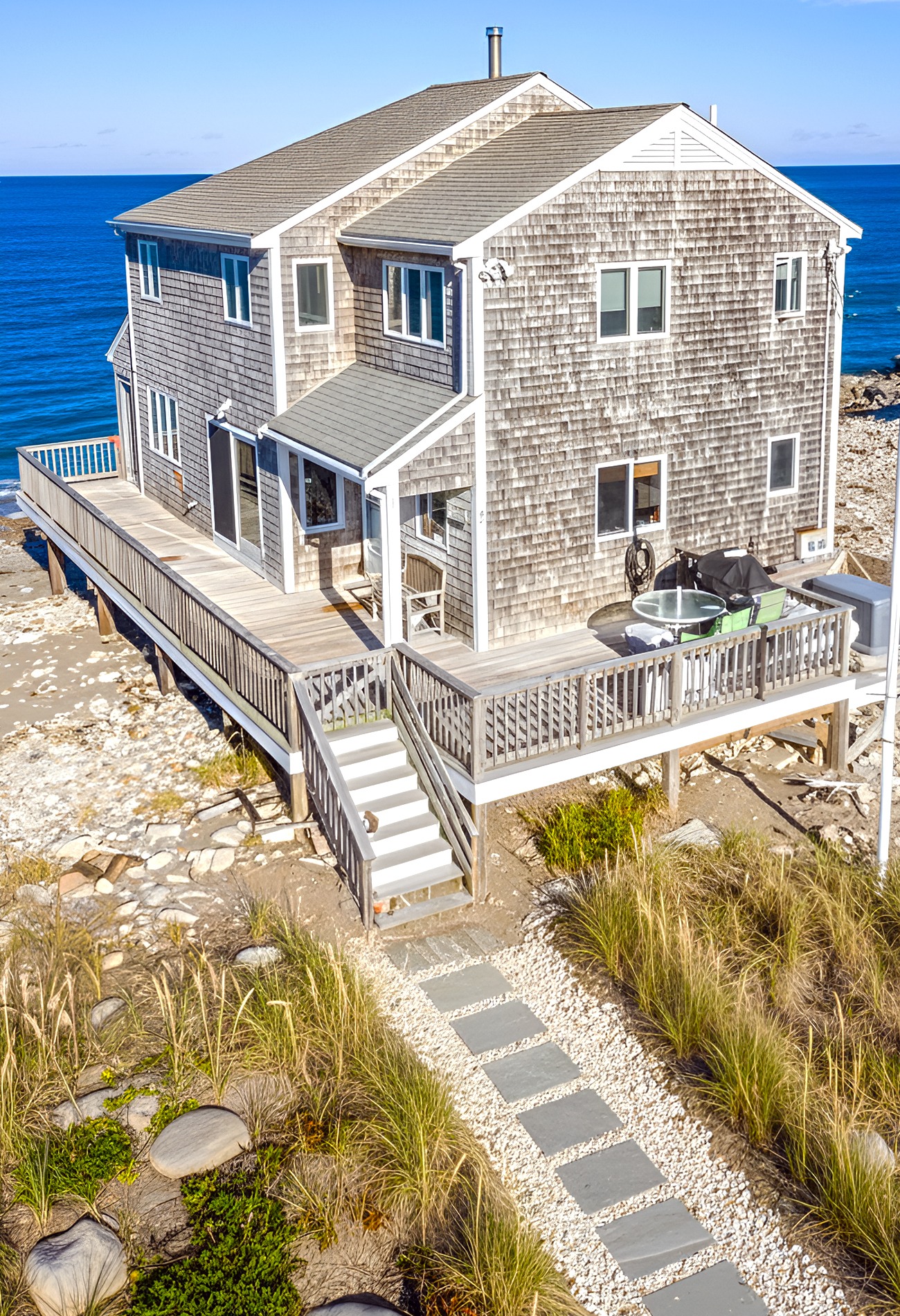
Classic shingle gray has that old coastal charm. It feels simple, natural, and timeless. It works especially well with cedar shake siding.
This color looks best when it feels a little weathered. It should not look too perfect. That is part of its charm.
Pair shingle gray with white trim, black lanterns, and soft landscaping. The look feels calm and lived-in.
Design cues:
- Use cedar shakes or gray shingle siding.
- Add white trim around windows and doors.
- Choose black or bronze lanterns.
- Use stone steps and shell paths.
- Add beach grass and simple shrubs.
18. Pale Yellow
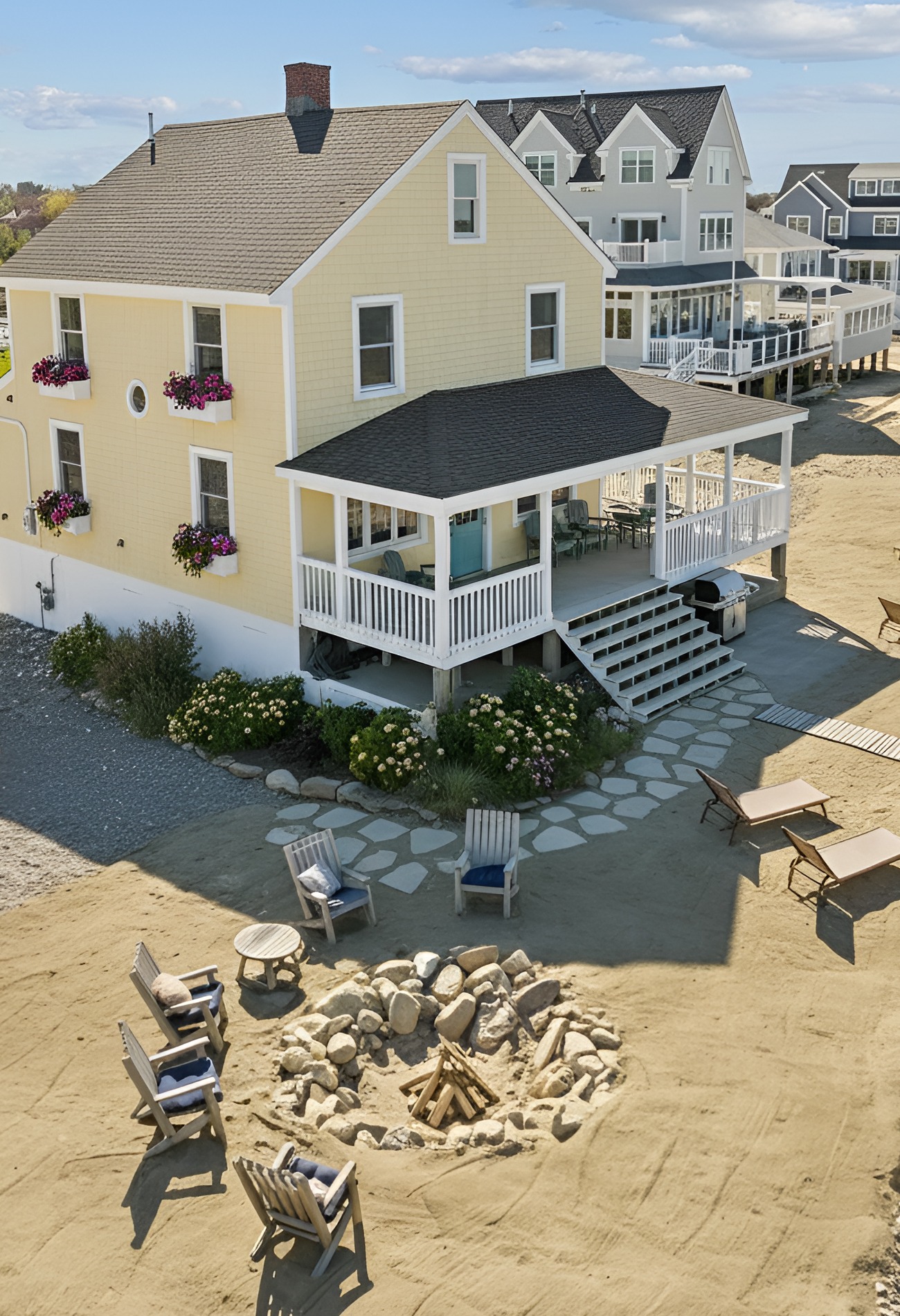
Pale yellow feels sunny, happy, and welcoming. It gives a beach house a classic cottage look. It works best when the shade is soft, not bright.
White trim keeps pale yellow fresh. A blue or green front door can make it feel even more coastal. Add flower boxes, porch chairs, and a white railing for charm.
Pale yellow is great for homes that need a warm, friendly look from the curb.
Design cues:
- Use soft yellow siding.
- Add white trim and railings.
- Choose a blue, green, or white front door.
- Add flower boxes for cottage charm.
- Use a light gray or white roof if possible.
19. Ocean Blue
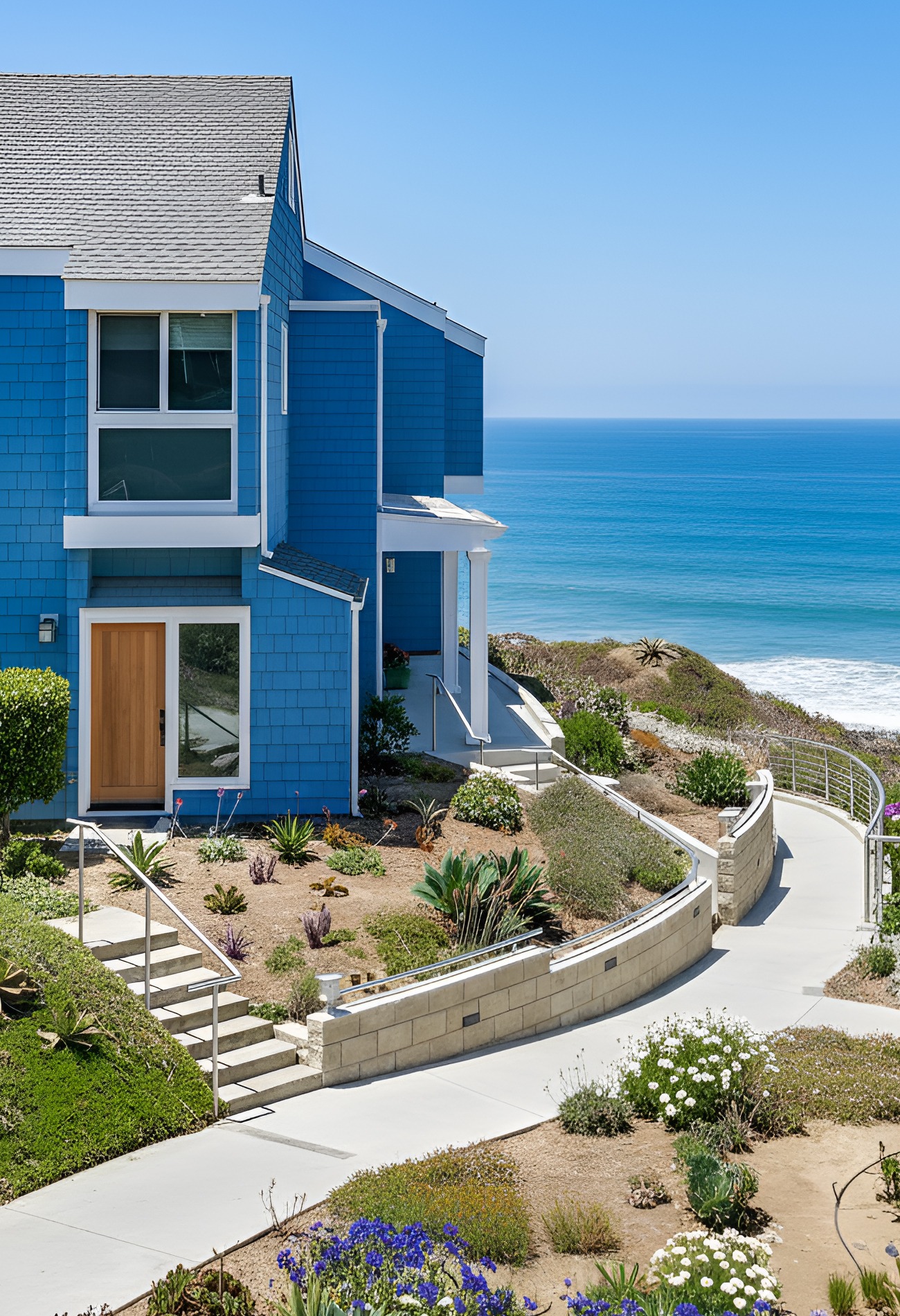
Ocean blue is deeper than sky blue but softer than navy. It feels calm, fresh, and strong. It gives the home a true coastal mood.
This color looks beautiful with white trim and warm wood accents. It can work on cottage homes, beach bungalows, and larger seaside houses.
Ocean blue feels bold, but it still has a relaxed feel. It is a great middle choice between pale blue and navy.
Design cues:
- Pair ocean blue siding with white trim.
- Use a wood door to add warmth.
- Add black or bronze lights.
- Choose white porch columns.
- Use simple landscaping so the color stands out.
20. Soft Olive Green
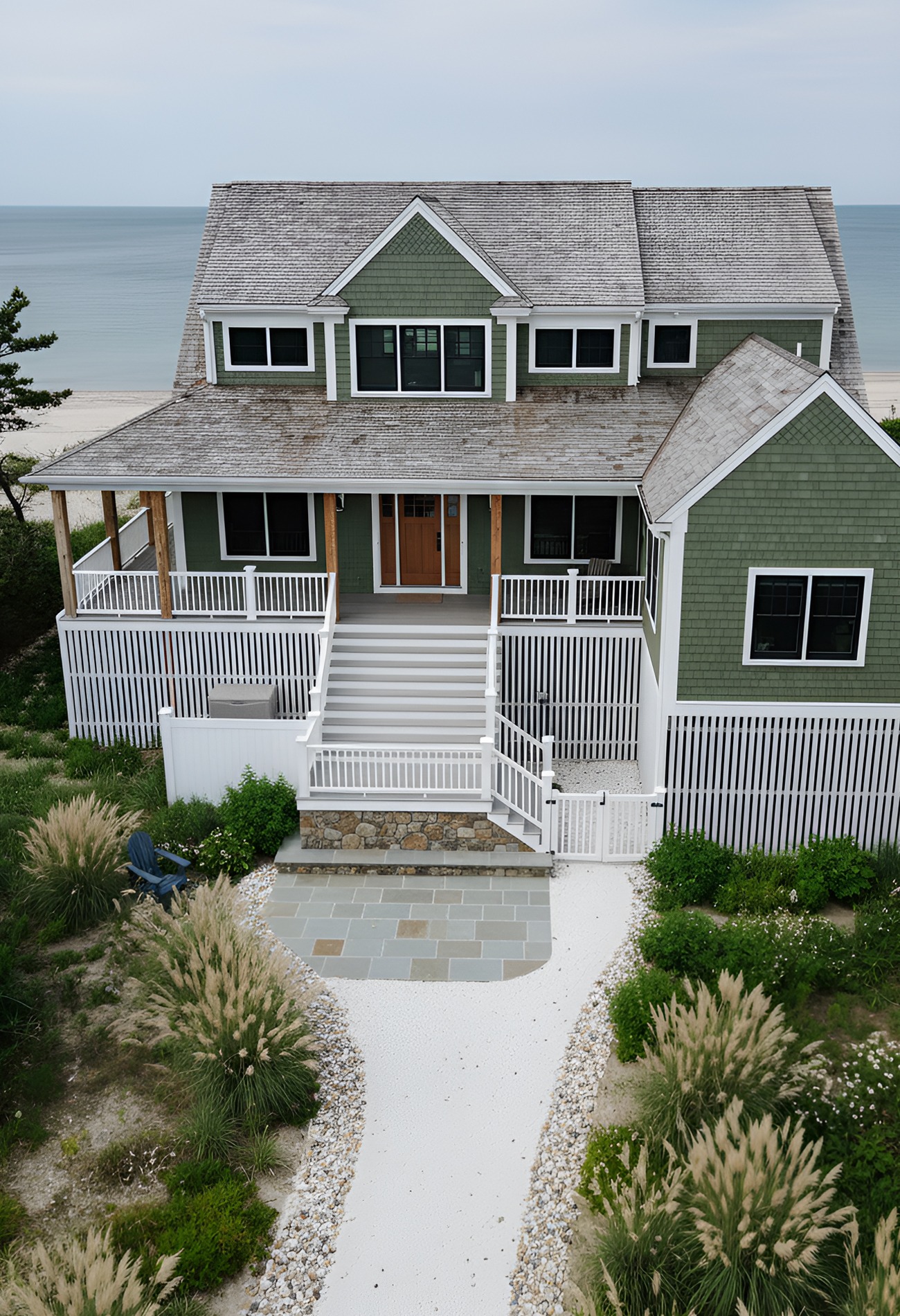
Soft olive green feels grounded and natural. It is a great pick for a beach house near trees, dunes, or marshland. It adds color but still feels calm.
This shade works well with cream trim, natural stone, and wood details. It also looks good with black windows for a more modern look.
Soft olive gives the home an earthy coastal feel. It is less expected than blue, but still very beach-friendly.
Design cues:
- Use olive siding with cream trim.
- Add natural wood porch posts.
- Choose stone steps or a stone base.
- Use black windows for contrast.
- Add native plants and tall grasses.
21. Shell Pink
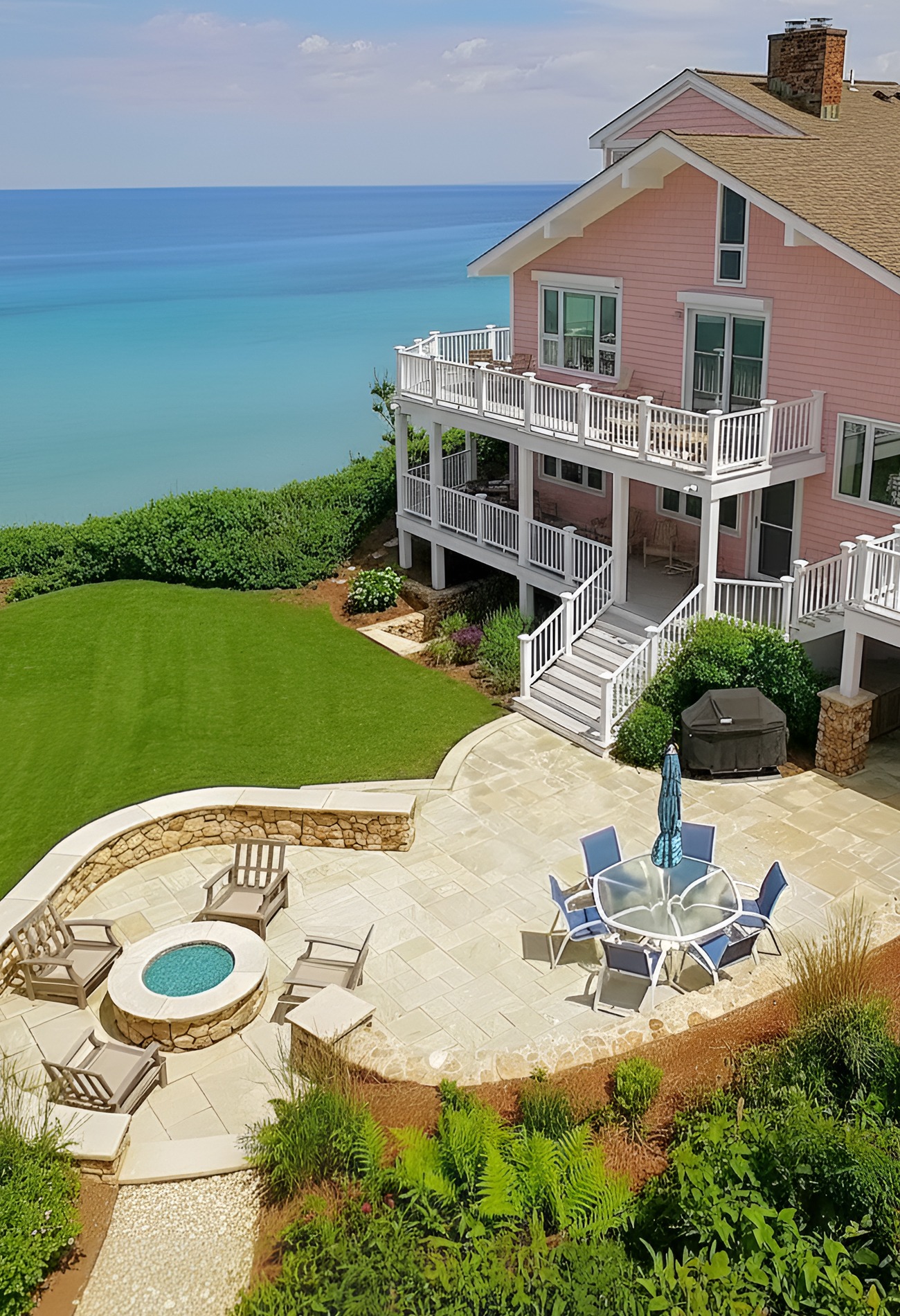
Shell pink is softer than coral. It feels gentle, pretty, and coastal. It gives the home a sun-kissed look without feeling too bold.
This color works best with white trim and simple details. It can feel cottage-like, tropical, or vintage, depending on the home style.
Shell pink is a lovely choice for a small beach house or guest cottage. It feels light, happy, and full of charm.
Design cues:
- Use shell pink siding for a soft coastal look.
- Add white trim to keep it crisp.
- Choose a pale gray or white roof.
- Use natural wood furniture on the porch.
- Add soft greenery near the entry.
22. Mist Gray
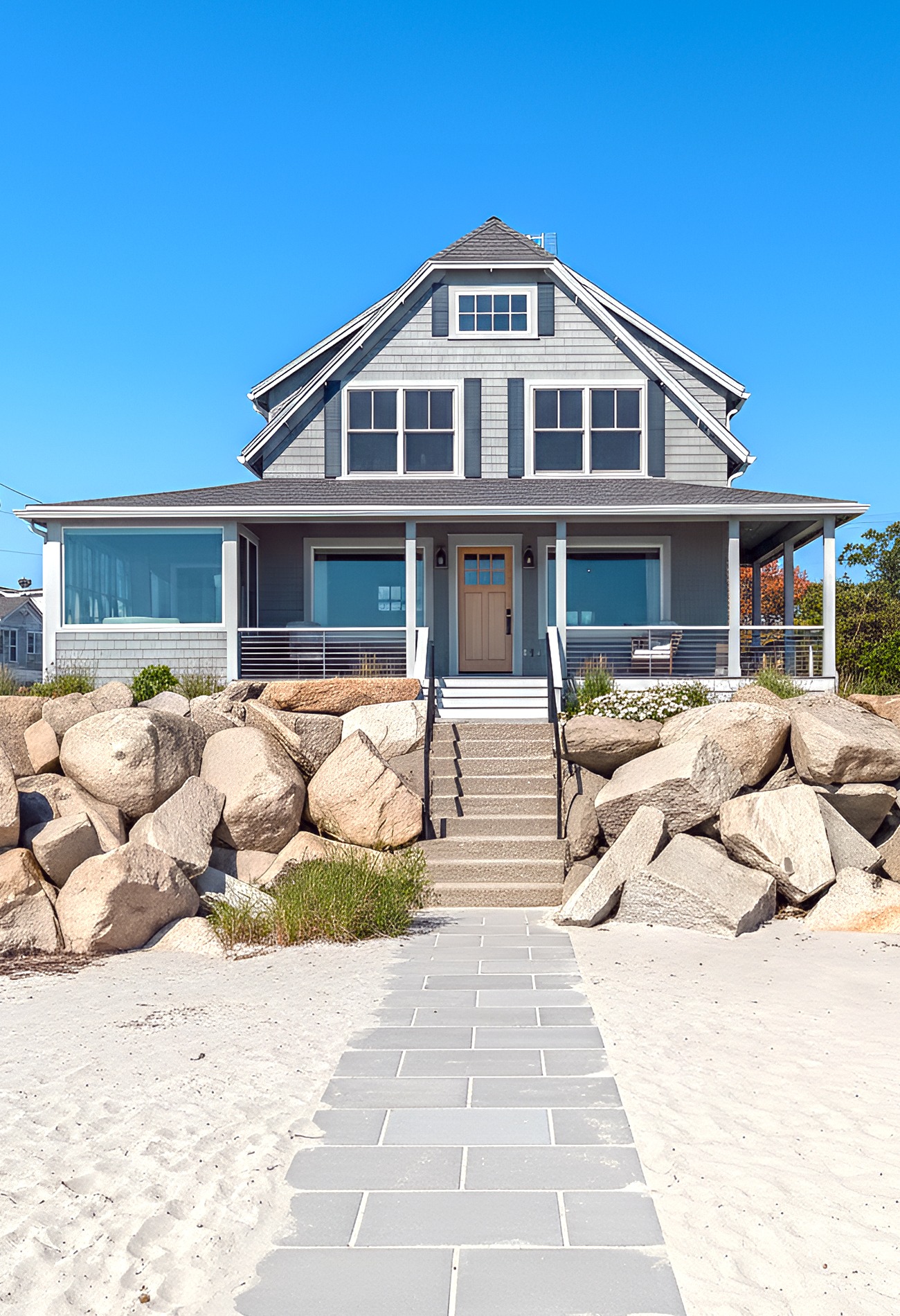
Mist gray feels cool, light, and elegant. It has a soft coastal look that works well in many settings. It is less warm than greige and softer than charcoal.
This color looks beautiful with white trim and black accents. It also pairs well with glass, metal railings, and modern rooflines.
Mist gray is perfect for a beach house that should feel fresh, simple, and refined.
Design cues:
- Use mist gray siding for a clean look.
- Add white trim and black accents.
- Choose glass or cable railings.
- Use a pale wood front door.
- Keep landscaping neat and simple.
23. White With Natural Wood Accents
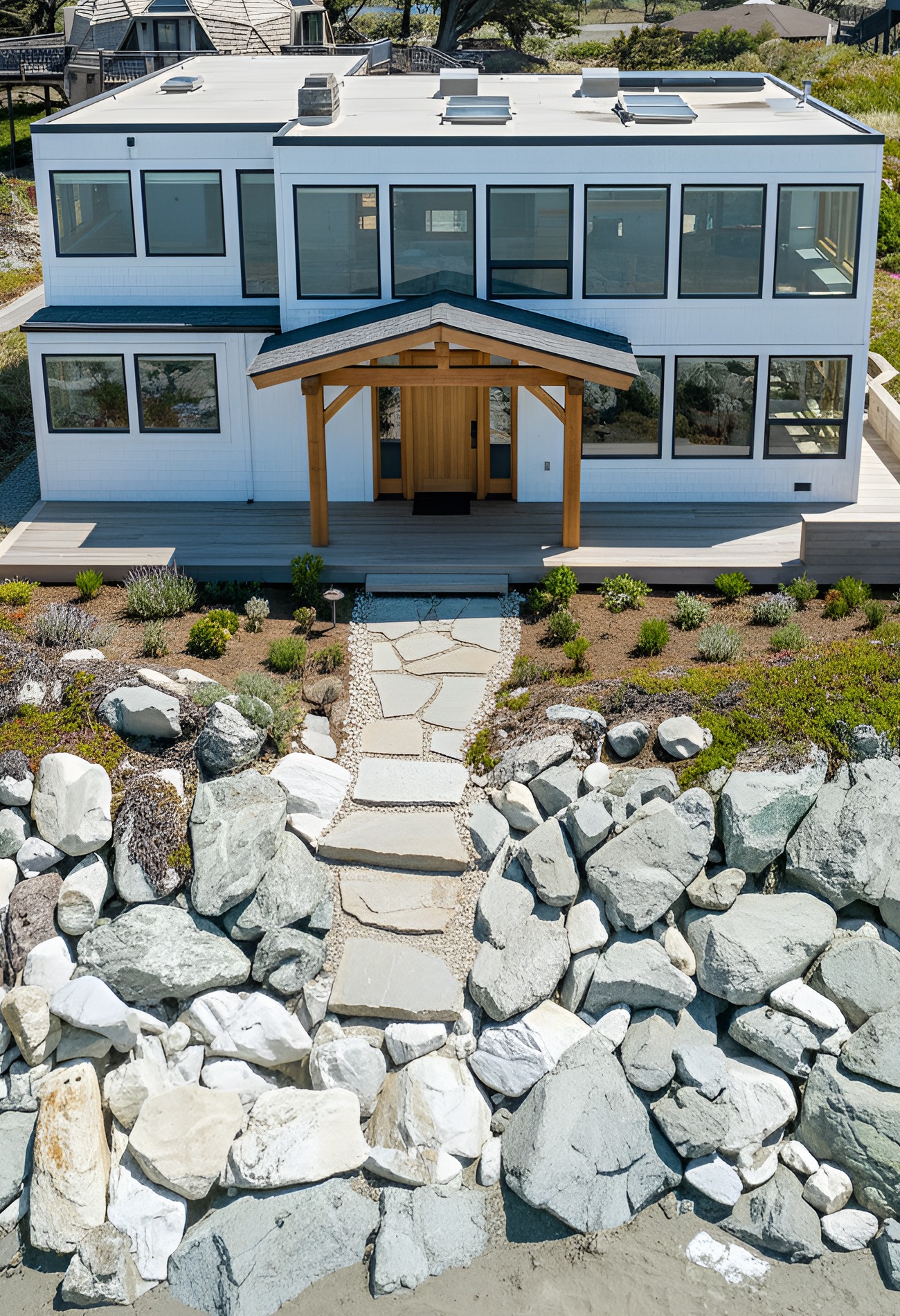
White with natural wood is fresh, warm, and very stylish. It gives a beach house that easy luxury look. The white keeps the home bright, while the wood adds texture and soul.
This pairing works well on modern coastal homes, farmhouse beach homes, and cottages. Use wood on beams, shutters, doors, railings, or porch ceilings.
The trick is balance. Too much wood can feel rustic. Just enough makes the home feel warm and custom.
Design cues:
- Use white siding as the main color.
- Add cedar beams or porch posts.
- Choose a wood front door.
- Use black windows for contrast.
- Add simple greenery to keep the look clean.
24. Pale Aqua With White Trim
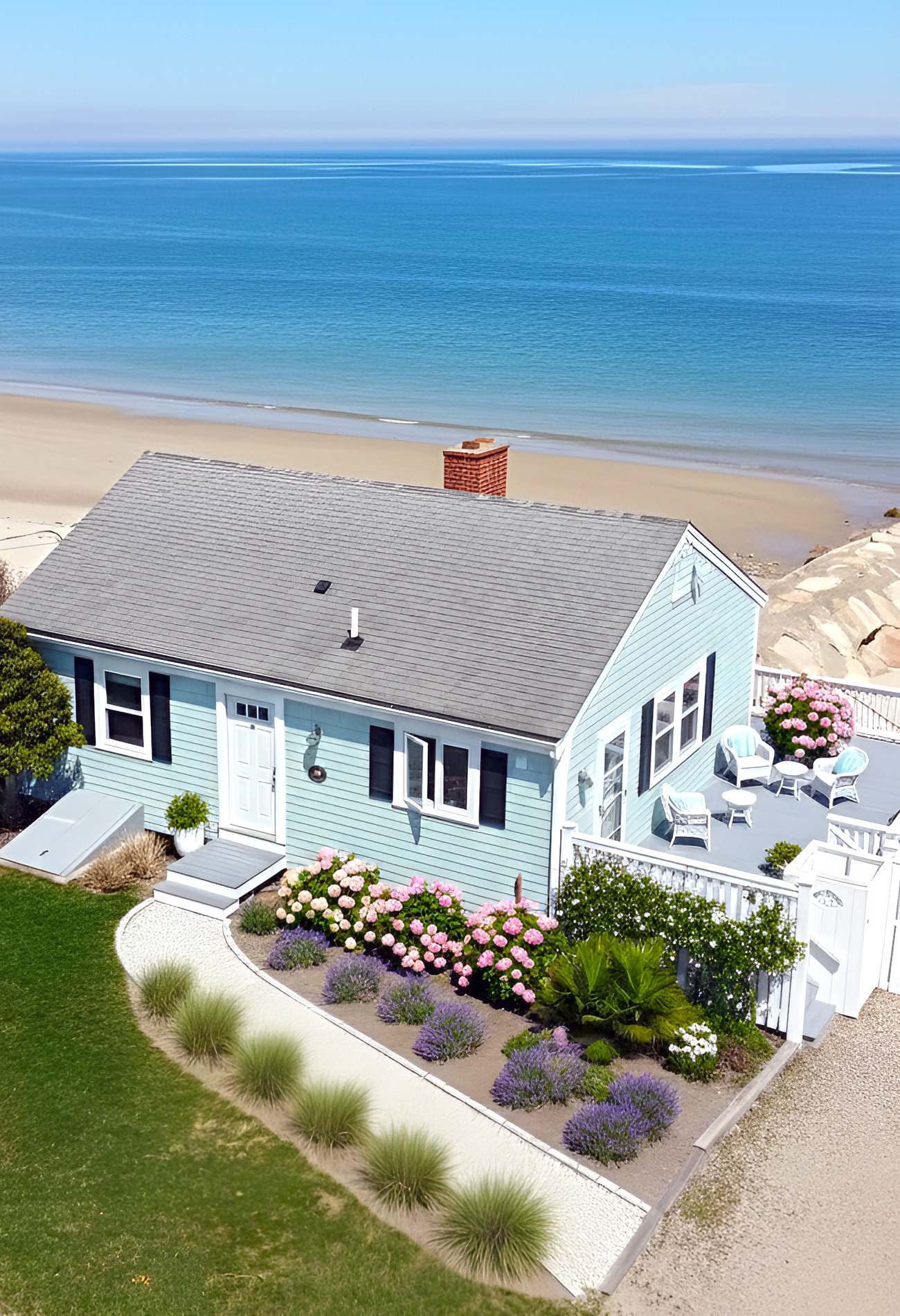
Pale aqua with white trim feels fresh, happy, and beach-ready. It is softer than bright aqua, so it feels more timeless. It works well on cottages, bungalows, and small beach homes.
White trim gives it a clean frame. A light gray roof keeps the whole look soft. Add wicker chairs, white planters, and shell paths for easy charm.
This color combo feels like a summer morning by the water.
Design cues:
- Use pale aqua siding.
- Add bright white trim.
- Choose a light gray roof.
- Use white porch furniture.
- Add soft flowers or tropical plants.
25. Black and White Coastal
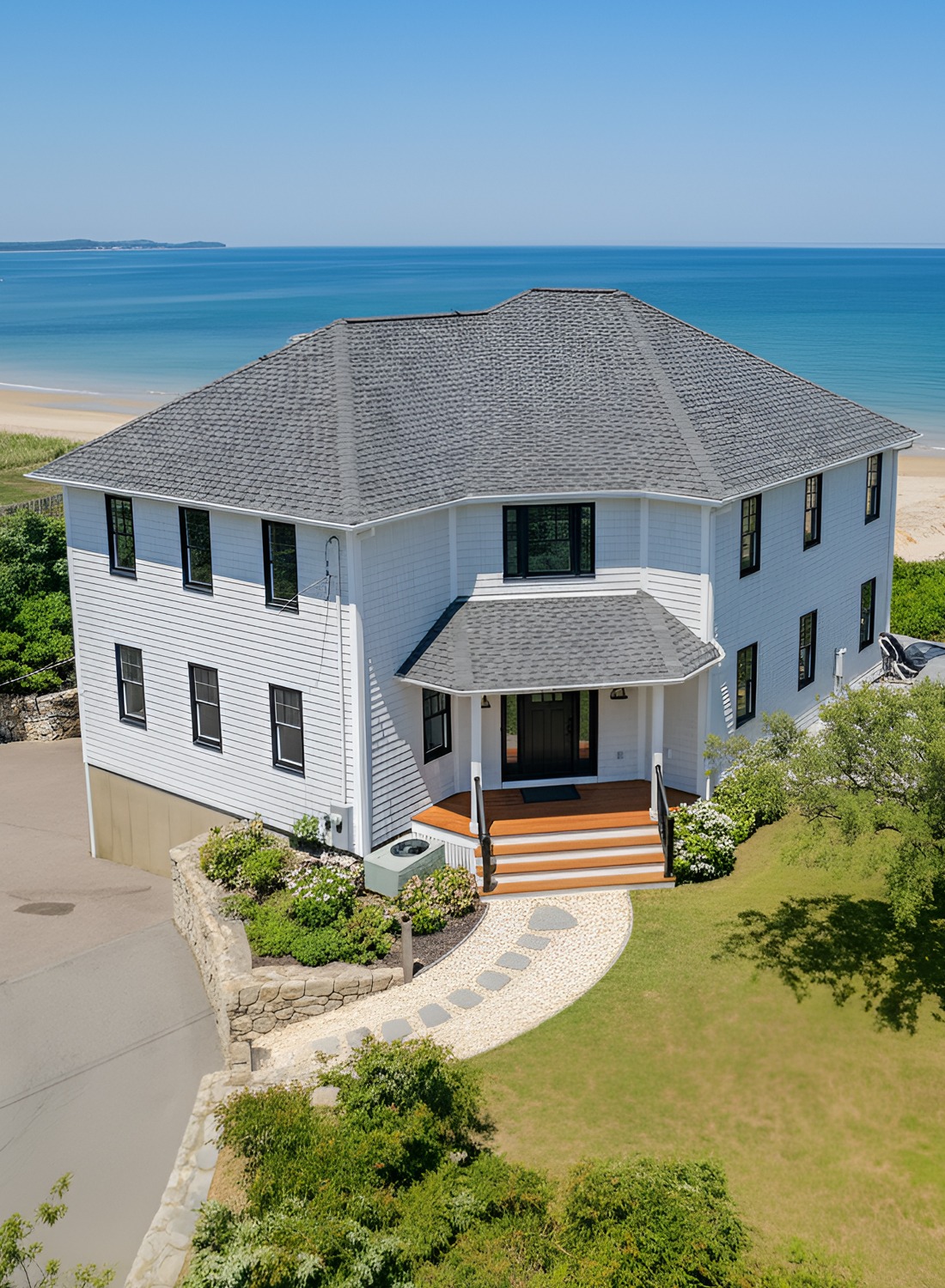
Black and white can look stunning on a beach house. It feels crisp, modern, and bold. It works well when the home has clean lines, big windows, or a simple shape.
Use white as the main color if you want a light coastal look. Then add black windows, doors, railings, and lights. For a bolder home, use black siding with white trim and wood accents.
This color combo feels fresh because it is simple. It does not need much extra detail to make a strong impression.
Design cues:
- Use white siding with black windows.
- Add a black front door for contrast.
- Choose black lanterns and railings.
- Warm it up with wood steps or beams.
- Keep the landscaping clean and simple.
How to Choose the Best Beach House Exterior Color
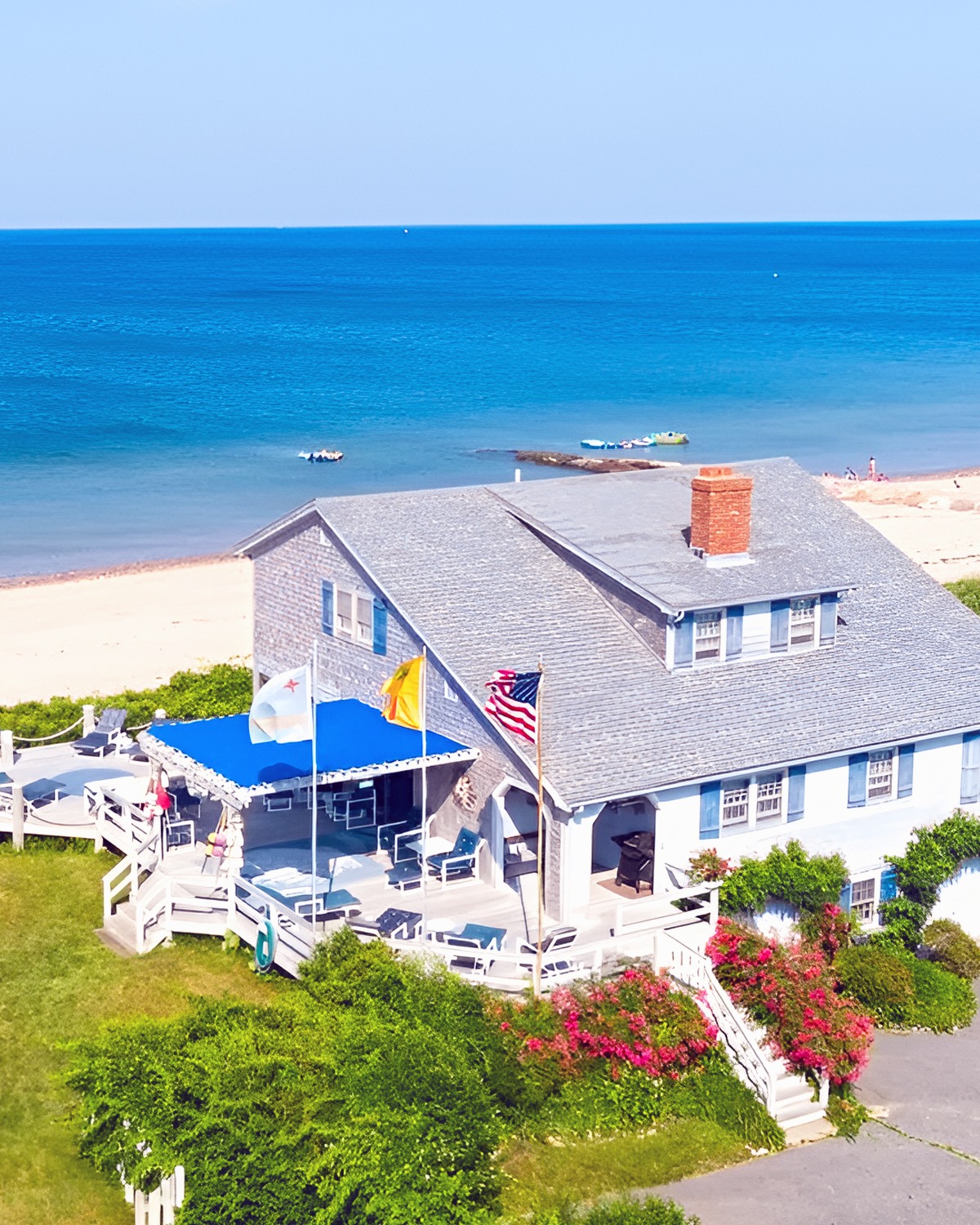
The best beach house exterior color should work with the setting. Look at the sand, water, trees, rocks, and sky around the home. Then choose a color that feels like it belongs there.
For a bright and classic look, choose white, ivory, cream, or pale blue. For a natural look, choose sand beige, sage, taupe, or shingle gray. For a bold look, choose navy, charcoal, teal, or black and white.
Also, think about trim. White trim makes most beach colors feel clean. Black trim adds a modern touch. Wood accents add warmth. Blue or green shutters add cottage charm.
A beach house does not need to look fancy to feel beautiful. It needs the right mix of color, texture, and light. When those three things work together, the whole exterior feels calm, fresh, and ready for slow mornings on the porch.