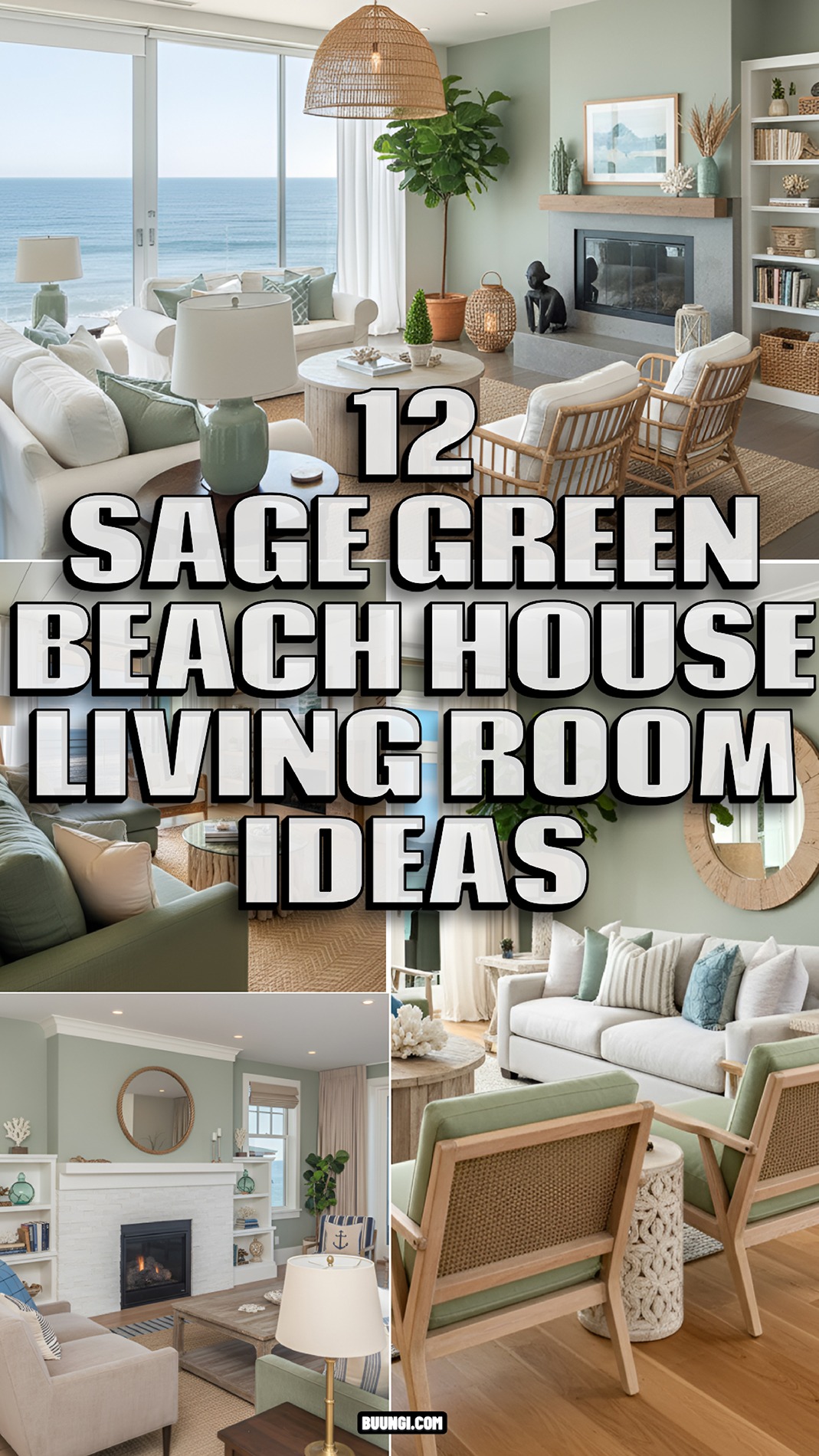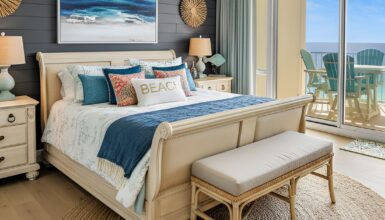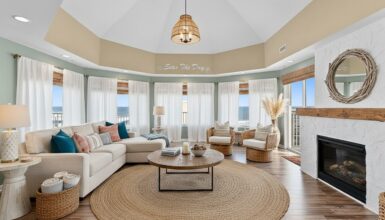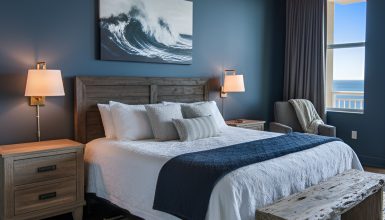
What if one color could make your beach house living room feel fresh, calm, and beautifully pulled together? That is the charm of sage green. It feels soft like sea grass, light like coastal air, and warm enough to make a room feel like home. When you pair it with sandy neutrals, woven textures, and breezy fabrics, the whole space starts to glow. So, if you want a living room that feels relaxed, stylish, and easy to love, this look is full of ideas worth saving.
1. Start With the Mood You Want
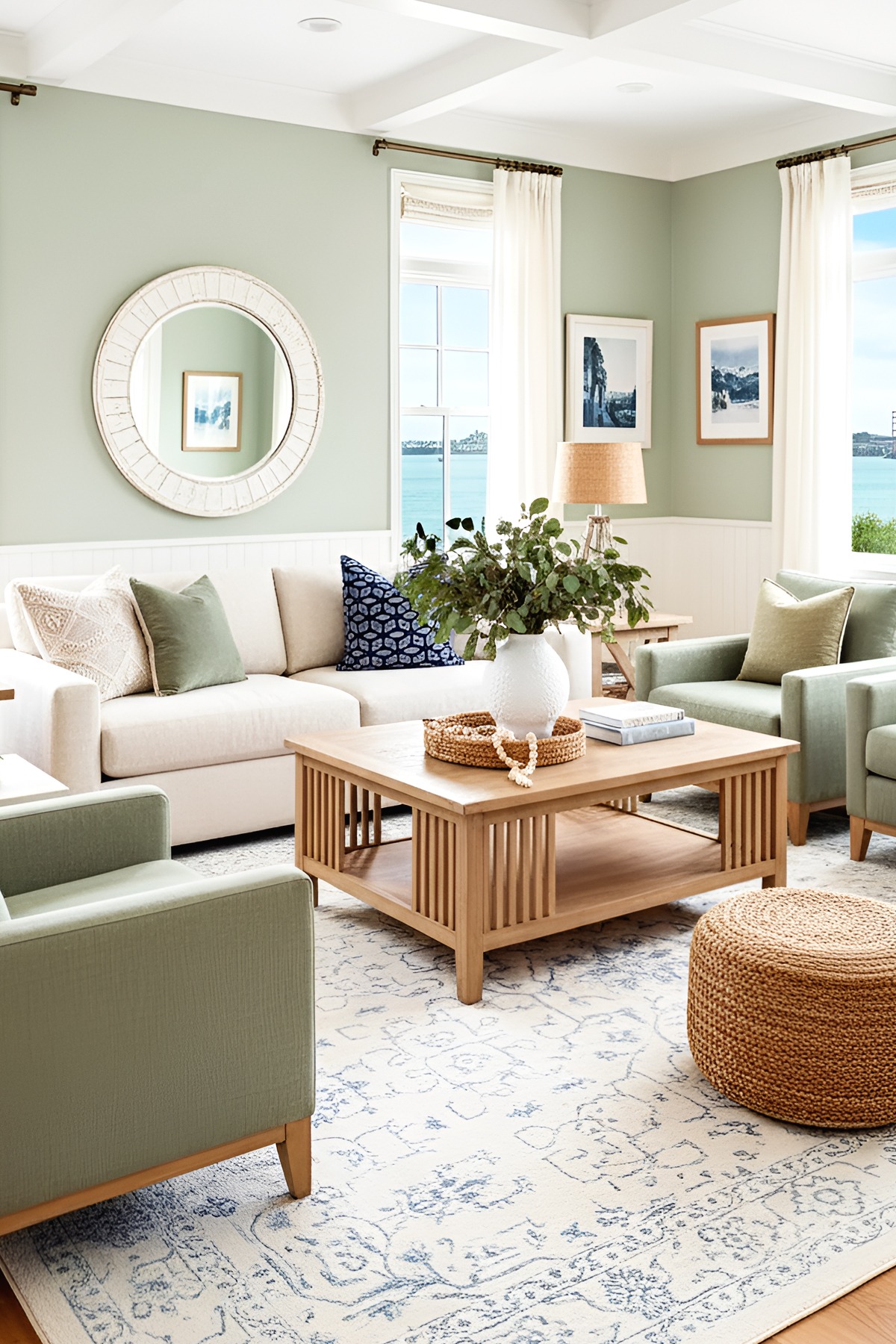
Before you buy a sofa or pick a paint color, think about the feeling of the room. A sage green beach house living room should feel restful and open. It should invite people to sit down, put their feet up, and stay awhile.
That means the room should not feel stiff. It should not feel crowded. And it should not lean too hard into beach decor in an obvious way. Instead, the goal is a soft coastal mood with gentle color, natural materials, and a lot of breathing room.
Sage green works best when it supports that mood. It should feel like part of the air in the room, not the star of a loud show.
Cues to focus on:
- Calm color palette
- Light and airy feeling
- Relaxed furniture layout
- Natural textures
- Soft coastal details
- Open, uncluttered look
2. Choose the Right Shade of Sage Green
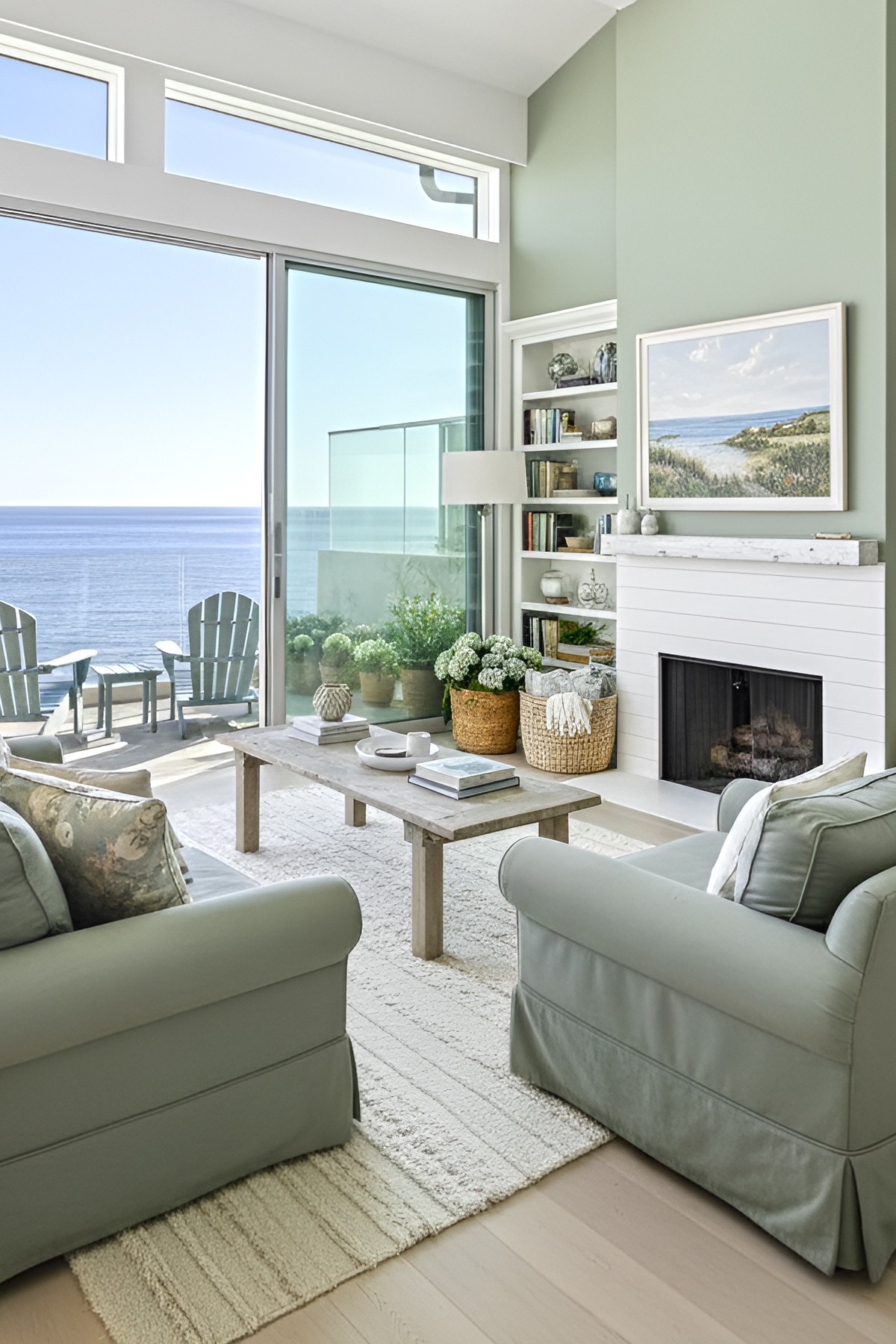
Not every sage green looks the same. Some shades have more gray. Some lean warm. Some have a touch of blue. In a beach house living room, the prettiest sage greens usually have a muted, dusty quality. They feel sun-washed, not sharp or bright.
A gray-green sage feels elegant and soft. A warmer sage with olive undertones feels earthy and grounded. A blue-toned sage can feel cooler and more coastal. The one you choose will shape the whole room.
If your living room gets a lot of sunlight, a medium sage can look lovely without feeling heavy. If the room is small or a little dark, go lighter. A pale sage on the walls can bounce light around and keep the space fresh.
You can use sage green in big ways or small ways. It can go on the walls, on the sofa, on curtains, or just in accents. There is no single rule. However, the key is balance. Let sage green lead, but give it plenty of soft neutrals around it.
Cues to focus on:
- Muted sage, not neon green
- Dusty or gray-green tones
- Soft, coastal undertones
- Light sage for darker rooms
- Medium sage for sunny rooms
- Balanced use of color
3. Build a Beachy Color Palette Around Sage
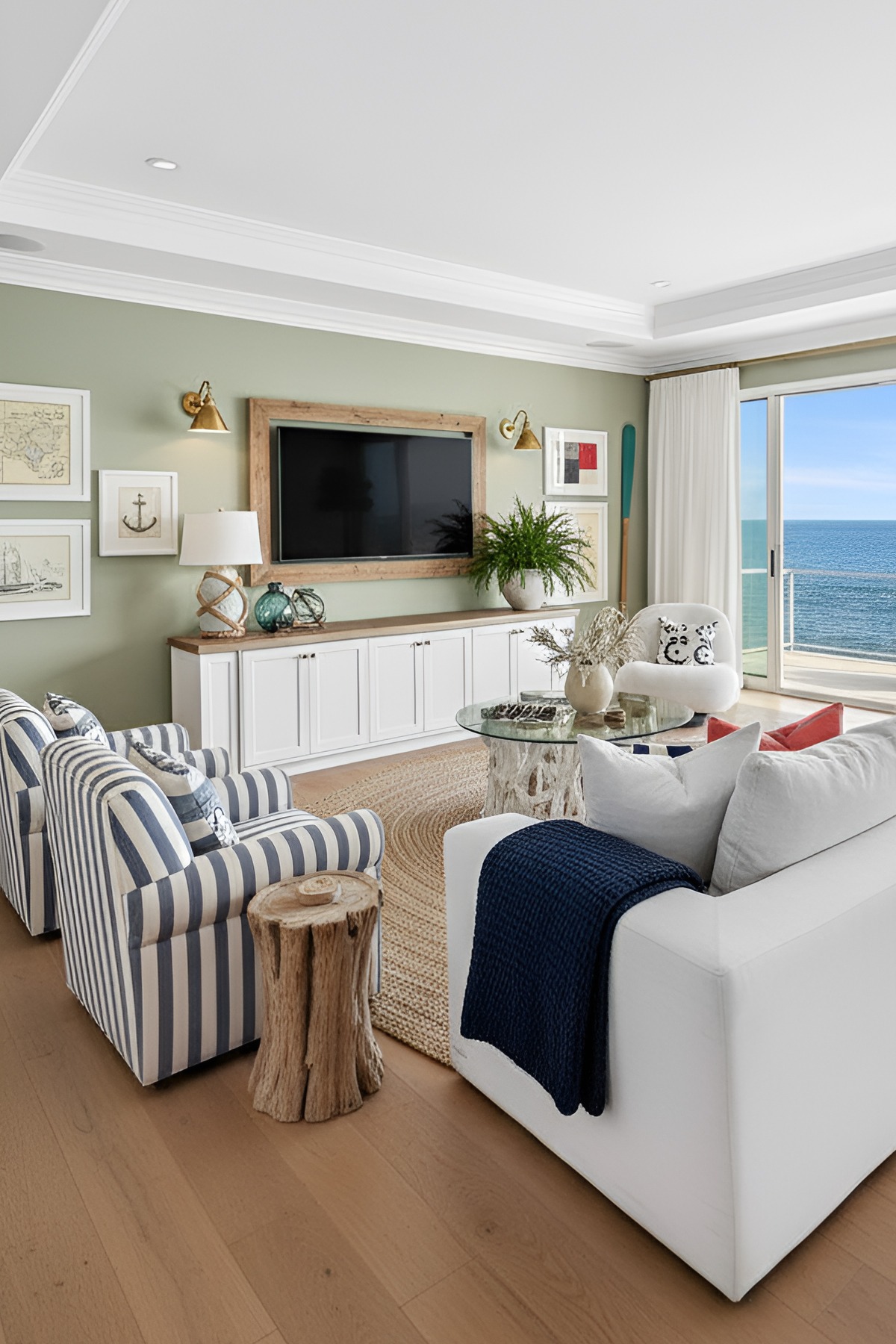
Sage green shines when it sits next to colors that feel natural and easy. Think of colors you would see near the shore. Sand. Driftwood. Cloudy sky. Sea glass. White linen. Pale stone. All of these tones help sage green feel even more relaxed.
A strong beach house palette often starts with sage green and creamy white. Then it adds warm beige, soft tan, pale wood, and touches of muted blue. This mix keeps the room from feeling flat. It also keeps the green from feeling too cold.
Try not to crowd the palette with too many bold colors. Bright coral, navy, or red can pull the room in a different direction. If you want contrast, use it in small doses. A faded blue throw pillow or a weathered wood side table can do enough.
The room should feel blended, as if every shade belongs to the same quiet story.
Cues to focus on:
- Sage green as the anchor color
- Creamy white walls or trim
- Sandy beige and soft taupe
- Pale driftwood tones
- Hints of sea-glass blue
- Low-contrast, soothing color flow
4. Pick Furniture That Feels Breezy and Comfortable
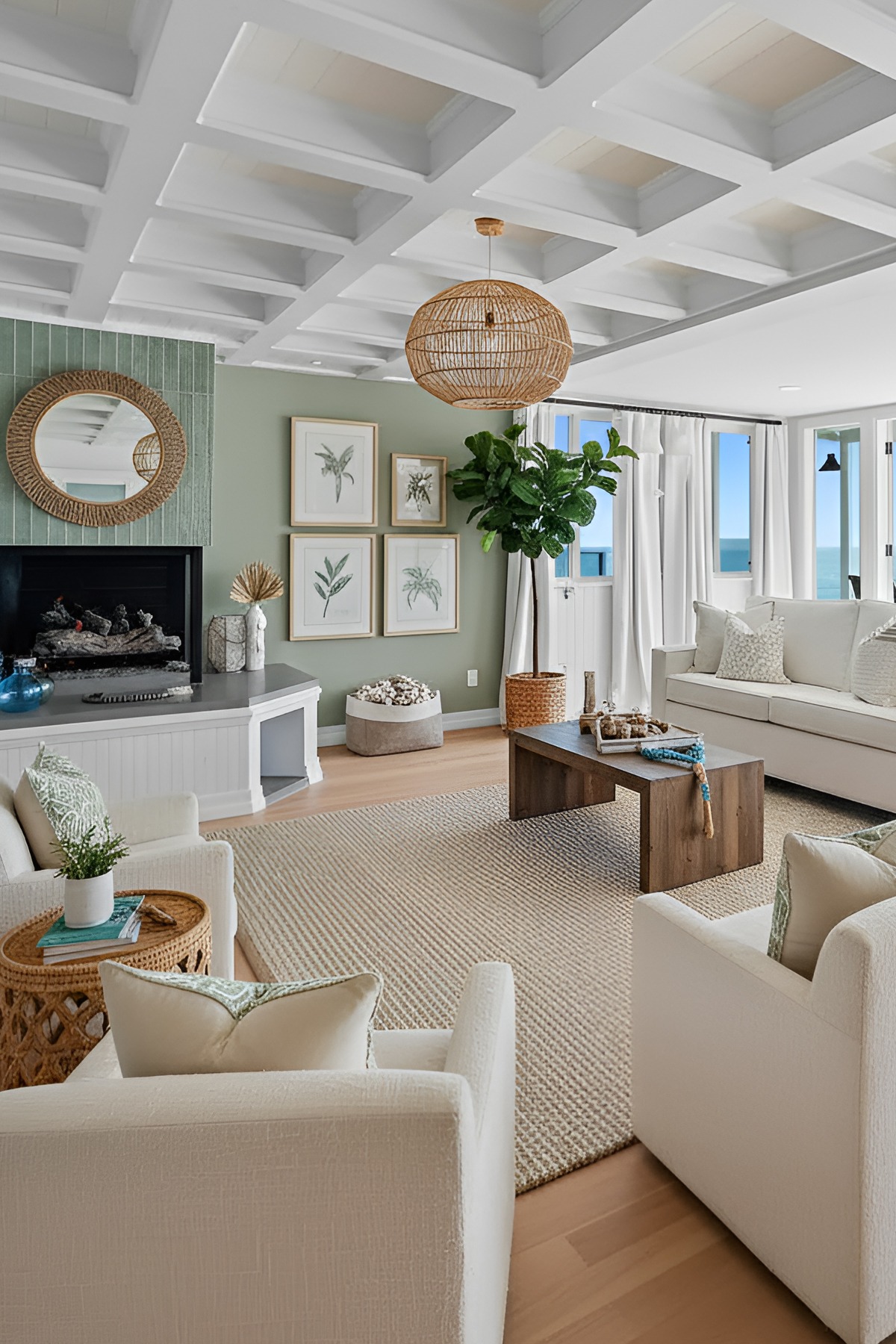
Beach house living rooms should feel welcoming. So, furniture matters just as much as color. Choose pieces that feel soft, casual, and easy to live with. This is not the place for heavy, formal seating or dark, bulky wood.
A slipcovered sofa is a wonderful fit. It looks relaxed and timeless. A linen or cotton-blend sofa in off-white, oatmeal, or pale sage works beautifully. If you want sage green on a larger piece, a sofa or pair of accent chairs in that color can ground the room without making it feel too busy.
Coffee tables and side tables should feel light in spirit. Whitewashed wood, natural oak, cane, rattan, or weathered finishes all fit the look. Curved edges can soften the room even more. That matters because sage green already has a gentle mood. Soft shapes help support it.
Choose seating that invites conversation. Two chairs by a window. A roomy sofa facing the coffee table. An ottoman that can hold a tray or act as extra seating. These choices make the room feel both pretty and useful.
Cues to focus on:
- Slipcovered or linen-look sofa
- Relaxed seating, not formal pieces
- Light wood or weathered finishes
- Rattan or cane accents
- Soft lines and rounded shapes
- Comfortable, conversation-friendly layout
5. Layer in Texture Like a Designer
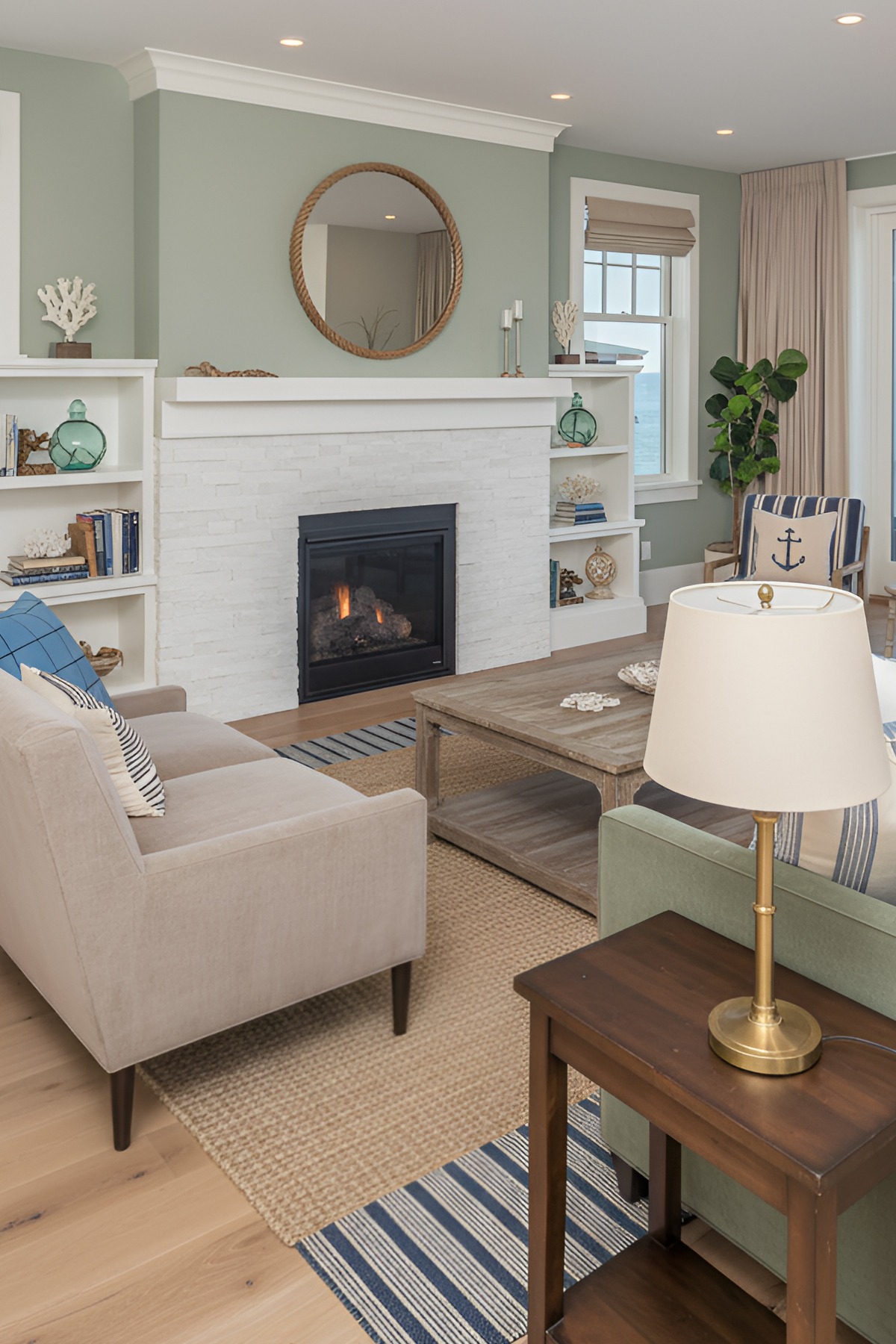
Texture is what keeps a sage green beach house living room from feeling flat. Since the color palette is soft, the room needs texture to add depth. This is where the magic happens.
Bring in woven materials first. Rattan baskets, a cane chair, a seagrass rug, or a jute ottoman can instantly create coastal warmth. Then add soft fabrics. Linen curtains, cotton pillow covers, a nubby throw blanket, and a textured upholstered chair all make the room feel richer.
Wood is also important. Look for pieces with grain, age, or a sun-bleached finish. A coffee table with visible texture or an old bench with worn edges adds character. Even a beadboard wall or a ceiling with exposed beams can help.
The point is not to match everything. The point is to layer materials that feel natural, touchable, and relaxed. That mix gives the room soul.
Cues to focus on:
- Linen and cotton fabrics
- Jute or seagrass rugs
- Rattan, cane, and wicker
- Washed wood finishes
- Nubby throws and textured pillows
- Layered natural materials
6. Let the Walls Set the Tone
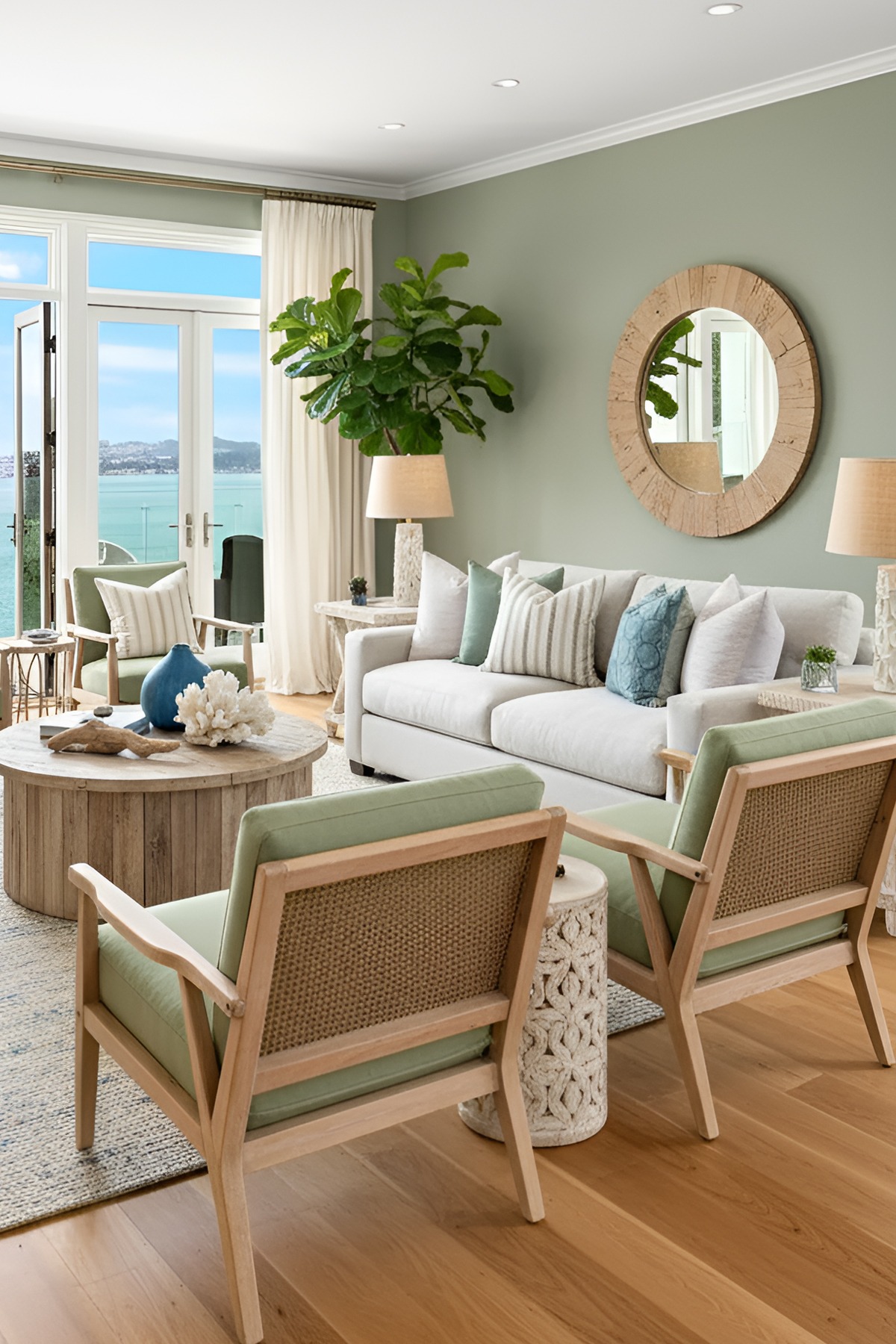
Walls do a lot of work in a beach house living room. They create the backdrop for everything else. If you want a full sage green look, paint the walls a pale, muted sage. This creates a cocooning but still airy feeling.
If you want a lighter room, keep the walls white or warm cream and bring sage green in through the furnishings. This works especially well if your space already has lots of windows and you want the architecture to stand out.
You can also split the difference. Try beadboard or wall paneling painted in a soft white, then add sage green above. Or use sage only on a fireplace surround, built-in shelves, or an accent wall.
Beach house style loves simple architectural details. Shiplap, beadboard, tongue-and-groove, and framed wall molding can all look beautiful here. They add charm without noise.
Cues to focus on:
- Pale sage wall paint for softness
- White or cream walls for brightness
- Beadboard or shiplap details
- Sage on built-ins or accent walls
- Simple wall treatments
- Clean, classic coastal backdrop
7. Use Fabrics That Feel Light and Easy
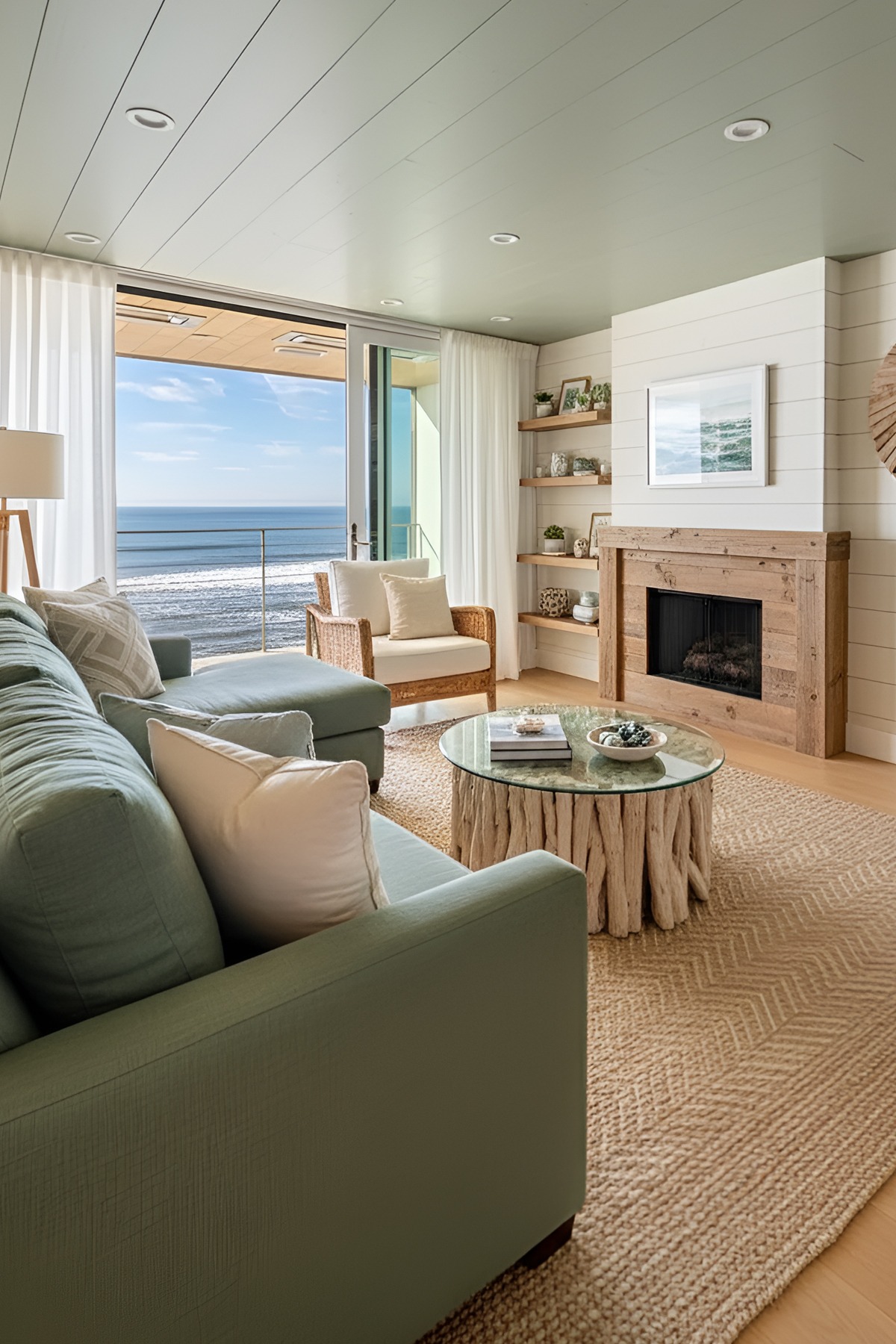
In a beach house, heavy fabric can weigh the room down. Light fabrics make the room feel fresh. They move with the breeze. They catch sunlight. They help everything feel more open.
For curtains, choose airy linen panels or cotton drapes in white, cream, or soft natural tones. Let them hang high and full. That makes the room feel taller and softer. Avoid dark blackout drapes unless you truly need them.
For pillows, mix sage green with stripes, oatmeal solids, pale blue, and textured neutrals. You can even add a faded floral or a small block print if it feels soft and coastal. Keep the prints subtle. The room should feel easy on the eyes.
Throws should look casual. Drape them over the arm of a sofa or fold one into a basket. Look for pieces with fringe, waffle texture, or a soft woven finish.
Cues to focus on:
- Linen or cotton curtains
- Soft, washable upholstery
- Muted pillow patterns
- Light and breezy fabric choices
- Woven throws with texture
- Easy, relaxed layering
8. Bring in Natural Light and Soft Lighting
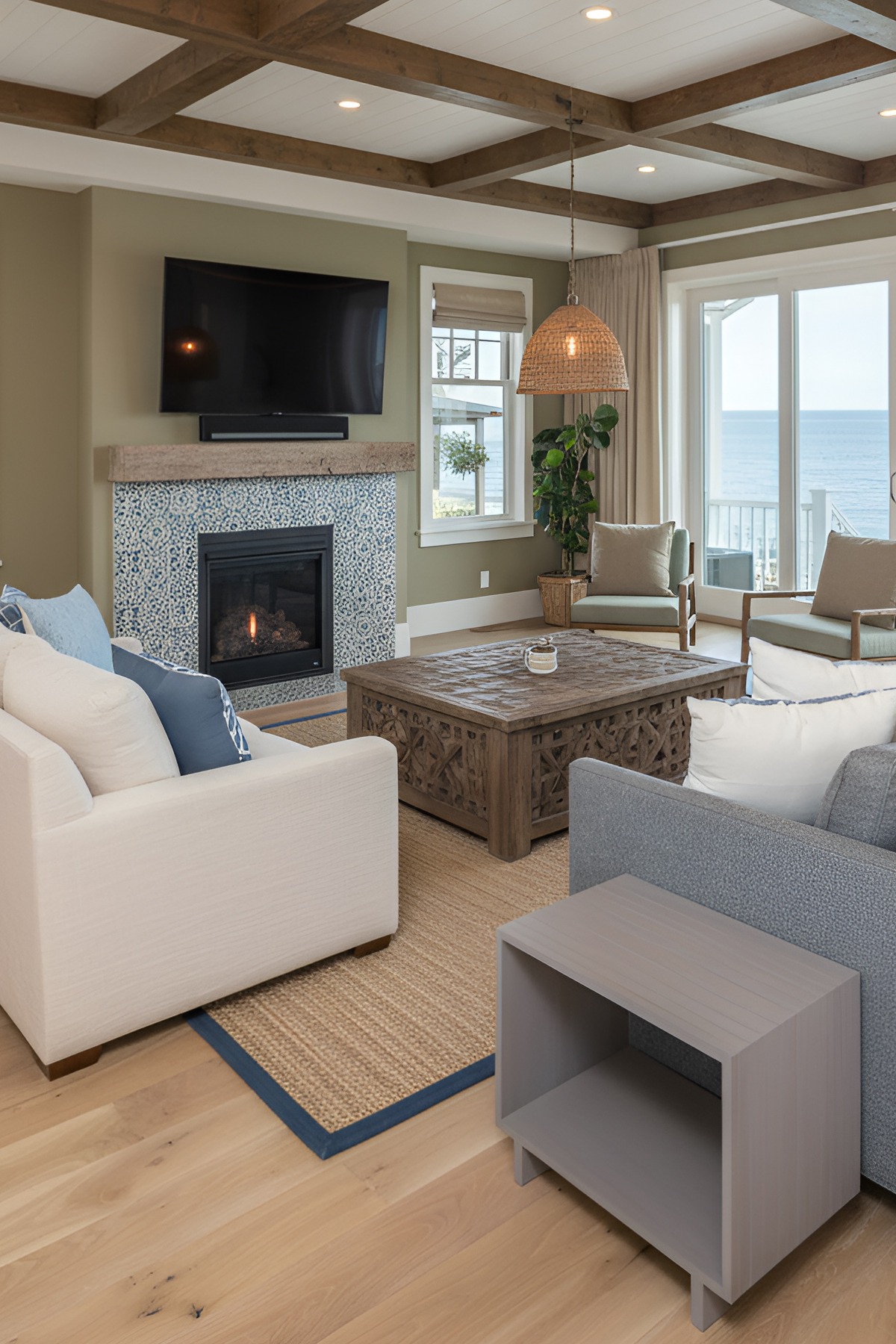
Beach house style and natural light go hand in hand. So, make the most of your windows. Skip anything too heavy. Use simple shades, woven blinds, or soft curtain panels that let light filter in.
Then think about lighting after the sun goes down. A good sage green living room should glow at night. Table lamps with ceramic bases, woven pendants, and soft white shades work beautifully. Wall sconces can add charm, especially near built-ins or a fireplace.
Try to avoid harsh overhead lighting on its own. You want the room to feel warm and flattering in the evening. Layered light helps do that. Use a mix of lamps, ceiling fixtures, and accent lighting so the space always feels inviting.
A beach house living room should feel just as good at sunset as it does at noon.
Cues to focus on:
- Maximize daylight
- Use light-filtering window treatments
- Add woven or ceramic lamps
- Choose warm, soft bulbs
- Layer overhead and table lighting
- Create an evening glow
9. Decorate With Coastal Touches, but Keep It Subtle
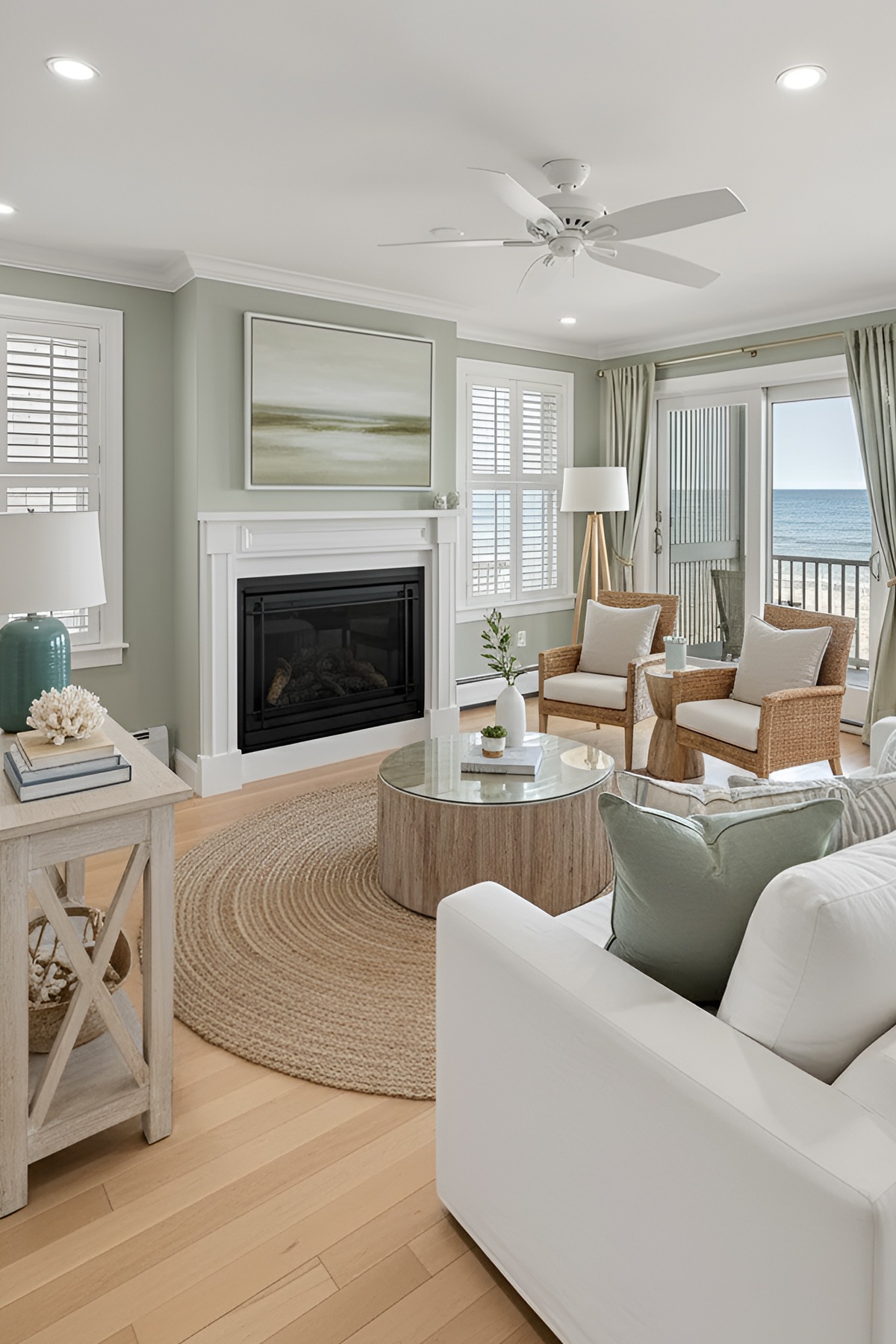
This is where many rooms go off track. A beach house living room does not need to shout “beach.” It does not need anchors, rope signs, or piles of seashell prints. Instead, let the coastal feeling show up in softer ways.
Think of artwork with ocean tones, dune landscapes, abstract water-inspired pieces, or vintage coastal photography. Use bowls with coral-like shapes, driftwood objects, sea-glass colors, or pottery in sandy hues. A few found objects can say more than a whole shelf of themed decor.
Plants also help. A potted olive tree, soft fern, or trailing greenery adds life and echoes the sage palette. Even dried branches in a large vase can feel beautiful and beachy.
Decor should feel collected, not staged. That is what gives the room warmth.
Cues to focus on:
- Subtle coastal art
- Sea-glass and sand-inspired accessories
- Driftwood or natural sculptural pieces
- Handmade pottery
- Green plants or branches
- Collected, not kitschy, styling
10. Ground the Room With the Right Rug
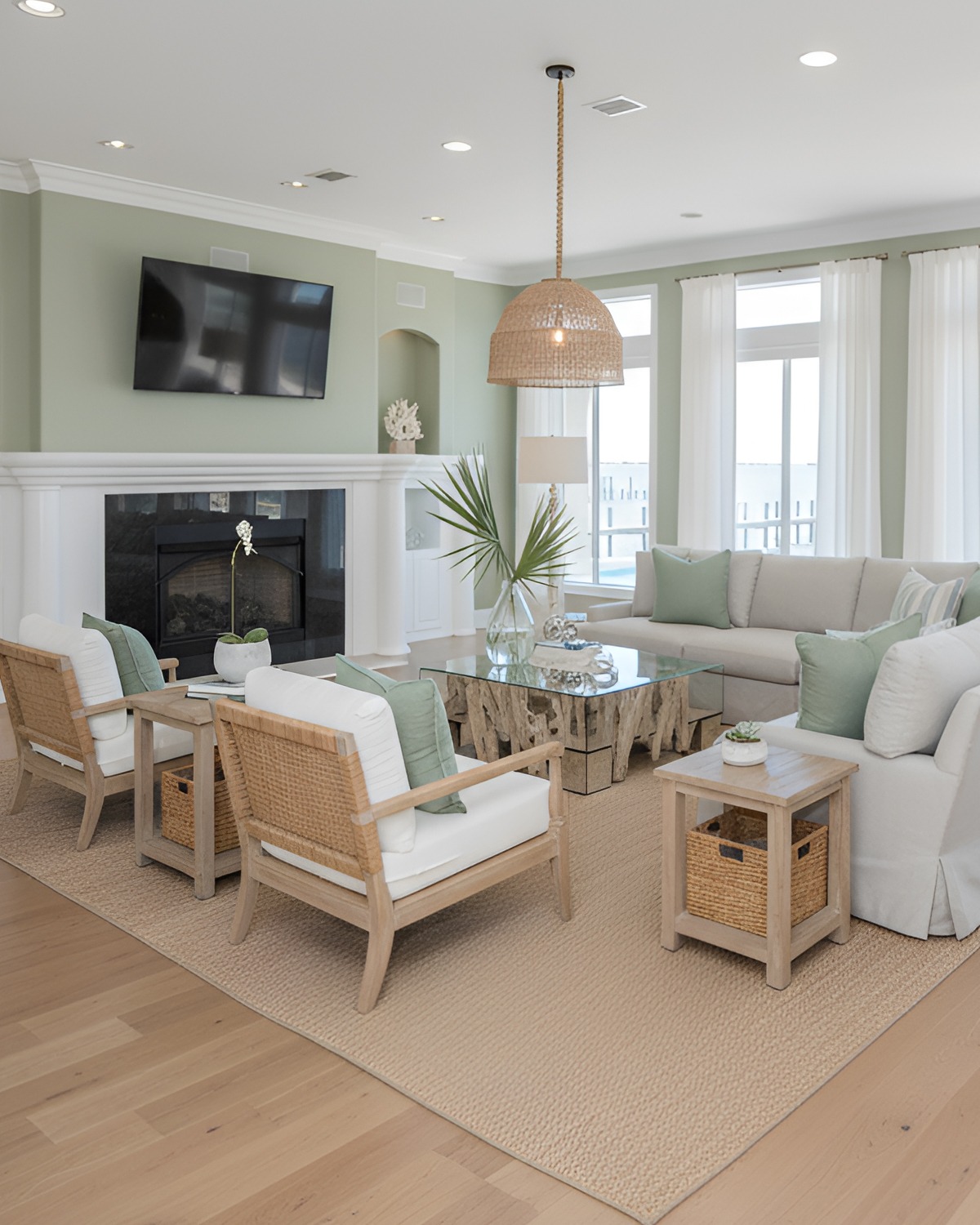
A rug can tie the whole room together. In a sage green beach house living room, a rug should feel natural, soft, and relaxed. Jute and seagrass rugs are classic choices because they add texture right away. They also pair beautifully with sage green.
However, if you want more softness underfoot, try a wool or flatweave rug in cream, beige, faded green, or a muted stripe. A washed vintage-style rug can also work if the colors stay soft and beachy.
Size matters too. A rug that is too small can make the room feel broken up. Go large enough that the front legs of the main furniture pieces sit on it. This makes the room feel connected and thoughtfully arranged.
Cues to focus on:
- Jute or seagrass for texture
- Soft wool or flatweave for comfort
- Faded, beachy color palette
- Muted stripe or washed pattern
- Large enough to anchor furniture
- Natural, easygoing finish
11. Style the Coffee Table and Shelves With Restraint
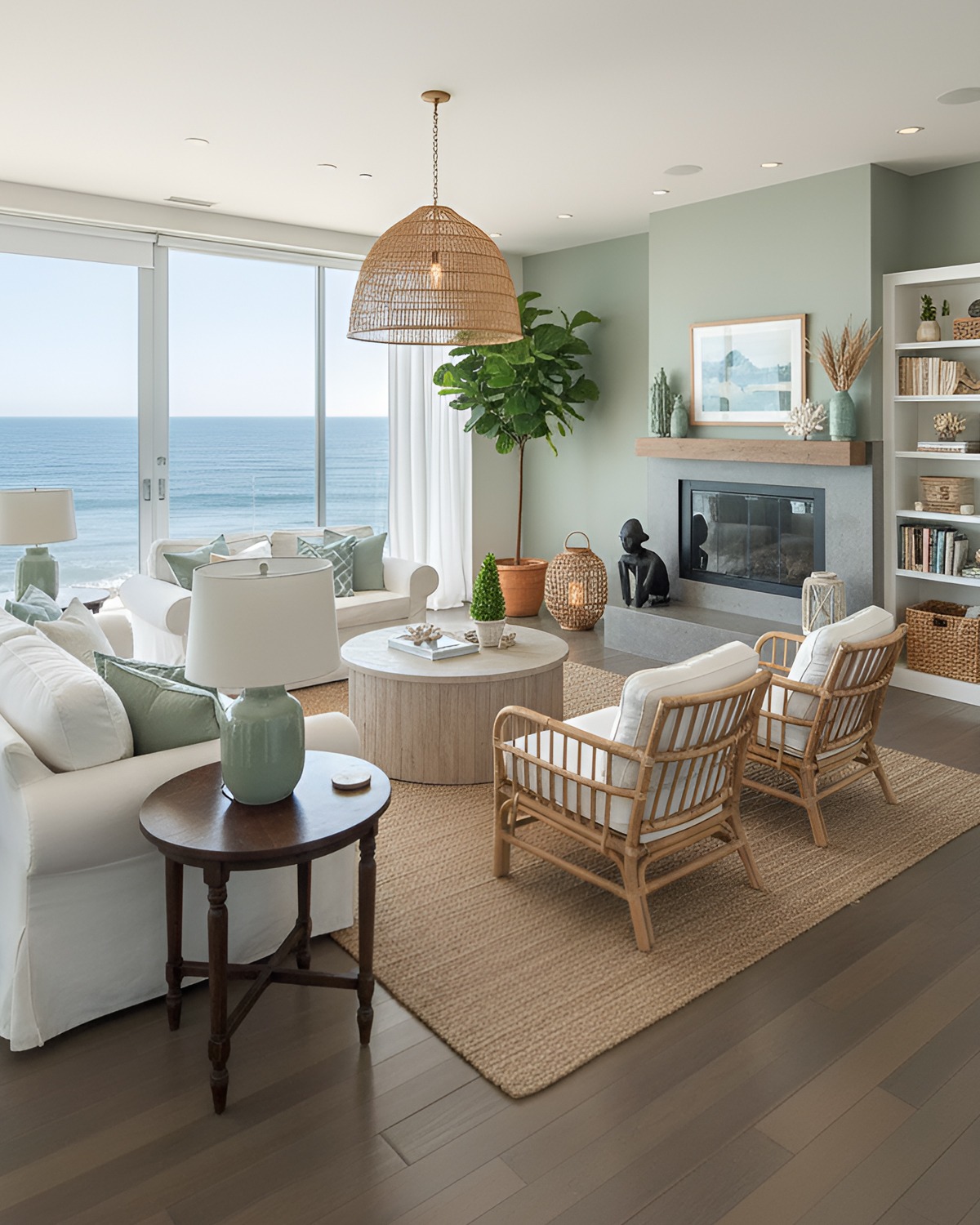
A calm room needs calm styling. Keep your coffee table simple. Use a tray, a few books, a candle, and maybe a small vase with greenery. That is enough. Shelves should also breathe. Mix books, bowls, art, and baskets, but leave open space too.
When styling, repeat your colors in small ways. A sage green vase here. A sandy ceramic bowl there. A pale blue book jacket. These little echoes make the room feel polished without looking forced.
And remember, empty space is part of the design. It gives the eye a place to rest.
Cues to focus on:
- Simple coffee table styling
- Open space on shelves
- Repeated soft color accents
- Books, pottery, greenery, and trays
- Balanced, uncluttered arrangements
- Decorative restraint
12. Make It Personal and Lived-In
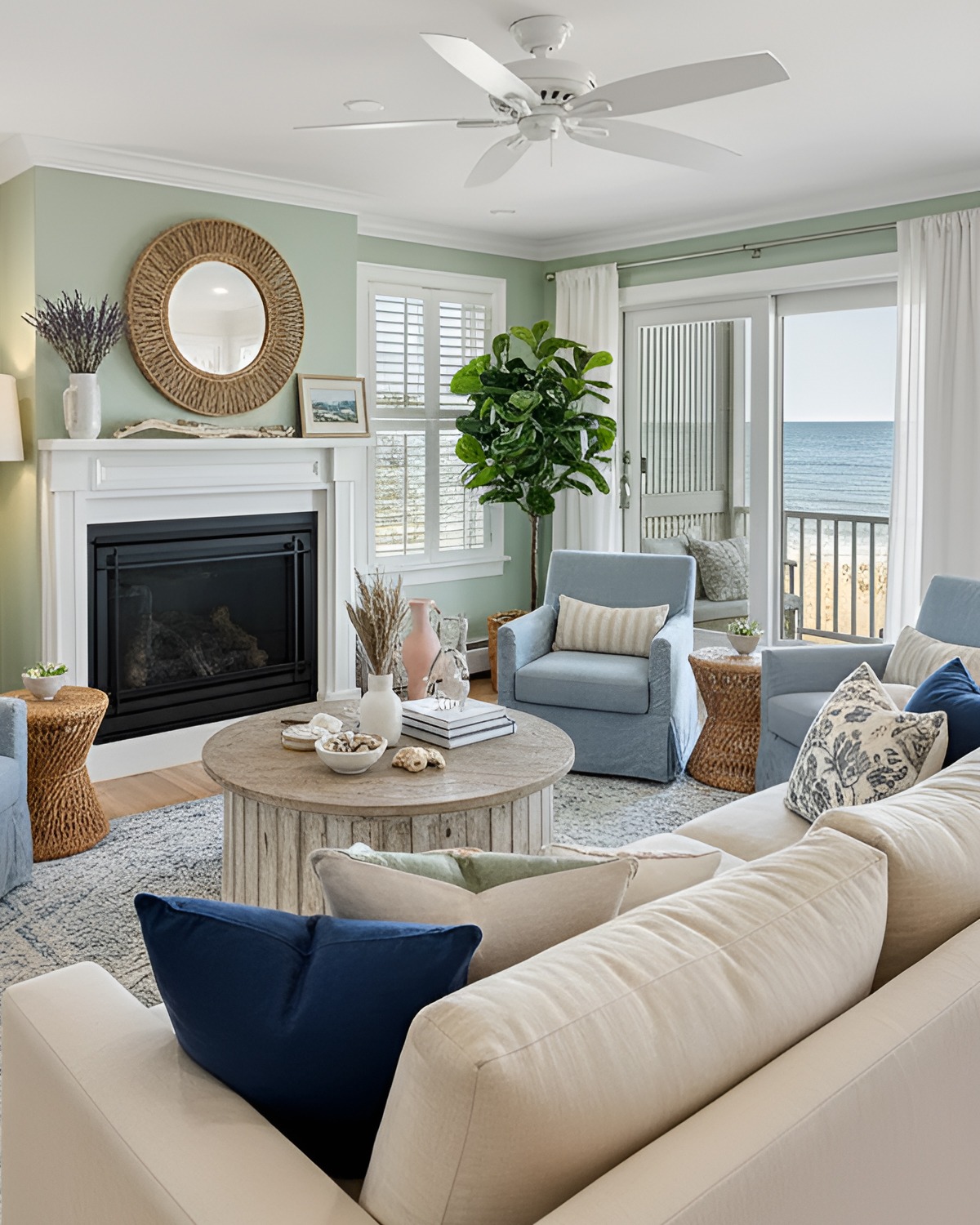
The prettiest beach house living rooms do not feel like showrooms. They feel personal. They have a sense of life. A favorite chair. A stack of well-loved books. A woven basket with throws. Family photos in simple frames. A collected bowl from a local market. These details matter.
Sage green helps with this because it is such a friendly color. It works with old pieces and new ones. It works with polished spaces and more relaxed ones. So do not chase perfection. Let the room feel real.
That is what makes it beautiful.
Cues to focus on:
- Personal pieces mixed in
- Comfortable, usable furniture
- Everyday beauty
- Old and new layered together
- Warm, lived-in charm
- Relaxed finish, not perfection
Conclusion
A sage green beach house living room feels peaceful without looking plain. It brings in color, but in a quiet and graceful way. Add soft white, natural wood, linen, jute, and a few subtle coastal touches, and the room feels bright, layered, and welcoming. Whether you want a full makeover or just a few simple updates, this color story can help you create a space that feels fresh every single day.