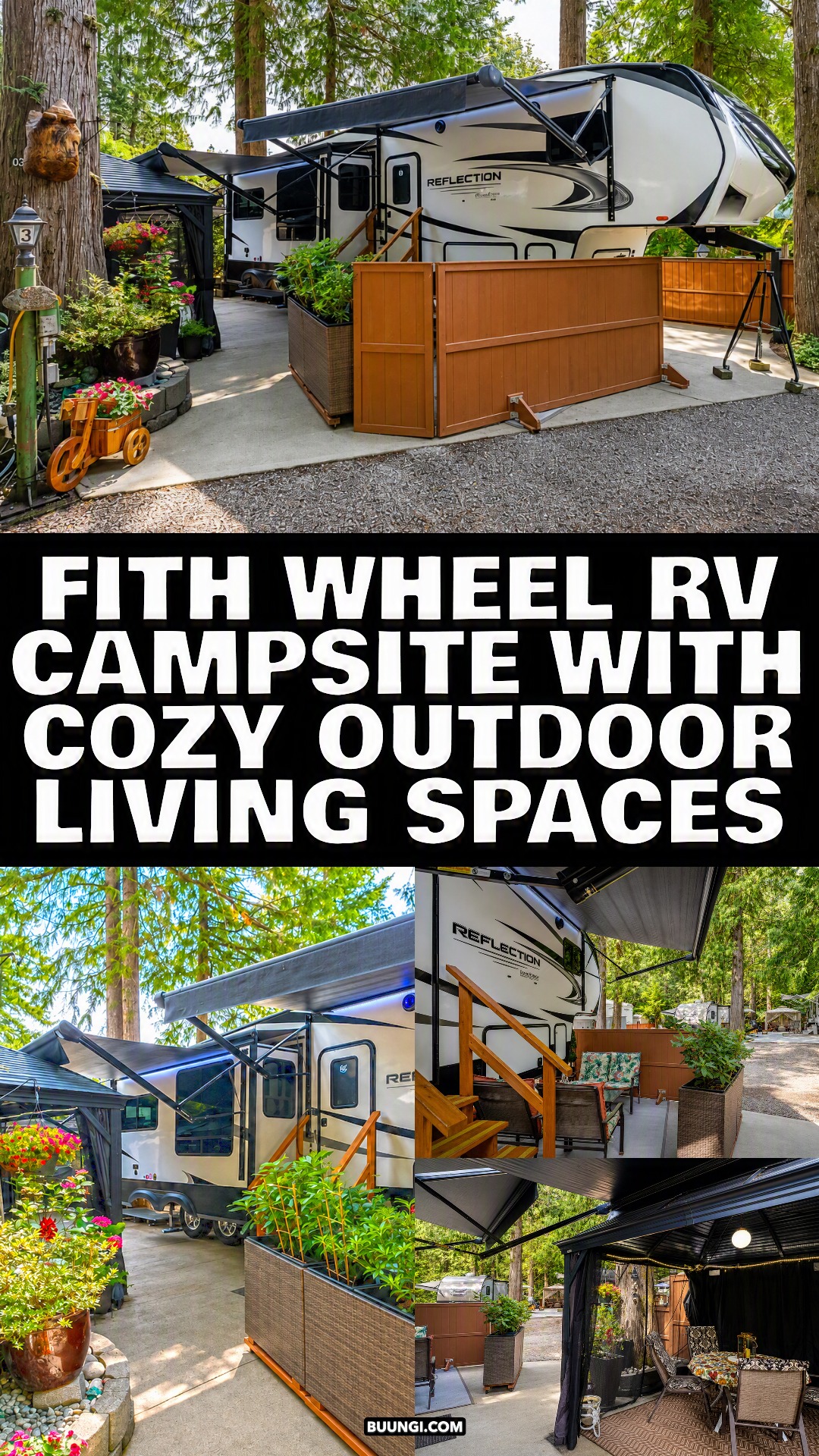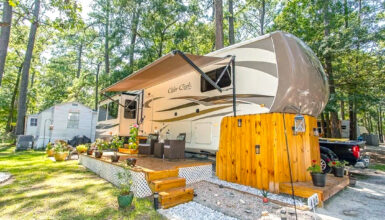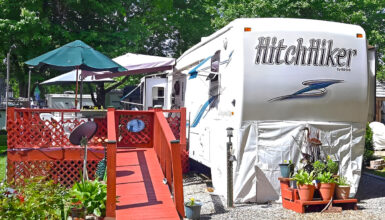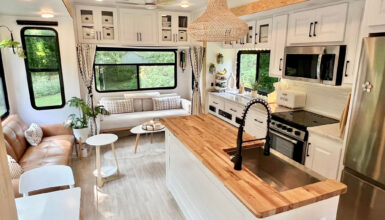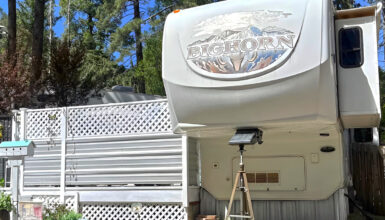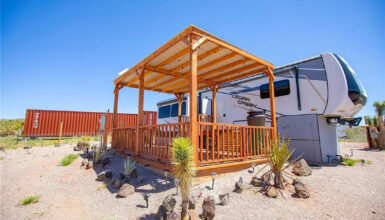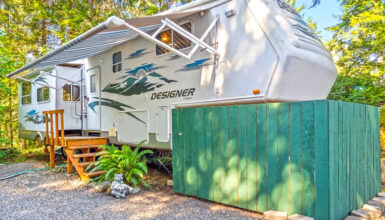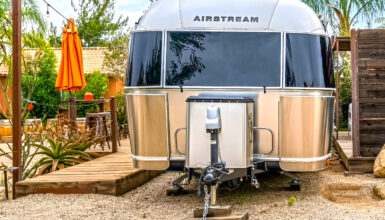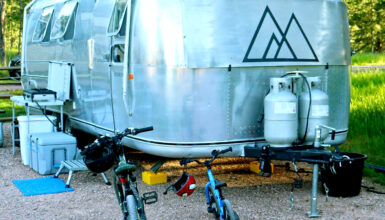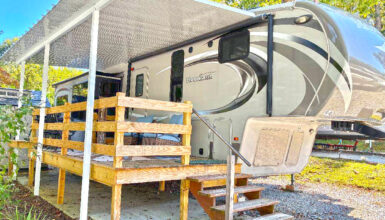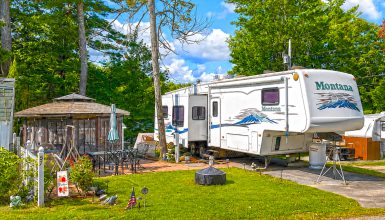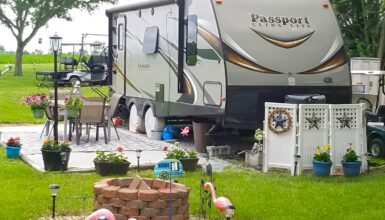
What makes a Fifth Wheel RV campsite feel more like a private outdoor retreat? It starts with a smart setup. Here, wide awnings, screened gazebos, cozy seating, lush plants, and privacy panels turn a simple RV pad into a relaxing place to live outdoors. Each area has a purpose, yet the whole space feels easy, natural, and connected to the forest.
1. A Fifth Wheel Becomes the Center of a Small Outdoor Home
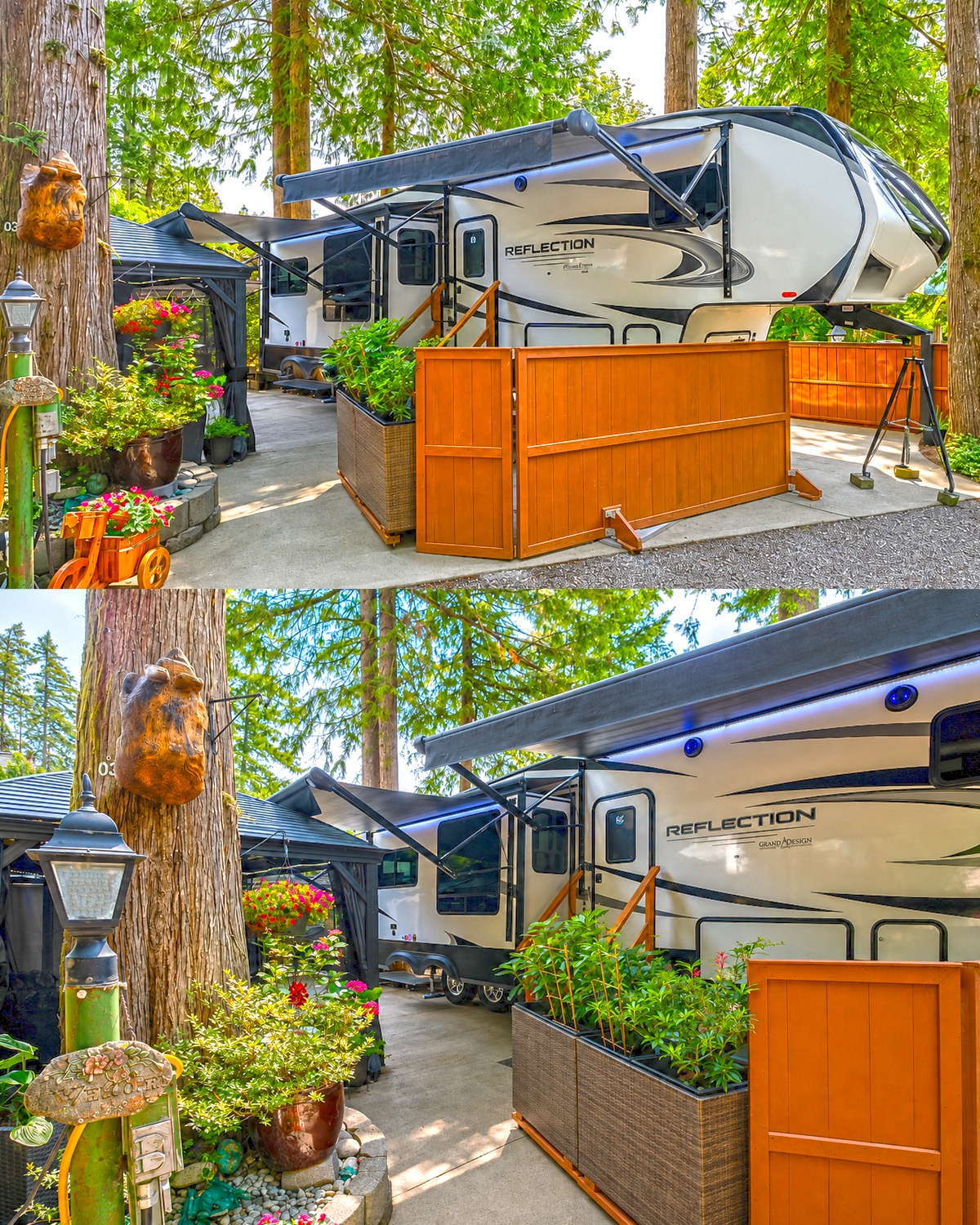
The first thing you notice is the size of the fifth wheel. Its tall profile gives the site a strong focal point. The white exterior also stands out against the dark trunks and rich green trees.
However, the owners have not treated the RV as a stand-alone object.
Instead, they have built the outdoor layout around it.
The main awning extends over the entry side. A second awning covers another part of the RV. Furniture sits close to the door. Planters guide movement around the patio. A gazebo adds a roofed room beside the RV.
Because of this, the fifth wheel feels connected to the land.
That is an important lesson for any long-term RV setup. You do not need a huge deck or permanent building. You can create a strong sense of place with zones.
Think of the RV as the main house. Then treat the patio, gazebo, and outdoor kitchen as small rooms around it.
Design cues to copy
- Use the RV as the center of the layout.
- Place seating near the main door.
- Create more than one outdoor zone.
- Keep walking paths open and easy to follow.
- Use matching materials to connect each area.
- Let the campsite shape guide the layout.
2. Tall Trees Create a Natural Roof
The mature trees may be the strongest design feature here.
Large trunks rise on every side of the campsite. Their high branches create filtered shade throughout the day. They also make the RV feel smaller and more at home in its setting.
This is a very different feeling from parking a fifth wheel on an open gravel lot.
The trees act like natural architecture.
Their trunks create vertical lines. Their branches form a loose ceiling. The green canopy filters harsh sunlight. Even the patches of light on the concrete add life to the space.
This natural shade also supports the RV awnings. The fabric awnings do not need to block every bit of sunlight on their own. Instead, they work with the tree cover.
The result feels cooler and softer.
There is another visual benefit. The warm bark and green leaves balance the white, gray, and black finish of the fifth wheel. Without the trees, the RV might feel large and bold. Here, it blends into a quiet woodland scene.
Design cues to copy
- Park near mature shade trees when the site allows.
- Keep healthy trees as part of the design.
- Work with existing shade before adding more structures.
- Use earthy colors near wooded campsites.
- Leave some natural ground visible around paved areas.
- Avoid filling every open corner with furniture.
3. Wide RV Awnings Create an Instant Outdoor Living Room
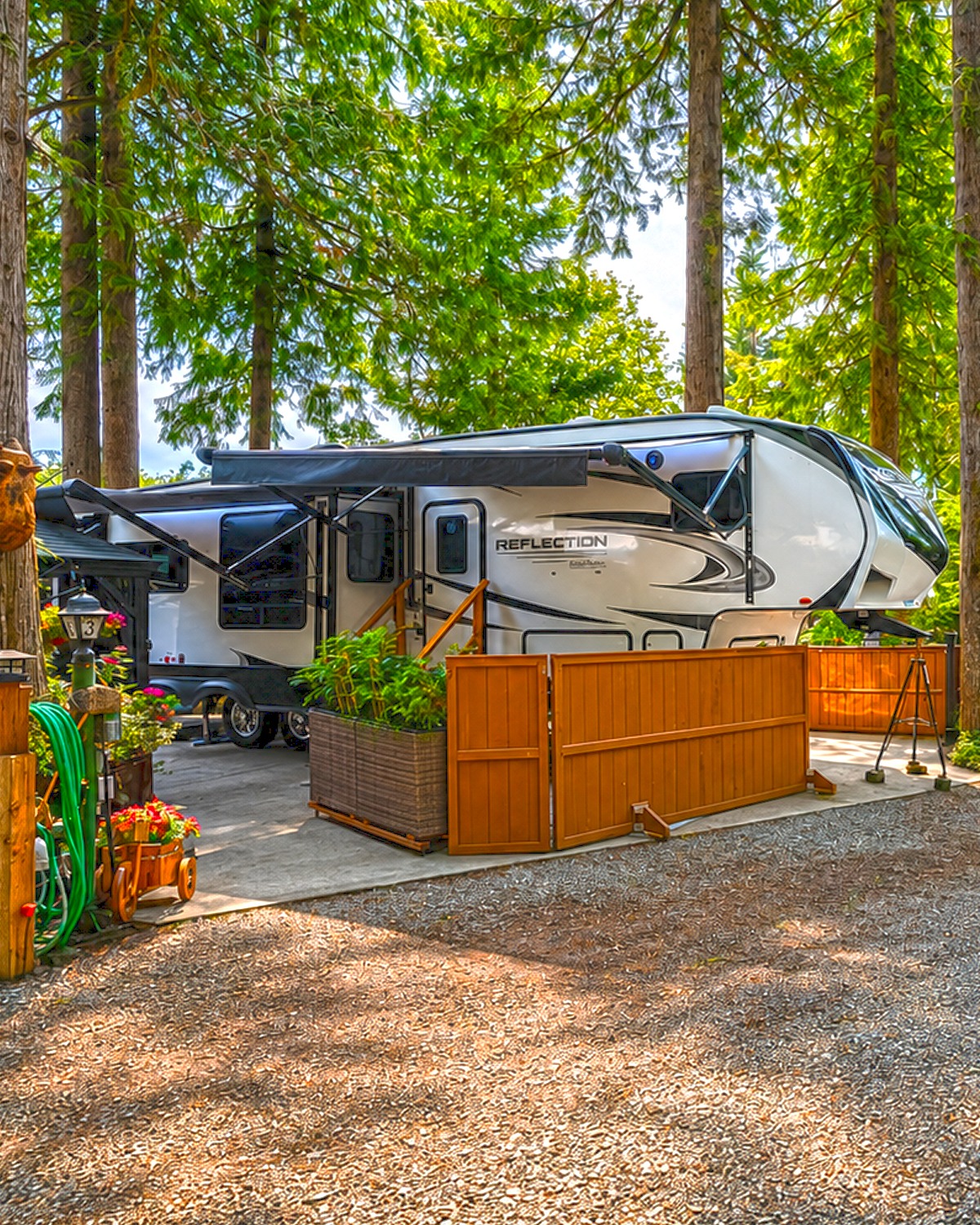
A large retractable awning stretches over the main side of the fifth wheel.
This simple feature changes the whole site.
Without the awning, the space beside the RV would feel like a walkway. With it, the area becomes an outdoor room.
The shade makes it comfortable enough for chairs and a table. It also protects the entrance from light rain and direct sun.
More important, the awning gives the outdoor space a ceiling.
A ceiling helps define any room.
That idea works indoors and outdoors. Once the overhead plane appears, the furniture below feels anchored. You begin to see the patio as a destination rather than leftover space.
The dark awning also gives the light RV exterior more contrast. Its strong horizontal line makes the setup look neat and planned.
There is even subtle lighting along the RV. This gives the covered area a soft glow after sunset.
Design cues to copy
- Extend an awning over the main sitting area.
- Keep taller furniture away from awning arms.
- Add soft LED lights for evening use.
- Place chairs inside the deepest shade.
- Leave enough open space beside the entry steps.
- Retract awnings during high winds or severe weather.
4. Wood Steps Add Warmth to a Modern RV Exterior
The fifth wheel has a sleek exterior. It uses white, black, charcoal, and silver tones.
Then you see the steps.
The warm wood makes an immediate difference.
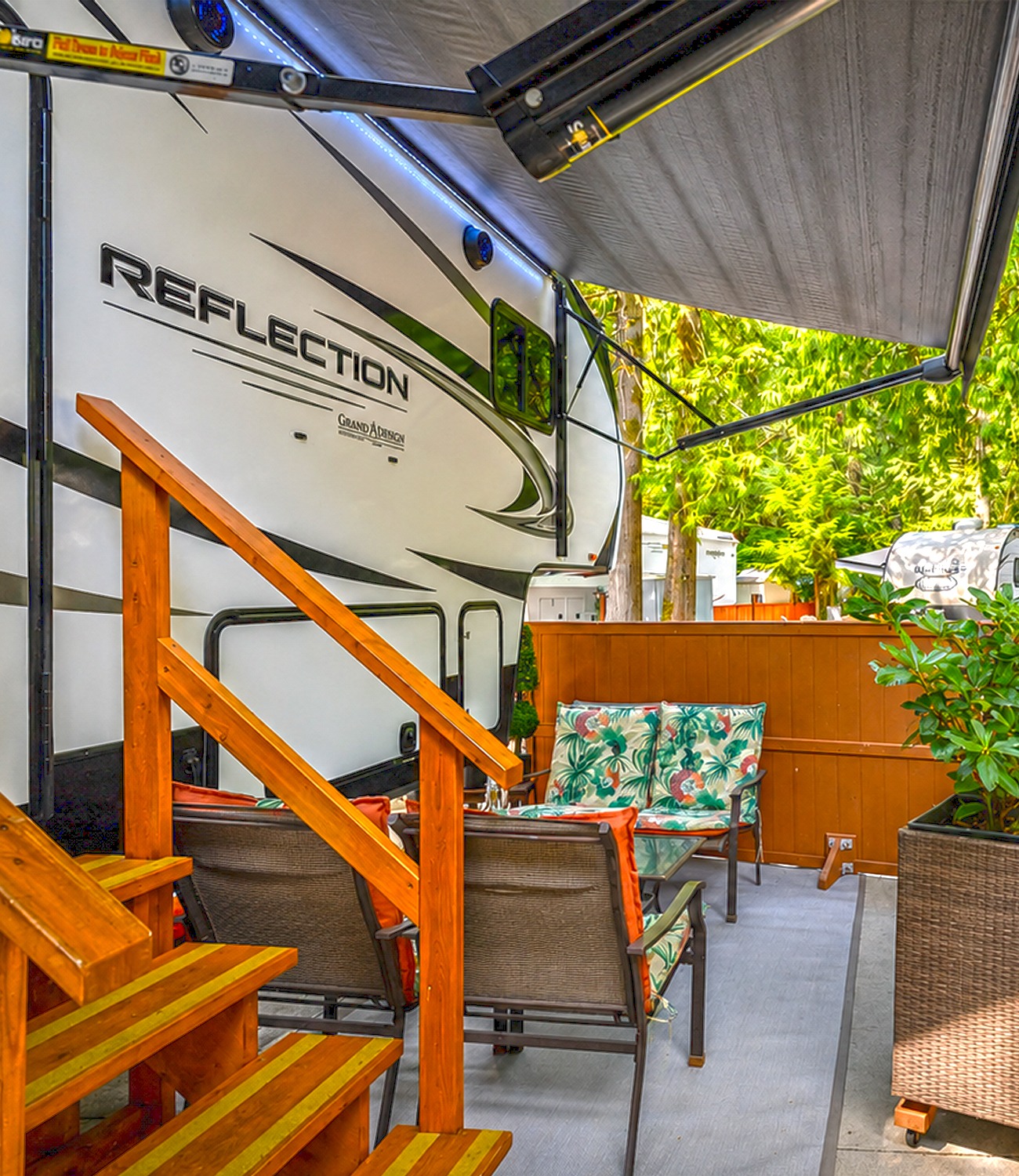
Wood handrails and stair treads add a more residential feel. They also connect the RV to the forest around it. The golden brown tone echoes the nearby tree trunks and wood fencing.
This is a small detail, but it has a large visual effect.
Metal RV steps often look practical. Wood stairs can feel more like a front porch.
That shift matters in a long-term setup.
The handrails also make the entrance feel more secure and complete. Instead of stepping directly from the trailer into an open campsite, you move through a small transition area.
It feels more like arriving home.
Design cues to copy
- Add wood around the entrance for warmth.
- Match the stain to nearby fences or decking.
- Use sturdy handrails.
- Keep stair treads wide and easy to see.
- Add non-slip strips if the wood gets wet.
- Keep plants clear of the stair path.
5. Privacy Panels Turn an Open Campsite Into a Personal Space
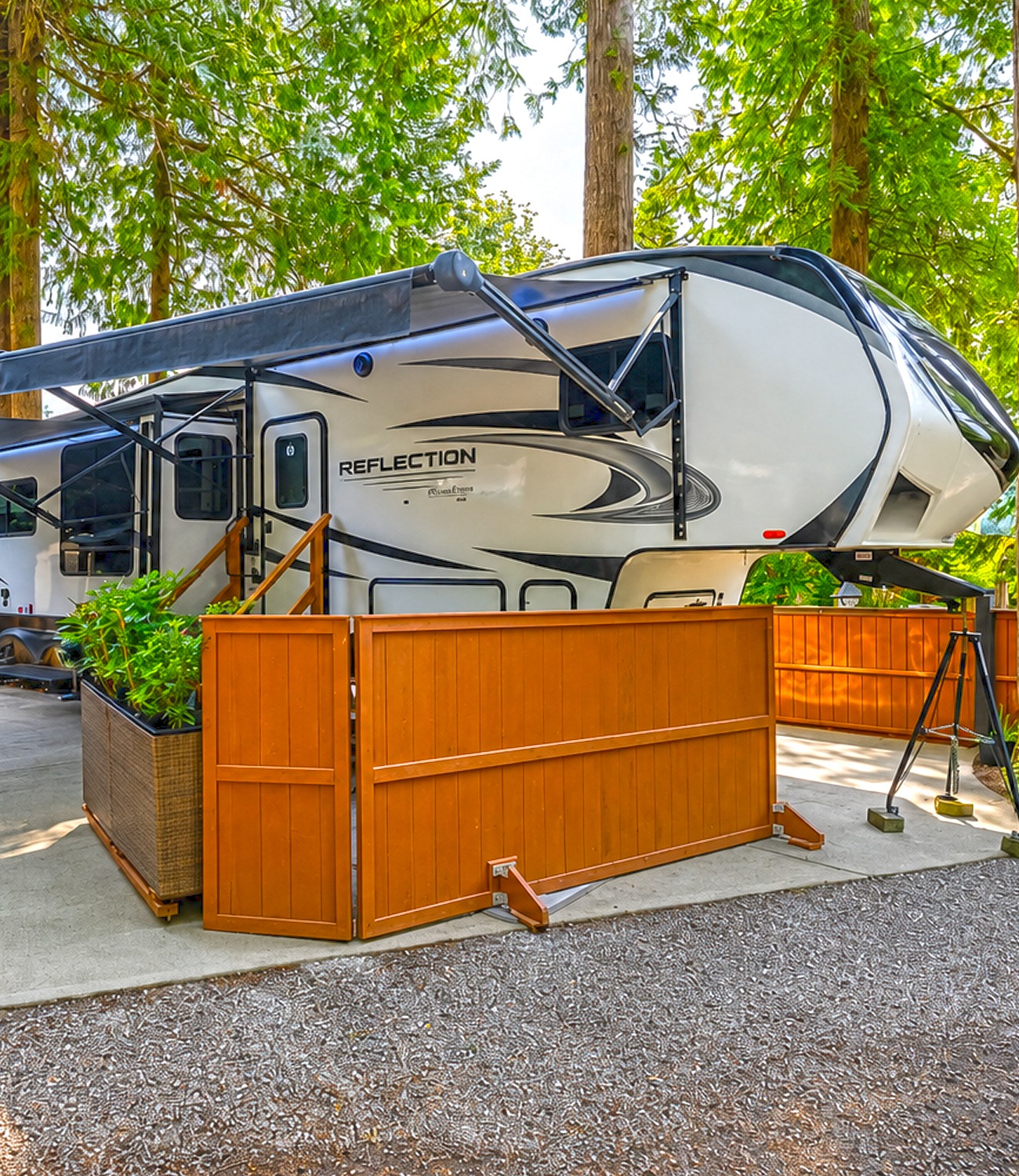
One of the smartest details is the low privacy fence around the front patio.
The warm brown panels create a clear edge around the site. Yet they are not so tall that the space feels closed in.
That balance works well.
A low barrier can give you enough visual separation without blocking the surrounding forest.
It also defines where the campsite begins and ends.
That becomes useful in RV parks where neighboring sites sit close together. Even a small fence can reduce the feeling that everyone shares one large open area.
The panels also hide some of the lower utility zones around the fifth wheel. From the road, you see a tidy wall rather than chairs, storage items, or campsite equipment.
The color matters too.
The medium brown finish blends well with tree bark, wood steps, gravel, and outdoor furniture. It looks softer than a white vinyl fence would.
Design cues to copy
- Use low panels for light privacy.
- Choose warm wood tones in natural settings.
- Keep gates wide enough for easy access.
- Avoid blocking important RV service areas.
- Use freestanding sections where permanent fences are not allowed.
- Tie fence colors to steps, planters, or furniture.
6. Large Planters Work Like Moveable Garden Walls
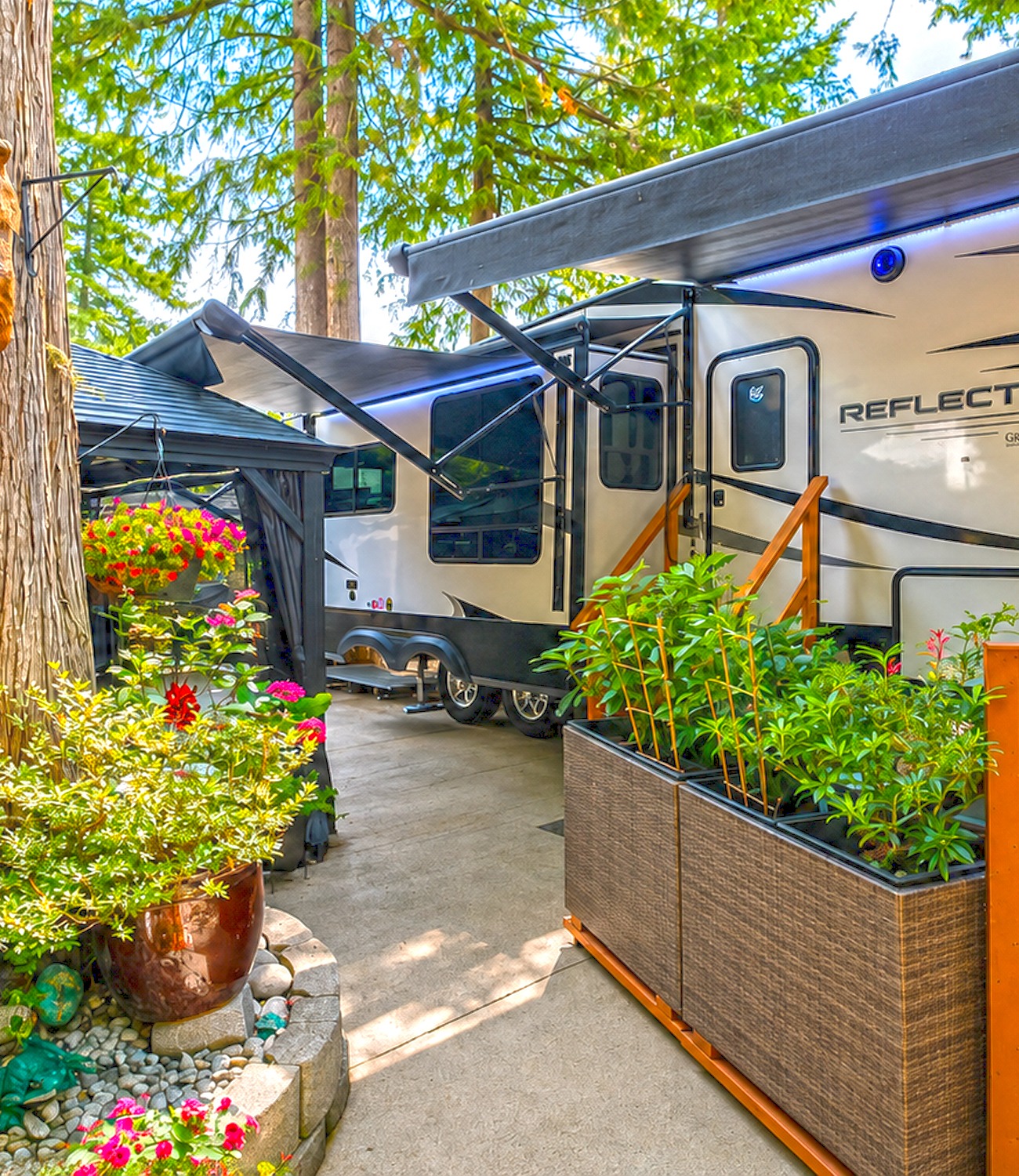
The tall rectangular planters are one of the best ideas in the setup.
They do much more than hold plants.
Placed along the edge of the sitting area, they act like movable walls. They provide privacy, guide foot traffic, and add soft green texture.
Their height also helps.
Small flower pots can disappear beside a tall fifth wheel. These larger planters have enough scale to stand up to the size of the RV.
The dark woven finish connects them with the outdoor furniture. Meanwhile, their simple shape keeps the planting area neat.
Several appear to sit on low wood platforms with casters.
That is especially useful for RV living.
You can roll the planters aside when you need more room. You can move them for better sun. You can also rearrange the patio without digging or building permanent garden beds.
The leafy plants create a green screen without making the space feel heavy.
Design cues to copy
- Choose tall planters beside large RVs.
- Put planters on rolling bases.
- Use them to separate seating from walkways.
- Repeat the same planter style for a clean look.
- Mix leafy plants with a few bright flowers.
- Leave room for mature plant growth.
7. Flowers Bring Cottage Charm to the Campsite
Although the fifth wheel has a modern look, the landscaping feels warm and personal.
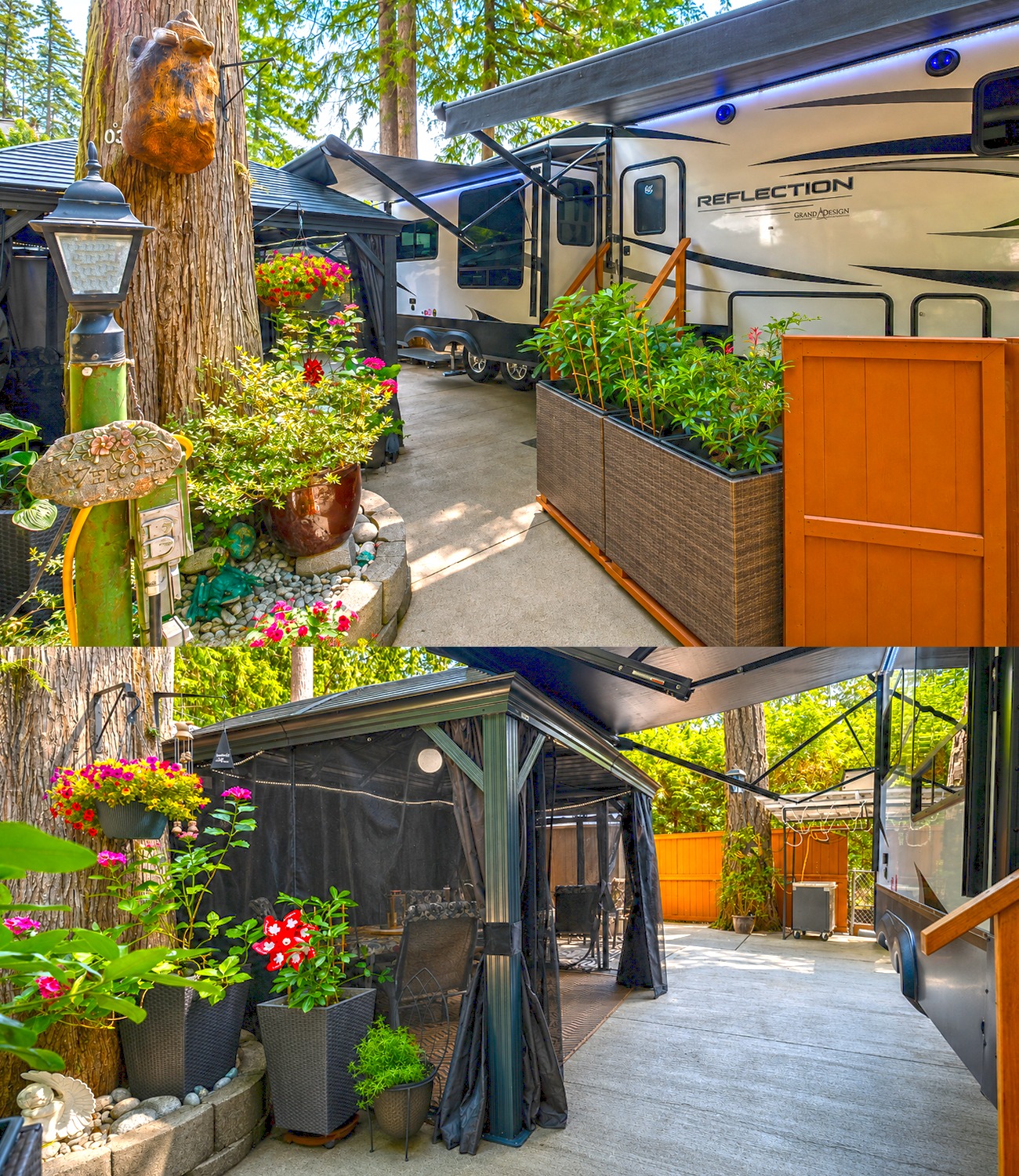
Bright flowers appear in baskets and pots. Pink, red, and yellow blooms stand out against the deep forest green.
That color keeps the site from feeling too dark.
It also adds a cottage-like layer to what could otherwise become a very gray and black outdoor space.
The owners have placed plants at several heights.
Some flowers hang overhead. Others sit in tall containers. Smaller pots sit closer to the ground.
That mix creates depth.
It also makes the site feel established. A few small planters can look temporary. A layered garden begins to feel like part of the landscape.
Decor near the trees adds another personal touch. These little details give the site character without filling every surface.
Design cues to copy
- Use flowers to brighten shaded campsites.
- Mix hanging baskets with floor pots.
- Repeat two or three flower colors.
- Choose containers that suit outdoor furniture.
- Use plants around hard patio edges.
- Keep decorations simple so nature stays the focus.
8. A Small Sitting Area Creates an Outdoor Lounge
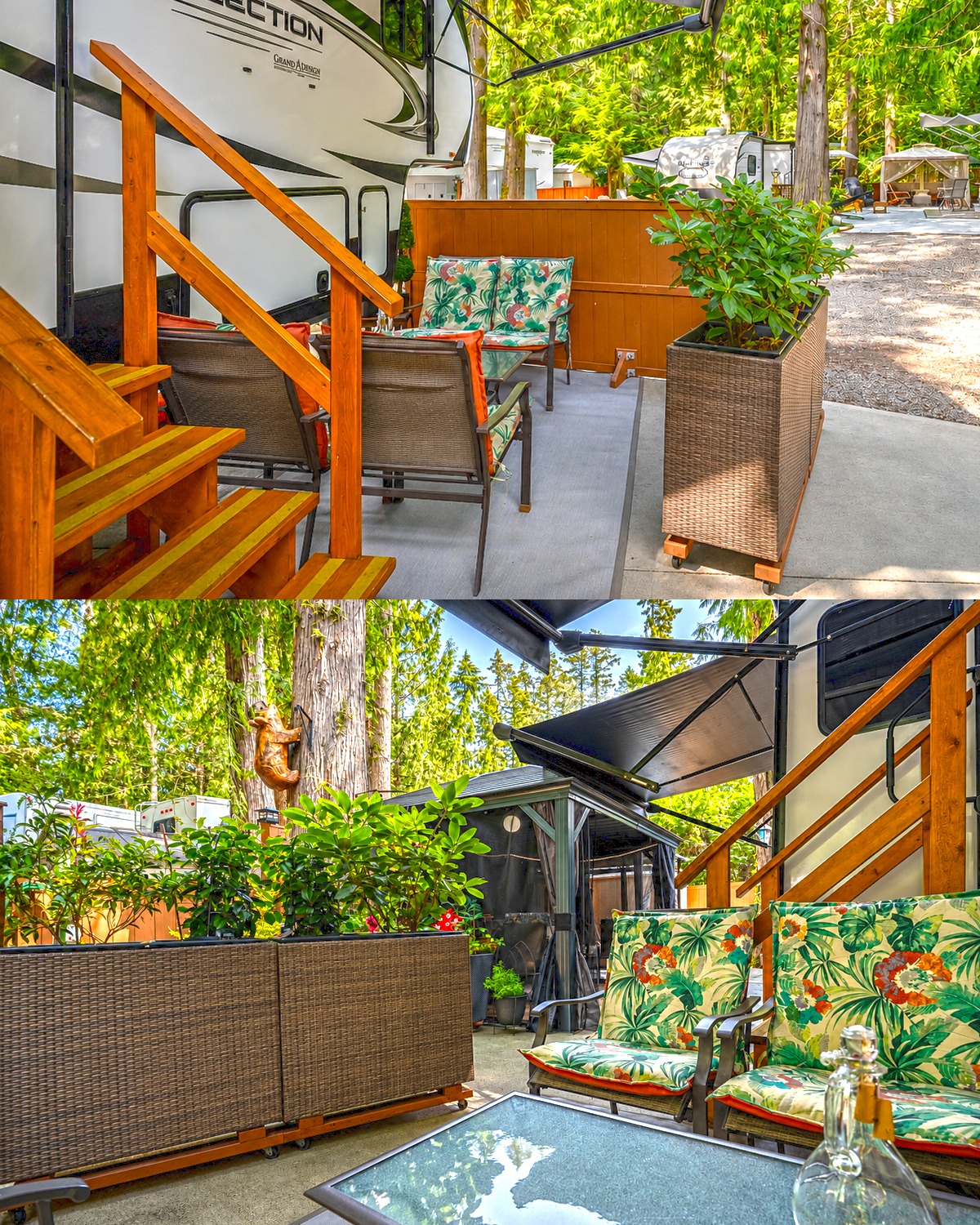
Near the RV entry, two cushioned chairs create a compact conversation area.
This is a smart use of limited space.
The chairs face inward rather than outward. That simple placement creates a sense of enclosure.
A glass-top table sits nearby. The furniture has slim frames, so it does not overwhelm the patio.
The tropical leaf cushions bring in green, cream, and warm orange tones. Those shades connect the seating to the surrounding plants.
That kind of color link can make inexpensive outdoor furniture feel much more styled.
The sitting space also sits under the awning. That means the chairs stay cooler during sunny periods.
This is likely the everyday lounge.
It is close to the RV door. It is easy to reach. It does not require walking across the whole site.
That matters.
The spaces you use most should usually sit closest to the entrance.
Design cues to copy
- Put everyday seating near the RV door.
- Use two chairs when space is tight.
- Choose slim furniture frames.
- Add washable outdoor cushions.
- Pick prints that echo local plants or colors.
- Keep a small table within reach.
9. The Screened Gazebo Creates a True Outdoor Dining Room
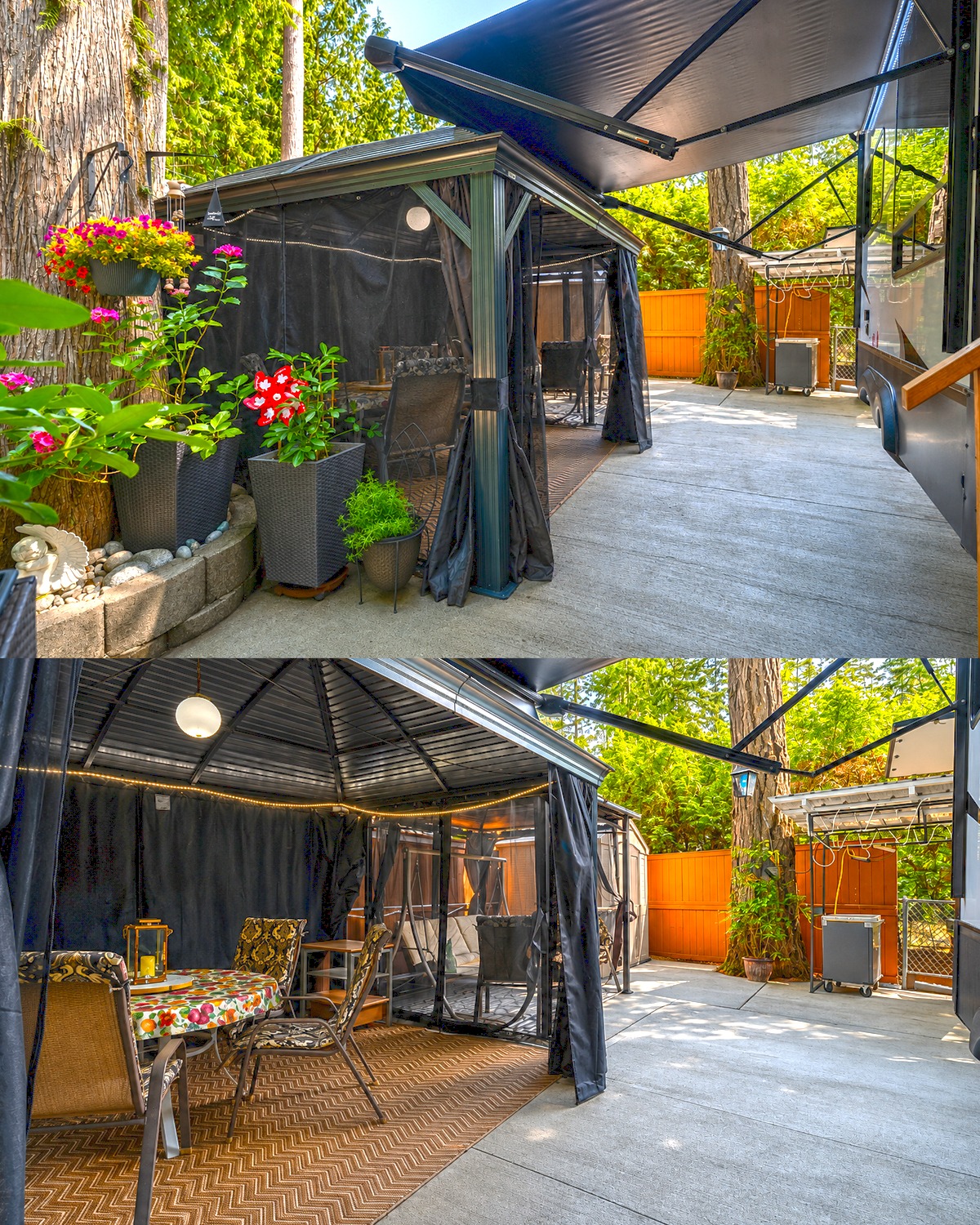
The gazebo may be the star of the whole outdoor setup.
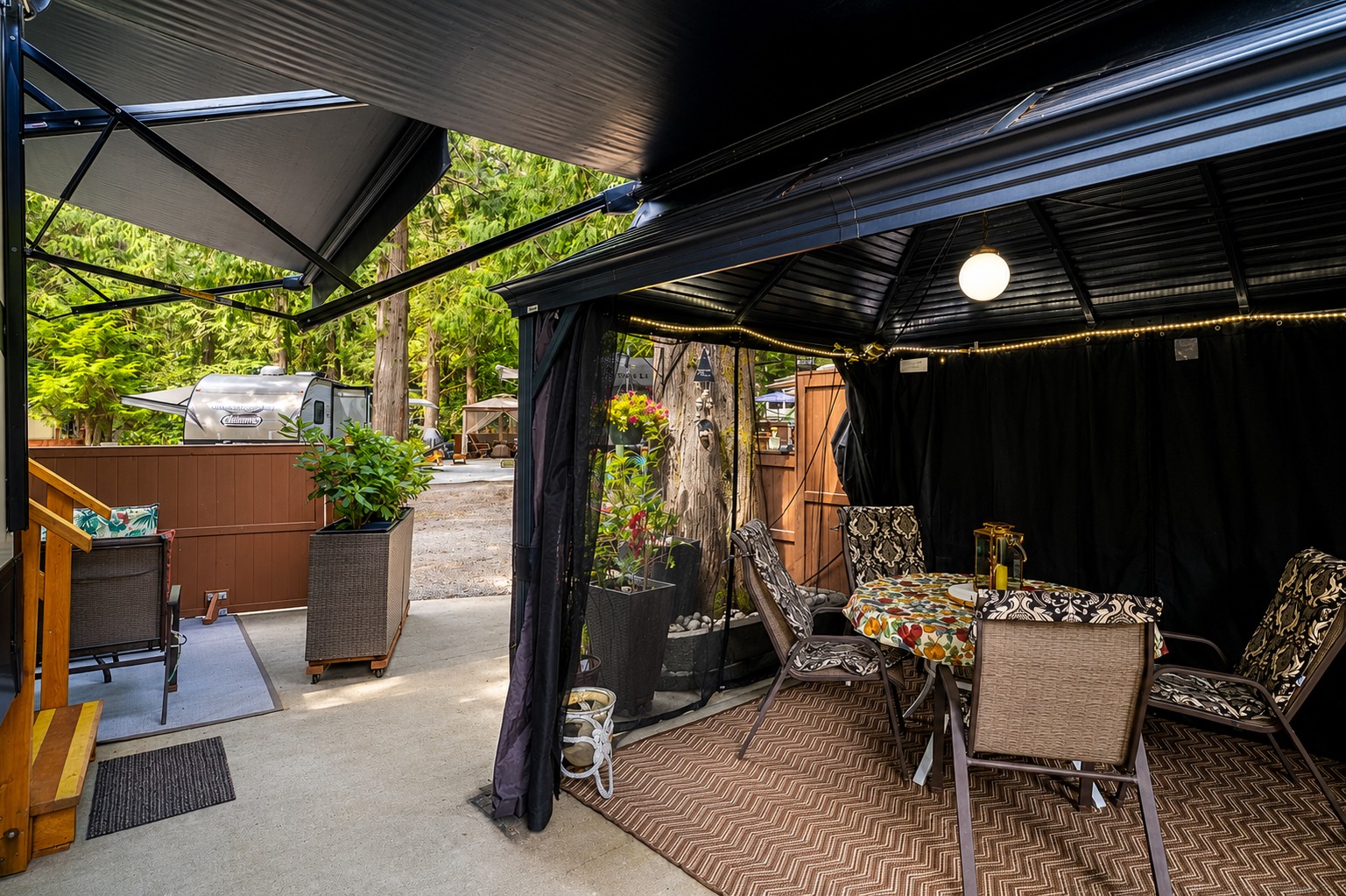
Its dark metal frame gives it a strong shape. Mesh curtains wrap around the sides. A peaked roof adds height.
Inside, there is a dining table and several chairs.
This creates an outdoor room that feels separate from the RV.
It is especially useful in a wooded campsite where insects can make evening meals less comfortable.
The screen walls let air move through the space while providing a useful barrier.
Dark curtains can also add shade and privacy.
Inside the gazebo, a patterned outdoor rug covers the concrete. That one move makes the area feel much more like a room.
A round light hangs above the table. String lights trace the upper edge.
So the space works after dark too.
This is a strong example of how to build an outdoor dining area without constructing a permanent porch.
Design cues to copy
- Use a screened gazebo for dining.
- Add an outdoor rug under the table.
- Hang one main light above the dining area.
- Add soft string lights around the roof.
- Choose mesh panels that can open and close.
- Leave clear access between the gazebo and RV.
10. Outdoor Rugs Make Hard Concrete Feel Softer
The site has a large concrete pad.
That is practical. It is easy to clean. It stays level. Furniture does not sink into soft soil.
Still, too much bare concrete can feel cold.
Outdoor rugs solve that problem.
A large patterned rug anchors the gazebo dining area. Another rug or mat appears near the sitting zones.
The patterns also bring visual texture into a space that has many smooth surfaces.
This matters because the RV exterior, fence panels, concrete, and gazebo frame all have strong flat planes.
Fabric and rugs break them up.
The result feels softer and more relaxed.
Design cues to copy
- Use outdoor rugs to define zones.
- Choose low-pile rugs that dry fast.
- Keep rug edges away from busy walking paths.
- Use medium or dark patterns to hide dirt.
- Match rug tones to furniture.
- Let some concrete remain visible between zones.
11. A Second Gazebo Creates a Quiet Retreat
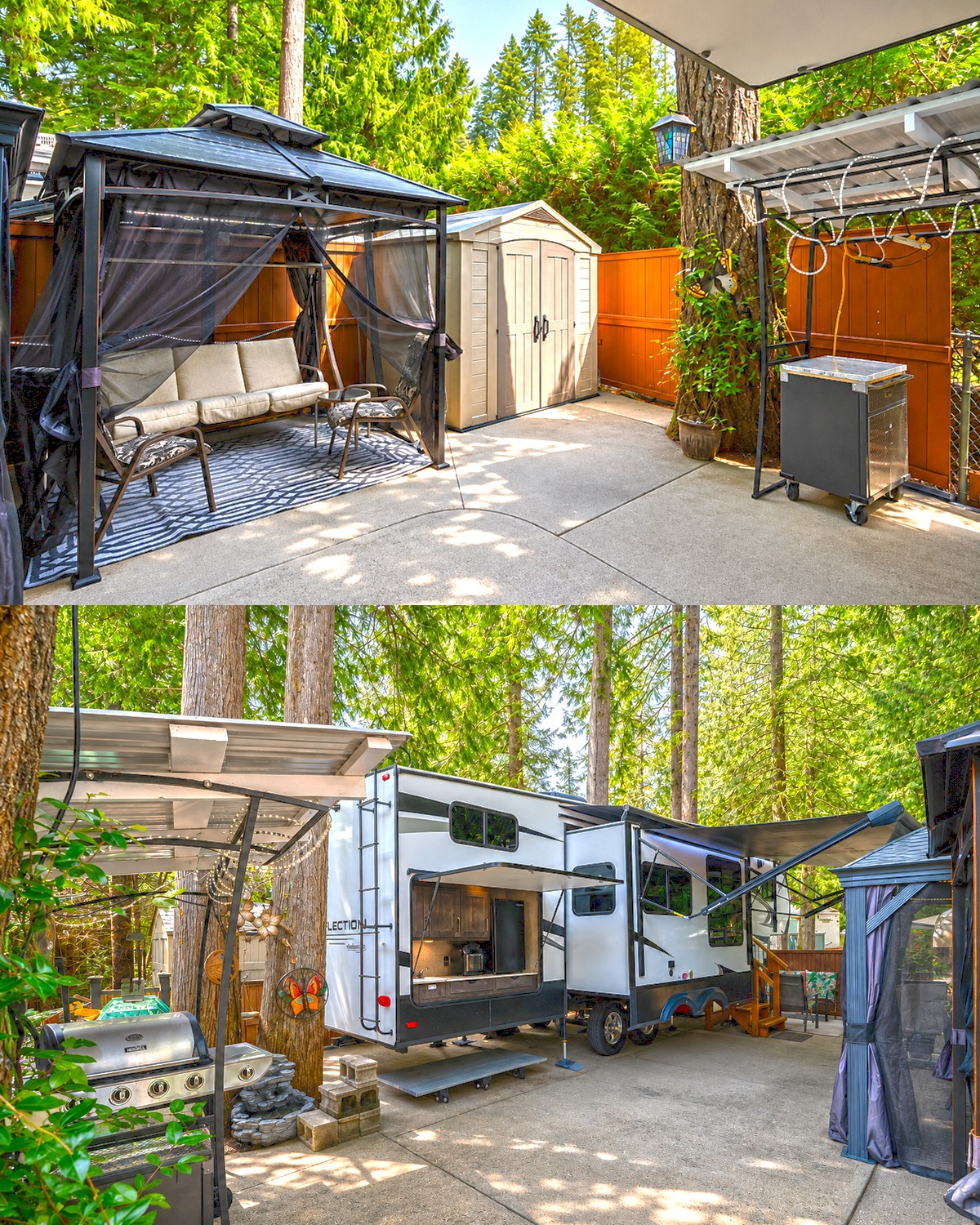
Another screened structure appears farther into the patio.
This one feels more like a lounge.
A cushioned swing sits inside, along with additional chairs. The setup creates a place for reading, resting, or enjoying a slow morning.
Having two covered spaces may sound like a lot for an RV site.
Yet each one has a different purpose.
One area handles dining. The other supports lounging.
That separation helps the site feel bigger.
It follows the same idea used in a well-planned backyard. Instead of placing every chair and table in one cluster, you spread different uses across the available space.
This gives each activity its own setting.
Design cues to copy
- Give each outdoor zone one main purpose.
- Place lounge seating away from busy paths.
- Use screened structures in buggy areas.
- Add a swing or deep chair for relaxation.
- Keep furniture grouped rather than scattered.
- Repeat similar roof colors across structures.
12. A Small Storage Shed Keeps Clutter Under Control
A compact storage shed sits behind the gazebo.
This may not be the most exciting design detail, but it is one of the most useful.
Long-term RV living creates gear.
There are hoses, tools, cleaning supplies, outdoor cushions, campsite equipment, spare parts, and seasonal items.
Without a storage plan, these objects end up under the trailer or around the patio.
A small shed changes that.
Its pale neutral finish keeps it visually quiet. The simple shape also stays in the background.
Most important, it gives everything a home.
That helps the outdoor areas stay neat.
Design cues to copy
- Add enclosed storage when park rules allow.
- Choose a compact shed that fits the scale of the site.
- Keep storage toward the back of the patio.
- Use shelves inside to maximize space.
- Store loose outdoor gear out of sight.
- Keep service access around the RV clear.
13. The Exterior Kitchen Makes Outdoor Living Much Easier
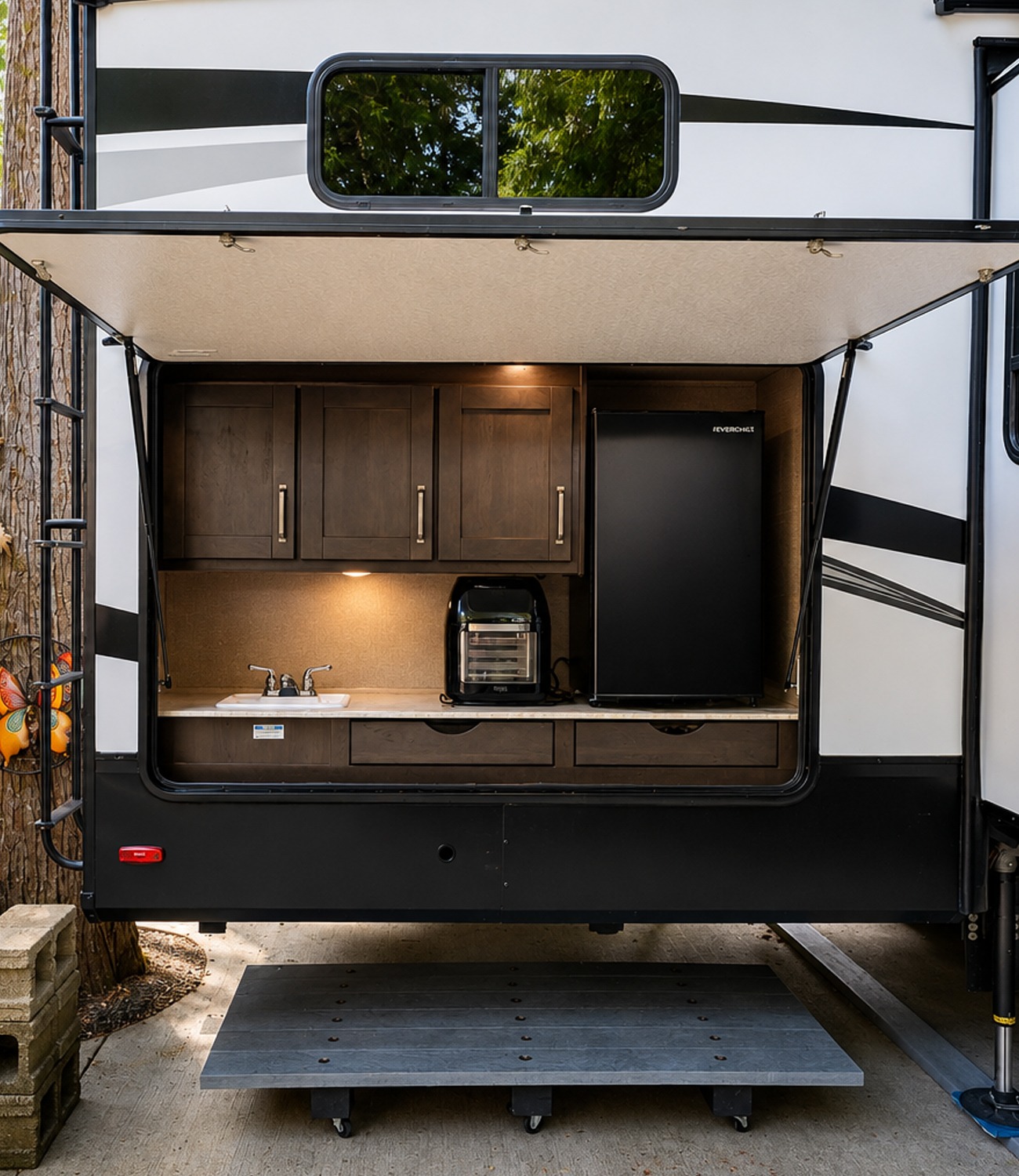
One of the fifth wheel’s most useful features is its exterior kitchen.
A large hatch lifts upward to form a small roof. Under it, there are upper cabinets, drawers, a countertop, a small sink, and a refrigerator.
This is an excellent feature for warm-weather RV living.
You can prepare drinks or simple meals without going inside every few minutes.
It also keeps heat and food smells outside.
The raised hatch helps define the work area. It acts almost like a small kitchen canopy.
The cabinets have a dark wood finish. This gives the outdoor kitchen a polished look. Built-in lighting under the hatch makes the space useful after sunset.
A rolling platform sits below the opening. That may provide added work space or help with equipment access.
The whole setup feels compact but complete.
Design cues to copy
- Use an exterior kitchen as a second food-prep zone.
- Keep a small fridge outdoors for drinks.
- Add task lighting above the counter.
- Store outdoor dishes close to the kitchen.
- Keep the walking zone in front clear.
- Use rolling carts for extra prep space.
14. Good Outdoor Lighting Extends the Day
Several forms of lighting appear throughout this setup.
The RV has slim LED lights near the awning. The gazebo includes string lights. Hanging fixtures create another layer of light.
This is better than relying on one bright fixture.
Soft light makes outdoor spaces feel cozy.
It also helps people move safely between the RV, gazebo, and patio after dark.
The key is restraint.
This setup does not appear to flood the campsite with harsh white light. Instead, smaller light sources mark important areas.
That supports the calm woodland mood.
Design cues to copy
- Use several small light sources.
- Add lights near stairs and doors.
- Use string lights inside gazebos.
- Place task lighting near the outdoor kitchen.
- Avoid overly bright floodlights.
- Aim lights down when possible.
15. The Color Palette Helps Everything Feel Connected
There are many separate objects here.
A large RV. Two gazebos. Fencing. Planters. Chairs. Rugs. A shed. Steps.
Still, the site does not feel chaotic.
Color helps hold it together.
Black and charcoal appear on the RV graphics, awnings, gazebo frames, mesh walls, and furniture.
Warm brown shows up in the fence, stairs, planters, rugs, and tree trunks.
Green comes from the plants and forest.
Then small flower colors add life.
This is a simple palette.
Because the colors repeat, each piece feels related to the next.
Design cues to copy
- Start with two or three main colors.
- Repeat black across metal elements.
- Use warm brown for natural details.
- Let plants supply most of the green.
- Use flowers for small pops of color.
- Avoid adding too many bright furniture colors.
16. Clear Paths Keep a Full Campsite From Feeling Crowded
There is a lot happening in this RV setup.
Yet there is still room to walk.
That is one reason the site feels comfortable.
The main route beside the fifth wheel stays mostly open. Furniture sits toward the edges. Planters define boundaries without blocking movement.
The gazebo entrances also face open areas.
This makes each space easy to reach.
Good traffic flow matters even more in a small outdoor area than in a large backyard.
A chair placed just one foot too far into a walkway can make the whole site feel cramped.
This layout avoids that problem.
Design cues to copy
- Keep the main RV entry path open.
- Push furniture toward the edges of activity zones.
- Face gazebo openings toward clear paths.
- Avoid placing planters in narrow passages.
- Leave space around steps and storage doors.
- Check slide-out and awning clearance before adding furniture.
Conclusion
This Fifth Wheel RV outdoor setup shows how a few thoughtful additions can completely change campsite living. Shade, comfortable seating, plants, lighting, storage, and covered outdoor rooms make the space feel much larger than the RV alone. Best of all, the design stays flexible. It offers the comfort of home while keeping the relaxed feel that makes RV living so appealing.