
This black barndominium proves that simple design can still feel stunning. From the bold dark exterior to the warm wood ceiling and bright white walls inside, every detail creates a look that feels cozy, rustic, and easy to love. If you enjoy barndominium homes that mix strong materials with soft, welcoming style, this one is full of ideas worth saving.
Exterior
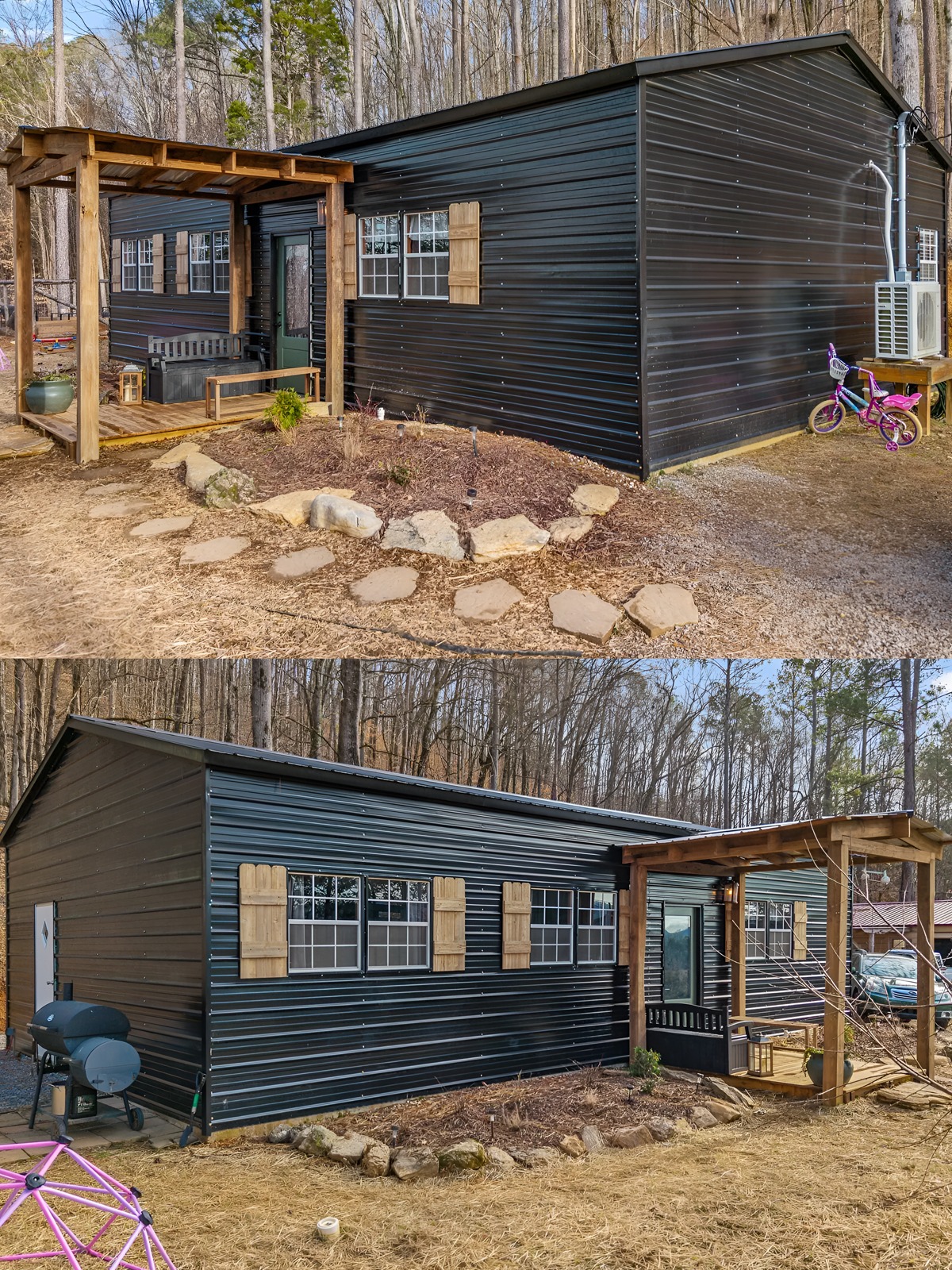
The outside of this barndominium is simple, but it is far from plain. The black metal siding gives the house instant presence. It stands out against the pale winter grass and the tall bare trees. That dark finish also gives the building a crisp, clean shape. Because the structure is so straightforward, color does a lot of the visual work.
Black is a smart choice here. It makes the house feel modern, but it also fits the wooded setting. Instead of fighting the landscape, it blends into it in a moodier, more dramatic way. That is one of the best parts of this design. It feels bold, yet still natural.
Another smart move is the way the exterior avoids too many extra details. There are no fussy trim packages, no busy rooflines, and no decorative distractions. The result feels honest. It embraces the utility of a barndominium while still looking stylish.
Design cues:
Choose one strong siding color and let it carry the design. Dark metal works especially well if you want a clean, modern-rustic feel. Keep the building shape simple. Then add warmth through a few natural accents instead of piling on decorative features.
Porch
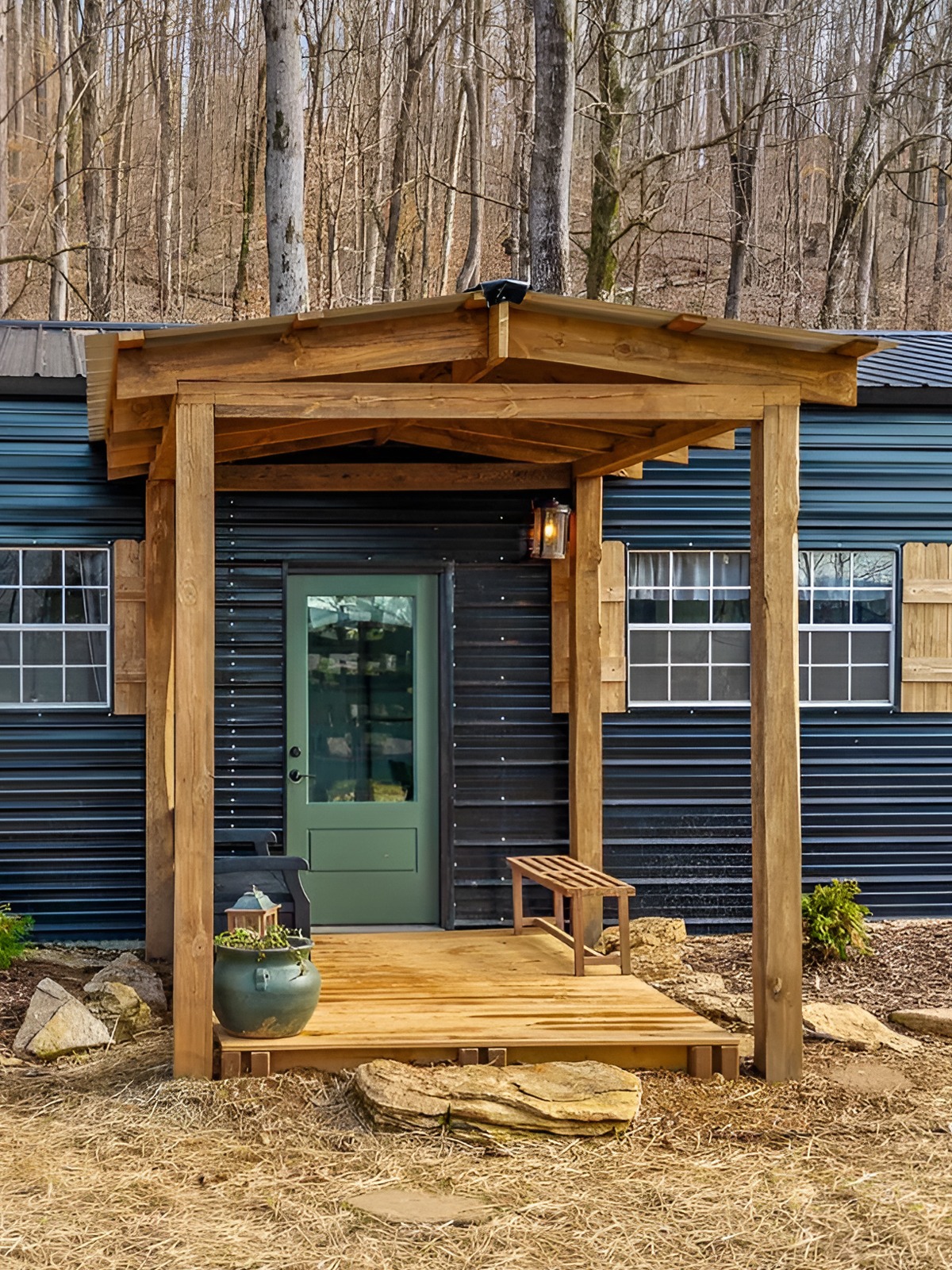
If the black siding gives the home strength, the front porch gives it heart.
The porch is small, but it does a lot. The chunky wood posts and beams create an instant contrast against the metal siding. That contrast matters. Without it, the house might feel too stark. With it, the home starts to feel handcrafted and welcoming.
The porch roof also helps frame the entry. It makes the front door feel intentional rather than lost in the long exterior wall. Even better, the porch creates a transition between the rugged outdoors and the warm interior. That is a big part of why the house feels so inviting. You do not jump straight from woods to living room. You pass through a softer, more human-scaled moment first.
The bench seating adds to that feeling. It tells you this is not just a place to enter. It is a place to pause. Even a compact porch can feel useful when it includes one or two elements that suggest real living.
The stepping stones and rock edging help too. They are simple, rustic, and practical. Nothing here feels over-designed. That is why it works.
Design cues:
Pair dark siding with raw or stained wood for warmth. Use thick posts for a sturdy, barn-inspired look. Add one useful piece, like a bench or lantern, so the porch feels lived in. Keep the landscaping loose and natural rather than formal.
Interior
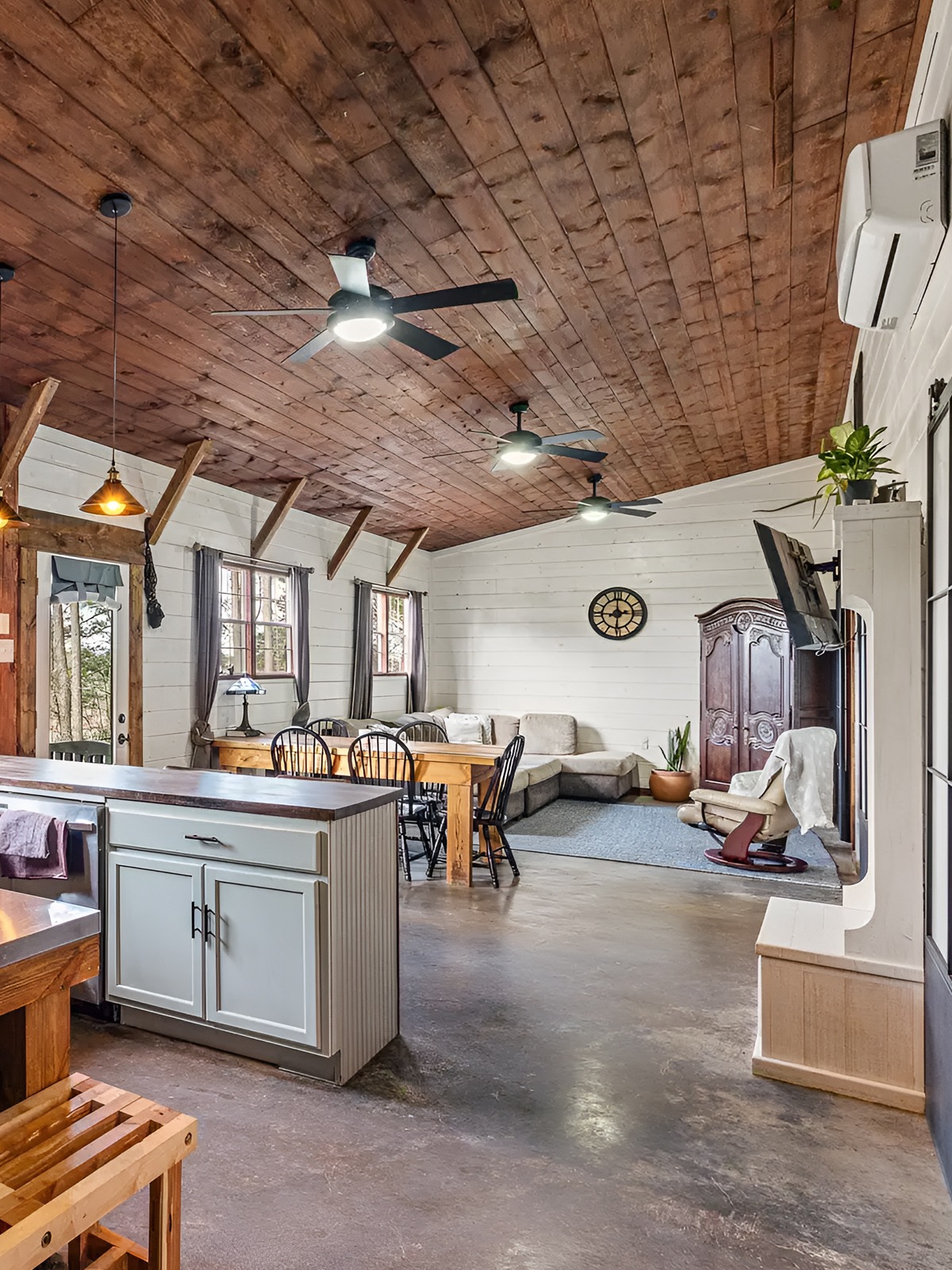
Once inside, the biggest design move is obvious right away: volume.
The tall sloped ceiling changes everything. It makes the open living, dining, and kitchen area feel far larger than its footprint. Instead of relying on square footage alone, the home uses height to create a sense of openness. That is one of the smartest tricks in barndominium design.
But height on its own can feel cold if it is not handled well. This home solves that with wood. The rich stained ceiling draws the eye upward, but it also wraps the room in warmth. The ceiling becomes more than a structural feature. It becomes the star of the interior.
Then the white shiplap walls balance all that rich wood. This contrast keeps the room from feeling dark or heavy. The walls reflect light. The ceiling adds depth. Together, they create that sweet spot between airy and cozy.
The exposed wood brackets and trim reinforce the rustic character. They give the room rhythm and help break up the long walls. Even better, they make the space feel built, not decorated. That is an important distinction. The best barndominium interiors often let structure become part of the style.
Design cues:
If you have height, highlight it. Use stained wood on the ceiling for warmth. Pair it with light walls so the room still feels bright. Let beams, brackets, and trim show. Those elements add character without clutter.
Kitchen
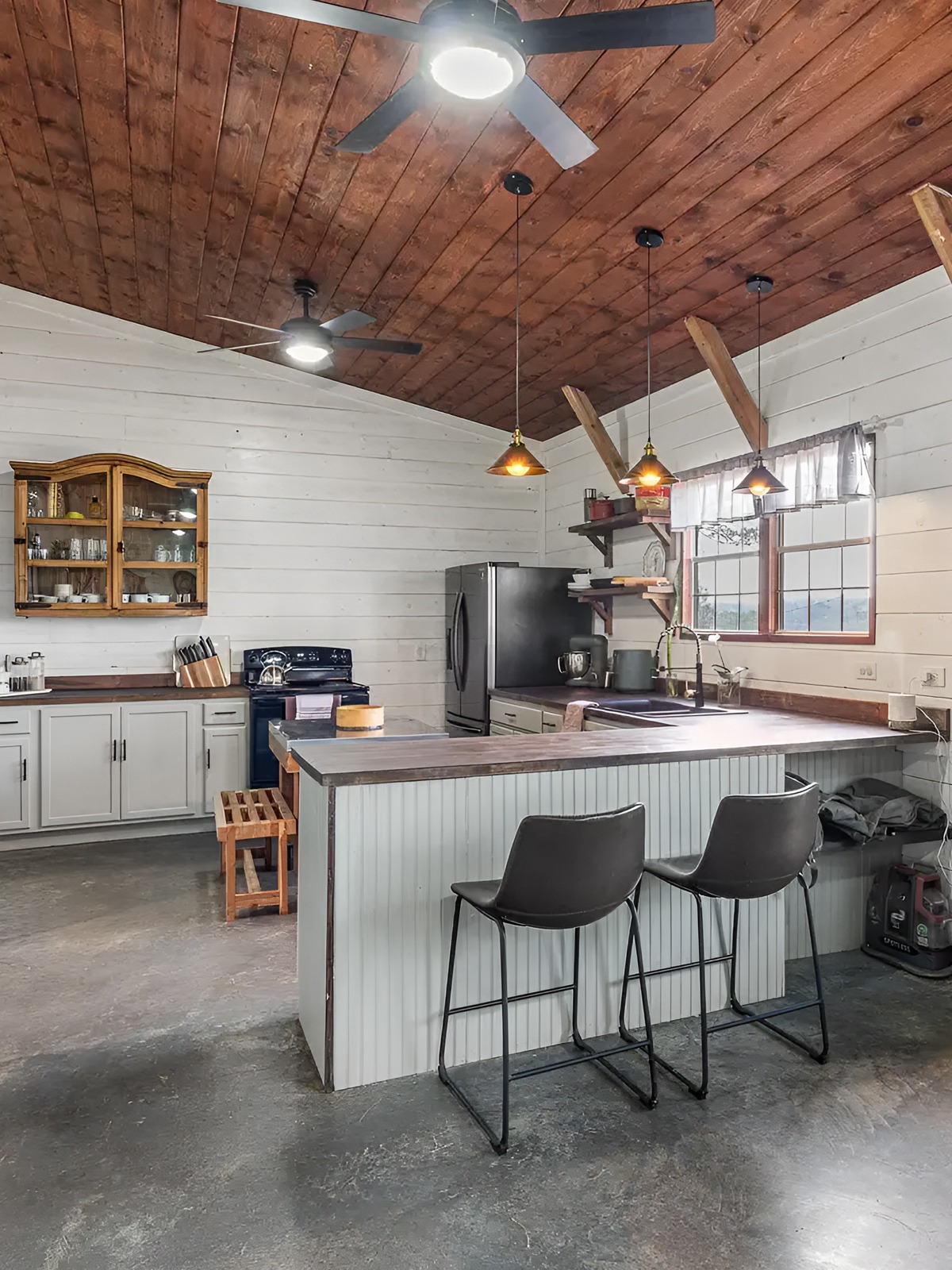
This kitchen is a great example of how a hardworking room can still feel beautiful.
The layout is simple and open. It connects directly to the dining and living spaces, which helps the whole home feel social and easygoing. There is no visual barrier between cooking, eating, and relaxing. That makes the house feel larger and more connected.
The materials do a lot of the styling. Gray cabinetry gives the kitchen a calm, grounded base. It is softer than white but still neutral. The butcher block counters bring in warmth and tie the kitchen to the wood ceiling and trim. That repeated wood tone is important. It keeps the whole open space feeling cohesive.
The black sink and faucet add contrast and give the room a slightly modern edge. They also connect visually to the black exterior and black accents elsewhere in the home. That kind of repetition helps the design feel intentional.
The island adds both prep space and casual seating. It does not look oversized, which is a smart choice in this house. Instead, it fits the room and keeps the flow easy. The beadboard detail on the island face adds subtle cottage charm, while the metal-topped prep table adds a practical, workshop-like note that fits the barndominium vibe perfectly.
Open shelves and simple wall storage keep the kitchen relaxed. Nothing feels too formal or too fitted. It feels like a real working kitchen, which makes it more appealing.
Design cues:
Mix painted cabinets with wood counters for warmth and balance. Add black fixtures for contrast. Keep the island proportional to the room. Use a few open shelves so the kitchen feels relaxed, not overbuilt.
Dining Area
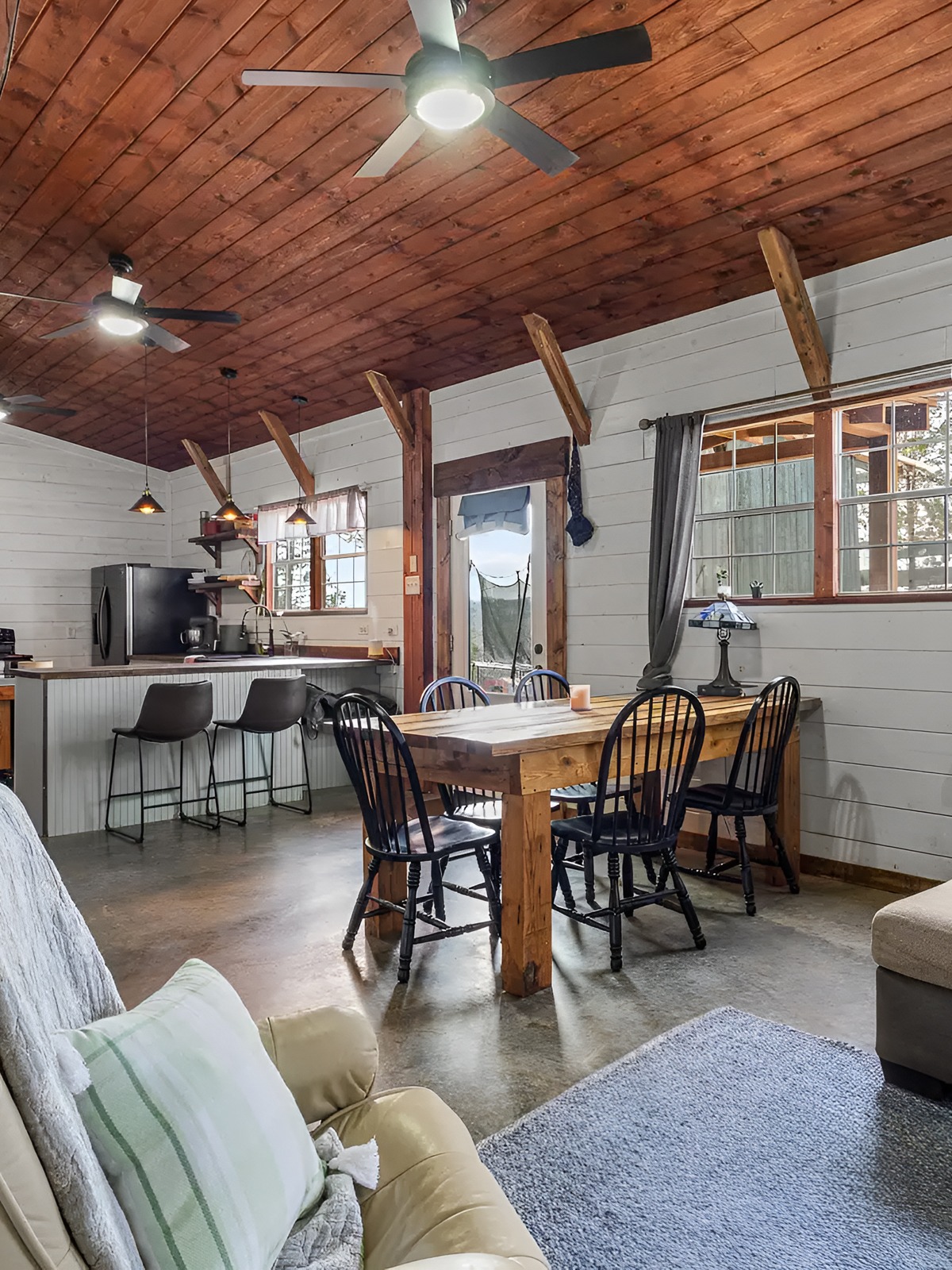
The dining area sits comfortably between the kitchen and living room, and that placement matters. It helps the open plan feel organized without needing walls.
The table itself is a strong design anchor. It is rustic, solid, and uncomplicated. The black spindle chairs add classic farmhouse character and help define the dining zone visually. Because the room uses simple shapes and durable finishes, it feels cohesive with the rest of the home.
This area also benefits from the windows. Natural light keeps the rustic materials from feeling too dark. That is a recurring strength throughout the house. Whenever the home uses heavier elements like stained wood or dark metal, it balances them with white walls or daylight.
Design cues:
Use one sturdy wood table to ground an open room. Pair it with simple black chairs for contrast. Let dining furniture help define zones in an open plan instead of relying on partitions.
Living Area
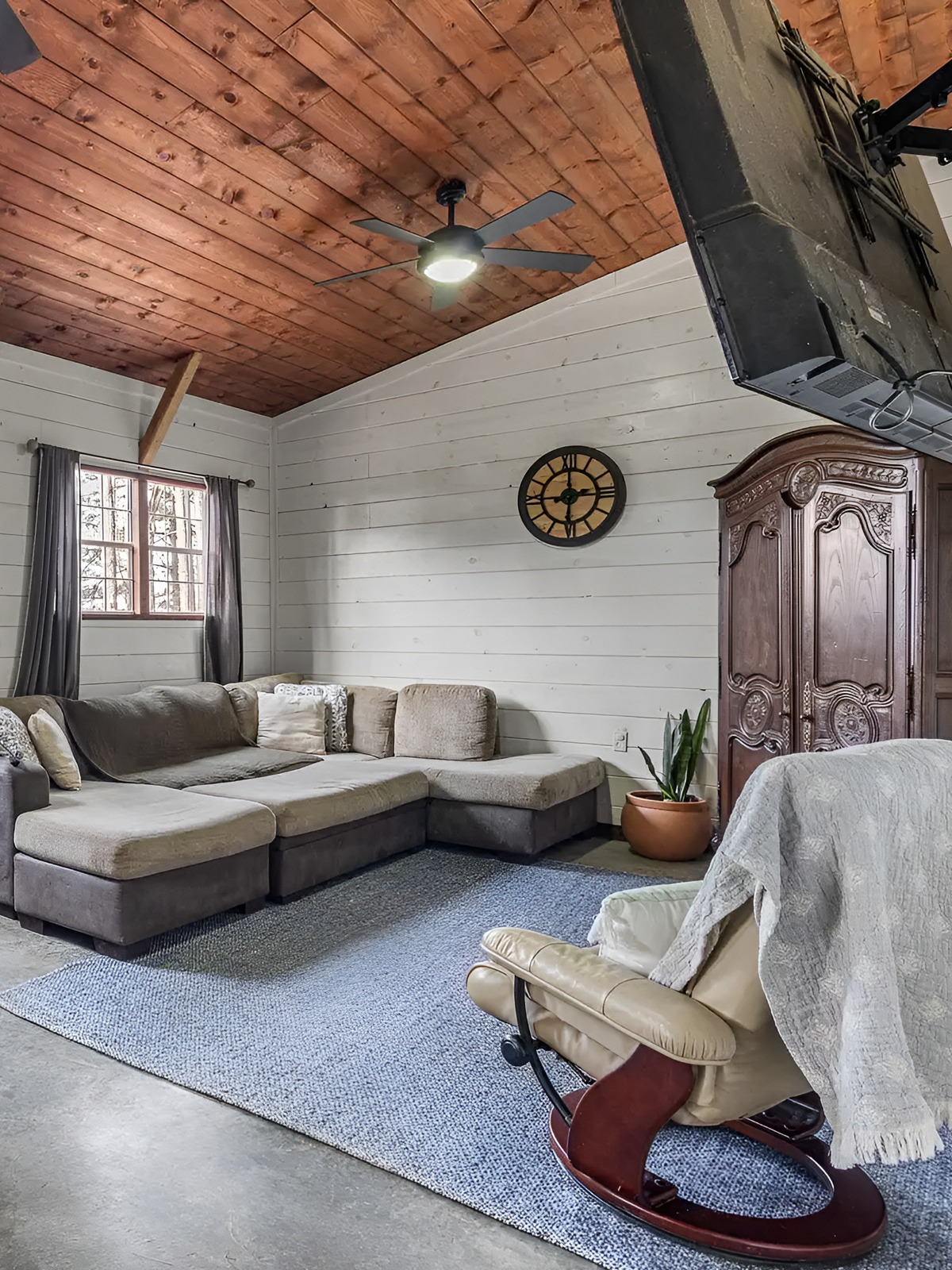
The living room is proof that rustic design does not have to feel rough. It can be very soft.
The sectional is large, cozy, and clearly chosen for comfort first. That is a smart move in a home like this. Since the architecture already provides a lot of character, the seating does not need to be flashy. It just needs to feel inviting. The neutral upholstery works well with the white walls and wood tones, while the large rug helps anchor the seating area and soften the concrete floor.
The furniture mix is interesting too. The old armoire brings in weight and age. The recliner adds everyday comfort. The clock gives the wall a focal point without making it busy. Altogether, the room feels collected rather than styled within an inch of its life.
The sliding barn-style doors are another key detail. They add a strong black frame and an industrial note that fits the barndominium look. At the same time, their frosted panels keep them from feeling visually heavy. That balance matters.
Design cues:
Choose one oversized, comfortable sofa in a neutral tone. Add a large rug to warm up hard floors. Mix one or two vintage-looking wood pieces into the room so it feels layered. Use black-framed sliding doors for a barndominium-friendly touch.
Concrete Floors
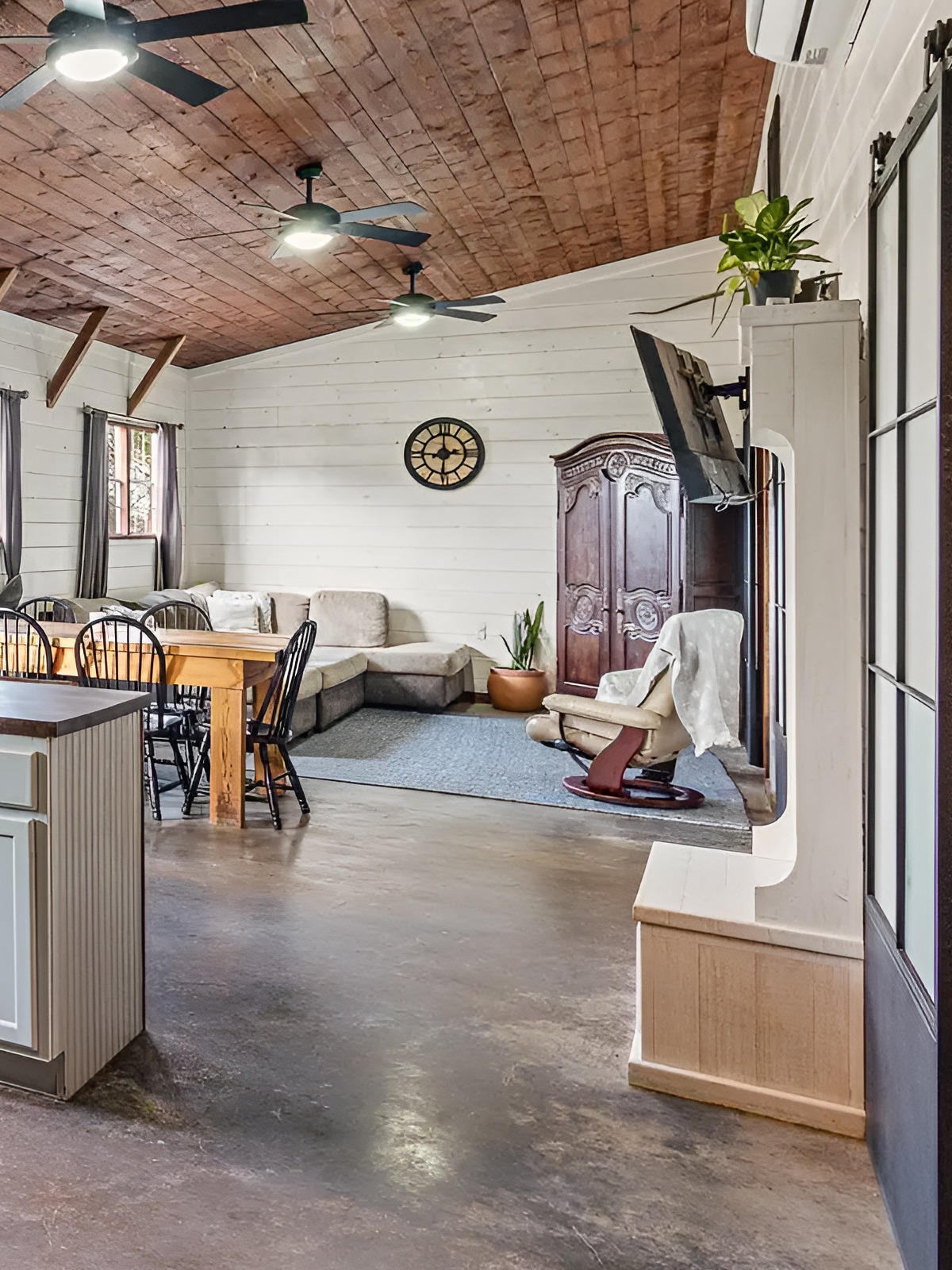
One of the most practical and stylish choices in this house is the flooring.
The polished concrete floors run through the main spaces and into the bathroom. That continuity helps the home feel larger and more unified. It also fits the barndominium style perfectly. Concrete feels durable, honest, and low-maintenance. Those qualities match the spirit of the home.
At the same time, concrete can feel cold if everything else in the room is hard too. This home avoids that problem by surrounding it with warm wood, soft rugs, fabric curtains, and cushioned seating. That is the secret. Hard floors need soft partners.
Design cues:
Use one durable floor throughout the main spaces for a seamless look. If you choose concrete, balance it with wood, rugs, and soft textiles so the home still feels warm.
Bedroom
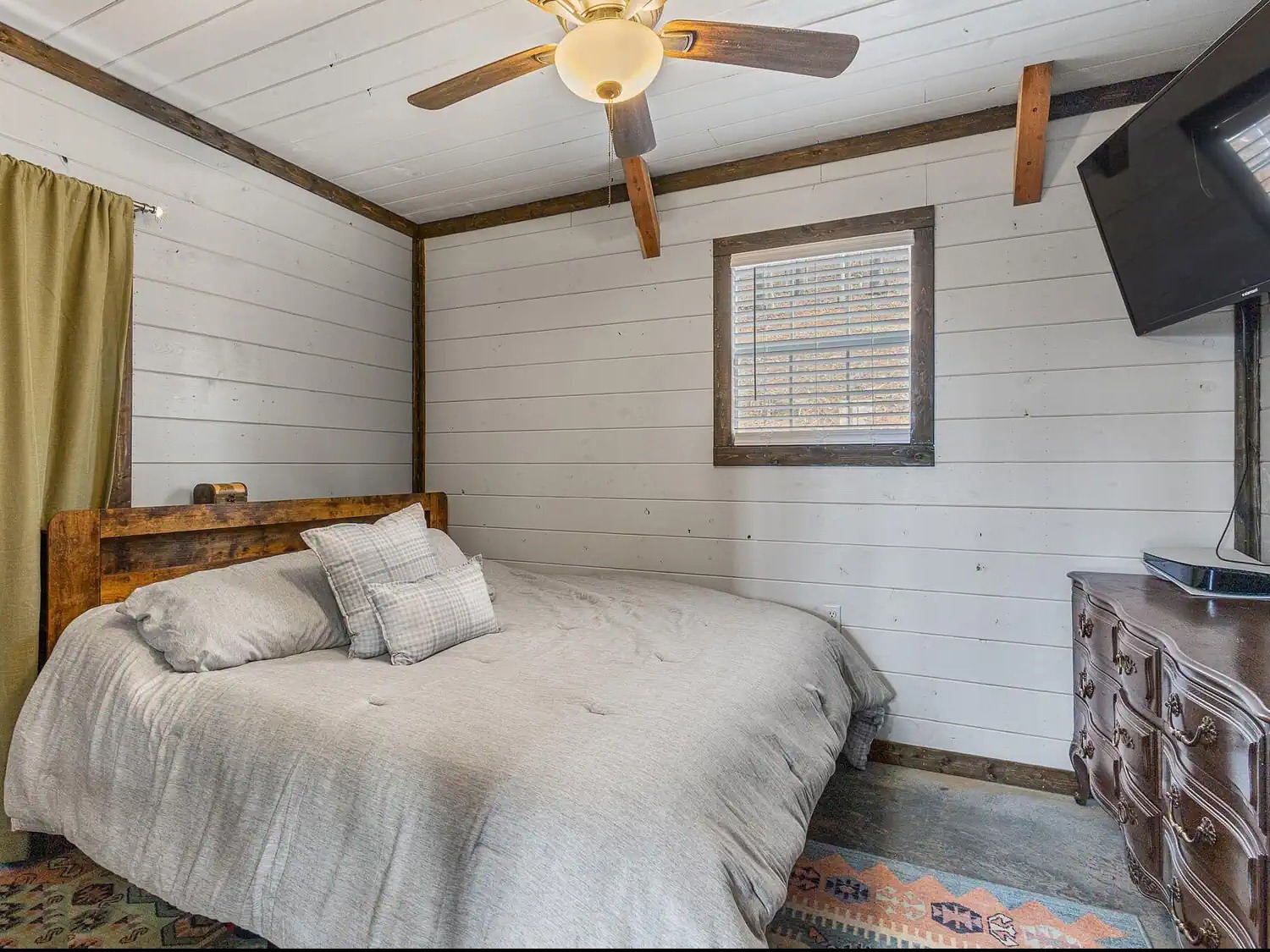
The bedroom is not elaborate, and that is exactly why it works.
White plank walls continue the language of the rest of the house. Dark wood trim frames the room and adds contrast. The wood bed echoes the rustic tone without overwhelming the small space. Neutral bedding keeps the room restful, while the patterned rug adds just enough color and softness.
This room shows a smart restraint that many rustic homes need. It does not overload the space with signs, baskets, antlers, or too many themed touches. Instead, it lets the architecture and a few solid materials do the talking.
Design cues:
Keep the palette light and neutral. Use dark wood trim or furniture for contrast. In a smaller room, let one rustic piece stand out and keep the rest simple.
Bathroom
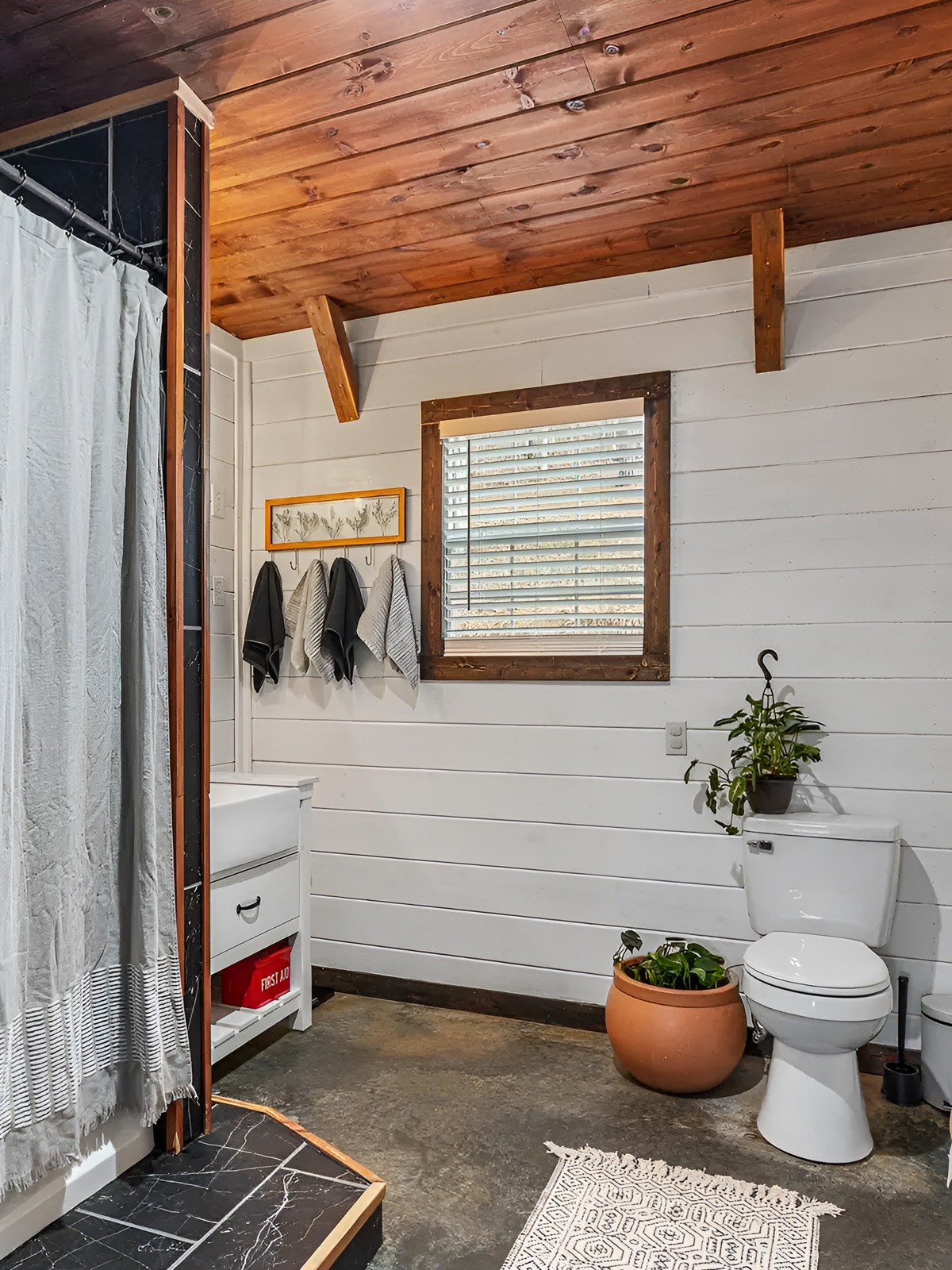
The bathroom carries the same material story into a more practical space, and it does it well.
White walls keep the room bright. The stained wood ceiling and trim tie it back to the rest of the home. The shower curtain softens the dark tile base, while the live-edge wood vanity top adds natural texture and a handmade feel. That detail gives the room extra personality.
Open towel storage adds function and keeps the bathroom feeling casual and approachable. The window brings in light, which is especially helpful in a room with darker wood tones overhead. Even the plant by the toilet adds a little life and softness.
This room does not try to feel luxurious in a fancy way. Instead, it feels warm, clean, and personal. That approach fits the house much better.
Design cues:
Repeat the same wood and wall finishes from the rest of the house so the design feels connected. Add one standout natural element, like a live-edge counter. Use open storage to keep the room practical and relaxed.
Conclusion
What makes this barndominium so appealing is its balance. The dark metal exterior feels bold and modern, while the wood porch, shiplap walls, and rustic finishes make the inside feel warm and lived-in. It is a great example of how a barndominium can look practical, stylish, and comfortable all at the same time. If you want a home that feels simple but full of character, this design offers plenty of inspiration.
Related posts:
 15 Barndominium Interior Ideas That Make Rustic Living Feel Fresh and Beautiful
 15 Barndominium Living Room Ideas for a Cozy Rustic Modern Home
 15 Barndominium Front Porch Ideas That Boost Curb Appeal
 25 Barndominium Kitchen Design Ideas You Will Want to Copy
 20 Barndominium Landscaping Ideas That Boost Curb Appeal Fast
 20 Barndominium Ideas You Will Want to Copy
Leave a Reply
You must be logged in to post a comment.