
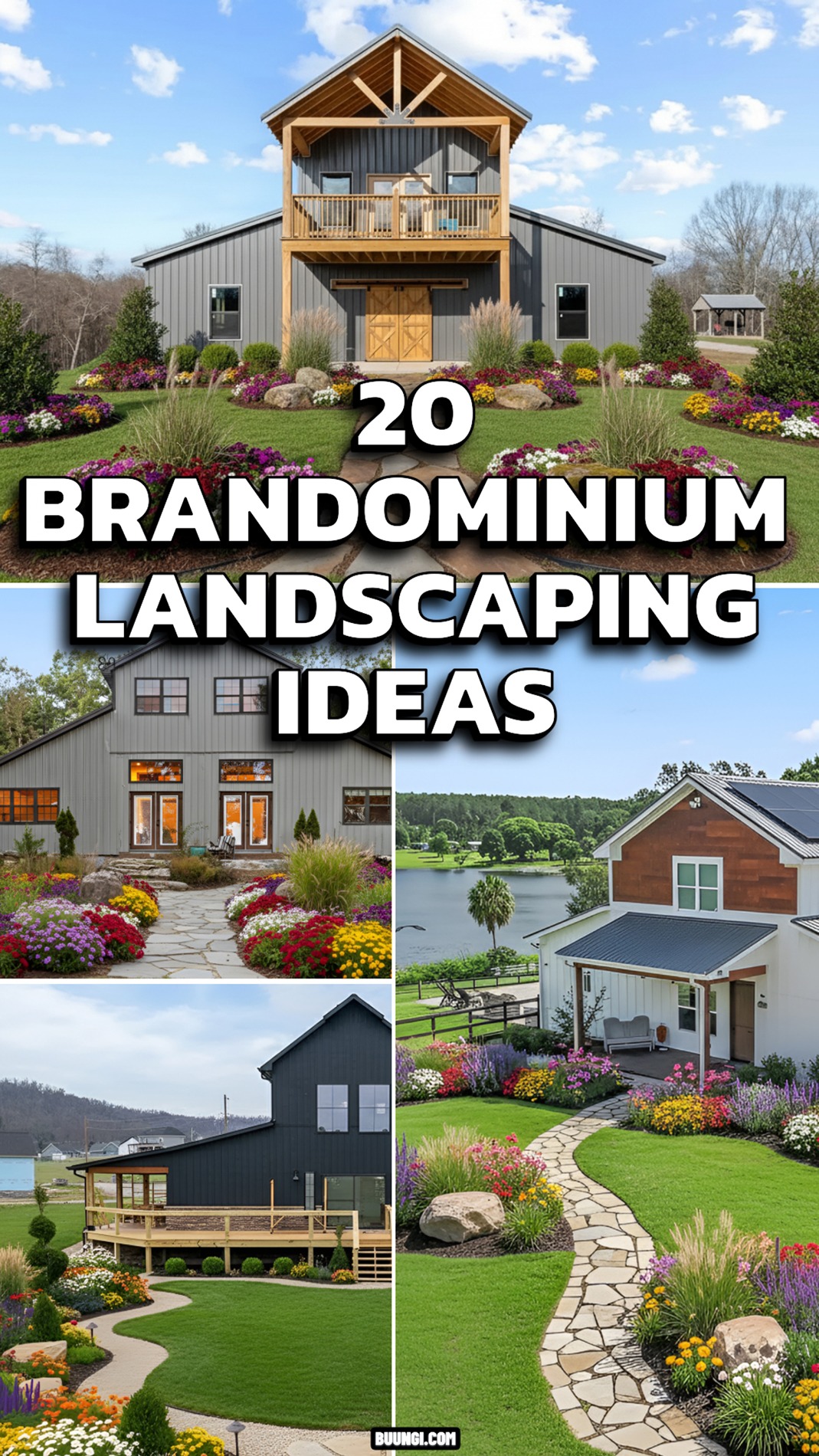
A beautiful barndominium does not stop at the front door. The landscaping around it matters just as much. The right mix of gravel paths, layered planting beds, native grasses, trees, and outdoor living zones can make the whole property feel warm, finished, and inviting. These barndominium landscaping ideas show how to turn open land into a space that feels polished, practical, and full of charm.
1. Frame the Front Walk With Layered Planting Beds
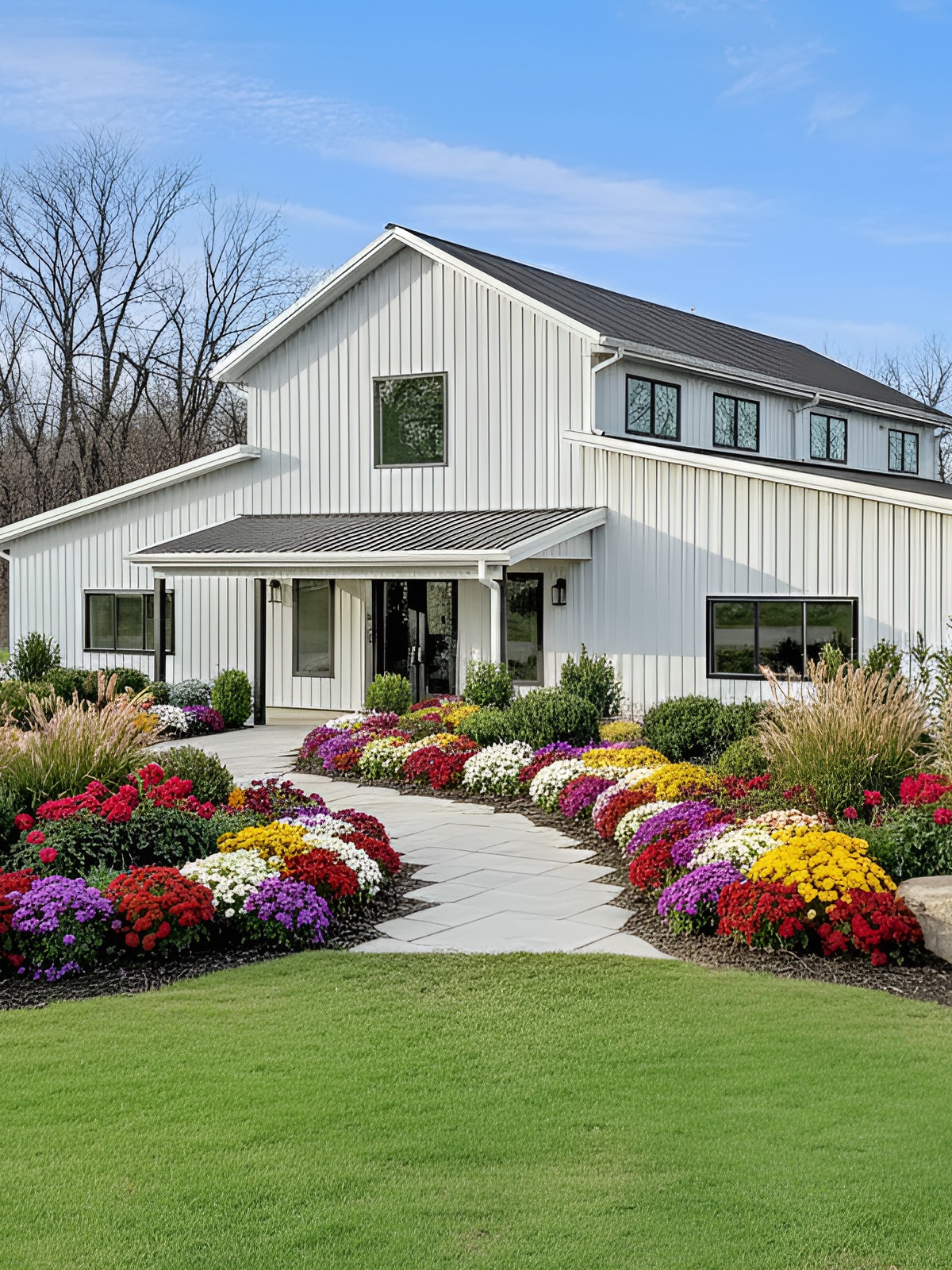
One of the easiest ways to make a barndominium feel more welcoming is to frame the path to the front door.
This works especially well because barndominiums often have broad, simple facades. A plain wall can feel a little stark without anything to soften it. A planting bed along the front walk changes that fast. It adds shape, color, and movement where the eye wants to see detail.
Start with a clean bed edge. Then build the planting in layers. Put lower plants near the path. Use medium shrubs behind them. Add one or two taller accents near corners or porch posts. This helps the bed feel balanced instead of flat.
The best look usually mixes evergreen structure with softer seasonal plants. For example, boxwoods or dwarf hollies can hold the shape year-round, while ornamental grasses, black-eyed Susans, salvia, lavender, or coneflowers add texture and color.
Cues to borrow:
Keep the bed wider than you think you need. Tiny beds can look lost against a large barndominium. Repeat the same plants in clusters for a cleaner, more pulled-together look.
2. Use Gravel and Stone for a Relaxed, Ranch-Style Feel
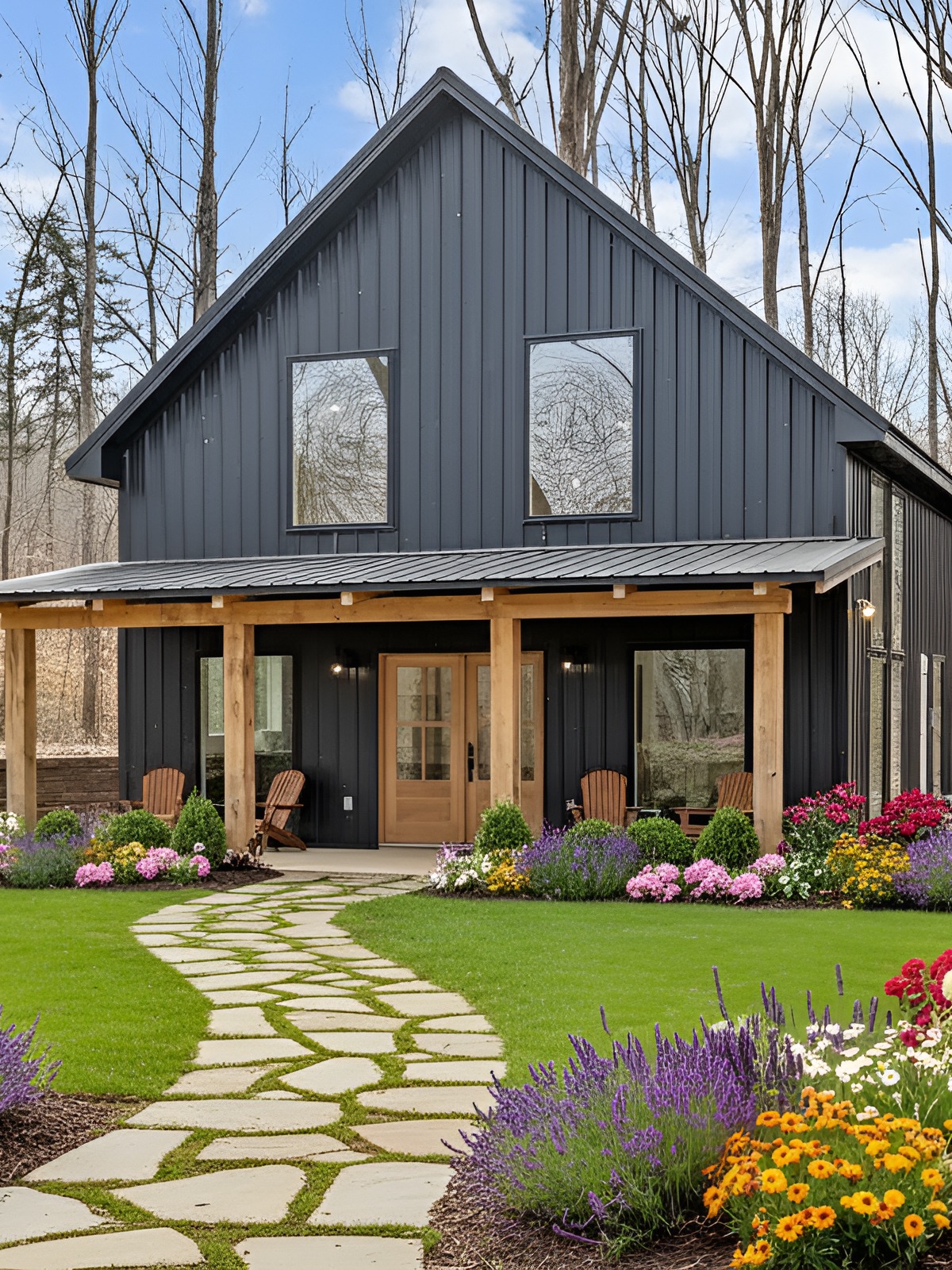
Gravel belongs around a barndominium.
It feels practical. It looks natural. And it pairs beautifully with metal roofs, board-and-batten siding, timber posts, and wide open land. That is why gravel paths, crushed stone sitting areas, and decomposed granite zones work so well on this type of property.
The real charm comes from contrast. Hard stone surfaces help balance the softer look of planting beds and lawn. They also give the landscape a more grounded, lived-in feel.
Use gravel for secondary walkways, fire pit zones, garden paths, utility areas, or side-yard access. Border the space with steel edging, stone, timber, or brick to keep it neat. Then soften the edges with drought-friendly plants or low native grasses.
Cues to borrow:
Choose one gravel tone and repeat it across the property. That simple move makes the whole landscape feel more cohesive. Warm tan, soft gray, and natural brown tones often work best.
3. Add a Big Porch Border With Cottage-Style Planting
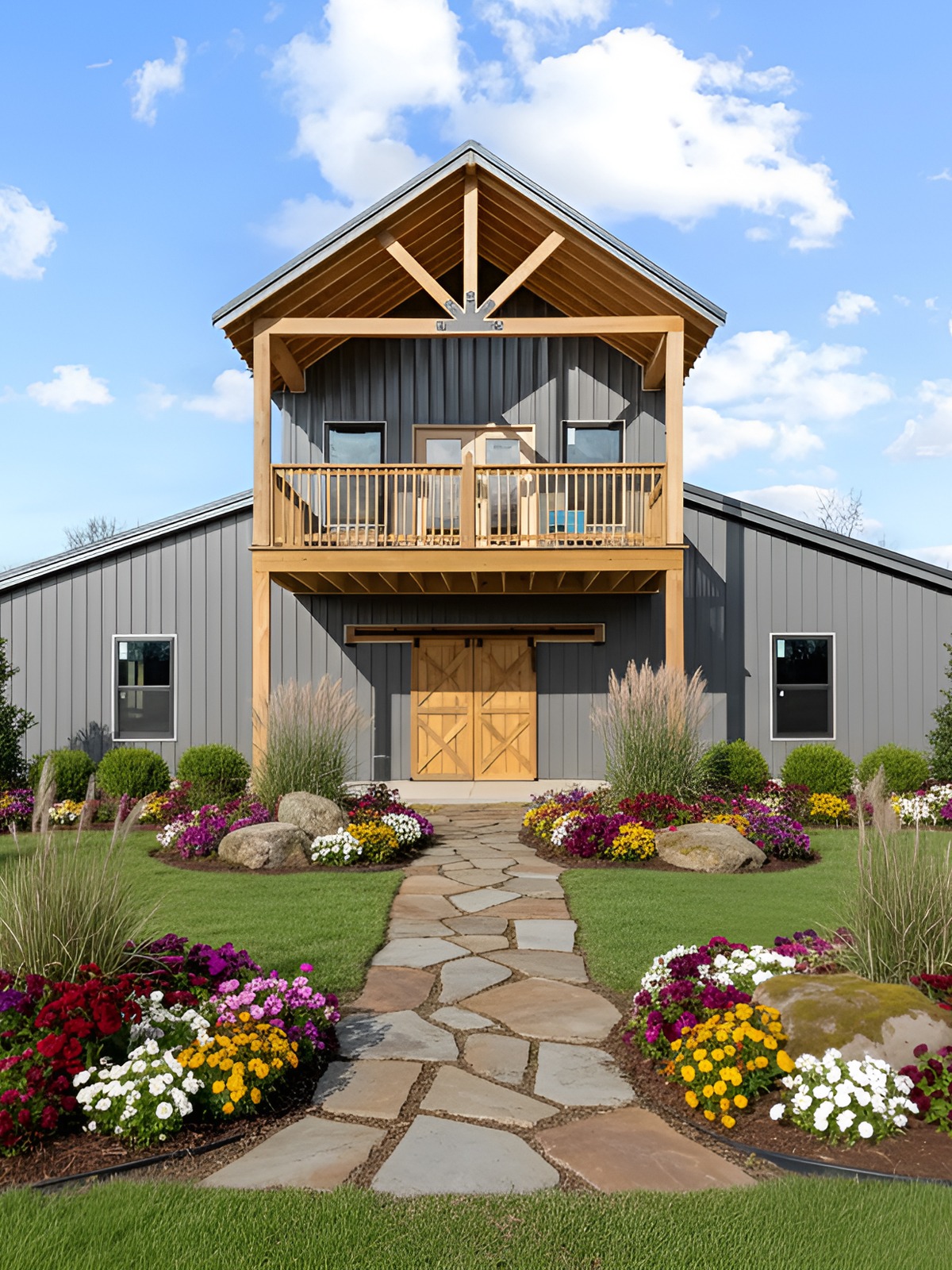
Barndominium porches tend to be large, which makes them a perfect place for generous landscaping.
Instead of stopping the planting at the steps, let it run along the full porch line. That makes the porch feel anchored to the yard. It also adds charm and scale.
A cottage-style planting mix works beautifully here because it softens the strong lines of the house. Think hydrangeas, catmint, Russian sage, daylilies, yarrow, coreopsis, and grasses mixed in wide drifts. The goal is not stiff perfection. The goal is fullness and ease.
This style looks best when it feels abundant but still controlled. Repeat colors. Keep the tallest plants toward the back. Let a few plants spill gently over the edge.
Cues to borrow:
Use porch planters that match the planting bed below. That small detail helps the whole front entry feel connected and intentional.
4. Create a Circular Drive Island That Becomes a Focal Point
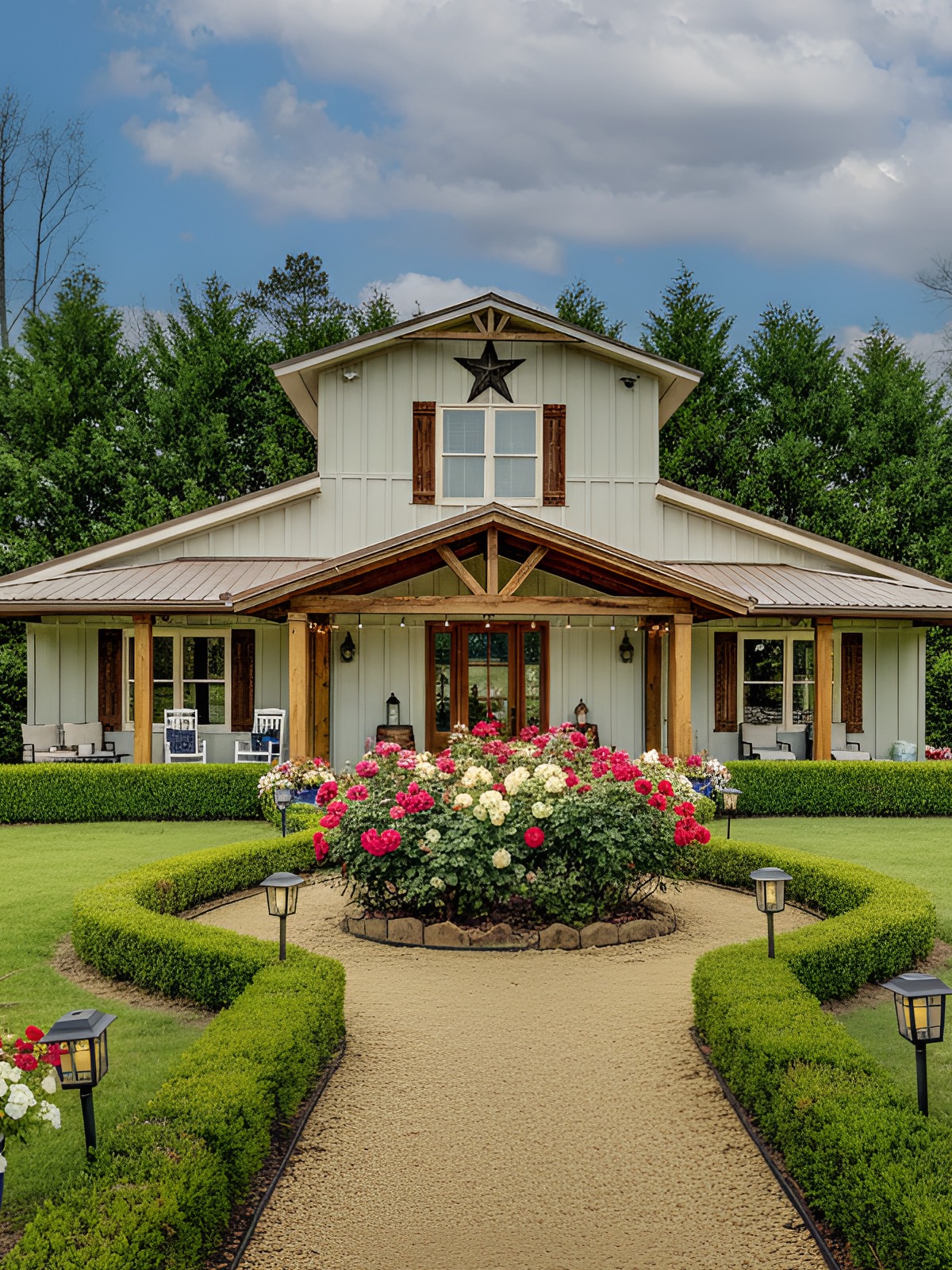
If your barndominium has a circular drive, do not leave the center empty.
That middle island can become one of the most striking features on the property. It gives the approach more drama, and it makes the house feel more established from the road.
The trick is to think in layers. Start with a bold center feature. This might be a small tree, a large boulder, a grouping of grasses, or even a rustic water trough planter. Then surround it with lower plantings that keep the view open for drivers.
Because this island is usually seen from all sides, symmetry often works best. Even a loose, natural design should feel balanced.
Cues to borrow:
Keep the center planting low enough that cars can still move safely around it. Use mulch or gravel to reduce maintenance in a space that is hard to mow.
5. Plant Ornamental Grasses for Soft Movement
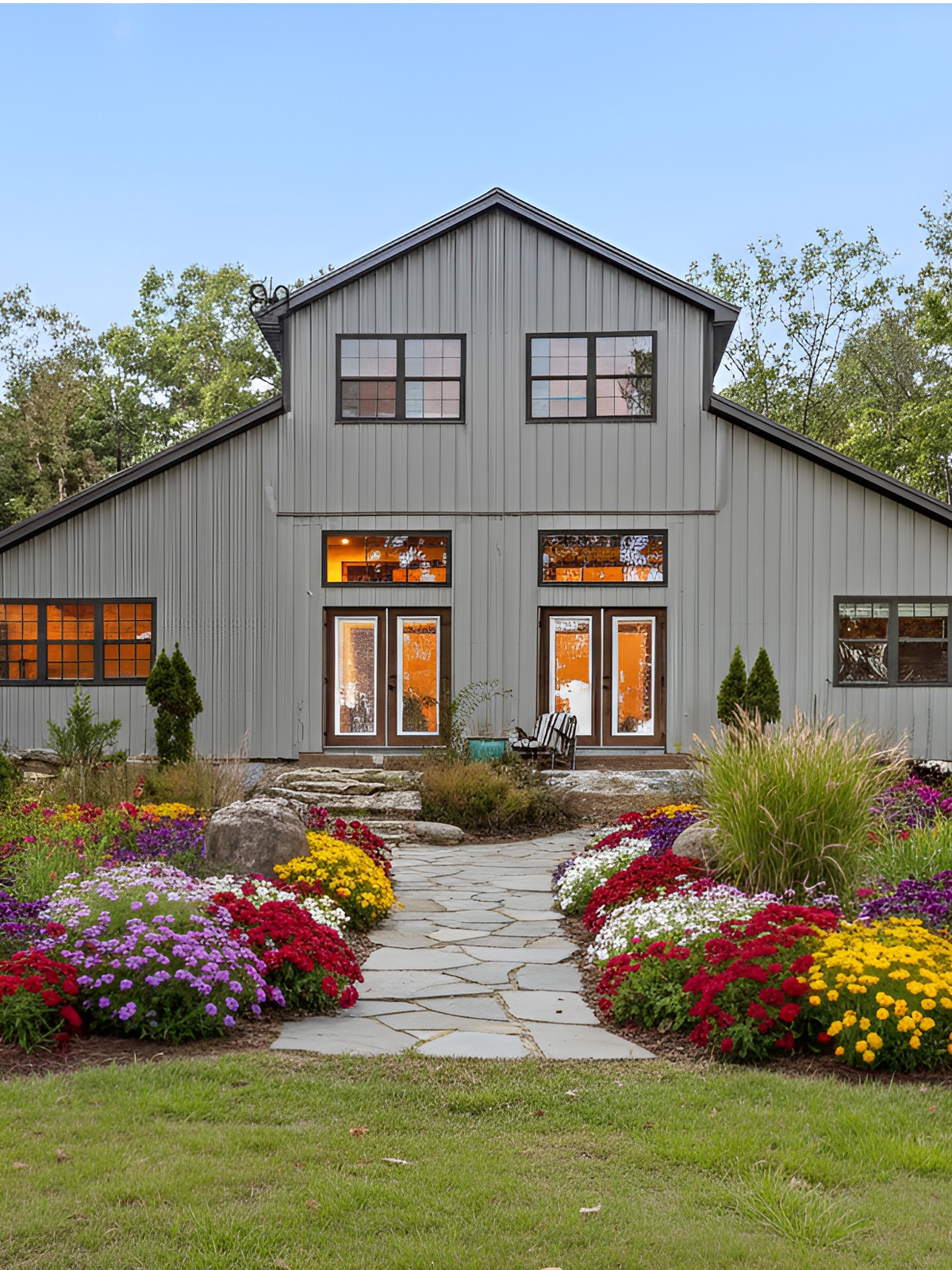
Barndominiums look especially good with landscapes that have movement.
That is one reason ornamental grasses work so well. They sway in the wind, catch the light, and soften the hard edges of metal and wood. They also fit the rural spirit that many barndominium owners want.
Use grasses near entry beds, along fences, beside driveways, or in mass plantings across larger areas. Feather reed grass, little bluestem, fountain grass, muhly grass, and switchgrass are all strong options, depending on your climate.
Grasses look best when planted in groups instead of one here and one there. Repetition creates rhythm. It also helps the landscape feel designed instead of random.
Cues to borrow:
Mix upright grasses with mounded grasses for contrast. Leave enough room for mature size so the planting stays graceful instead of crowded.
6. Define Outdoor Living Areas With Landscaping
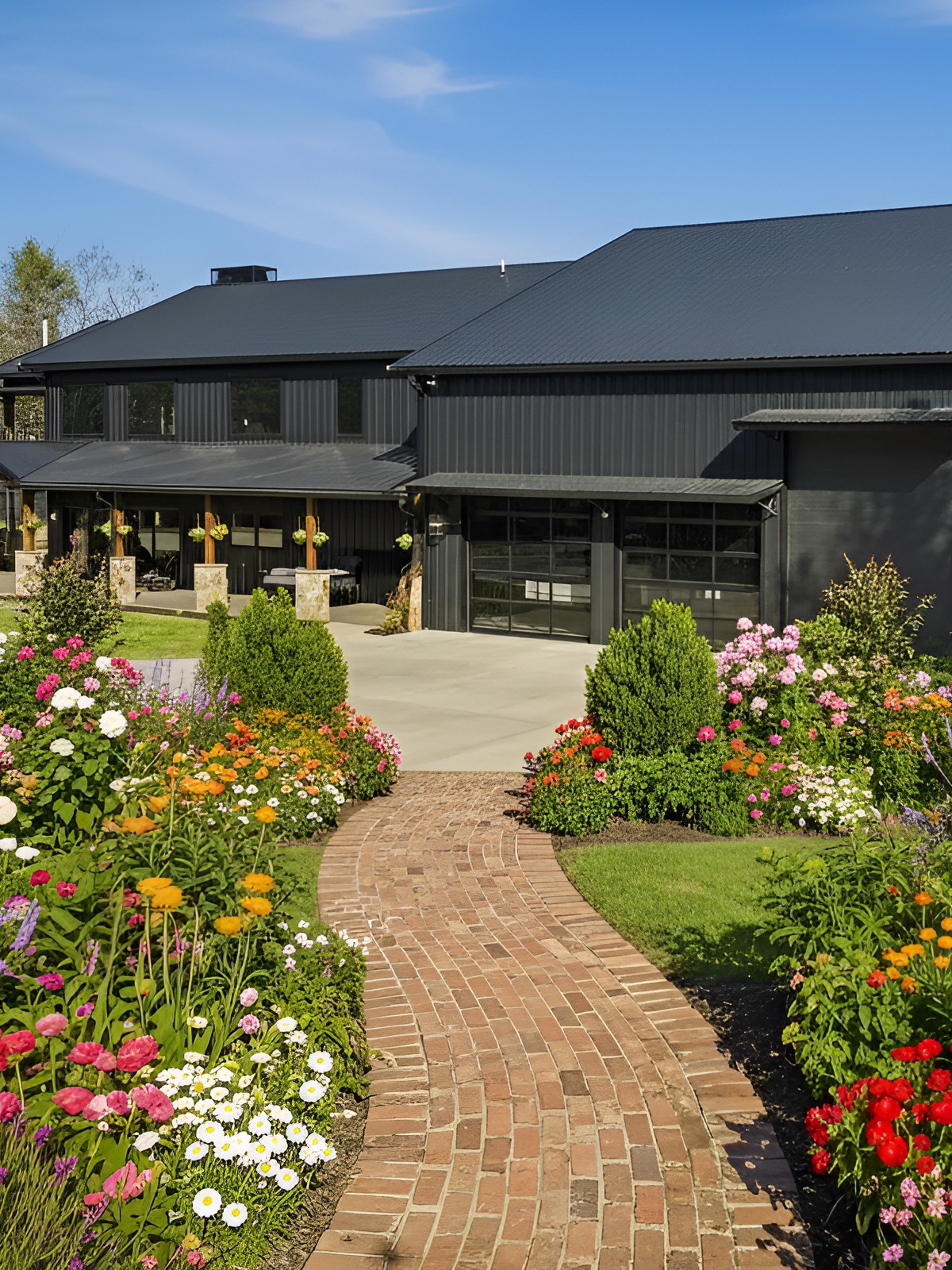
A barndominium yard often includes more than a front lawn. It may also have a patio, grill zone, fire pit, pool, workshop yard, or outdoor dining space.
Landscaping helps each of those zones feel like a real destination.
Use planting beds, small trees, gravel borders, and low hedges to outline each area. This gives the property flow. It also makes large open land feel easier to use and enjoy.
For example, a fire pit area feels more cozy when it sits inside a ring of gravel with shrubs, grasses, and string-light posts around it. A patio feels more finished when it is backed by layered greenery rather than left floating in the yard.
Cues to borrow:
Think like you are designing outdoor rooms. Each space should have edges, purpose, and a little privacy.
7. Use Native Plants for a Natural, Easy-Care Look
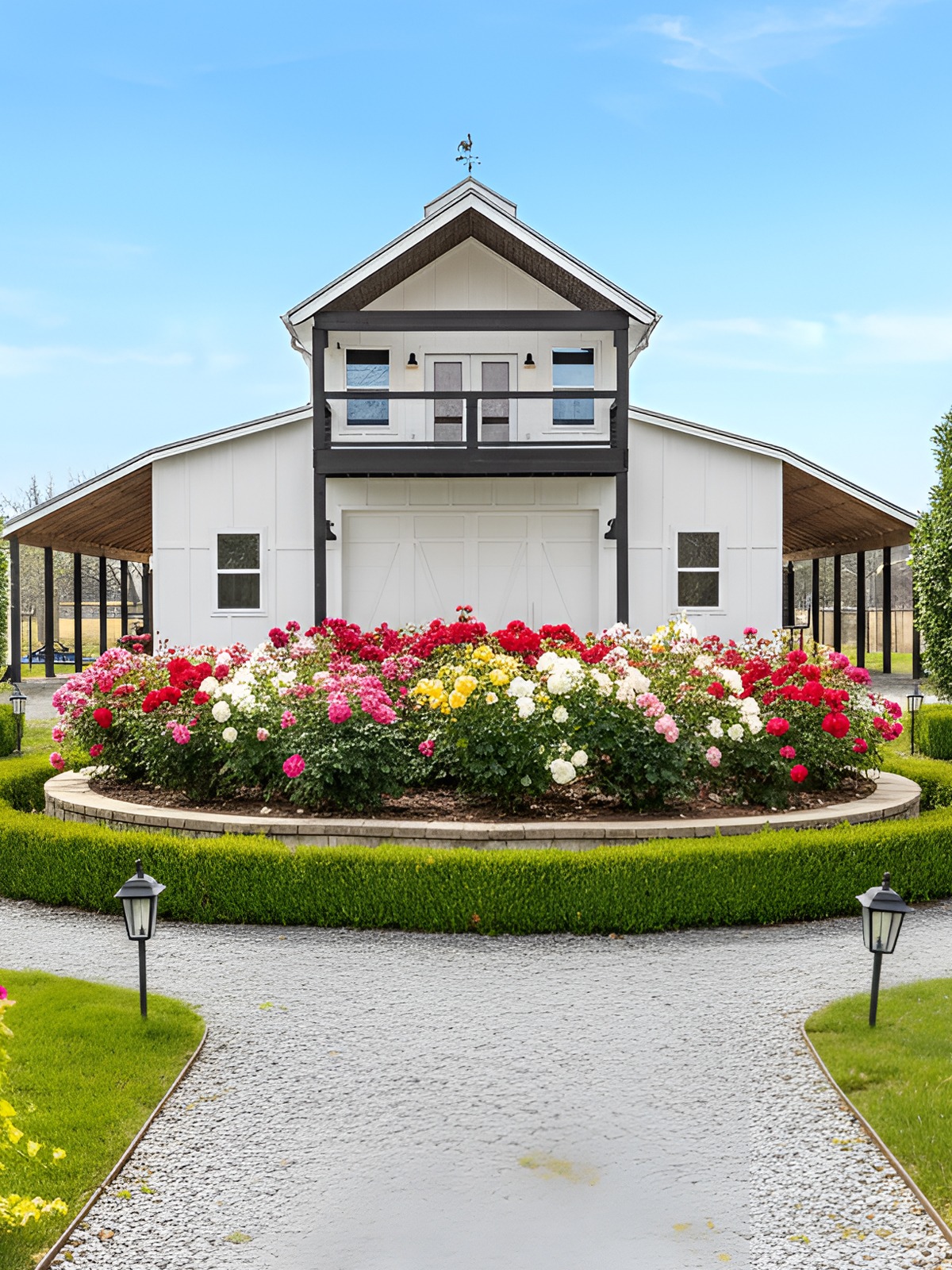
Native plants are a smart choice for barndominium landscaping.
They often need less water. They usually handle local weather better. And they help the property feel connected to the land around it instead of dropped onto it.
That does not mean the yard has to look wild. Native landscapes can look clean and polished when the layout is clear. Use repeated groupings, simple borders, and a limited plant palette to keep things tidy.
This approach works especially well for larger lots, sloped areas, and side yards where high-maintenance planting would be hard to manage.
Cues to borrow:
Use native plants in bigger drifts instead of small mixed bunches. Then add one crisp element, like steel edging, a gravel path, or a mowed strip, to make the design feel intentional.
8. Add Trees to Give a New Build Instant Presence
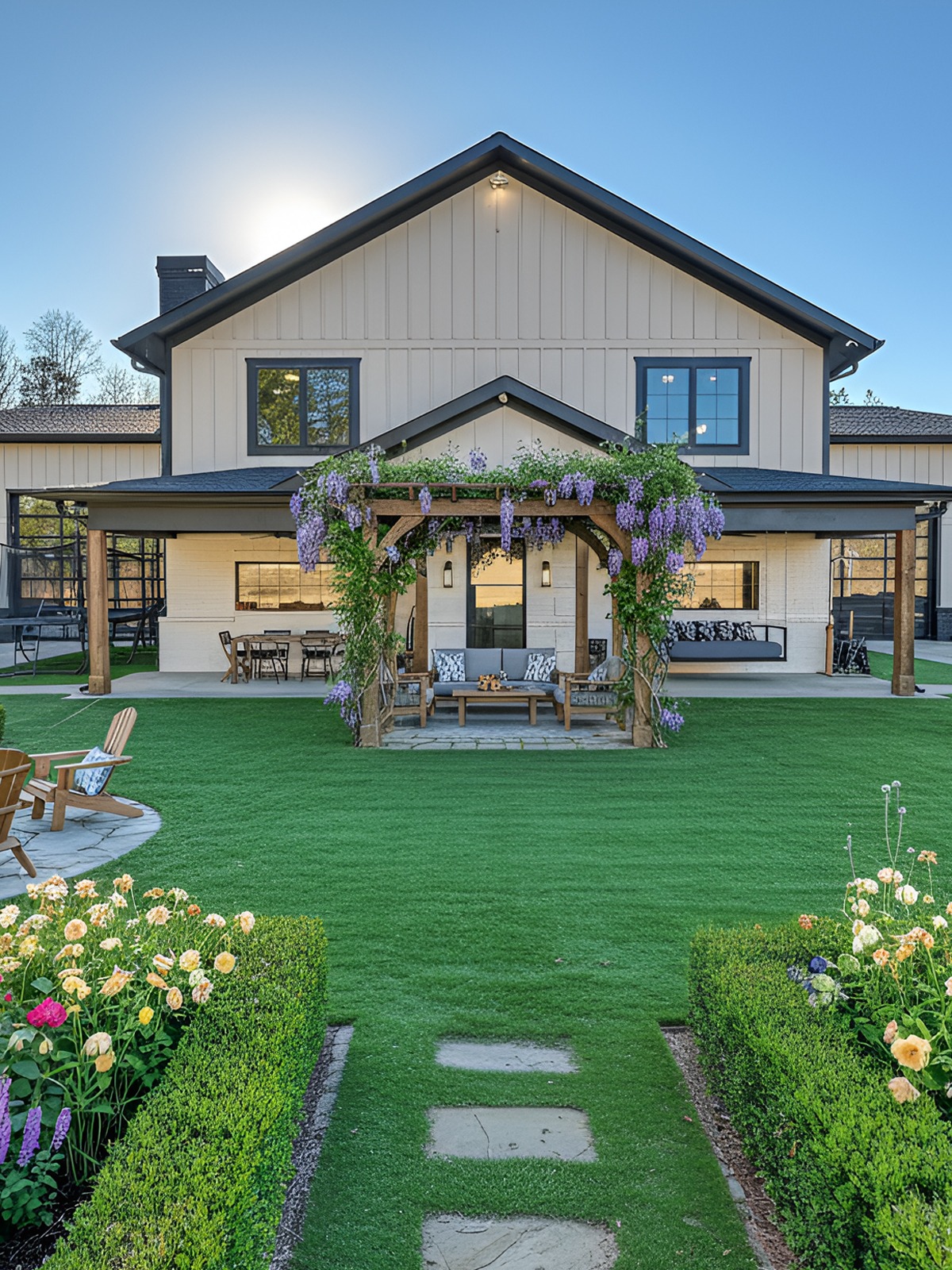
A newly built barndominium can look amazing, but the landscape around it may feel young and exposed.
Trees help fix that.
Even a few well-placed trees can make the property feel more settled and valuable. They add height, shade, and structure. They also break up the large scale of the building.
Focus first on the spots that matter most. Frame the front approach. Add shade near seating areas. Place one or two trees where they can help the home blend into the lot.
Choose shapes that fit the architecture. Strong upright trees suit modern barndominiums. Broad, spreading trees can make rustic designs feel more relaxed and rooted.
Cues to borrow:
Do not plant too close to the house. Give trees enough room to mature so the final look feels graceful, not cramped.
9. Try a Dry Creek Bed for Beauty and Drainage
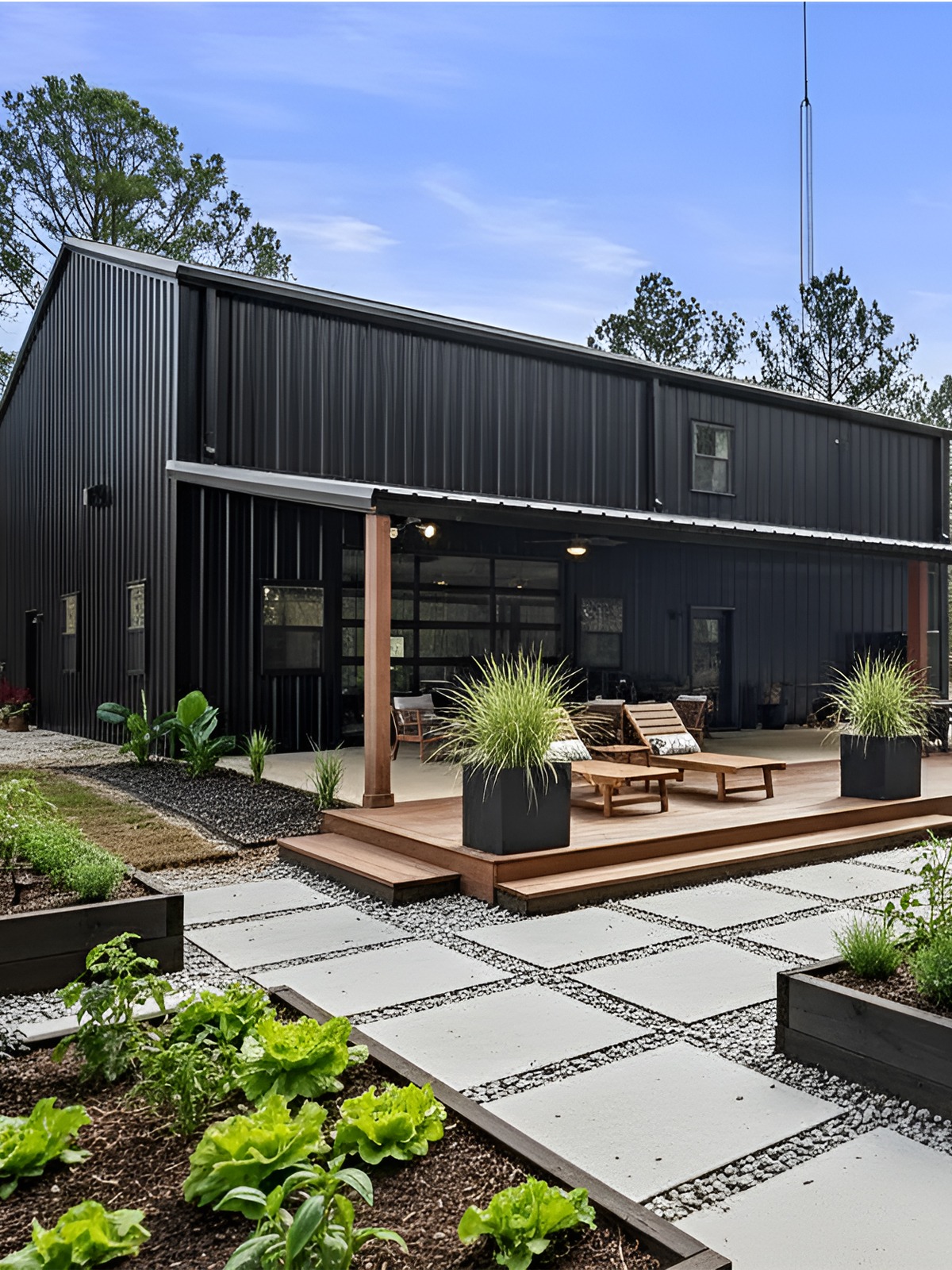
A dry creek bed is one of the most useful features you can add to a barndominium landscape.
It solves a problem and adds charm at the same time.
If your property has runoff issues, low spots, or erosion after rain, a dry creek bed can guide water away while looking like a natural landscape feature. Use river rock, boulders, and hardy plants along the edge to create a soft, natural line through the yard.
This idea works well beside long driveways, near downspouts, along slopes, or across front yards that need a little more character.
Cues to borrow:
Vary the stone sizes so the creek bed looks natural. Add grasses, sedges, or flowering perennials along the edge to keep it from feeling too stark.
10. Build Raised Beds Near the House or Garden Zone
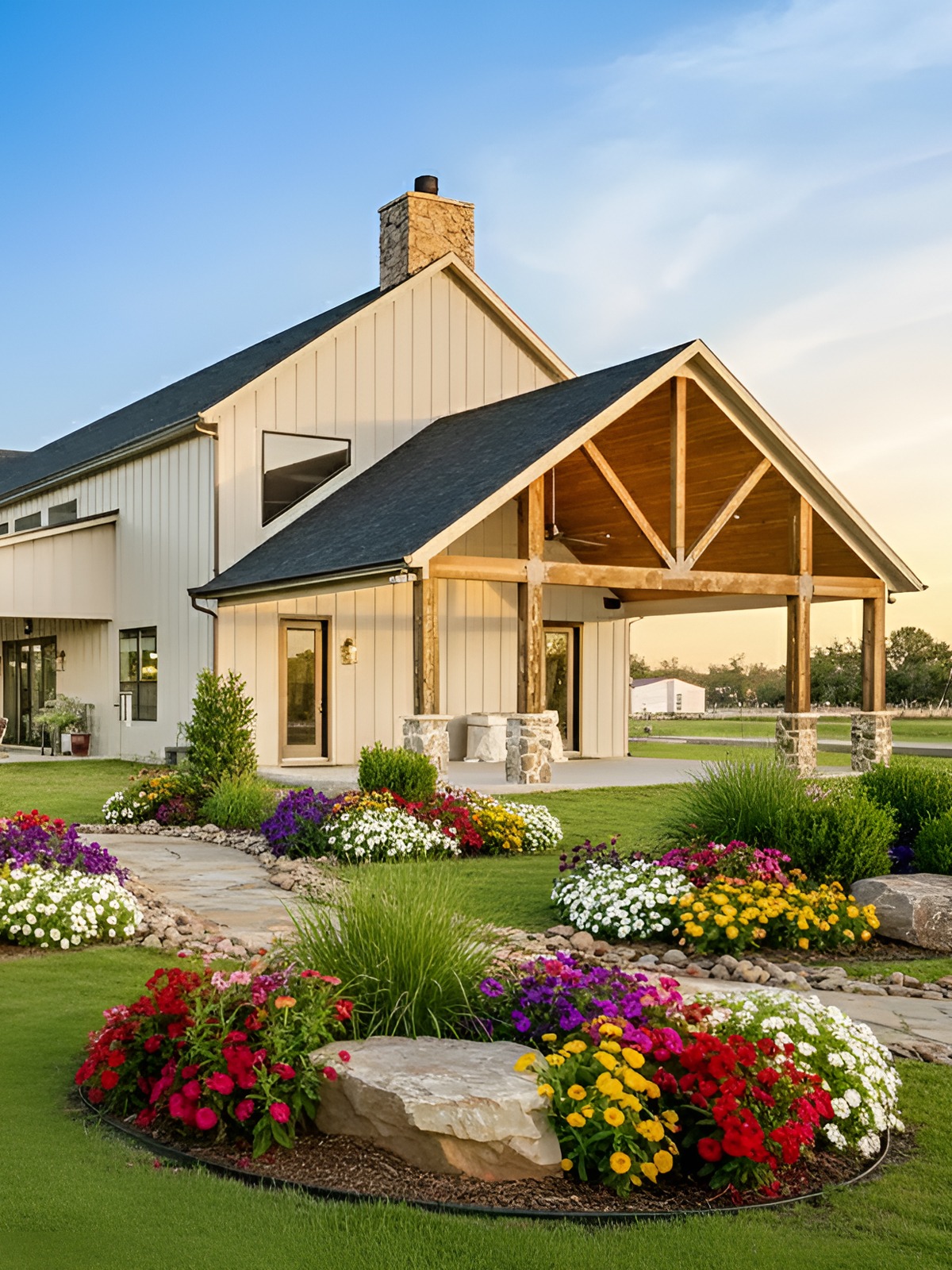
Barndominium living often leans practical, and raised beds fit that lifestyle perfectly.
They look neat. They make gardening easier. And they can be beautiful when designed to match the home.
Use cedar, corrugated metal, stone, or painted wood for the bed walls. Then place them in a sunny side yard, near the kitchen door, or in a fenced garden area. A row of raised beds can look almost architectural, especially when paired with gravel paths and simple edging.
This idea is great for vegetables, herbs, flowers, or a mix of all three.
Cues to borrow:
Match the raised bed material to something on the home, like the roof color, trim tone, or porch wood, so the garden feels tied to the architecture.
11. Make the Mailbox Area a Mini Statement Spot
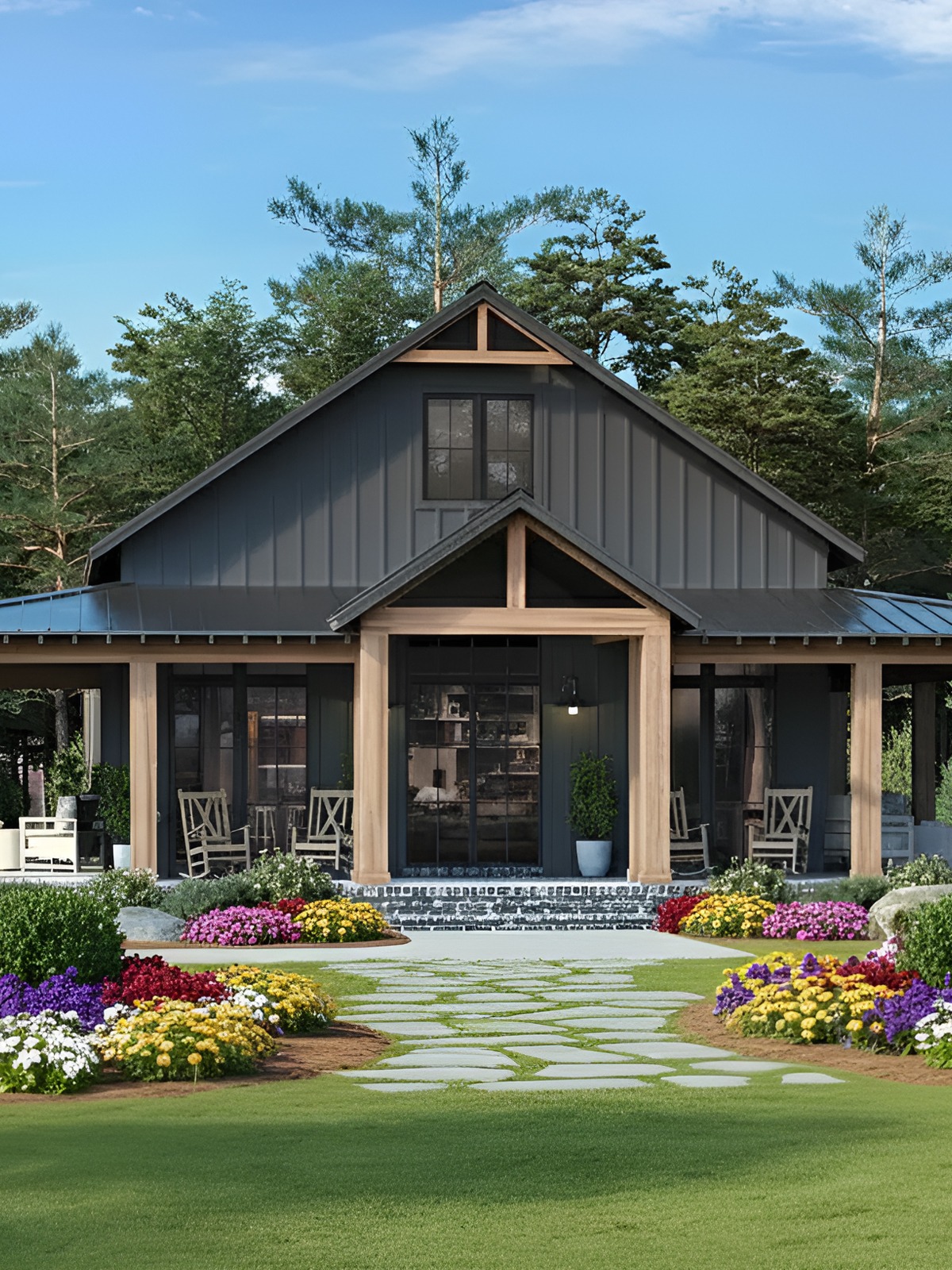
The mailbox is often the first detail people see from the road.
So why leave it plain?
A landscaped mailbox area can make the entire entrance feel more polished. Wrap the base with stone, brick, or timber if it fits your style. Then add a small bed around it with low shrubs, grasses, and flowers.
Keep the planting low enough that it does not block visibility. The goal is to add charm, not clutter.
Cues to borrow:
Repeat plants used near the house so the mailbox feels like part of the same design story.
12. Use Large Planters for Fast Front-Entry Impact
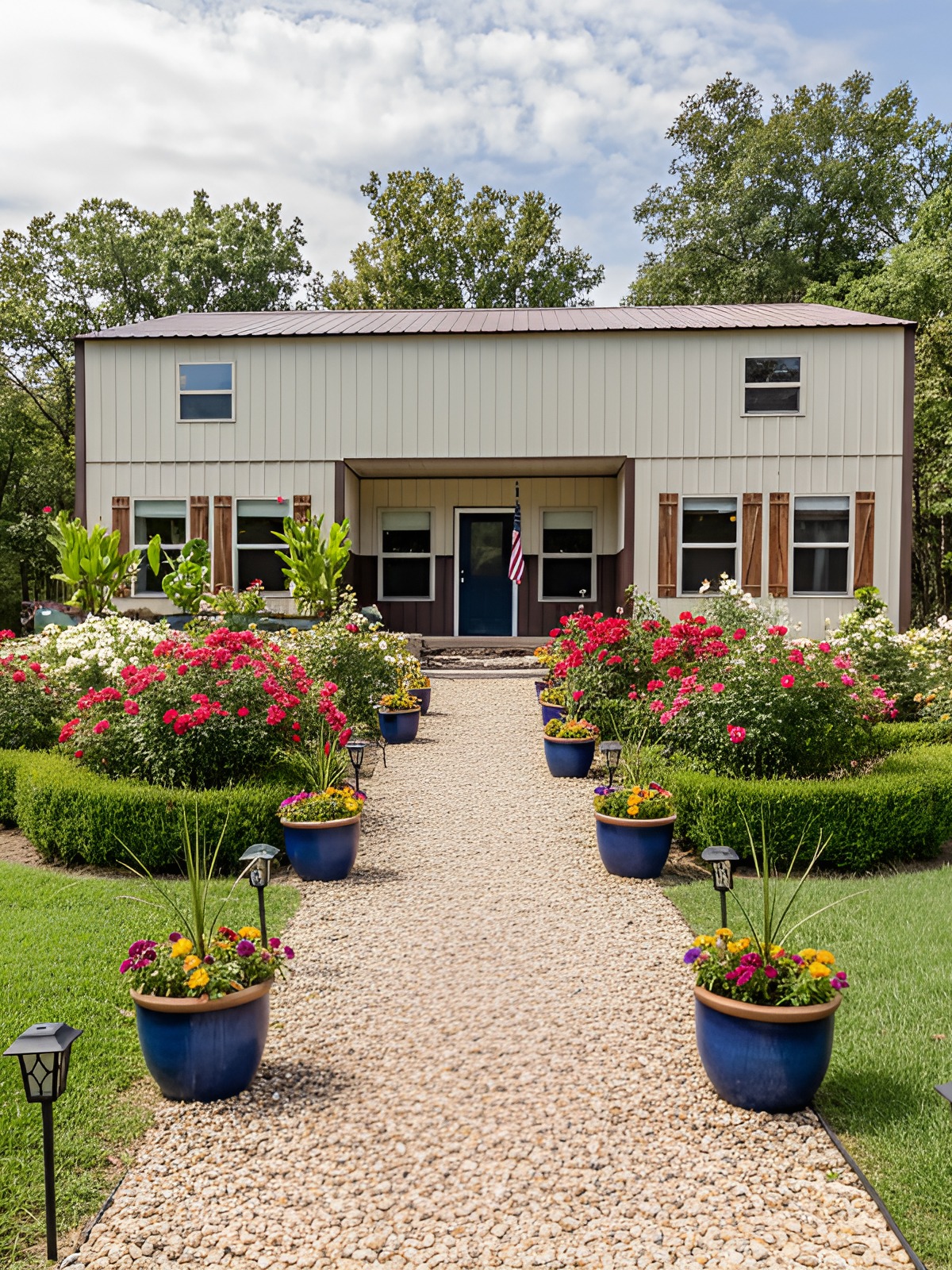
Sometimes the quickest landscaping win comes from containers.
Large planters near the front door, porch steps, or garage entry can add color and life right away. They also help fill awkward gaps where in-ground beds may not work well.
For barndominiums, oversized planters often look better than delicate ones. The scale matters. Big containers feel strong enough to stand up to the size of the house.
Use them to hold small evergreens, seasonal flowers, grasses, trailing vines, or even dwarf trees.
Cues to borrow:
Choose fewer, bigger planters instead of many small ones. That looks cleaner and more upscale.
13. Add Landscape Lighting for Warm Evening Curb Appeal
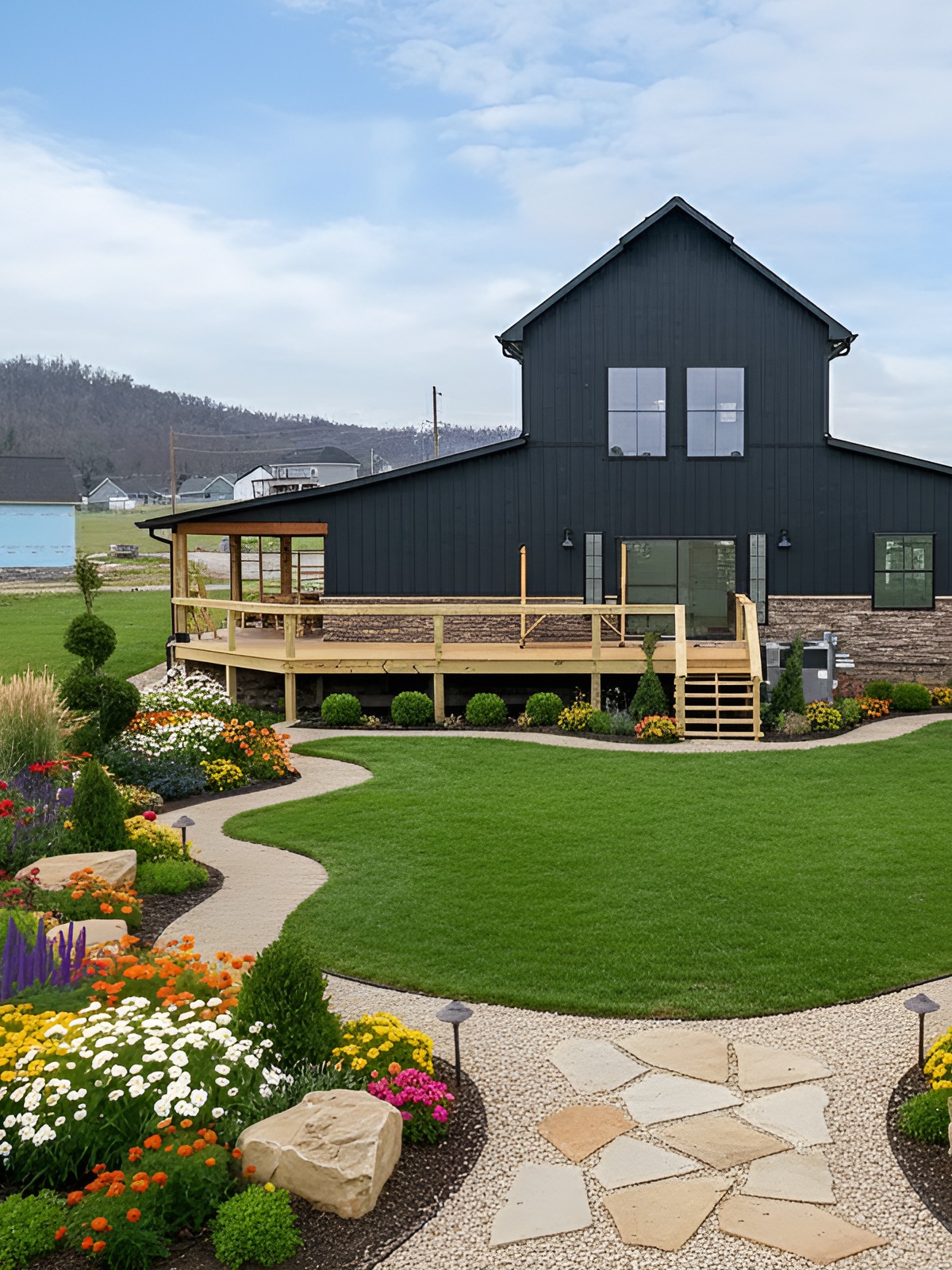
A barndominium can look stunning at night with the right lighting.
Landscape lighting helps guide guests, highlight plants, and make the property feel safer and more welcoming. It also adds that soft glow that makes everything feel more finished.
Use path lights along walkways. Add uplighting at trees or architectural features. Place soft lights near steps, porch edges, and seating areas. The goal is warmth, not glare.
Lighting works best when it highlights the most important shapes in the landscape. Think tree trunks, stone borders, grasses, and entry beds.
Cues to borrow:
Keep the light placement simple and repeat the same fixture style across the property for a more unified look.
14. Plant a Windbreak for Comfort and Privacy
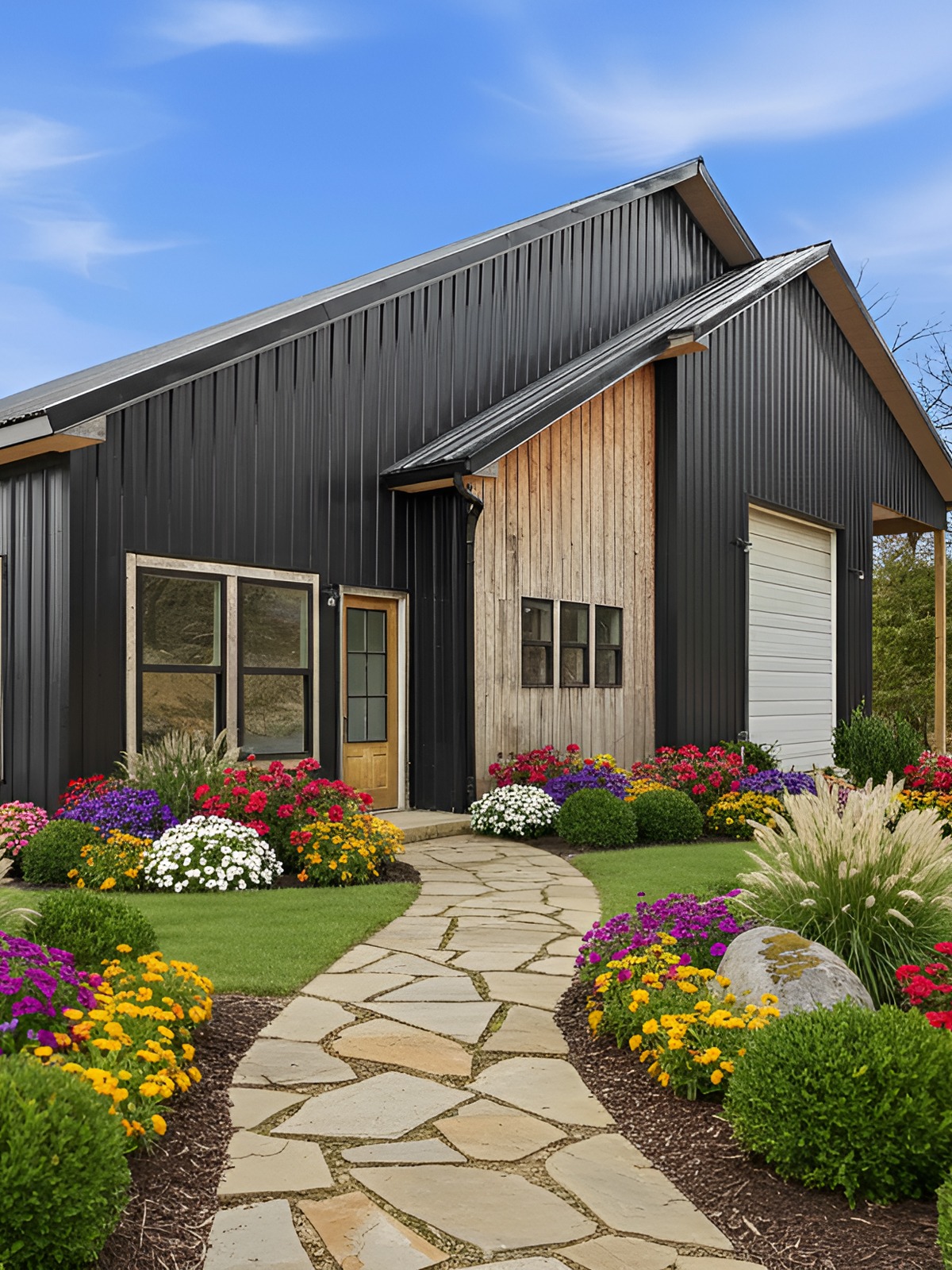
Many barndominiums sit on open land, which can mean strong wind, harsh sun, and very little privacy.
A windbreak can help with all three.
Use rows of trees, large shrubs, or mixed evergreens along the edge of the property where protection matters most. This can make patios more comfortable, reduce dust, and give the yard a more sheltered feel.
A mixed planting often looks better than a stiff, single-species row. It also creates a more natural rural look.
Cues to borrow:
Stagger the planting instead of lining everything up in a straight wall. That feels softer and more organic.
15. Create a Wildflower Meadow for Big, Open Areas
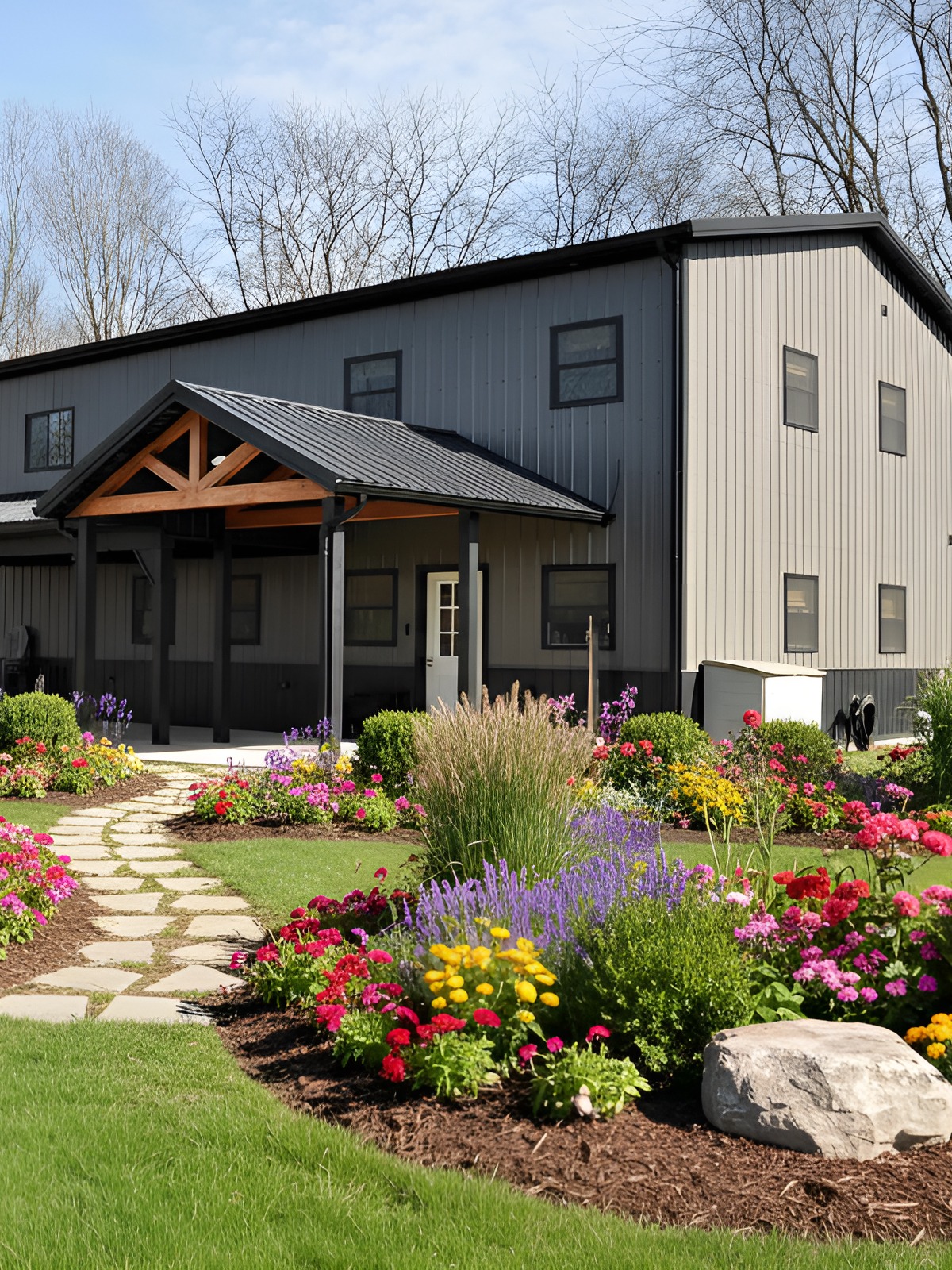
Not every inch of a barndominium property needs lawn.
In fact, large open areas often look better with a wildflower meadow or naturalized planting. This approach saves mowing, adds seasonal beauty, and fits the country feel many owners want.
A meadow works especially well farther from the house, where a more relaxed look feels appropriate. Near the home, keep the edges cleaner with mowed paths, gravel borders, or defined beds so the contrast feels intentional.
Cues to borrow:
Treat the meadow like a backdrop and the house zone like the polished foreground. That balance keeps the whole property attractive and easy to manage.
16. Use Boulders as Sculptural Landscape Accents
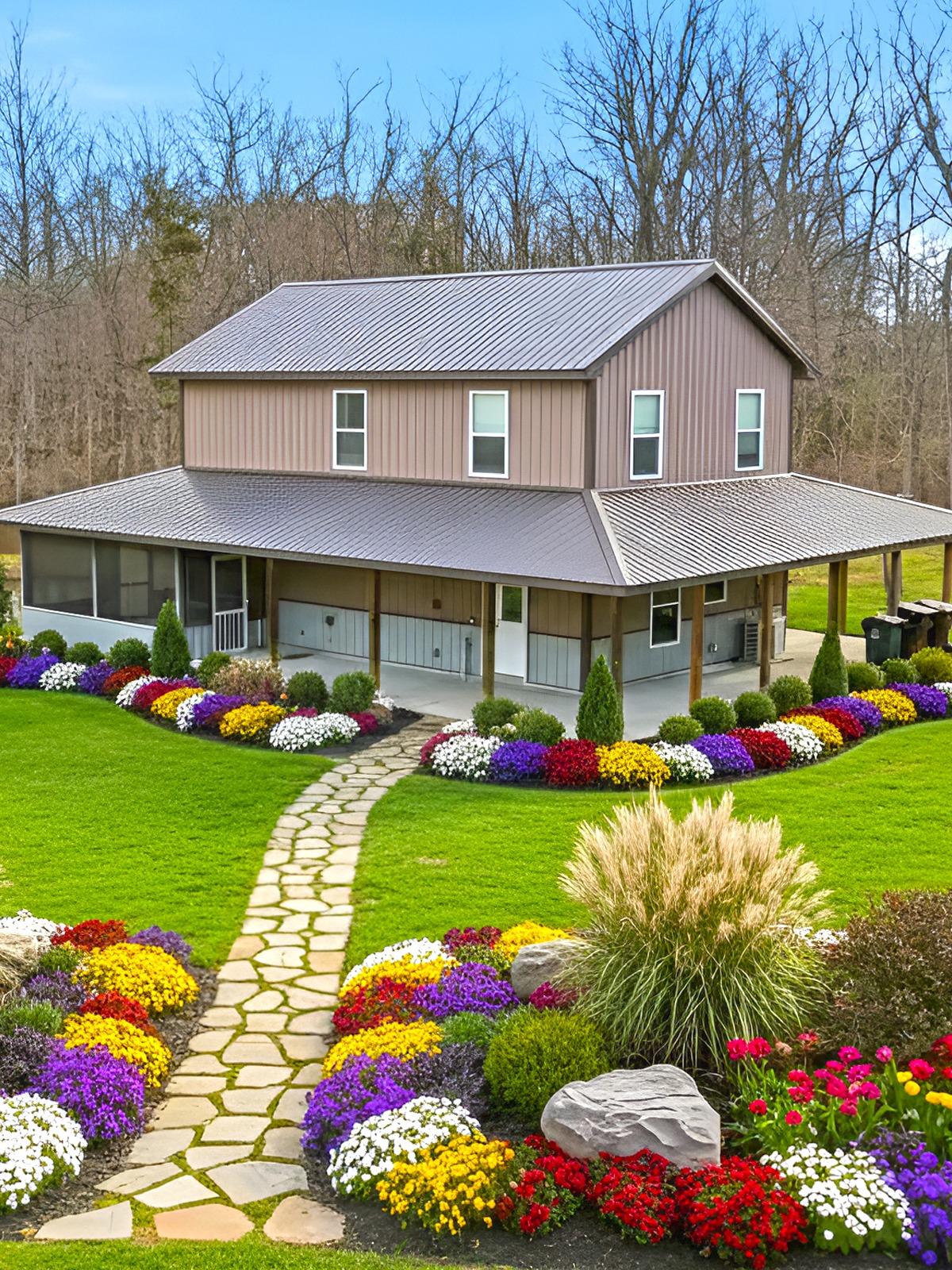
Boulders can do a lot in a barndominium landscape.
They add weight. They add texture. And they help the property feel rooted to the site. This is especially helpful around modern-rustic homes that need strong natural elements to balance clean lines.
Use boulders in entry beds, on slopes, beside dry creek beds, or as anchors in gravel gardens. One large boulder often looks stronger than several small ones.
Cues to borrow:
Partially bury the boulder so it looks like it belongs there. A rock that sits fully on top of the ground can look dropped in instead of natural.
17. Line Long Driveways With Simple Repetition
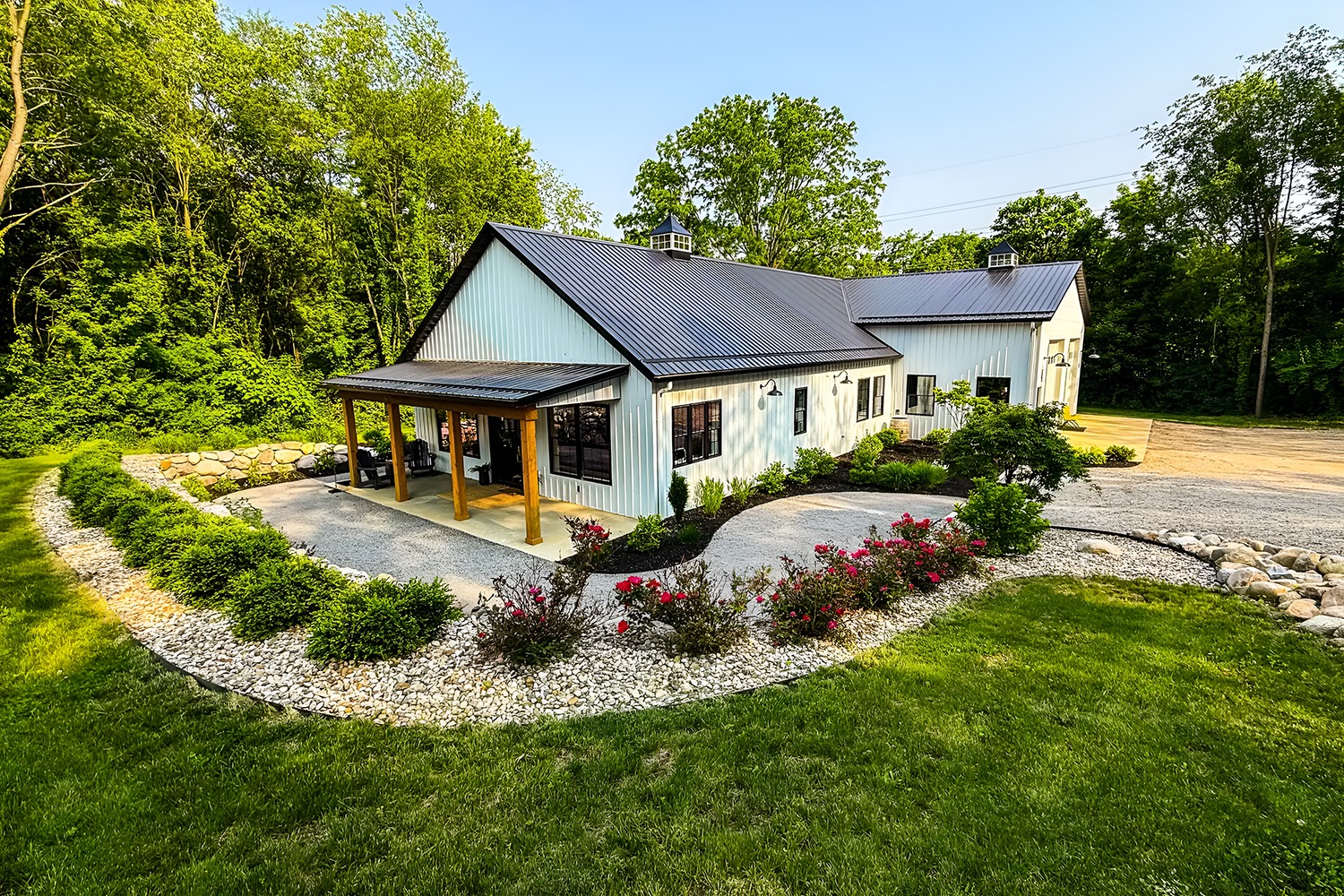
A long driveway can be one of the biggest visual features on a barndominium property.
Use that to your advantage.
Lining the drive with repeated trees, grasses, fence posts, or low planting beds can make the approach feel more dramatic and well planned. Repetition also helps large spaces feel calmer and more elegant.
You do not need to plant every inch. Even simple clusters placed at intervals can guide the eye and add rhythm.
Cues to borrow:
Stick with one or two plant types for a cleaner look. Too much variety can make a long driveway feel busy.
18. Tuck in a Fence Garden for Rustic Character
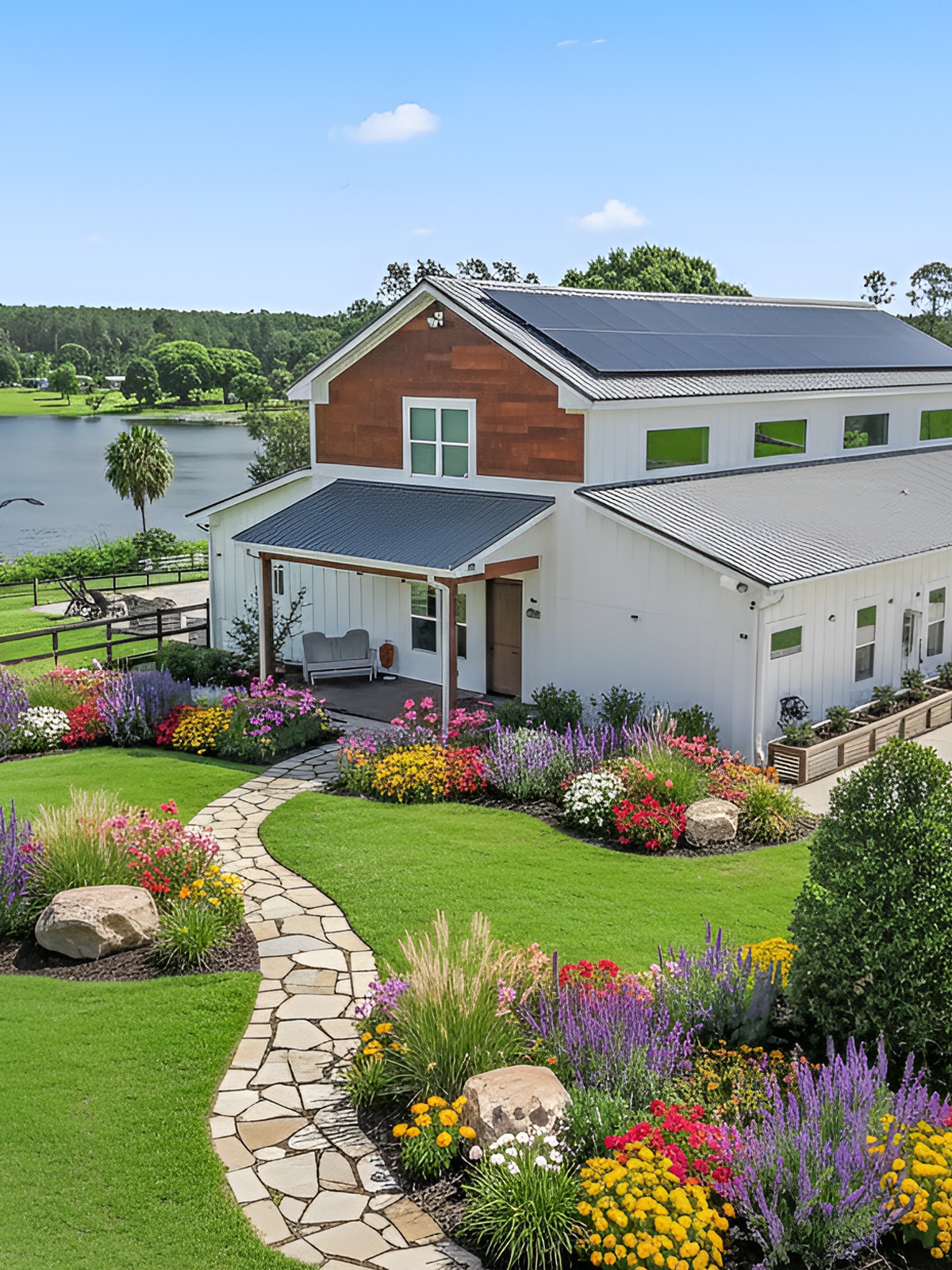
Fences and landscaping make a beautiful pair.
A fence line gives plants a backdrop, and the plants soften the fence in return. Around a barndominium, this combination can add a lot of rustic character.
Use this idea along split-rail fences, black metal fences, garden enclosures, or pasture edges. Plant grasses, roses, salvias, daisies, or climbing vines depending on the look you want.
This works especially well near the front yard, garden area, or driveway entrance.
Cues to borrow:
Leave room between the fence and the plantings so the area stays easy to maintain and does not feel overgrown.
19. Keep a Clean Foundation Zone Around the Home
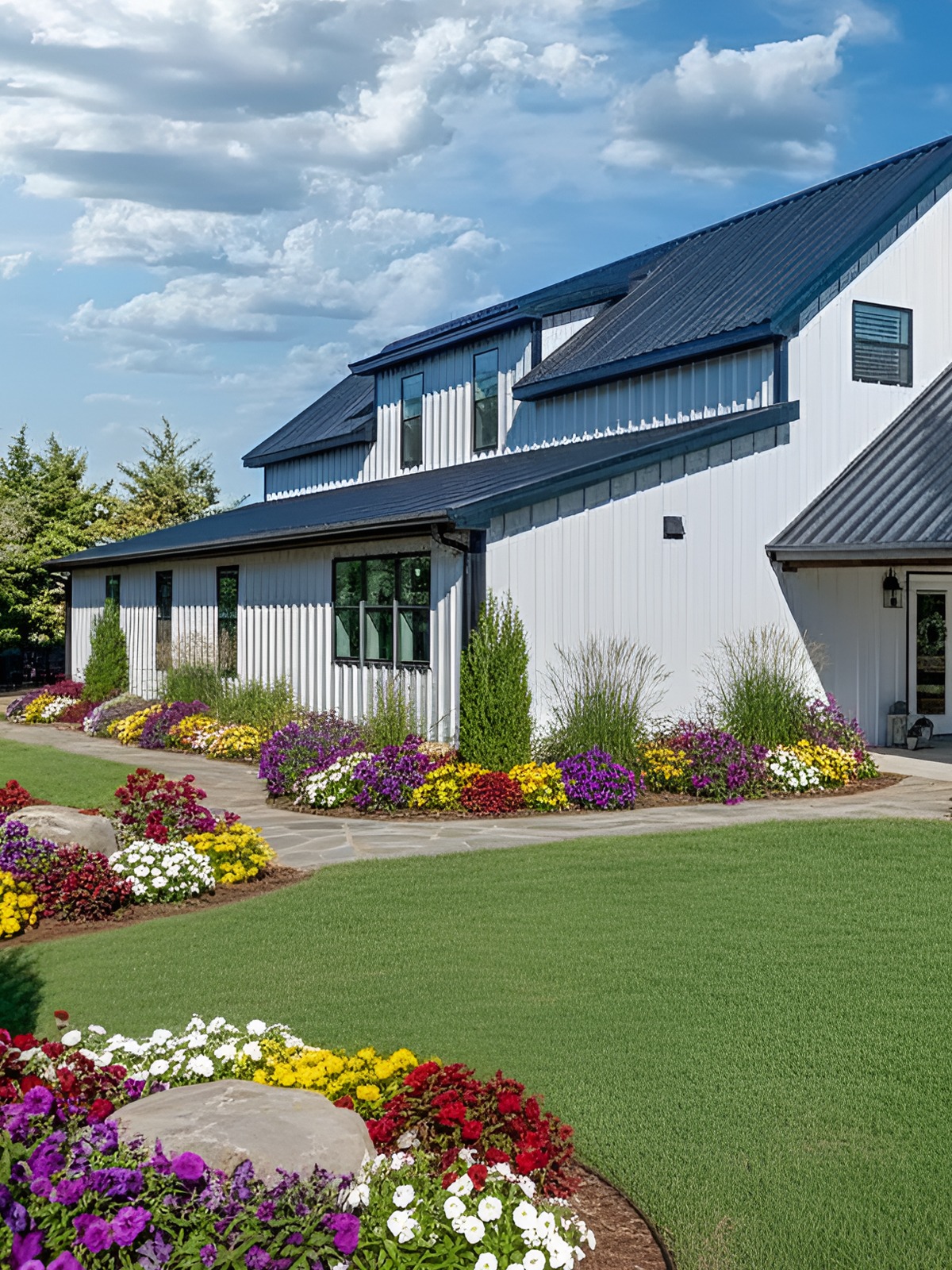
Some of the best barndominium landscaping comes from restraint.
That means knowing where to keep things simple.
A clean foundation zone around the home helps the exterior look tidy and intentional. This might be a mulch bed, gravel border, or narrow strip of planting that prevents weeds, splashing mud, and messy grass edges near the siding.
It also gives the eye a visual break, which can be very helpful on homes with bold materials and strong shapes.
Cues to borrow:
Use crisp edging and one ground material throughout the foundation beds so the result feels clean and unified.
20. Mix Rustic and Refined Elements for the Best Overall Look
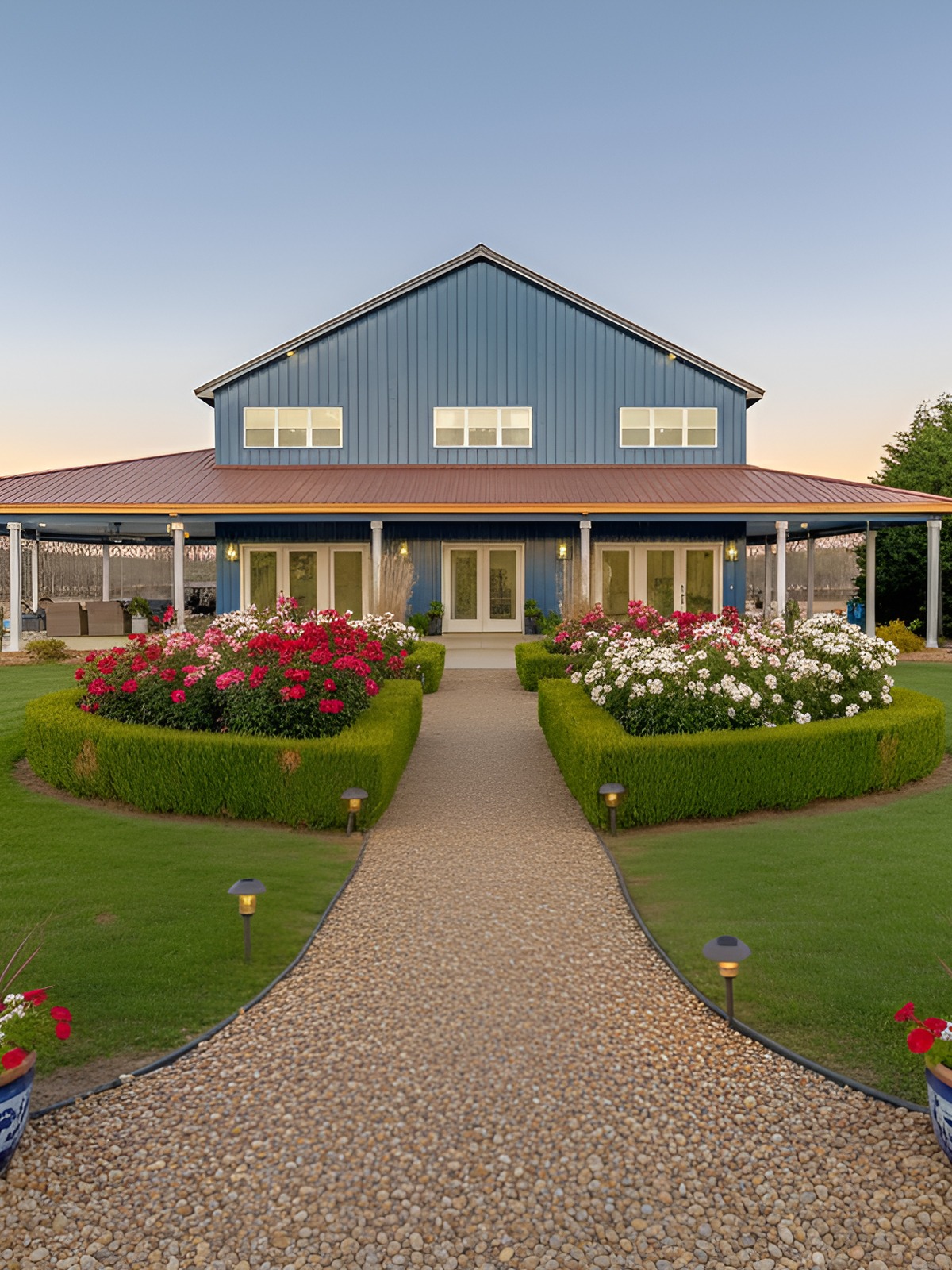
This may be the most important idea of all.
Barndominium landscaping looks best when it balances rustic charm with polished structure. That is the sweet spot. Too rough, and the property can feel unfinished. Too formal, and it can fight the laid-back spirit of the house.
So mix the two.
Pair native grasses with neat gravel paths. Use a rugged boulder beside a clean concrete walk. Add loose wildflowers behind a crisp steel edge. Let timber planters sit near modern black lights. That contrast gives the landscape depth and personality.
In other words, let the home guide the yard. A barndominium already blends warmth, utility, and style. The landscaping should do the same.
Cues to borrow:
Pick a few repeating materials and colors, then layer in softer natural elements around them. That is often what makes the whole property feel beautifully complete.
A great barndominium landscape does not need to feel fussy or overdone. It just needs to feel like it belongs.
When the plantings match the scale of the home, when the paths feel natural, and when the outdoor spaces feel useful as well as pretty, the whole property starts to shine. Suddenly, the house does not sit on the land. It feels connected to it.
That is the goal.
So, whether you start with one front bed, a few new trees, a gravel path, or a full yard plan, every thoughtful change will help your barndominium feel warmer, more finished, and more inviting. And really, that is what good landscaping does best. It turns open ground into a place that feels like home.

Leave a Reply
You must be logged in to post a comment.