
If you love bedrooms that feel calm, airy, and stylish, mid-century modern coastal design is a beautiful mix to explore. It blends the warm wood tones and clean lines of mid-century style with the light colors, soft textures, and breezy feel of coastal decor. The result feels timeless, fresh, and easy to live with. These 15 mid-century modern coastal bedroom decor ideas are full of inspiration to help you create a space that feels relaxed, polished, and quietly beautiful.
1. Start With a Soft Coastal Color Palette and Ground It With Warm Wood
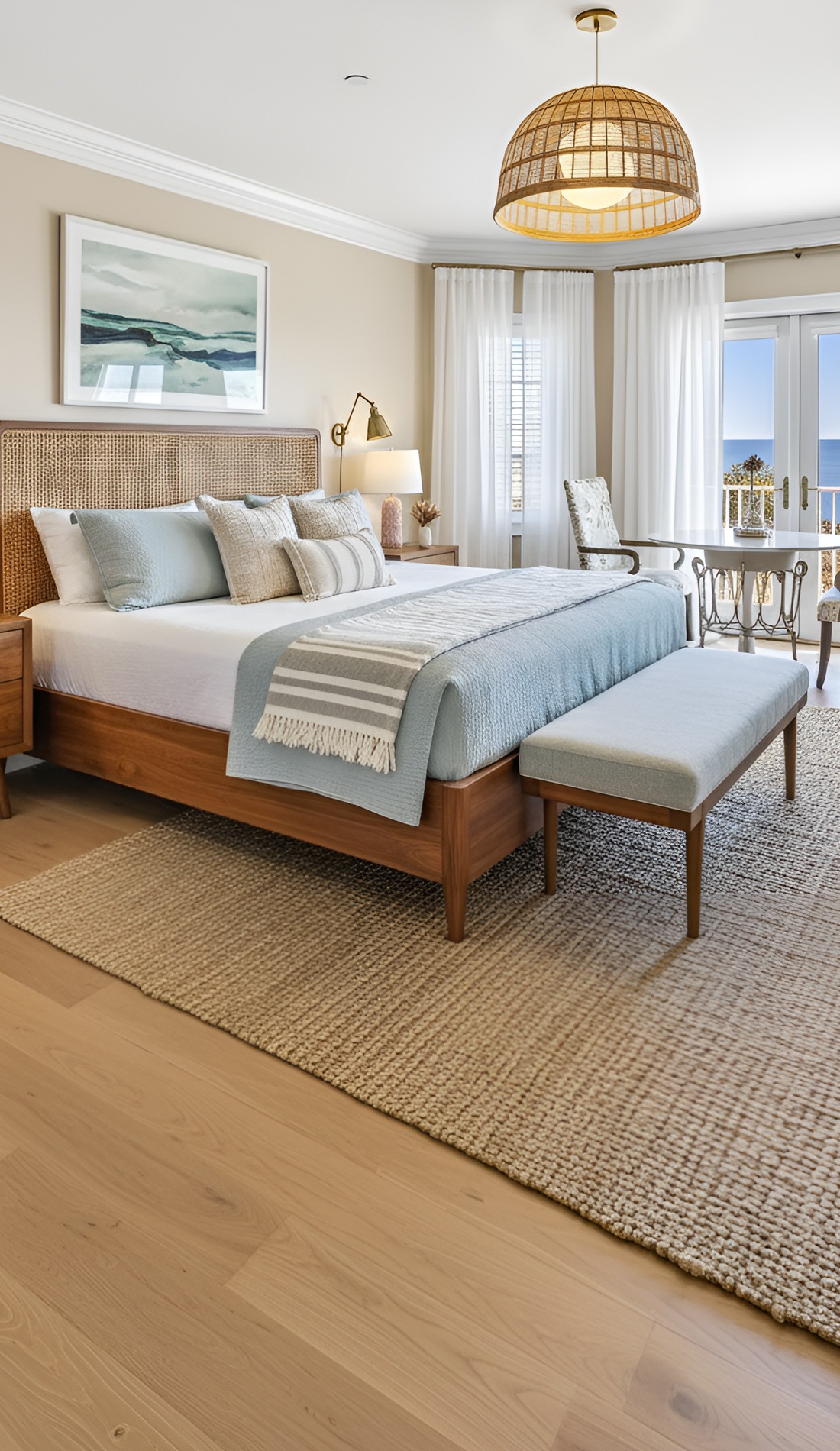
A strong mid-century modern coastal bedroom usually starts with contrast.
The coastal side brings in soft, airy shades like sandy beige, misty white, pale blue, sea glass green, and warm ivory. These colors make the room feel open and restful. However, if you stop there, the space can feel too washed out or too beachy.
That is where mid-century modern style comes in.
Mid-century furniture often uses walnut, teak, oak, or other warm-toned woods. Those deeper wood tones add visual weight. They also keep the room from feeling flat. A walnut bed frame, teak nightstand, or wood dresser instantly adds the grounded look that this style needs.
The cue here is balance.
Use light wall colors and bedding as your coastal base. Then layer in wood furniture with clean lines and simple shapes. You want the room to feel bright, but not pale. Warm, but not dark. Relaxed, but still crisp.
This mix works especially well because it gives the eye both softness and structure. The light colors calm the space. The wood tones give it history and depth.
2. Choose a Bed Frame With Clean Lines and Tapered Legs
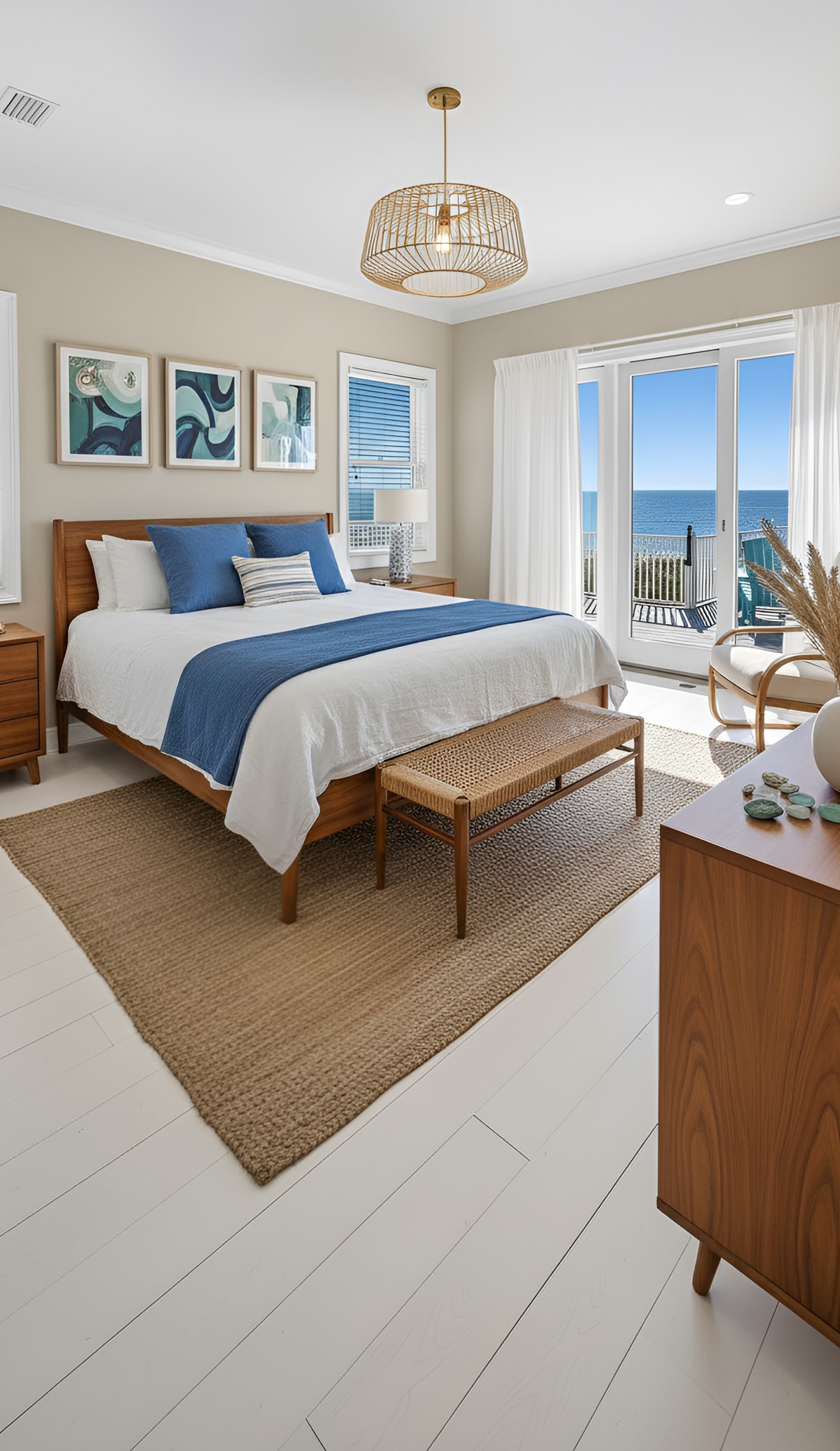
The bed is the biggest piece in the room, so it sets the tone fast.
For a mid-century modern coastal bedroom, skip chunky farmhouse frames, ornate traditional headboards, or anything too rustic. Instead, look for a bed with a low profile, slim silhouette, and subtle shape. Tapered legs are one of the clearest mid-century cues, and they work beautifully in this style.
A wood platform bed is a great fit. So is an upholstered headboard with a simple frame and rounded corners. If the wood feels rich and warm, even better.
To keep the look coastal, avoid heavy or formal detailing. You want the frame to feel airy enough to sit well with breezy textiles and light colors. Slatted wood headboards, cane panel details, or soft upholstered inserts can all help bridge the two styles.
The cue to remember is this: sleek, but not cold.
Your bed should feel designed, not stark. It should support the room without overpowering it.
3. Layer White and Sand-Toned Bedding for an Easy, Beachy Base
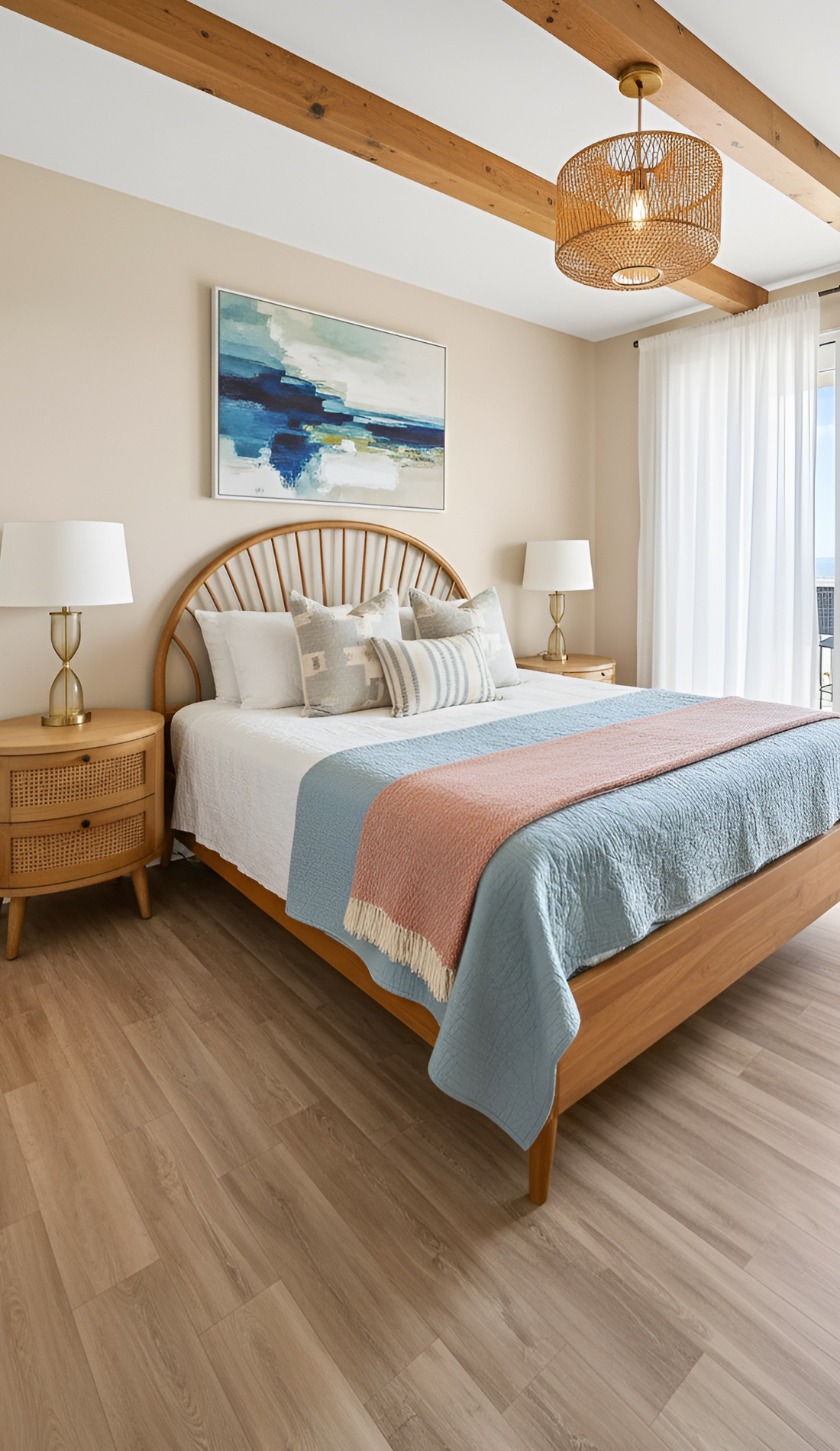
Bedding is one of the fastest ways to bring coastal softness into the room.
Start with crisp white sheets or ivory linen. Then build from there with sandy beige quilts, oat-colored blankets, soft blue accent pillows, or muted striped shams. The goal is not to create a lot of sharp contrast. Instead, you want gentle variation.
This is where texture matters more than print.
Coastal bedrooms feel inviting because they use materials that look relaxed and lived-in. Linen, cotton, gauze, waffle weave, and lightweight knits all work well. Meanwhile, mid-century modern style likes simplicity. So rather than pile on lots of frills or loud patterns, keep the bedding clean and tactile.
A few design cues help this look feel more elevated. Use bedding that drapes naturally. Mix two or three related neutrals instead of one flat color. Add one accent tone, such as dusty blue or seafoam, if the room needs a little life.
The result feels soft, fresh, and pulled together without looking too styled.
4. Bring In Cane, Rattan, or Woven Details for Texture
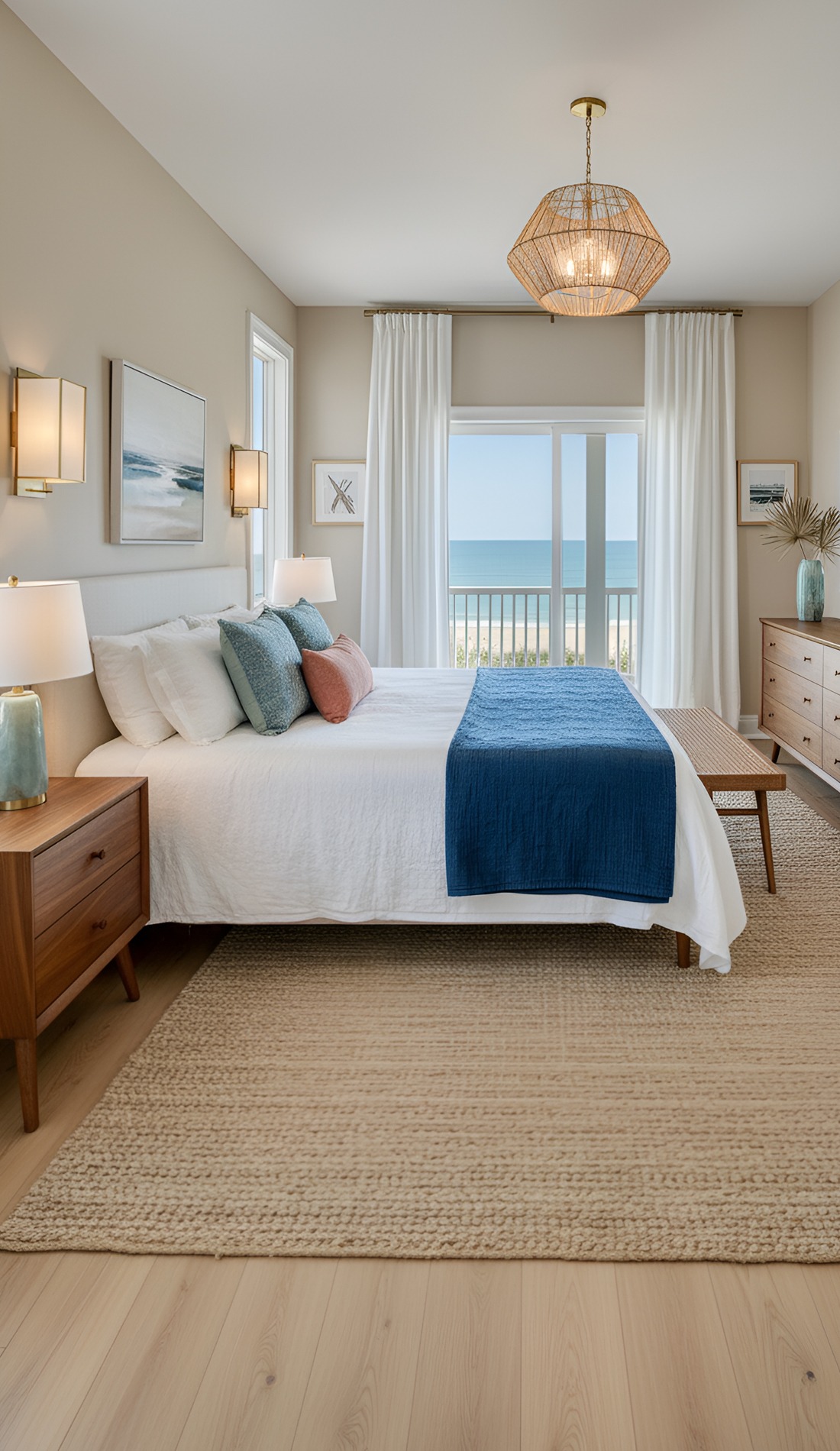
One reason mid-century modern coastal bedrooms work so well is that both styles love natural materials.
Mid-century modern interiors often use cane, wicker, and woven accents in a clean, sculptural way. Coastal rooms also lean on texture, especially textures that feel organic and light. That overlap makes woven elements a perfect bridge between the two.
You might use a cane-front nightstand, a rattan bench at the foot of the bed, a woven pendant light, or a basket for extra blankets. Even a single cane chair in the corner can add depth and warmth.
The important cue is placement.
Woven details should soften the room, not take it over. Too much rattan can push the bedroom into boho or tropical territory. Instead, pair woven pieces with smoother surfaces like wood, white walls, and simple bedding. That contrast gives the room a more refined look.
Used well, these materials add that breezy, beach-inspired touch without losing the clean spirit of mid-century modern design.
5. Use Walnut or Teak Nightstands to Add Classic Mid-Century Character
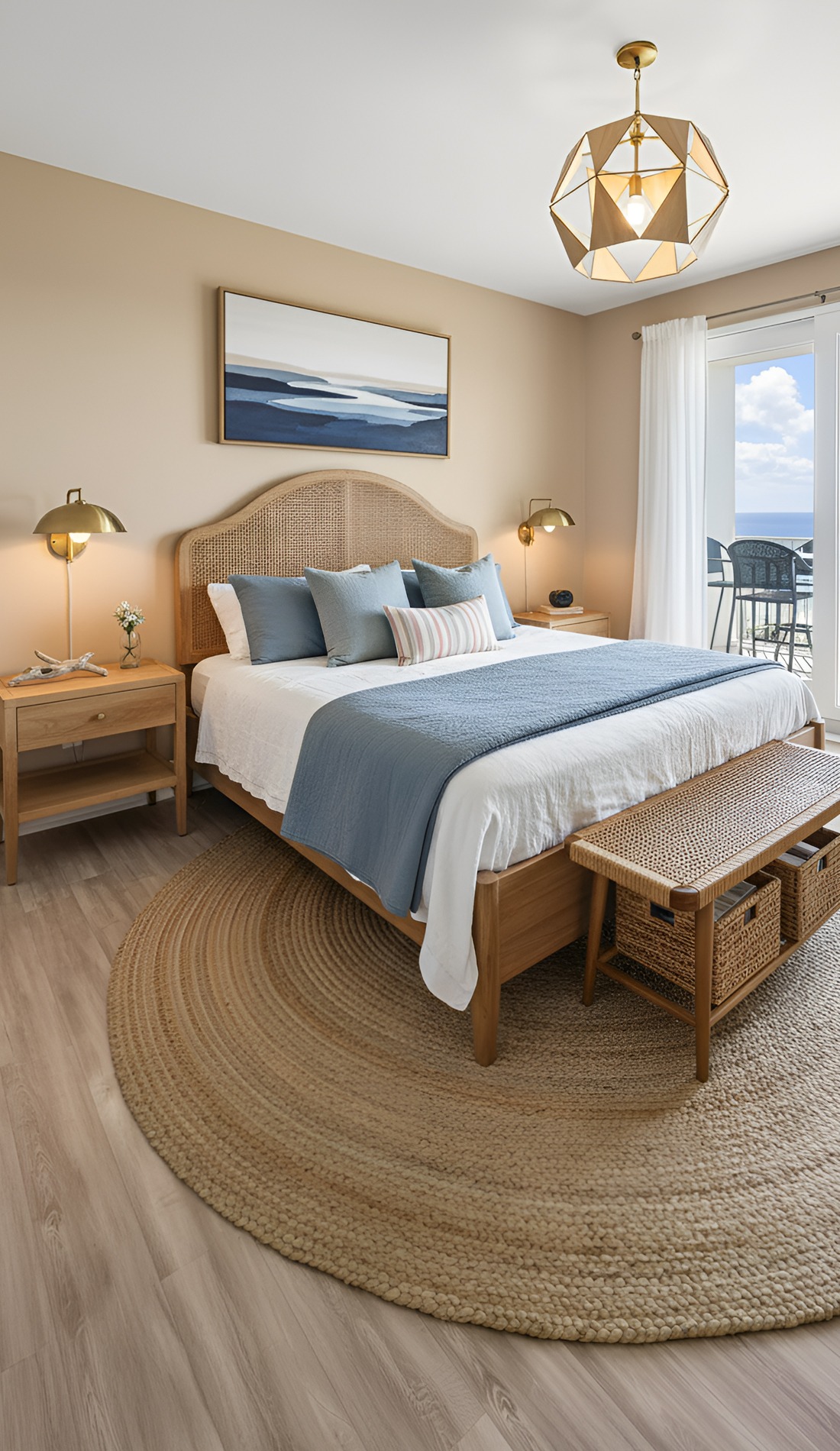
Nightstands do a lot of quiet design work.
In this style, they are a great place to bring in true mid-century personality. Look for pieces with flat-front drawers, round pulls, tapered legs, or softly curved edges. Walnut and teak are especially effective because they add that signature vintage warmth.
These wood finishes also help anchor the bed and give the room a collected feel. In a coastal bedroom, where walls and textiles often stay light, wood nightstands keep the room from floating away visually.
To style them, keep the top simple. A ceramic lamp, a small stack of books, a bowl, or a vase with a few stems is enough. Mid-century modern style likes function and clarity. Coastal style likes airiness. So do not crowd the surface.
A well-chosen nightstand says a lot about the room. It tells you whether the space feels generic or intentional. In this case, it should say timeless, warm, and easy.
6. Add Curved Shapes to Soften the Straight Lines
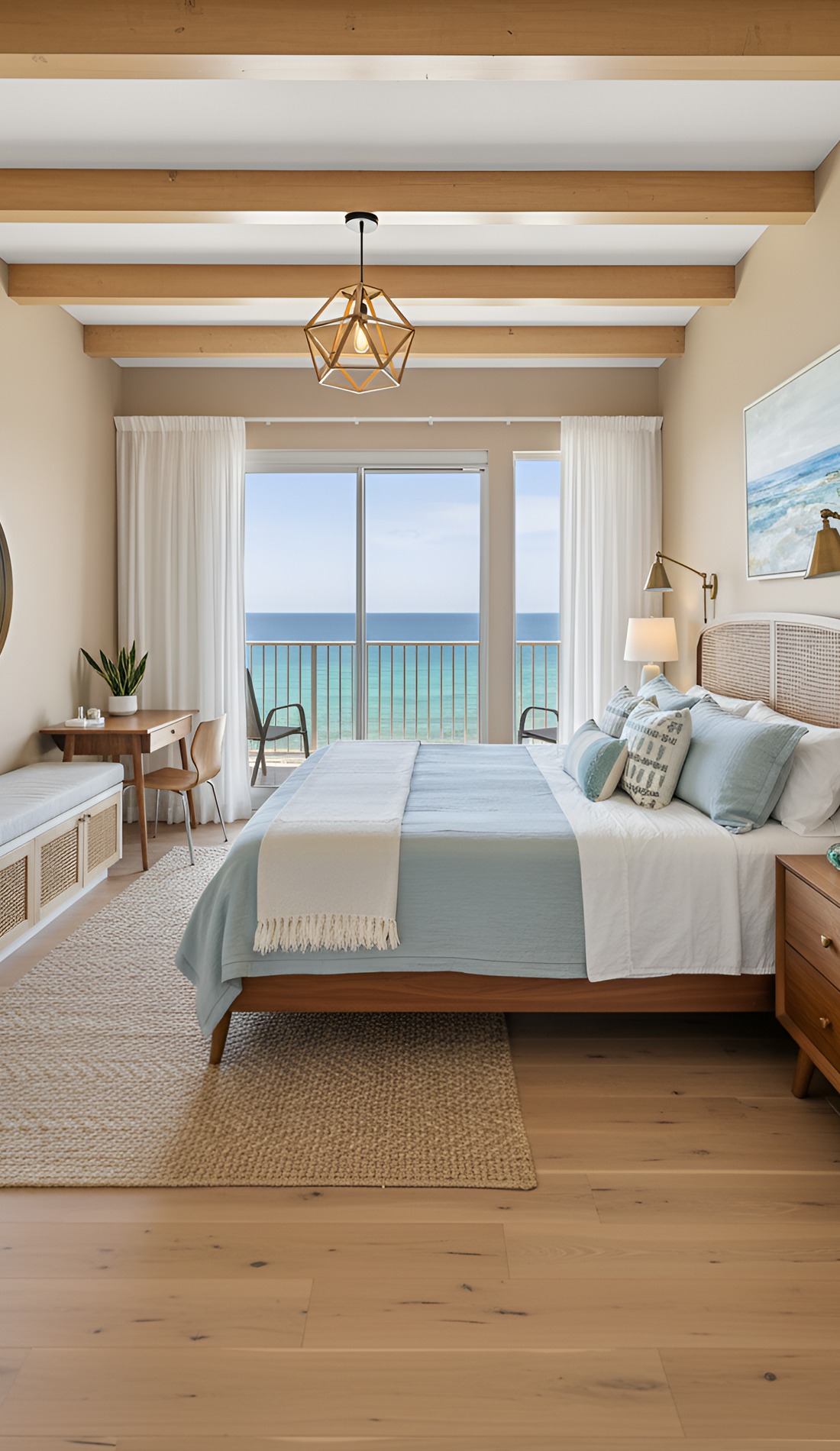
Mid-century modern rooms often feature clean geometry. Coastal rooms, meanwhile, feel softer and more relaxed. To make the two styles blend naturally, curved shapes are your friend.
A rounded headboard, globe lamp, arched mirror, curved accent chair, or soft-edged bench can all help. These shapes break up the straight lines of wood furniture and make the room feel more inviting.
This is a subtle cue, yet it matters.
If every piece in the room has hard corners and rigid lines, the bedroom can feel too formal or too sharp. A few curves bring movement. They also echo the natural softness that coastal style does so well.
Think about the shape of pebbles, driftwood, sea glass, or waves. None of those are harsh. When your room includes a few rounded silhouettes, it quietly reflects that mood.
The space still feels clean. It just feels gentler.
7. Keep the Walls Light, but Not Stark
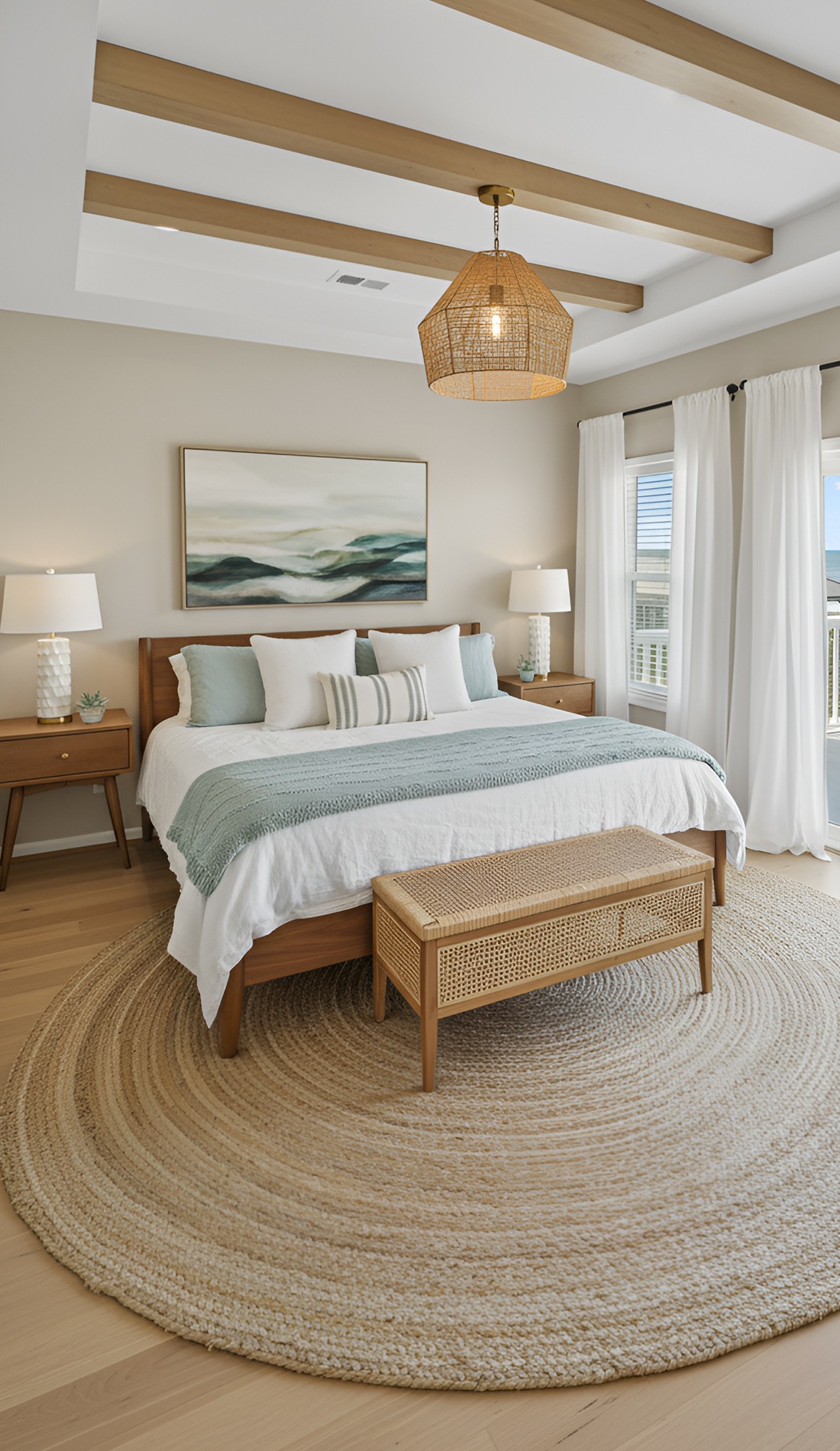
Wall color can make or break this look.
Bright white can work, but only if the rest of the room has enough warmth to balance it. Otherwise, the bedroom can start to feel sterile. Instead, try warm white, creamy ivory, pale greige, soft sand, or very light blue-gray.
These shades still feel coastal because they reflect light beautifully. However, they also feel more welcoming than a cold, hard white.
Mid-century modern furniture tends to look best against simple backdrops. That is why light walls work so well here. They let the bed, nightstands, and wood tones stand out without visual clutter.
The cue is softness.
Choose wall colors that feel sun-washed rather than bright and crisp. You want the room to feel like it has been touched by daylight all day long. That quiet warmth helps connect the coastal mood with the timeless depth of mid-century pieces.
8. Use Simple Coastal Artwork With a Vintage Feel
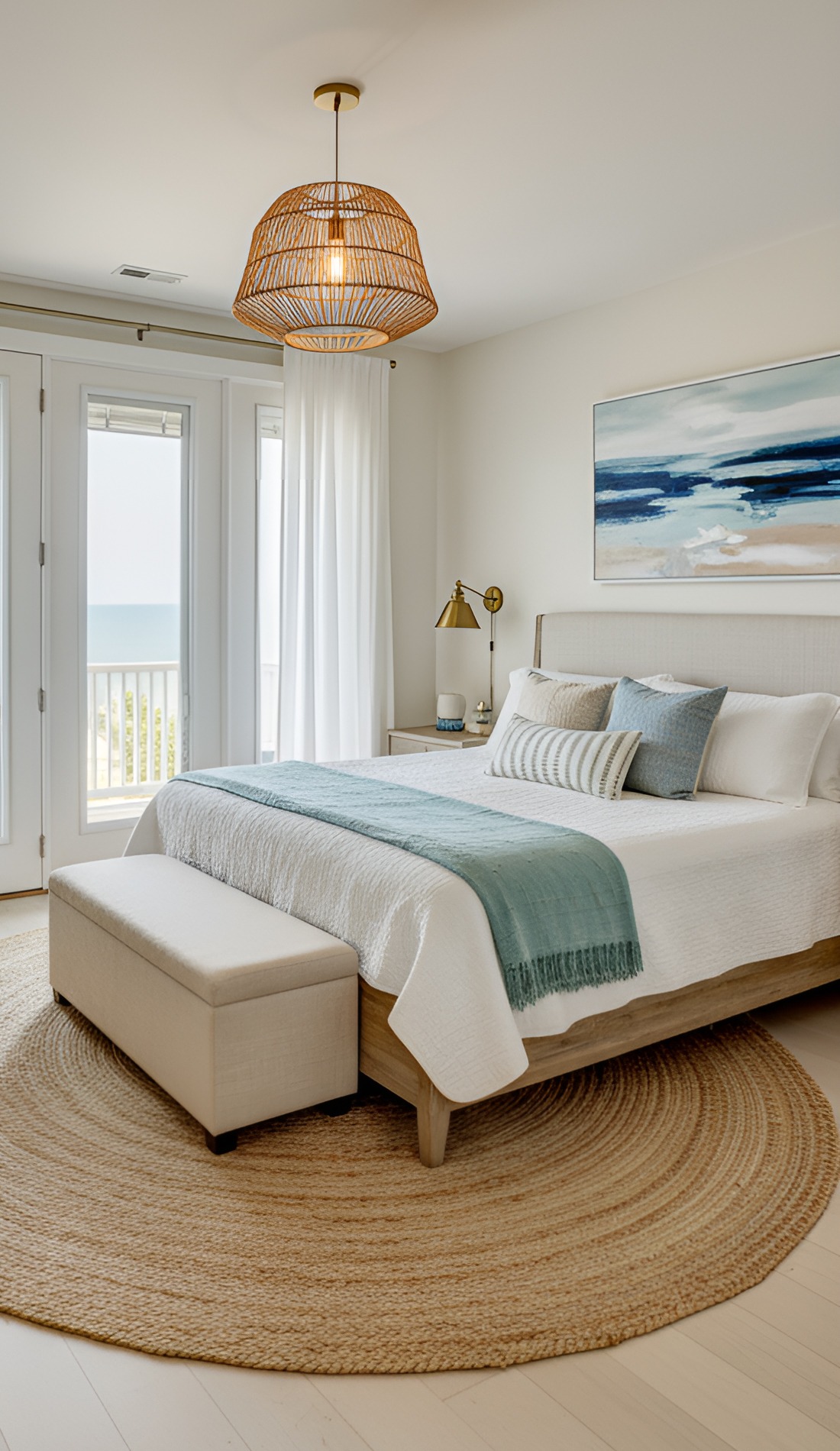
Art can help tie the two styles together, but it needs the right tone.
In a mid-century modern coastal bedroom, the best artwork usually feels minimal, breezy, and slightly nostalgic. Think abstract ocean tones, vintage coastal sketches, line art, simple sailboat studies, or muted landscape prints. Black-and-white photography can work too, especially in wood frames.
Avoid anything too literal or overly themed. You do not need signs, shells, or obvious beach quotes to create a coastal mood. In fact, those details can weaken the look.
Instead, aim for art that hints at the coast through color, movement, or subject matter. Then frame it in warm wood or thin brass to keep the room feeling polished.
Mid-century modern interiors often use art as a clean visual statement. Coastal spaces use it to create mood. When you combine those ideas, the best pieces feel effortless and calm, yet still intentional.
9. Choose Lighting That Feels Sculptural but Relaxed
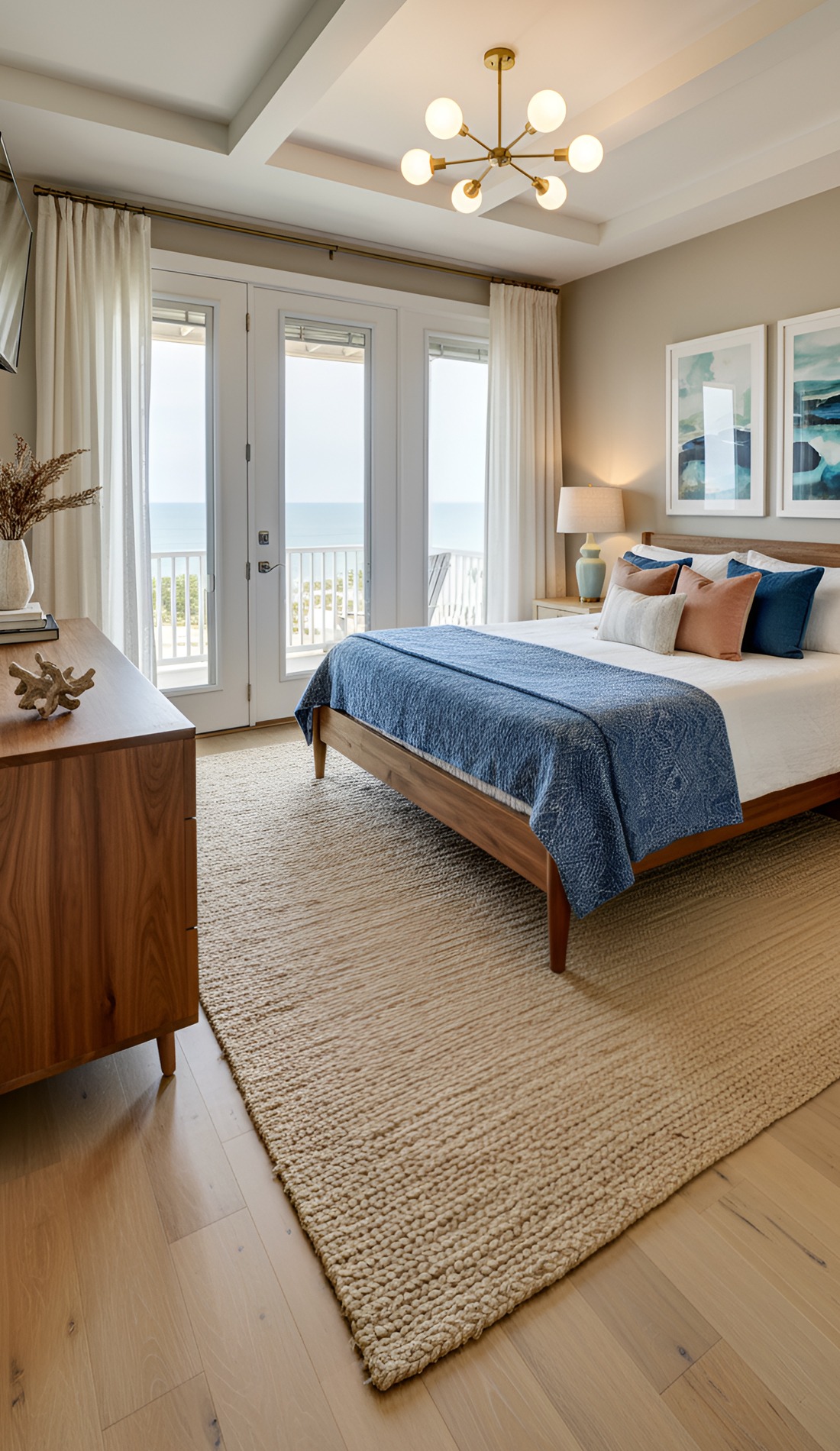
Lighting plays a big role in this style because it can bring in both shape and softness.
Mid-century modern lighting often has a sculptural quality. Think globe lamps, cone sconces, tripod bases, or simple brass details. Coastal lighting often leans woven, airy, and natural. In this bedroom style, those two directions can work together beautifully.
For example, you might use ceramic lamps with rounded bases on walnut nightstands. Or you could hang a woven pendant with a clean silhouette over the center of the room. A brass reading sconce beside the bed can add a subtle mid-century feel without making the space look formal.
The cue here is restraint.
Choose lighting that has personality, but do not overdo it. Each piece should feel useful and visually clear. You want the lighting to support the room, not dominate it.
Soft lamp light also adds warmth at night, which helps balance all the pale tones and keeps the bedroom from feeling too cool.
10. Mix Smooth Surfaces With Relaxed Textiles
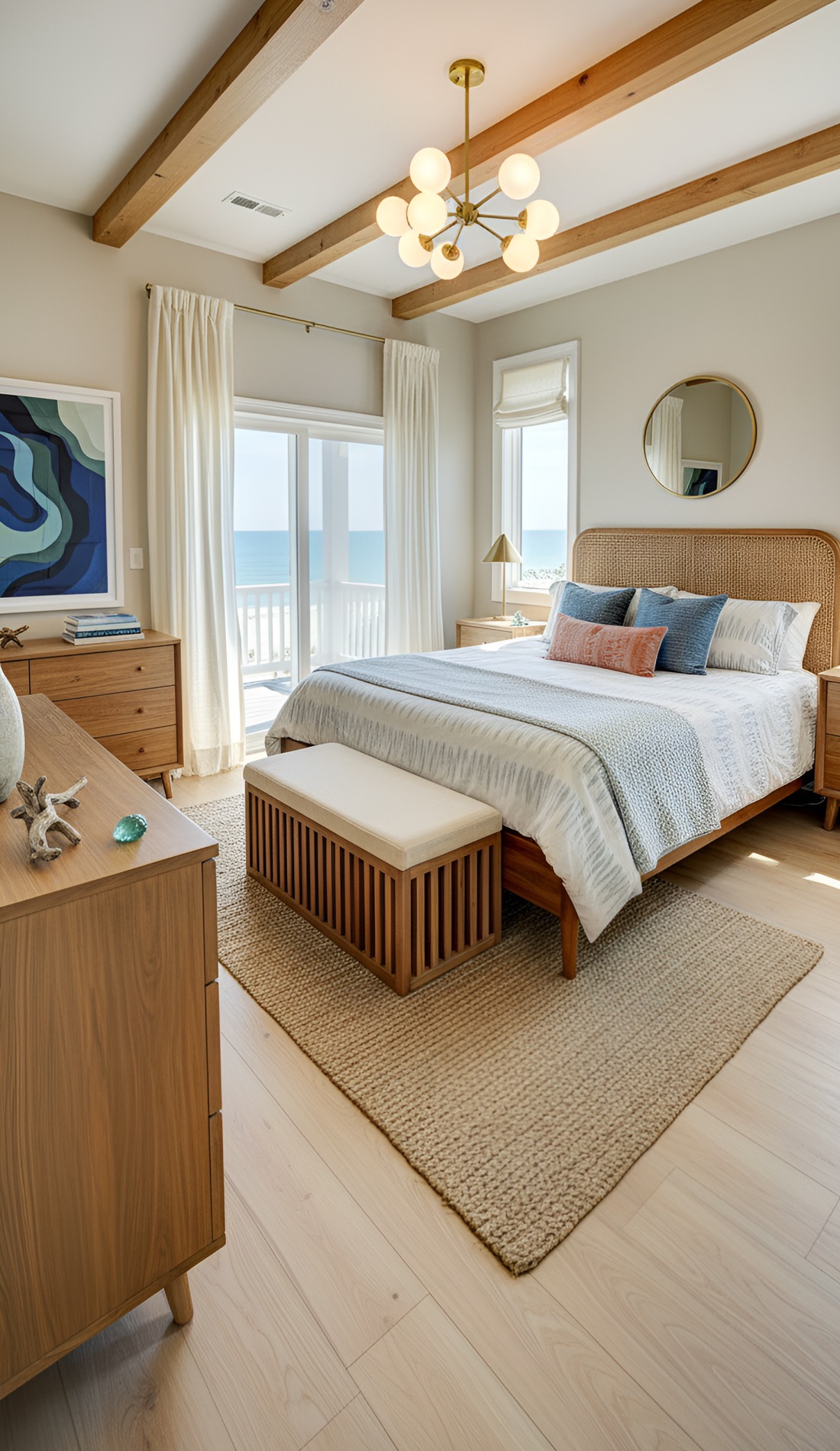
One of the secrets to this style is contrast in texture.
Mid-century modern design often uses sleek wood, polished finishes, glass, and clean upholstery. Coastal rooms bring in softness through linen, cotton, jute, and woven fibers. When those textures meet, the room feels rich without looking busy.
A smooth wood dresser beside airy linen curtains works beautifully. So does a sleek bench topped with a casual throw. Even a polished ceramic lamp can look more interesting next to rumpled bedding.
This mix matters because it keeps the room from leaning too far in one direction. If everything is smooth, the room can feel cold. If everything is soft and weathered, the room can lose its shape.
Try to give the eye both.
Use at least one or two hard surfaces, one or two woven details, and several soft textiles. That layered mix creates a bedroom that feels comfortable, yet still visually sharp.
11. Add a Bench or Accent Chair That Feels Light on Its Feet
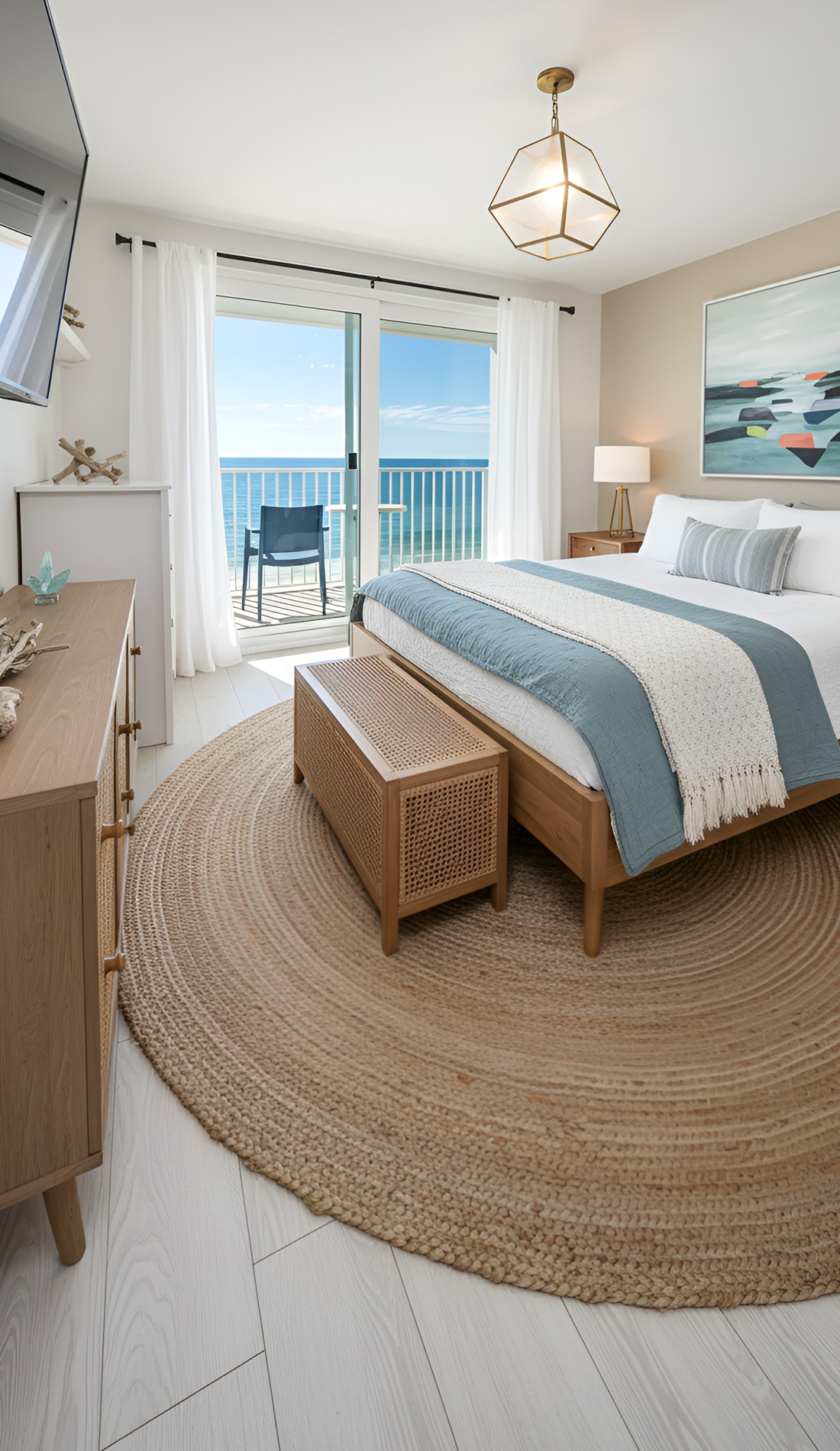
Extra seating helps a bedroom feel finished, especially if the room has enough space to support it.
For this style, look for a bench or chair that has an open, airy shape. Mid-century modern pieces with exposed wood frames, slim legs, or woven seats work very well. A small accent chair in wood and linen can also create a cozy reading corner without adding heaviness.
At the foot of the bed, a bench adds function and polish. It gives you a place for a folded throw, a tray, or tomorrow’s clothes. It also helps anchor the bed visually.
The cue is visual lightness.
Avoid oversized pieces with thick bases or bulky upholstery. Since coastal rooms need a sense of openness, extra furniture should still allow the room to breathe. Open frames, lifted legs, and simple lines all help keep that easy flow.
12. Use Pattern Sparingly and Let Texture Do the Work
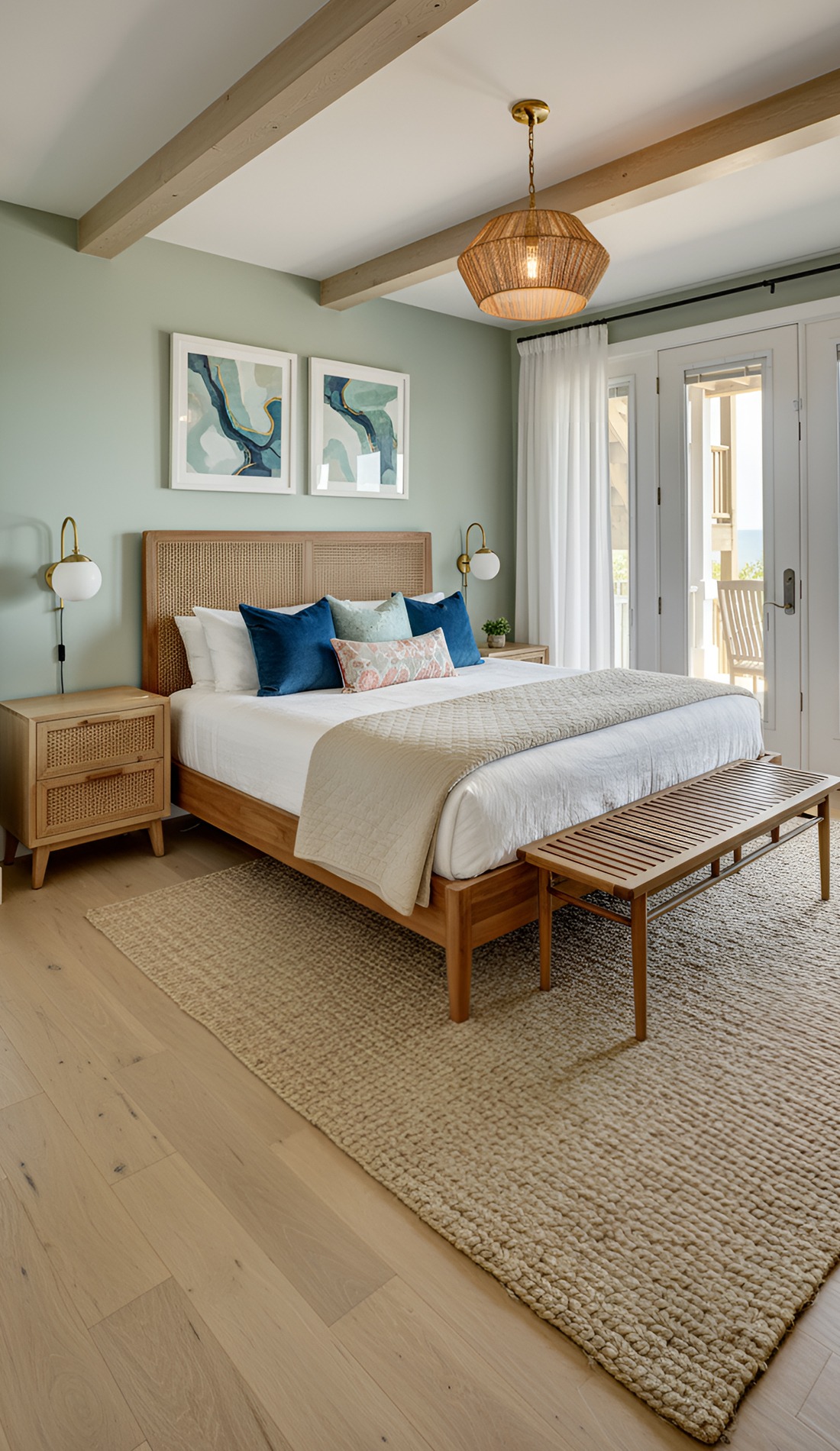
A lot of bedrooms feel busy because they rely too much on pattern.
In a mid-century modern coastal bedroom, it is usually smarter to keep pattern limited and let texture create interest instead. That means you might use a subtle stripe, a soft geometric pillow, or a quiet woven rug, but not all of them at once.
Mid-century modern style does enjoy geometry. Coastal style enjoys softness and ease. The best way to blend those ideas is to use simple patterns in muted colors. A striped lumbar pillow, a lightly patterned area rug, or a small abstract print can be enough.
Then let linen, cane, wood grain, boucle, and woven fibers carry the room.
This approach makes the bedroom feel calm, which matters in a sleep space. It also gives the design more longevity. Rooms built on texture tend to age better than rooms built on trendy prints.
13. Anchor the Room With a Natural Fiber Rug
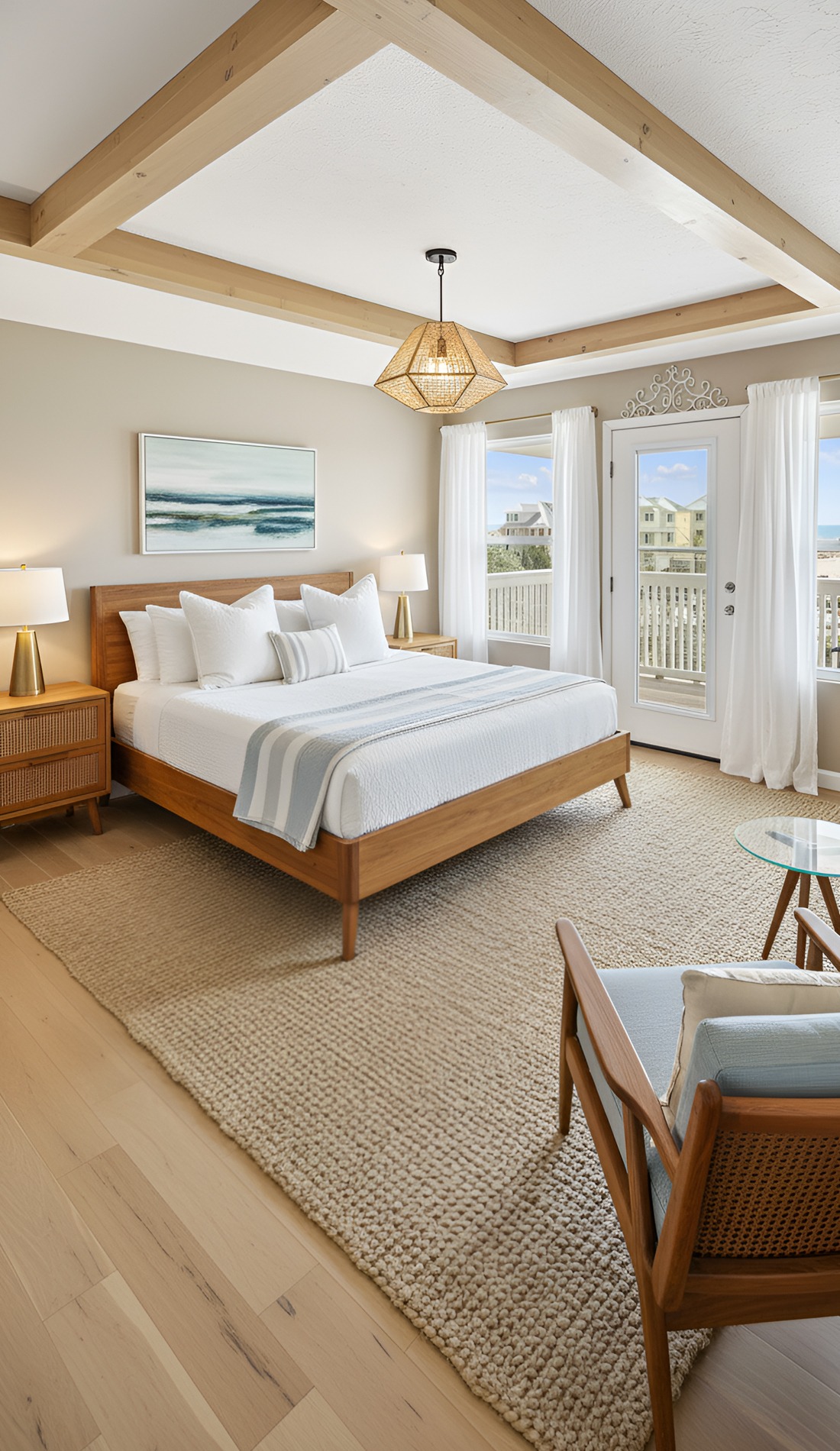
A rug helps connect everything.
For this look, a natural fiber rug is often the easiest win. Jute, sisal, or a soft woven blend can add that beach-inspired texture while also grounding the cleaner lines of mid-century furniture. The color is usually just right too. Natural fiber rugs often come in sand, oat, honey, or driftwood tones, which fit the palette beautifully.
If you want more softness underfoot, layer a flatter woven rug under the bed and add a small plush accent rug nearby. That way, you get the visual texture without giving up comfort.
The cue is natural warmth.
Your rug should help the room feel relaxed and rooted. It should not steal the show. In most cases, subtle color and visible texture will do more for this style than a bold pattern ever could.
14. Keep Styling Minimal and Meaningful
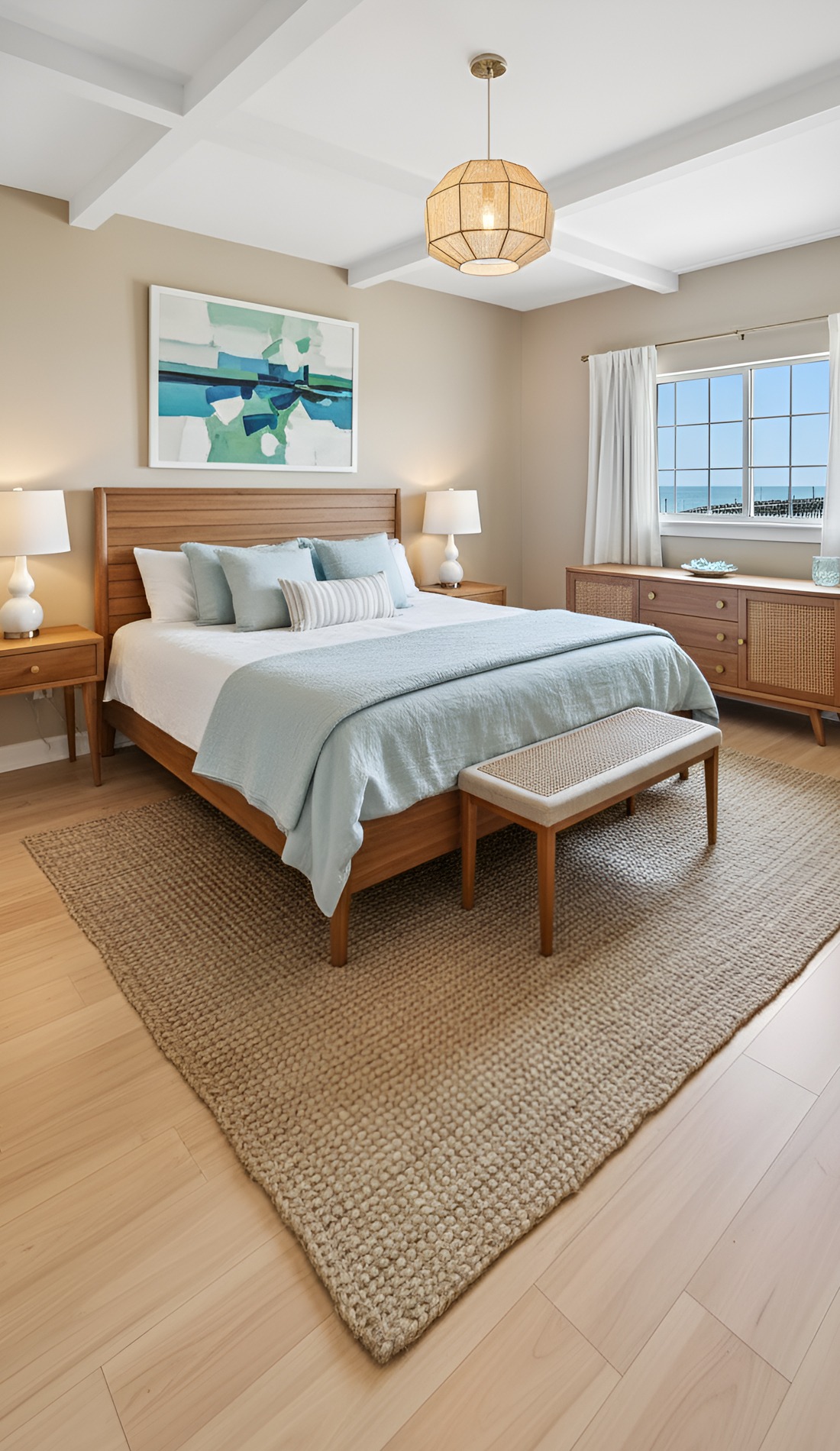
This look works best when surfaces can breathe.
That means your dresser, nightstands, and shelves should not be packed with decor. Mid-century modern style likes clean editing. Coastal style likes easy openness. Together, they create a bedroom that feels peaceful when you keep styling simple.
A few good choices go a long way. Try a ceramic vase, a stack of books, a small tray, a framed print, or a glass object that catches the light. You can also add a branch, dried grass, or greenery for a natural touch.
The cue is intention.
Every item should feel like it belongs. If something is there only to fill space, the room will start to feel cluttered. On the other hand, when each piece has shape, texture, or personal meaning, the room feels curated without being stiff.
Minimal styling also helps the bedroom keep that airy coastal quality. It lets the furniture and materials speak for themselves.
15. Let the Room Feel Calm, Open, and Unforced
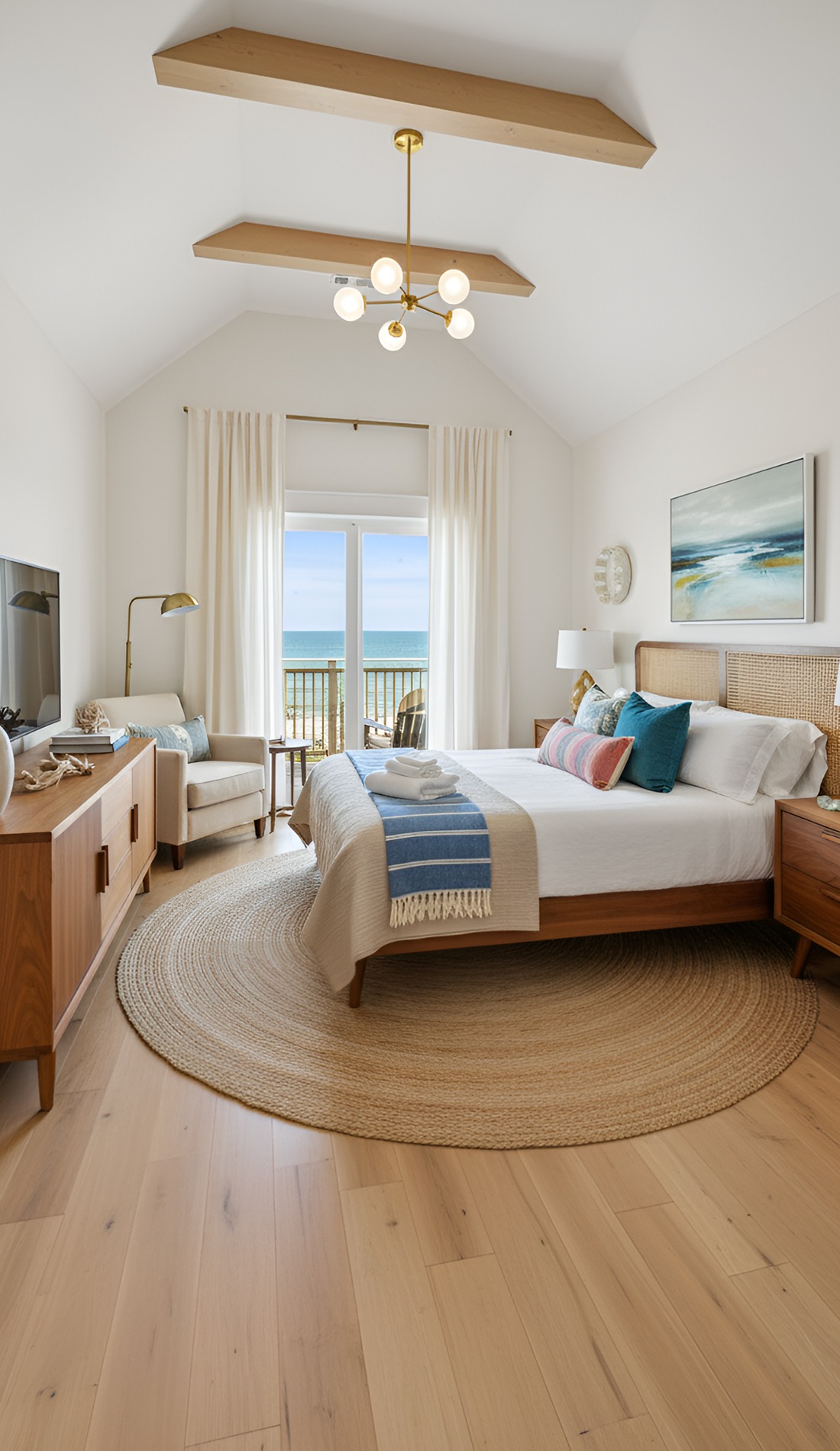
The final idea is less about one object and more about the overall mood.
A great mid-century modern coastal bedroom should never feel crowded or overly decorated. It should feel like a room where sunlight moves easily, air can circulate, and every piece has a reason to be there. That quiet simplicity is what makes the style so appealing.
So as you decorate, keep asking a simple question: does this room still breathe?
If the answer is yes, you are probably on the right track.
Leave a little empty space on the walls. Let the furniture sit with some breathing room. Choose fewer, better pieces. Repeat tones and materials so the room feels connected. Let wood warm up the light palette. Let texture add interest without noise.
That is the real heart of this style.
It is not about making the room look themed. It is about creating a bedroom that feels timeless, restful, and gently elevated. Mid-century modern coastal design does that beautifully because it combines order with ease, shape with softness, and warmth with light.
And in a bedroom, that balance feels just right.
A space like this does more than look pretty in a photo. It feels good to live in. It feels easy in the morning. Calm at night. Fresh in every season. That is why this mix continues to resonate. It gives you the best of both worlds: the tailored charm of mid-century modern design and the laid-back serenity of coastal living.
So whether you start with a walnut bed, a woven pendant, sandy bedding, or just a quieter color palette, know that each choice can move your room in the right direction. Piece by piece, the bedroom becomes lighter, warmer, and more inviting.
And really, that is the goal.
Not just a stylish room.
A room that feels like an exhale.

Related posts:
 20 Stunning Beach House Designs for Coastal Living Lovers
 Beach House Interior Ideas: Coastal Decor Inspiration for a Relaxed, Breezy Home
 30 Beach House Living Room Designs That Capture Relaxed Coastal Charm
 27 Beach House Kitchen Design Ideas
 How to Decorate a Beach House Living Room in Boho Style
 25 Beach Coastal Bedroom Décor Ideas for a Calm, Breezy Look
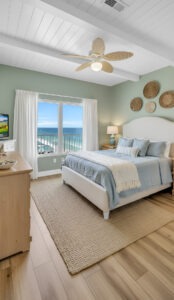 15 Coastal Bedroom Wall Decor Ideas With Easy Beach-Inspired Style
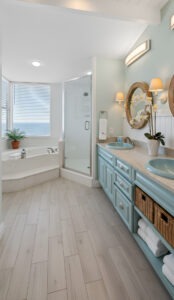 15 Beach House Bathroom Ideas Full of Light and Coastal Charm
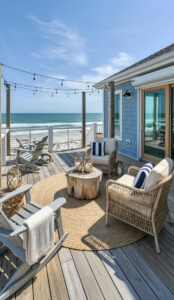 15 Beach House Deck Decor Ideas for a Calm Coastal Vibe
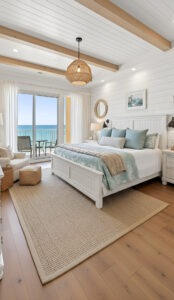 17 Coastal Farmhouse Bedroom Ideas With Relaxed Cottage Style
Leave a Reply
You must be logged in to post a comment.